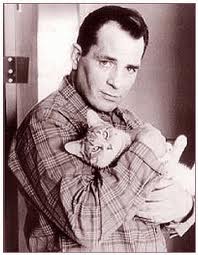
Year of Kerouac: Doctor Sax, Maggie Cassidy

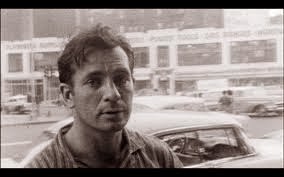
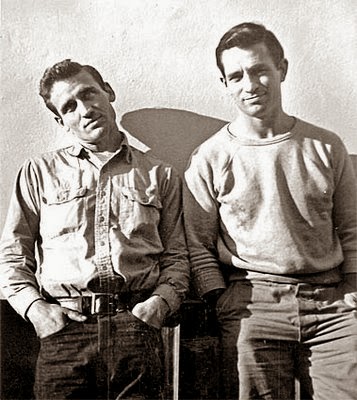
The Year Of Kerouac, my year-long project of re-reading (or in some cases, reading for the first time) the works of Jack Kerouac, continues. I’m reading them not in the order of when they were written (the years on the left below) but rather in order of the subject matter most of them cover, Kerouac’s own life (the years to the right below). You can read my review of the first book at the link below…

Visions of Gerard             1956       1922–1926
Doctor Sax          1952       1930–1936
Maggie Cassidy 1953       1938–1939
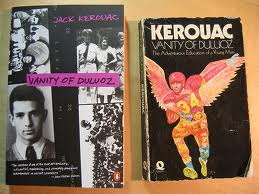
·         Vanity of Duluoz               1968       1935–1946
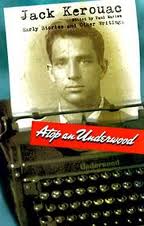
Atop an Underwood: Early Stories and Other Writings    1936–1943           Various
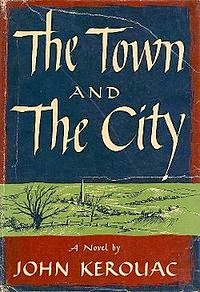
The Town and the City   1946–1949           1935–1946
On The Road      1948–1956           1946–1950
Visions of Cody 1951–1952           1946–1952
The Subterraneans         1953       1953
·         Mexico City Blues (1955; published 1959)
Tristessa              1955–1956           1955–1956
The Dharma Bums           1957       1955–1956
·         The Scripture of the Golden Eternity (1956; published 1960) 
Desolation Angels            1956–1957
Book of Dreams   1960    1952-1960
·        Lonesome Traveler, short story collection (1960)
Big Sur (novel)   1961       1960
Satori in Paris     1965       1965
·         Pic, novella (1951 & 1969; published 1971)

All caught up now? Good! On to the reviews of the next two…

Doctor Sax is a weirdly wonderful book, one of the most unusual, and best, of all of Kerouac’s works. On one level, it’s an account of boyhood daydreams, and a particular historical event (a great flood in his hometown). In this way, it’s a natural continuation of the haunted childhood depicted in Visions of Gerard. On another, it mixes in himself as the present-day narrator, along with dreams from his contemporary life. And on a third, it’s a mythic struggle between the mysterious Dr. Sax and a Great Serpent that clearly exists in the realm of fantasy and fable. Along with the subject matter, the narrative too shifts back and forth between straightforward narrative, and more fantastical sequences full of neologisms and nonsense words. It certainly shows the influence of William S. Burroughs, with whom he was staying when he wrote much of it. It’s a joy to read, and definitely shows Kerouac at his most creative and most fictional, in fact creating something very like the “metafiction” that became popular in the 90s and 00s.

Maggie Cassidy is in a sense the most readable of the three books that I’ve covered so far, in that it is an extremely straightforward narrative and also the most grammatically “proper” of the three. Despite that (or maybe because of that) it’s the one I’ve liked least. It may be that the writing is too prosaic for my taste, or it may be that a lot of the subject matter is about sports and adolescent boyhood, two subjects I don’t much care for. The main subject of the narrative, the blossoming of his first love with the title character, also highlights one of Kerouac’s least admirable points- his co-mingled mythologized idealization of the feminine with his fear and misogyny toward the same. For all that, there are some really touching passages, particularly involving his relationship with his father, and the by the end of the book I appreciated it as a bridge between Lowell and the boyhood world of Dr. Sax and Visions of Gerard, and the New York and restless wandering of the adult Kerouac.

(As a final note, I read it as an e-book, so I didn’t get the 50s pulp-cover in the picture, but that is pretty damn spectacular.)      

Revisiting the 2000s: 20 albums (final thoughts)

Well, here we are! You read the intro, where I laid out the project of reviewing what a cross-section of critical opinion regards as twenty of the best albums of the decade that must not be named (or at least, never properly was), 2000-2009. You thrilled to the reviews of albums 1-5, 6-10, 11-15 and 16-20. Here, at the end of all things, what have we learned?

First off, having spent a lot of the decade distracted by other things and back-filling older artists and genres, it was a pleasant surprise to find some things I really liked. My “top” picks from among the albums I listened to were:

  • Arcade Fire, Funeral
  • Beck, Sea Change
  • Eminem, Marshall Mathers LP
  • Jay-Z, The Blueprint
  • Kayne West, Late Registration
  • Madvillian, Madvilliany
  • MIA, Arular
  • Outkast, Stankonia
  • Phoenix, Wolfgang Amadeus Phoenix
  • The Flaming Lips, Yoshimi Battles the Pink Robots 
  • Wilco, Yankee Hotel Foxtrot

Then there was another whole patch that, while I can’t think they’re the best albums of this last or any other decade, I would call “good”. They don’t reach “top” status for various reasons (musical or thematic inconsistency, lightness of lyrics or theme compared to the top albums, or just being a kind of good clean fun that doesn’t quite rise to greatness):

  • Daft Punk, Discovery
  • Interpol, Turn on the Bright Lights
  • LCD Soundystem, Sound of Silver
  • MIA, Kala
  • Spoon, Kill the Moonlight
  • Sufjan Stevens, Illinois
  • TV on the Radio, Return to Cookie Mountain

And, then, well…I have to respectfully disagree with the critics on the following albums. The first I found too experimental and not enough listenable, and the second was just kind of derivative and blah:

  • Animal Collective, Merriweather Post Pavillion
  • D’Angelo, Voodoo

We’ll get back to this “good” and “great” question in a moment. First, a pair of further observations.

1. This was not Rock’s decade. Of the 20 albums in this list, more than half were hip-hop, soul or dance music. Not that I don’t have a lot of love for those genres, but I do hope that Rock makes a rebound sometime in the 2010-2019 decade. For which, we are currently accepting naming bids…

2. You could make a very decent case that many of the best albums of the decade were basically 90s-afterburn. I will illustrate with one of my favorite data formats, the histogram. In this case, of the year the albums came out in. As you can see, fully half come from the first three years of the decade.

Now, back to this best/great/good question. In my previous installment, I got into an interesting commentary stream with my friend Matt, who besides being generally a groovy guy and great writer is an audiophile and astute pop culture critic. One of his contentions was that I’d gone too easy on the decade by calling anything that came out of it good compared to albums of decades past. I’ll let him speak for himself on this point:

“Maybe you need to shift your categories downward some more. “Good” should mean “adequate” and “adequate” should mean “terrible” and “terrible” should mean “I feel sorry for this band, I really do.” 

To me, I think it comes down to this: if I met somebody who was more or less intelligent but had little familiarity with the popular music of the last 60 years, what music would I recommend to them? And what albums from the ’00s would I include in my recommendation? 

Rolling Stone just recently “updated” their 500 Greatest Albums list by adding several albums from the ’00s to it, which now makes me less inclined to recommend the list to people. It’s just so awkward seeing Vampire Weekend, M.I.A., and Arcade Fire right next to Roxy Music, Santana, and N.W.A. I just want to shout out to a potential reader, “No! This is not the right list!” To be fair, the highest an album from the ’00s ranks on the new list is at 118 (Late Registration?), but honestly, they should have just left the damn list alone.

Hey, if writers and musicians genuinely believe that LCD Soundsystem and Wilco deserve to be lumped together with Led Zeppelin and Stevie Wonder, then I guess I just have some lint stuck in my ears. But I really believe that recorded music in the album format simply will not have the cultural and emotional impact it did up until the ’00s.

All these people are in denial!”

He has a point about where the music on this list fits in the grand scheme. There are specific entries I might argue with him on, and time of course is the great arbiter. But none of these albums are epochal. I don’t think it was that kind of decade, I think it was largely a decade of reflection and remixing that lacked the galvanizing new musical movements of the 50s, 60s, 70s and 90s. I’m hopeful that it was one of those periods of consolidation and musical drift that have preceded a “next big thing” in the past. Then again, thanks to technological change, maybe pop culture is too atomized now to have a “next big thing”. I wouldn’t bet on it, but there is an interesting neo-Marxian argument to be had about how the technological shift in the means of production may preclude this. It may certainly, as Matt contends, diminish the importance of the album as a form. Music lived before the album as we currently know it arose in the 60s, though, and I think it will live just fine in its next phase as well.

In the meantime, I haven’t given up on the album as an art form. And while this project has given me some new albums to like, I happen to think there were plenty of great albums in the 2000s. My own personal list of the top 20 albums of the decade (only three of which appeared on the nine critics lists I perused, again proving that, if nothing else, this was a very idiosyncratic decade) is (in alphabetical order):  

Bangs  Call and Response  (2002)
There’s a kind of female-powered punky and yet poppy band that I really, really like, and hope will hit it big, but they break up and vanish after producing one or two great albums. The 2000s had a lot of bands like this, and there is another on this very same list. But my first sadly gone girl-group love of the decade was the Bangs. 10 years later, this still sounds fresh, fun and eminently listenable.  

Breeders  Title TK  (2002)
As documented above, there’s a good case to be made that some of the best music of the 2000s was actually 90s afterburn. This is true on my list as well, witness this fine outing by one of the best bands of the 90s, the Breeders, headed by one of the driving forces behind another of the best bands of the late 80s/early 90s (and, in my opinion, of the entire history of Rock) the Pixies. It’s dark moodiness was one of the things that carried me through post-divorce early 2000s, and I love it still today.

Bruce Springsteen  Magic  (2007)
While I like Bruce Springsteen a lot in general, I tend to like best the dark Springsteen albums that he comes out with every other album or so. Magic is that, and is also a kind of perfect distillation of the mid-decade despair of the Bush years, delivered by a Springsteen that has aged into the world-weariness and mythic presence that he sometimes had to pose at in younger days.   

Death Cab For Cutie  Narrow Stairs  (2008)
I’m not sure the last decade had a better lyricist than Ben Gibbard, the lead of Death Cab for Cutie. Structurally, the songs are often simplistic, but what I’ve observed about them is that they linger. And the mellow, seemingly straightforward package in this album delivers things like a haunting wrestle with Jack Kerouac’s legacy, seeing smoke from the grapevine turned into a timeless struggle against the elements, and one of the most chilling “love” songs ever recorded, laying bare yet again how many of our favorite “romantic” songs are actually creepy obsession when you think about them.     

Deerhoof   Reveille  (2002)
If somebody took perfect pop rock, exploded it, and reassembled the pieces out of sequence but in a way that strangely still works, it would sound like this album. I don’t just love Deerhoof because they’re a Bay Area band. I love them because (and particularly on this album) they show just how creatively lazy every other band this last decade was, and that surprising, idiosyncratically beautiful things can still be done in Rock.

Drive-By Truckers  Brighter Than Creation’s Dark  (2008)
I said in the intro piece to this series that nobody in any pop genre had really had a great decade in the 2000s. In fact, that isn’t entirely true, and this album would be one of my prime exhibits in the contention that some of the best music of the 2000s was in fact Country music. Granted, it wasn’t by people you were going to hear on any Country station, but that doesn’t make it any less true. This is an amazing band, and an amazing album by them. Whether they’re writing about the rise and fall of Grunge (yes, really), a lament to a friend’s downfall through crystal meth, a sympathetic portrait of a soldier’s regret at having to kill, or just good old fashioned country themes, they are superb throughout, and adept at mixing Country and Rock together in way that you can’t really say which is which.     

Gillian Welch   Time (the Revelator)  (2001)
Some of the best music of the 2000s was Country music, but you won’t hear it on any Country station Exhibit II. I guess technically she might be Bluegrass, but let’s not split hairs. The point is Gillian Welch is a living encyclopedia of American roots music, channeling decades of influences to make her own outstanding contribution on this album.  

Hank William III  Straight to Hell  (2006)
Some of the best music of the 2000s was Country music, but you won’t hear it on any Country station Exhibit III. They just happened to all end up in a row alphabetically, but it still makes for a nice exhibit. They didn’t quite make my top 20, but you could add the Bastard Sons of Johnny Cash and Lucinda Williams to the list as well. As for this album, the way Deerhoof should make everybody working in Rock ashamed of how little they’ve strived for, Hank III should make everybody working in Country ashamed of how lame they are.

Kristin Hersh  Sunny Border Blue  (2001)
And I suppose this might be Exhibit II in my “90s afterburn” theorem. Nee of Throwing Muses, Kristin Hersh is an amazing songwriter and a powerful musician. The songs here are spare, confessional and harrowing. This was another album that helped me burn through post-divorce darkness early in the decade, and it’s taken on whole new meaning to me as we both (the album and I) have aged.   

Martha Wainwright  Martha Wainwright  (2005)
Martha Wainwright is one of the lushest, most true to herself voices of the decade. Here is a woman not worried about being popular or likable, laying it all out, good, bad and ugly. Which, of course, ends up lending the proceedings a vulnerability that wins through the darkness. Loudon Wainwright is great, Rufus has his many fans, but give me Martha any day!    

Northern State   Dying in Stereo  (2003)
Hip hop can be great. Feminism too. Political records sometimes. Empowered women creating something, always. Put them all together, and you get one of the best albums of the past decade. 

Raveonettes  Whip It On  (2002)
Rock is dead, they say. Pretty regularly. And there are long stretches of certain decades (80s, 2000s) that you think they might have a point. Then something like this comes along, and you realize that there’s plenty of life left in the old beast. Not to mention all in Bminor! It took a Danish band to do it, which would make me sad as an American, except we had the White Stripes in the same decade. So go Danes, go!  

Red Hot Chilli Peppers  By The Way  (2002)
There’s something wise and melodically bittersweet about this album. Which makes sense, since it comes almost two decades in for the group, and after lead singer Anthony Kiedis got into recovery. Which maybe is part of the reason it works for me. I think it suits the decade too- a moment to pause and reflect in a rough era that’s seen a lot go by.   

Rilo Kiley  Under the Blacklight  (2007)
If there is anything to not like about this album (or indeed the band in general) I don’t know what it would be.  Between Jenny Lewis’ lush and precisely delivered vocals, the intelligent and more than occasionally emotionally chilling lyrics and the inventive and skillful musical craftsmanship on display here, this album is a delight.    

Sleater Kinney  One Bea(2002)
I used to think of this album as a kind of predecessor to American Idiot, full of a similar disquiet over post-9/11 America that the later album delivered even more thunderously. As the years wear on, what impresses me is how Sleater Kinney’s effort is more perennial than Greenday’s, which started to sound dated to me a two or three years after it was released. I find it to be an excellent illustration of my general theory that to produce political art that lasts, you have to prioritize the personal over the polemical.    

Soviettes  LP III  (2005)
Remember in the opening entry above about the Bangs, how I described that certain kind of female-powered punky yet poppy band that I’m always hoping will make it big and instead collapses? Meet my mid-decade heartbreak, Minnesota’s the Soviettes, on the third and best of three excellent albums they put out before breaking up.  

Tanya Donelly  beautysleep  (2002)
Picture me in 2002, post-divorce, starting to re-connect to who I am as a person and artistically. I’m alone in the dark, sitting next to the stereo with the first new music I’ve bought in years. On comes Tanya Donelly, 80s co-founder of the Throwing Muses and 90s veteran of the Breeders and Belly. Through moody billowing music and shimmering vocals she’s celebrating the birth of her first child, and the renewal this represents after decades of wandering. And I’m right there with her… 

Tanya Donelly  Whiskey Tango Ghosts  (2004)
Or, you know, here with her two years later. She’s now in a more acoustic vein, looking back over the years and through the complexity and ambiguity of marriage with well-worn wisdom and tenderness. I lvoed it from first listen, but this album has played better and better for me as I’ve gone through the same journey myself.  

The White Stripes  De Stijl  (2000)
Other White Stripes albums made the best of the decade lists I compiled my twenty albums from, and indeed one of my sources, Paste, made the following pretty excellent case that Jack White owned the whole damn decade musically:
2000: The White Stripes, De Stijl 
2001: The White Stripes, White Blood Cells; White founds Third Man Records
2003: The White Stripes, Elephant; White contributes to Cold Mountain soundtrack and appears in the film
2004: White produces and performs on Loretta Lynn’s Van Lear Rose
2005: The White Stripes, Get Behind Me Satan
2006: The Raconteurs, Broken Boy Soldiers
2007: The White Stripes, _Icky Thump _
2008: The Raconteurs, Consolers of the Lonely; White records “Another Way to Die” with Alicia Keys for Bond flick Quantum of Solace
2009: The Dead Weather, Horehound; White Stripes tour film Under the Great White Northern Lightspremieres at Toronto Film Festival; White stars in guitar love-note doc It Might Get Loud with Jimmy Page and U2’s The Edge
While White Blood Cells and Elephant deservedly draw a lot of praise, De Stijl is my favorite. It starts rocking the second you put it on, and pretty much never stops. 

U2  All That You Can’t Leave Behind   (2000)

I recall reading some music critic (I’m sure someone can remind me who) describing the Clash’s London Calling as the album that perfectly personified the 70s collapsing into the 80s. I feel like this album is the same thing for the liminal knife-edge of the 90s becoming the 00s. Here are U2 as world weary veterans producing an album that almost crystallizes the transition from the hopefulness of 90s globalism to the post-9/11 global unease of the 00s. Yes, it was a little before that. But the artist as prophet can do that, call the coming zeitgeist before it comes.  

So there you go. We’ve seen me reviewing the critics call on the best albums of the last decade  and now you’ve seen my picks for the 20 best albums of the decade. What do you think? The next move is your’s…

Year of Kerouac: Visions of Gerard

Do you know what a New Year calls for? A new literary resolution! For this year, mine is to read the full works of someone who’s long been one of my muses, Jack Kerouac. I remember late nights up in my parent’s living room while home on college break, reading his works, and biographies of him and the other Beats. Sneaking vodka from the bottle I had hidden in my suitcase, mixing it with kool-aid at 1 AM and reading, my head aswirl with the words (and the vodka), dreaming of literary greatness.

That, of course, was an adolescent dream, and not coincidentally a preview of bottoming out myself nearly two decades hence. But it was also significant in awakening my literary ambitions and poetic vision, and he and the Beats remain a touchstone for me to this day. It is impossible to overestimate the influence they’ve had on creative output in all genres since the 50s, the way they made space in American literary life for subjects and points of view that had been ignored and/or forbidden. And personally, I’ve found that the depths of their vision, and meaning and warnings of their lives, keep revealing new facets to me as I get older.

So here I am at 42, only a few younger than Kerouac when he died, and at the perfect age to discover the secret of Life, the Universe and Everything. It seemed like an opportune time to look back. In brief, what I plan to do is read all the works he meant to publish (as opposed to the flood of sometimes questionable posthumous editions), plus a select one or two more. Furthermore, I’m going to read them in the order of the main subject he himself choose, the chronicle of his life. That is, I’ll read them by the period in his life they cover, rather than when they were written.

In more depth, the works I’m going to try to complete are (with the year they were written, and the period of his life they cover, listed after):  

Visions of Gerard             1956       1922–1926
Doctor Sax          1952       1930–1936
Maggie Cassidy 1953       1938–1939
·         Atop an Underwood: Early Stories and Other Writings    1936–1943           Various
The Town and the City   1946–1949           1935–1946
Vanity of Duluoz               1968       1935–1946
On The Road      1948–1956           1946–1950
Visions of Cody 1951–1952           1946–1952
The Subterraneans         1953       1953
·         Mexico City Blues (1955; published 1959)
Tristessa              1955–1956           1955–1956
The Dharma Bums           1957       1955–1956
·         The Scripture of the Golden Eternity (1956; published 1960) 
Desolation Angels            1956–1957
·        Lonesome Traveler, short story collection (1960)
Big Sur (novel)   1961       1960
Satori in Paris     1965       1965
·         Pic, novella (1951 & 1969; published 1971)

I’ve just completed the first of these, Visions of Gerard. Though written in the mid-period of his career, during his mid-50s peak of output, it actually covers events in the earliest period of his life, the death of his older brother Gerard when he was four. It is a profoundly melancholy little book, just 130 pages. I actually had trouble getting in to the reading at first, since it comes from one of his most experimental periods, but once I was in, it had amazing depths. It is equal parts nostalgic childhood reminiscence, exposition on the ephemeral nature of life, and exploration of the birth of his own psyche. He presents his dying young brother as a sensitive youth prone to mystical vision. But of course, he’s also presenting himself in this portrait, as he even says, “At that age I was Gerard.” I’m realizing reading it that Kerouac’s sense of the bleakness of this life,  mystical superposition of this realm and realms beyond, and desire to let everyone know about how close liberation lies began at a very young age. Of course some of this is written on to events after, but he’s clearly getting at the root of how he saw the world here too. A special additional pleasure for me, now that I’ve been living on the North Shore of the Boston Area for a year and a half, is the portrait of Lowell in the 20s. I can feel, smell and taste things in his descriptions that might have escaped me before.

Next, I’ll continue his portrayal of early life in Lowell with Doctor Sax.        

And the Goodreads Challenge score is…

31 out of 52! Well, I’ve learned that these things can be very valuable once you let go of self-flagellation if you don’t make it. Because the thing is, you end up achieving more with an ambitious goal, even if you fall short of it, than if you aim low. I’ll keep it brief here, since I haven’t done an update in a while. The final books were:

When The Past Is Present  (David Richo, 2008, 224 pp.)
A friend recommended this to me two years ago or so, and I’m glad I finally got around to it. David Richo uses conventional psychology, Jungian psychology and Buddhist concepts to explore how issues from childhood and past relationships can cloud our present relationships, and how we can learn to recognize and process them so we can be truly present. If I hadn’t already done A LOT of this kind of work in the past few years, this book would have landed on me like a thunderbolt. It strongly affected and challenged me as it was. Recommended for anyone who has had issues with unresolved issues from the past affecting the present. In other words, everyone.     

Sliver  (Dave Morrison, 2008, 108 pp.)
Here’s the deal: If you’re a 40ish former rock musician from New York & Boston who currently lives with your wife in my dreaming-of-living-there state Maine, and I run across your book during a trip to Portland, Maine just as I’m ready for a new volume of poetry, I’m going to get it. As it turns out, in subject matter and sensibility, Morrison is my kind of poet even if the form of his poetry doesn’t always work for me.   


Foundation Trilogy  (Isaac Asimov, 1961, 678 pp.)
We’d read several things by Asimov in my late great Sci-fi Book Club, but we never got around to this, widely considered to be one of his masterworks. About the only thing I can say about it that isn’t superlative is that the dialogue ends up sounding a little dated (1950sish, in fact) at times. Otherwise, you have an epic sweep of future history, political intrigue, twists and surprises, and, as always, Asimov’s shrewd and compassionate understanding of how people are.    

Powers: Roleplay  (Brian Michael Bendis & Michael Avon Oeming, 2001, 110 pp.)
If you have a fondness for superhero comics and you haven’t read Powers yet, I highly recommend it. The series centers upon a pair of cops (one of them with an intriguing secret past) who investigate crimes involving super-powered individuals. In this volume, they’re investigating the murders of a group of college kids who were role-playing superheroes. Bendis is a superb writer, Oeming is a superb (though highly stylized) artist, and the whole thing is just fun. Get on board!      

Ultimate Spider-man Ultimate Collection II  (Brian Michael Bendis & Mark Bagley, 2009, 308 pp.)
And here have Brian Michael Bendis’ second appearance on this list, in a volume that brings together issues 14-27 of Ultimate Spider-man. Marvel’s used-to-be-great “Ultimate” line took characters from Marvel’s mainstream Universe and retold their tales in a setting stripped of the main continuity’s decades of story-line, giving things a chance to be fresh and new again. So here we get Peter Parker back to his roots, a teenager learning the ropes as Spider-man while also dealing with crushes, bullies and high school, and in a more modernized setting. Good clean fun all around, including the most realistic portrayal ever of what would really happen if the totally-human Kraven fought the strongly super-powered Spider-man. My only complaint is that the teen love melodrama got a little needlessly thick at the end. Ah well, kids. What can you do?      

JLA Vol. 1: New World Order  (Grant Morrison, Howard Porter & John Dell, 1997, 93 pp.)
Let’s not dodge the truth: for a lot of the 70s and 80s, DC sucked. Then, starting in the 90s, several creators stepped in, remembered that they were dealing with the world’s greatest heroes, and started to have fun with them again. Grant Morrison’s work with the JLA was one of the signposts of this, and here we have the first volume of his run as writer for the group. The artists, well, let’s just say they haven’t quite caught up yet (that will come later in the series), but the tale is solid good old-fashioned fun.   

Superman/Batman Vol 6: Torment  (Alan Burnett, Dustin Nguyen & Derek Fridolfs, 2009, 160 pp.)
I do love my Superman/Batman. They’re both such icons, and there’s so much that somebody who understands how to bring out the contrast between them can do, purely in terms of characterization, to make a great story. Throw in some cosmic shenanigans and great artists, and you get a grand tale here. It’s marred a little bit by tie-ins to the most recent grand Universe-shaking hullabaloo that DC was doing at the time, but otherwise is a rollicking good time.    

So there we are for 2012. And what’s on the docket for 2013? (But first, let’s pause here for a second to say, “Holy crap! It’s going to be 2013! How did that happen? And are there flying cars yet?”) I don’t think I’ll be doing the Goodreads challenge again, instead I’ll be challenging myself to read the collected works of two of my muses, Jack Kerouac and Allen Ginsberg. To whit, Ginsberg’s collected poems 1947-1997, and all the works Kerouac published in his lifetime, plus two published after. More description to follow…

And Happy New Year! See you in 2013!

Revisiting the 2000s: 20 albums (16-20)

And here we are, the final five albums of my re-visitation of what was a musical lost decade for me, the 2000s (aka Naughts, aka 00s, aka we never came up with a good name for it). To quickly reintroduce you to the theme, despite being a huge audiophile, I spent most of the last decade vastly distracted by life and/or back-filling on older artists and genres. So I wondered what I had missed, and turned to a cross-section of critical evaluation to identify the top 20 albums of the decade that I hadn’t given a careful listen to yet.

You’ll find the intro to this project here, followed by albums 1-5, 6-10 and 11-15. In all those reviews, as in the ones you’re about to read, I wrote my reviews in real-time, as I listened to the album. What you see here are my immediate reactions, unedited except to correct gross spelling and grammar missteps.    

And so here we proceed with the final five, highlighted below in yellow:

Animal Collective, “Merriweather Post Pavillion” (3)
Arcade Fire, “Funeral” (7)
Beck, “Sea Change” (5)
Daft Punk, “Discovery” (4)
D’Angelo, “Voodoo” (3)
Eminem, “Marshall Mathers LP” (3)
Interpol, “Turn on the Bright Lights” (4)
Jay-Z, “The Blueprint” (6)
Kayne West, “Late Registration” (4)
LCD Soundystem, “Sound of Silver” (6)
Madvillian, “Madvilliany” (3)
MIA, “Arular” (3)
MIA, “Kala” (4)
Outkast, “Stankonia” (6)
Phoenix, “Wolfgang Amadeus Phoenix” (3)
Spoon, “Kill the Moonlight” (3)
Sufjan Stevens, “Illinois” (3)
The Flaming Lips, “Yoshimi Battles the Pink Robots” (3)
TV on the Radio, “Return to Cookie Mountain” (3)

Wilco, “Yankee Hotel Foxtrot” (8)  

Spoon, “Kill the Moonlight” (2002, 3 votes)
Track one “Small Stakes” is a nice thumping way to start an album, and I like how there’s a slurred uneducated indifference to the vocal delivery that contrasts with the music’s head-bopping driving power. This really reminds me of the Jam, which is to say it’s immediately endearing itself to me. Makes me wonder, is this a British or an American band? Yes, that’s how little I knew about Spoon before starting this review. Only know the name, really. Oh, track two still has that Jam thing going on, only now a little more swinging, with a hint of, say mid-60s Kinks. This must be a Britpop group. And, heck, there’s no law against that. Especially since this one is more on the rock, and less on the 60s studio overproduction, side of that equation. Three tracks in now, and this one is having some Who-style power-pop coming through. I love it! So entranced by the music thus far that I’m not quite catching the lyrics. I have a feeling they hold some riches that will emerge from repeated listening. Oh, you know who else this is reminding me of? The Zutons. Which, again, endears it to me. I’ve got the feeling that this lacks the gravity of, say, Arcade Fire or Beck’s efforts from this list, but I would probably play it more- it’s hitting all my “British rock favorite” nerves in just the right way! Track 6 “Paper Tiger” is doing some interesting things with a kind of love song from a pub thug meets well-mannered pop-rock sound. You know what every song is about so far? Short catchy refrains. Again, puts me in mind of Jam/Buzzcocks. I would also like to give these guys a medal, maybe even kiss them, for the fact that the longest track on the album is 3:39. You don’t need more than that when you know what you’re doing! And track nine, “All the Pretty Girls Go to the City” knows what it’s doing. Weary, jaded lyrics, big beats and even a little piano, without ever forgetting to rock. Track 10 of 12, still loving it. It’s weird though- this could be almost an undiscovered 60s holdover, an alt-80s band, or a 90s Britpop album. It gives it a kind of timeless quality. And track 11 is- wait, what?!? Just permitted myself a little research now that I’m near the end- Texas based? From Austin? Is Austin producing bands that do classic timeless-sounding Britpop-inflected rock better than the Brits? I’m moving there immediately! USA-USA-USA!    
     
Sufjan Stevens, “Illinois” (2005, 3 votes)
When this first came out I remember hearing about his project to do an album based on every state in the Union and thinking both, “Damn that’s ambitious- admire!” and “He’ll never get around to it.” That second has turned out to be true, which makes this even more precious, so I’m glad to finally have a chance to listen to it. My impression so far? I love the opening track, an indie folk ballad about a UFO sighting. Second piece was instrumental. Third seems to have crossbred Muzak and polka. It’s all very poppy, and very, very indie- long titles that are a thesis unto themselves, clever lyrics, lackadaisical vocals, musically a variety pack that delights in its own quirkiness. You wouldn’t put this on if you wanted to rick, but you might put it on to clean the house on a Sunday afternoon. I’m finding myself in a war between finding it too cutesy for its own good and oddly catchy and compelling. Now a ballad on John Wayne Gacy which is appropriately unsettling. Ah, and there we go, the narrator identifying at the end with him, and the secrets we all keep. Track five, “Jacksonville” seems to be channeling a little Neil Young- crap, I think the album is winning me over despite its self-consciousness and way too much production with strings. Track seven “Decatur”- equally catchy, equally befuddling. I can’t decide whether it’s profound, or a cheesy farce. Which is, you know, kind of like life, and maybe true to his experience of Illinois. Now it’s getting more serious toward the middle with and “Chicago” and “Casimir Pulaski Day” the kind of earnest heartfelt lyrically dense songs that Deathcab for Cutie trades in. And now noticeably less “children’s album” than some of the earlier songs on the album with their lyrical and musical quirkiness. Figures that the Superman-related song “The Man of Steel Steals our Hearts” works for me, of course, and is (in parts) the most rocking thing on the album so far. Though it could do with being half as long. This whole thing strikes me as kind of what would happen if you had Michelangelo do a WPA art mural: a klunky collection of themes rendered with unwarranted extraordinary artistry. Now track 16, with a title much too long to actually write, but something to do with a wasp, is (not for the first time on this album) presenting some queer themes, which is always good news socially, though it can be more of a mixed bag musically. This is reminding me of “69 Love Songs” now, which also continually confronts one with the question, “Is this the greatest thing ever, or is it kind of silly and annoying?” There is something to be said for having the title of every track make you want to read a Wikipedia article to understand it, though. It has its charm. Not as much charm as a hard-rocking song that kicks your ass, but still. Now on my research break, I’m interested to see how several sources mention the Christian themes of the album. Which didn’t really make as distinct an impression on me, I suspect because I always see the mundane suffused with theological significance. It just seems normal to me. And now track 24 of 26 (granted, several of them are interludes). What to say to sum up? A+ for super-sized cajones of artistic ambition. A+ again for high musical and lyrical quality of such excellence. Now apply a preciousness deflator and indie over-cleverness penalty. It adds up to something superb, always listenable, and sometimes quite affecting, even if it’s not quite my cup of tea.

The Flaming Lips, “Yoshimi Battles the Pink Robots” (2002, 3 votes)
I have to admit I’ve always been well disposed toward this album, since Yoshimi and Pink Robots is clearly within my oeuvre. Without having more than a vague sense of its contents. I have to admit I didn’t expect it to sound like this! “Fight Test” is like burned out 70s rock fueled by a child’s synthesizer. Pretty groovy. Now the second track is more of the ambient electronic sound effect inflected piece I was expecting. But it’s got a beat, and it’s about a robot, so I have to be pretty happy with it. And I am, despite the swell of strings and electronic sound effects at the end of track two. Now three, “Yoshimi Battles the Pink Robots, Part I)”, it’s like an acoustic ballad that swallowed and is digesting electronica. This is superb! Vocally so heartfelt, lyrically superb, and yet ridiculous. I’m moved to wonder why this is working for me, but “Illinois” didn’t? Stronger point of view? Less lyrical obliquity? Material I’m just more in tune with? Greater thematic and musical unity, certainly. And the electronic beat certainly makes it more uptempo, which I appreciate. At heart, I think just can’t help but love anybody capable of producing a yearning heartfelt ballad to a Japanese girl fighting giant robots. Now “In the Morning of the Magicians”, a title check to an occult conspiracy classic. Of course I love it! This track, by the way, is like a space age psychedlica. “Are You a Hypnotist?” asks track seven, and yes indeed this album does put one in a fine and mellow mood. It’s just the eight mix of ambient, strong beat and orchestral swell, and it doesn’t hurt that the lead vocalist could just as easily be singing a country song. I think this is the vocal tenor all those other droning bleary indie groups are going for, and missing. It is getting a little too late Beatles studio experimental for my taste as it goes on, but still quite charming. As, indeed, is late Beatles studio experimental if you can divorce it from its canonical standing. Oh, I didn’t realize “Do You Realize” was them. Very fine, very fine. Sad, heartfelt, space age, esoteric yet feeling real. Thumbs up all around! They even managed to pull off ending the album with an instrumental track. Well done, boys, well done.      

TV on the Radio, “Return to Cookie Mountain” (2006, 3 votes)
Oh to be on Cookie Mountain, with the barkers and the colored balloons… No, wait, other song. So, I have to admit to loving the title of this album, but not knowing what to expect from it. Based on track one, I have to say there’s more Lo-Fi and distortion and less blasé indie musical drift than I would have feared. To be sure, there is the overproduction and blending of electronica and rock that you do tend to get with a lot of indie. But it’s built here around rock structure and sensibility, and the lyrics feel like they have some bite to them. It is a little all in one tone so far (as of track three), but if you were in a mood for a certain kind of mellow tinged by bitterness, this would really hit that spot. Kind of reminds me of two of my 2000s favorites, No Age and Times New Viking, if they had a little tilt toward Daft Punk or LCD Soundsystem in them. So far, not as engaging as Kanye, Emminem or Jay-Z, not as fun as MIA or Phoenix, or as weirdly wonderful as Madvillain or Sufjan Stevens. But a solid good- I wouldn’t turn it off, and there are no tracks I want to skip past. Oh, in fact, track five “Wolf like me” is really kicking it up. Is it because it’s like electronica-enhanced Garage Rock? What can I say, I’m a rocker. Oh, and track six “A Method” is doing some interesting things with rhythm and hand claps. Maybe this is one of those albums that takes a while to hit its stride. Loving track seven “Let the Devil In”! Okay, TV on the Radio, you’re growing on me. Now, of all things, it’s reminding me of 80s era Peter Gabriel on track eight. Something about the poly-rhythmic  beats, intelligent lyrics and vocal pitch of the semi-chanted lyrics. The first four tracks were clearly some kind of muted mood-setter, and it really gets unleashed here in the middle. I wonder what’s coming next? What? Nine “Blues from Down Here” is like Bauhaus if they did a dance song. TV, who are you? Okay, this one (“Tonight”) is different yet again. It actually sounds like it may have been recorded to vinyl and then re-recorded from vinyl. Even if that’s not true I’d like to believe it is. Seemed to take a segue in the middle into an old-time croon, then at the end trails off into metallic scrapes and echoes. And now a big stomping beat on “Wash the Day Away” and the wave of distortion that’s more familiar from the first few tracks, but with a hint of psychedelic. Reminding me of, of all things, Prince. I would like to pause here and say that I cannot endorse the average 6-7 minute track length we’re getting here late in the album. This one, of all of them, I might delete because I’m not sure 8 minutes of rather repetitive sound does anything to improve my life. “Untitled seem to be a similarly audio tape loop sound effects “Day In The Life” kind of thing. Delete. Oh and then, fuck them, just as I was about to give up the next one “Snakes and Martyrs” is unique and interesting. I guess that’s how experimental works- sometimes you miss, and sometimes you hit big. So, what we have here is a good beginning, a great middle, a ponderous after, and then back to great at the end. Sounds to me not like a “great”, but a top tier of good. Best of the decade, as critics indicate? Not overall, but at its best moments, yes.


Wilco, “Yankee Hotel Foxtrot” (2002, 8 votes)
This is a fitting album to end on, as I’d heard hype about it all decade long, both critically and from people I knew. I’ve even heard a lot of it, even though I never owned it, or listened to it all the way through. There definitely is something to this first track too. Not only is there the sonorous rhythm of the weary burned-out vocals and the weirdly disorienting beginning, but there are lyrical flashed of brilliance throughout including one of the all-time best lines, “I am trying to break your heart.” Every great song ever has been, but Jeff Tweedy actually figures that out and turns it into a manifesto. A little too Beatles sound-effecty clever tape loop at the end, but hey, they have the ambition to sell it. And then comes “Kamera” a nearly perfect pop-rock song something that sounds a little bit like it belongs to the 60s, 70s, 80s and 90s simultaneously. “Radio Cure” seems like it might be a love song to Radiohead, or almost a sonic one-uppance of Thom Yorke. And of course kudos for just coming out lyrically with, “There is something wrong with me.” All these songs, too, are somehow undermined in a way that doesn’t actually undermine them, but instead disorients just the right amount, by what sounds like a toy synthesizer. And fuck, I mean come on, “War on War” is one of the most perfect songs I can imagine. My take so far is that this album is like a distillation, a nearly perfect distillation, of a certain vein of 80s college rock and 90s alternative. Something neo-singer/songwriter, alt country, ironic experimental a la Camper Van Beethoven, with the intense emotional nakedness that grunge had at its best, divorced of the bombast. And don’t get me wrong, I lovethat bombast, but this album has a stripped down straightforwardness that’s refreshing. And now “Heavy Metal Drummer”, a paen to “playing Kiss covers beautiful and stoned” as if to prove my point. But at the same time full of musical playfulness and some pure music geek experimentalism. Track eight “I’m the Man Who Loves You” plays almost like a thesis on 60s and 70s pop-rock, without forgetting to be fun. Now track nine with its tagline “every song is a comeback”, and darned if it doesn’t sound like it. In a way, I feel like this is the end product of the evolution of Big Star->a certain current of alt 80s->certain current of 90s alternative->Big Star of the 2000s that evokes it all. Wrapping up now, as we approach track 11 of 11. What to say? It’s pretty awesome. This is the kind of album you could finish and immediately start again. I could see it going in to heavy rotation thereafter. I have to think it is one of the best albums of the 00s, though in a way it seems odd to say it, since it feels so timeless. Got a little ambient at the end of the last track, which isn’t the note I would think you would want to end the album on. That’s the danger of going to 7 minutes- it’s hardly ever justified. Still, any way you slice it, it belongs near the top. A fitting way to end this review of the leading candidates for the best album of the 2000s.  

And there we are, my take on the critical world’s top 20 albums of the 2000s. In another week or two, I’ll do one last summary post looking back on the whole list, and suggesting my take on a dissident top 20. In the mean time, dear reader, I would love to hear your reactions…  

Revisiting the 2000s: 20 albums (11-15)


For me the 2000s were a musical “lost decade”. And what does one do with what is lost? Find it! And so I set out to identify and review 20 of the top albums of the decade that I had heretofore missed. You can read the Intro to see how I compiled my list, and then my reviews of albums 1-5 and 6-10. And next up? Well, 11-15, of course! Highlighted in yellow below…

Animal Collective, “Merriweather Post Pavillion” (3)
Arcade Fire, “Funeral” (7)
Beck, “Sea Change” (5)
Daft Punk, “Discovery” (4)
D’Angelo, “Voodoo” (3)
Eminem, “Marshall Mathers LP” (3)
Interpol, “Turn on the Bright Lights” (4)
Jay-Z, “The Blueprint” (6)
Kayne West, “Late Registration” (4)
LCD Soundystem, “Sound of Silver” (6)
Madvillian, “Madvilliany” (3)
MIA, “Arular” (3)
MIA, “Kala” (4)
Outkast, “Stankonia” (6)
Phoenix, “Wolfgang Amadeus Phoenix” (3)
Spoon, “Kill the Moonlight” (3)
Sufjan Stevens, “Illinois” (3)
The Flaming Lips, “Yoshimi Battles the Pink Robots” (3)
TV on the Radio, “Return to Cookie Mountain” (3)

Wilco, “Yankee Hotel Foxtrot” (8)   

Madvillain, “Madvillainy” (2004, 3 votes)
If you start off your album with a two minute collage of supervillains from movie serials, it’s pretty much like you’ve slipped me a twenty for the review. Track two, “Accordion”, seems to feature one. I’m also appreciating how they pronounced the “w” in “swords” to make a rhyme work, and justified the accordion. Next thing to love: average song length of two minutes! A good deal for anyone, and a miracle in a hip-hop album. I’m really liking this so far- spare beats, restrained sound effects, and the ongoing supervillain subplot. It reminds me, in a good way, of the conscious hip-hop of the 90s that gangster drove off the radio and practically out of existence. It’s a really clever use of some classic soul & jazz samples, sound effects and news and media clips to back lyrics that have something going on and aren’t wall-to-wall violence and misogyny. All of which, in track 6 “America’s Most Blunted” gets us an ode to how weed helps creativity. These guys are practically hippies! So far I’d have to say that this doesn’t aim as high, or get as dangerously personal, as the best albums from this list so far. But it’s more consistent, and fun to listen to, than almost any of them. This is the kind of album that would lend itself to heavy rotation. “Shadows of Tomorrow” track 12 is delivering a meditation on the relation of past & present & future. I think I’m getting this album- it’s like the musical equivalent of the conversation that follows getting stoned while watching Mystery Science Theatre 3000. Which explains why I like it so much! And track 15 “Hardcore Hustle” is turning into a manifesto on making music that’s not crap- take that 2000s! The next one gets political/philosophical about terrorists just being tools of those in power, part of the same old game, and the next track is a more personal post-breakup song. Like the whole thing is opening up thematically, even as it relaxes the supervillain theme. Man, these guys are pretty good. My esteem for it is growing by the track. Although I am sad that they have a song titled “Rhinestone Cowboy” that didn’t sample the original song. Stupid copyright laws… Still and all, if this isn’t one of the best things anyone turned out last decade, I don’t know what is.


M.I.A, “Arular” (2005, 3 votes)
First off, kudos to M.I.A., in fact, to anyone who would have the stones in the mid-2000s to begin an album with “In’shallah”. And then into the muscular metallic beats of the second track exhorting us to “pull up the people, pull up the poor.” This was like the 99% early, and with rap braggadocio spin and a reminder that she’s a soldier, a fighter, and has the bombs to make us blow. You really haven’t gotten much as self-consciously politically dangerous since Public Enemy, made even more edgy by its call-outs to the signs and symbols of the era of global terrorism. Which is great, but would get tiresome if it wasn’t working as music too. I’m really liking the spare production behind this, and the driving nature of her boom-boom delivery. I think it’s no accident that I mentioned Public Enemy a few lines back. Now track six “Amazon” is here, and has such layers of sound and dense lyrics while delivering a story about her being held for ransom with handclaps in the background. This is delightful! Nice laser sounds starting off track 7 too. I’m already mourning the fact that this is over in 6 more tracks. It’s getting more world beat in the middle, but I won’t hold that against it. And getting more personal, track eight “Hombre” is like a straight up sex you up number. Well, she’s thrown us enough substance at this point to earn it. In fact, on the comparative front, that’s what strikes me. This is as fun as Daft Punk or LCD Soundsystem, but with more substance, as tough as Jay-Z or Eminem, but with less bragging and beefs. Totally deserving to be near the top for the 2000s. I mean “Ten Dollar” seems to be about child prostitution, name checks “Lolita” and is delivered with a sound reminiscent of the best of mid-80s hip-hop. Come on! And it all comes together on the last track “MIA” into something like a manifesto. A manifesto you can dance to! Someone should give this woman (and this album) a medal.


M.I.A, “Kala” (2007, 4 votes)
Say what? “Bamboo Banga” is starting by lyric-checking “Roadrunner”. Not much music, as such, on this yet, almost more like performance poetry, ah and now we ease into it halfway through. A little more droney and repetitive than the last album. Also lighter, content-wise, as in empty of. Maybe I need to stop comparing and see if I can appreciate it for what it is. “Bird Flu” on track two is much more musically experimental than anything on “Arular”. And I don’t like it. (Yes, I’m failing at not comparing.) Allright, track three “Boyz” has some more dynamic beats and soul samples, but her lyrics are still a little chanty and monotonous. And the lyrics are also a little, “eh, so?” Track four “Jimmy” now has the music and the vocals going for it. Still a little content-lite compared to “Arular” (it’s just a song about a boy) but at least the lyrics are starting to fire. Ah, here we go, track five “Hussel”. It finally has all three going for it- dynamic vocal, lyrical content and musical engagement. Five tracks is a while to wait for it, though. “Mango Pickle Down” is a beautiful strange thing, though, and her early 80s style rap on it is as unguarded as I’ve heard her on either album now. Yeah, it’s definitely into a groove now (ha, and sampling from New Order and lyric-checking the Pixies) on track 7 “Twenty Dollar”, and slipping in the line “I put people on the map who’ve never even seen a map”. So really, I just think I’d drop the first three tracks, start with four, and all will be well. As for “Down River” she’s politically feisty again, and sampling gun and typewriter sounds. That I can get behind. Even more so on next track, which is quiet and disquieting, and possibly remixing polka music. Then “XR2” which is maybe channeling the spirit of global rave culture. And now “Paper Planes” is getting ethereal and floating, with some shots, cash registers and “Straight to Hell” sampling thrown in for effect. Doing my AMG & Wikipedia research at the end, and reading that it was made with multiple producers and all over the world, it doesn’t surprise me that it sounds more scattered, musically and thematically, than “Arular”. Folks seem to like it better, which I don’t agree with, but, well, I’m a sucker for narrative. Isn’t some kind of through line important for an album? Still 10 out of 13 great tracks in a variety of styles is nothing to sneeze at…

Outkast, “Stankonia” (2000, 6 votes)
Live from the Center of the Earth? Seven Light Years below the surface? Which reminds me of Parliament and then goes straight into a series of sexual slurping sounds that could be straight out of Prince. Then they’re straight into talking about burning the American Dream on “Gasoline”. You know, the second interlude is straight out of Prince too. Oh, but then we start to slow jam into “So Fresh, So Clean”. I’ve got to say that makes a nice contrast to the political rage of the first song. These guys have range! Then “Mrs. Jackson”, a seemingly heartfelt mea culpa to the baby mammas and their mammas. That’s their words, not mine. Hey, and I just spotted a Kanye West sample, which makes sense, because the lyrical strength and musical sophistication here remind me of him. I wonder if he had a part in production here, or just followed their lead? By track 6 “Snappin’ & Trappin’”, we’re down in some gangster material thick with paranoia and a weird warbling sound effect in the background. Got to say I really like these guys so far, a quarter of the way in. Oh, and a “My Adidas” call-out on the otherwise darkly-inflected “Spaghetti Junction”. The next interlude and track actually gives the female voice some equal time, a rarity in 2000s hip-hop for sure. (Though admittedly, with its October 2000 release date, this album is more like 90s afterburn.) After which “B.O.B” gets fast and furious and brings up the Gulf War before Iraq II started. The next track is on to talk of hand grenades and homemade bombs. Pretty interesting given that this is all pre 9/11. I do like my artist as prophet. Then on “We Luv Deez Hoez” we get the artist as womanizing misogynist. Oh, boys… Which gets fully redeemed on “Humble Mumble”, half social critique and half silly rhyme play. Like I said earlier, these guys have range. They also have a good sense of sequencing in terms of sounds and themes, aka this is a really honest-to-goodness album. I like to think the next track “Red Velvet” is actually about cake. Not sure if I’m able to follow enough to tell, but they did just name-check Bill Gates. The interlude that follows is probably the first time a rap song featured the shout “break” since 1987. So, wrapping up now (track 20 of 24), where are we? I feel like this is either a gangster rap album with some uncommon self-reflection and mirthful musical inventiveness, or a conscious hip-hop album gone gangster. Either way, it doesn’t sound like everything else and I really like it. Oh, even more now that “Toilet Tisha” has chilled me with its heartfelt anguished tale of suicide. Which they knew to follow with a slow jam, a skit, and a gospel finale. I’d definitely put this toward the top of what I’ve listed to so far. Which is nice to be able to do since it’s the last hip-hop album in the mix. Well done 2000s hip-hop, well done…


Phoenix, “Wolfgang Amadeus Phoenix” (2009, 3 votes)

Well, I have to say this is a pleasant surprise. Based on the knowledge that they’re an indie band, and the self-consciously smart title, I was expecting something that would be like a lot of 00s Indie Rock: droning and bleary, or experimentally over-arty. Whereas “Listzomania” actually made me happy and had my head bouncing from the first second. This was more of an instant “like” than anything I’ve heard so far on this list. Definitely New Wave influenced, as a lot of the 00s Indie scene is, but not in a way that sounds like a day-glo mausoleum of the 80s. There are lyrics. Fairly dense lyrics. I think they mean something. But I don’t care because the surging Neo-New Wave rock is so much fun to listen to! Four tracks in now to “Fences”, and this is something I could picture listening to a lot. It certainly reminds me of things- Tegan and Sara’s “So Jealous”, Pretty Girls Make Graves, the Postal Service. And those are all things I like too. So it does appear, after all, that the Indie scene has somethinggoing for it. I’m sending that this probably doesn’t get to the profundity of Arcade Fire or Beck, but I don’t care! Listening to it makes me feel like a teenager waiting for my favorite moment in my new favorite song. Whoa-whoa-whoa-what? They’re French? Mon dieu! Goes to show you how accurate my prejudices are. Well done, continentals, well done.   

Next stop-albums 16 through 20!

48-Hour Warning: Last Call for Prognostication!

In (actually less than) 48 hours now, we will begin voting. Technically, many of us already have, in a pattern that, incidentally, seems to favor Obama so far. But I digress. My point is, the game is almost over. Below are the leading indicators as they currently stand.

Popular Vote

RCP polling average (a straight average of selected recent polls):
HuffPost Pollster polling average (an average of a wider set of polls, with adjustments for state-national variance and house bias):
TPM polling average (selection of polls, and with regression trends added in):
If you take the average of all three, it looks like this (also showing the collective movement for both Obama and Romney over the last 10 days):
So, in sum, slight advantage Obama, but so small compared to the margin of error that it could just as easily be either candidate ahead or behind, probably within 1 point of each other. 
Now, there are those who disagree. Throughout the campaign, the average of state totals have seemed to add up to a different number than national polls have been showing. Nate Silver at FiveThirtyEight has a good argument that the state totals are the more reliable of the two, and indicate a stronger lead for Obama than national polling averages are showing. Simon Jackman, a Political Science professor at Stanford, concurs, using a similar analysis. Based on this line of thought (and the math behind it) Silver’s model indicates the following result for election day:
  
Electoral Vote
Even as its polling average shows a slight lead for Obama, the state averages at RealClearPolitics show Obama with leads in 9 of 12 ostensible swing states. His lead is less than 2% in only two of these (Colorado and New Hampshire). RCP’s “no toss up” map currently shows:
Over at HuffPost Pollster, their model, which has been updated with 120 swing state polls in the past week, currently shows:   
To paraphrase the math, Obama is overwhelmingly likely to reach at least 277, with a strong chance of up to 303.
FiveThirtyEight similarly updates its electoral model with all new polls, and then makes adjustments for house bias and historical dynamics in each state. In the past two days, they’ve only found a Romney lead in 1 out of 20 swing state polls released Friday, and 2 out of 21 released Saturday. Their map currently looks like this:
  
The only states on the map that have below an 80% chance of an Obama victory are Colorado, New Hampshire and Virginia, and the lowest (Colorado) still shows a 68% chance. On this basis, Silver’s model is predicting an overall 85% chance of Obama victory, and a map that adds up to 303-235.  
Finally, we have 270towin, which has built up a database of all recent state polling, and uses it to run 10,000 simulations a day. Their most recent batch comes out like this:
Based on all available evidence, Obama seems very likely, whatever the national popular vote, to win the electoral college.
Oddsmakers
Of course, it isn’t all poll averages and simulation models. There are several betting markets that aggregate the bets of large numbers of participants (like, really large- over 100,000 on an average day). Two of the largest are Intrade, which currently shows a 66% chance of Obama’s reelection:
And Betfair, who’s current odds are:
These are odds against, so if you translate them back to percentage terms, it comes out to around 76%-24%.
The betters are predicting very high odds for Obama winning. 
Approval Rating
One last data point. RCP also tracks Obama’s job approval rating over time based on an average of multiple surveys, and it currently adds up to:
Obama is just a whisker under 50% approval, and his approval leads disapproval by nearly 3 points. This is much more likely to signal reelection than not. It also, perhaps not coincidentally, is very similar to where Bush was on election day in 2004 when he won a narrow, but hardly ambiguous, victory:

Final Thoughts
Many people are presenting the race in this final stretch as “too close to call”. This certainly makes sense for reasons of better news leads and partisan positioning, but I don’t believe that it’s accurate. As I shared in my “one week to go” posting, I learned a hard lesson in 2004: if the preponderance of numbers are pointing in a direction, believe that direction over any story you may see, no matter how compelling a case it makes,  about why the preponderance of numbers is actually wrong.
With less than 48 hours to go, the preponderance of numbers indicate that Barack Obama will be reelected. 
Since I’ve been throwing everyone else’s forecast around here, I’ll add mine to get some numbers where my mouth is. On the popular vote front, taking the average of RCP, Pollster and TPM as my starting point, and assuming a 1% 3rd party vote (which is pretty typical of years that don’t have an Anderson, Perot or Nader 2000), we get 3.8% still undecided. To the extent that there is any evidence of closing momentum, it seems to be slightly toward Obama. So I tilt the split of the undecideds very slightly in his favor. And on this basis, I’m going to predict a popular vote margin of Obama 49.7% to Romney 49.3%.

In the electoral college, I’m going to go with all the states where Obama currently leads by more than 1% going to him, all the ones that Romney leads by any amount going to him, and Colorado, where Obama leads by less than 1%, and the only state where the early voting trends do not seem to favor him, going to Romney. On that basis, I predict Obama 281 to Romney 257.   
As anyone who’s worked with me in my finance jobs over the past 15 years (eeek-is it really that long?) will tell you, I tend toward a (numerically) conservative bias in my forecasting. So, to the extent that there is upside to this forecast, I would expect it to be in Obama’s favor.
And that is my final “before” word on the subject. My next stop will be live blogging election night. Join me then!

One Week To Go: Margins & Momentum

This, apparently, is my 29th posting on the election over the past year! We were all so young and innocent when I kicked off my coverage, and followed with my first bit of electoral numerology. And now here we are, with a week to go.

At the moment, the popular vote looks like this:

Or this:

Or this:

All of which doesn’t really tell us a lot, for two reasons:

1. RealClearPolitics, as you’ve seen above, currently has Romney in the lead by 0.8%. But the 8 polls that average is made up of currently have an average margin of error of 3.13%. Even if you assume that pooling them together cuts the collective margin of error, say, in half, it would still be around 1.5%. So Romney and Obama’s separation is well within that margin of error. I.e. the margin we’re seeing could just as easily be the product of statistical noise.

Similarly, HuffPost Pollster’s numbers have Romney ahead by 0.7%, but their estimate of their model’s margin of error is around 1.2%. Once again, Obama could just as easily be ahead. Or Romney could be further ahead than he seems. Or they could be nearly exactly tied. The point is, the numbers are so close together that they aren’t really useful in distinguishing which of these it is.   

2. As David Rothschild helpfully reminded all us poll junkies today, the popular vote doesn’t actually matter. The electoral vote determines who is elected President. RCP, the aggregator of the three featured here that currently has the widest Romney margin, has a no toss-up electoral map that looks like this:

So, that’s that for margin. But what about momentum? We’re looking at what the numbers look like today, but what matters is what they’ll look like a week from now. Does one of the candidates have significant momentum? To get a handle on this, I crunched some numbers.

If we compare the popular vote numbers at RCP, HuffPost Pollster and TPM for today versus a week ago, we see:

If you average the three (which are themselves averaging multiple polls, and adjusting their mix in various ways), it would seem that both candidates have, at best, a smidgen of momentum, and Romney’s is a bit larger. If you rolled the change over the last week forward another week, we’d be at Romney 48, Obama 47.4. Then it would all be about how the remaining undecideds split. Even if they split disproportionately toward Romney (and there’s good historical perspective and recent analysis that casts doubt on that), we’d probably still be looking at something that’s within one percent.

But wait, you say, didn’t I just maintain that the popular vote doesn’t really matter? Why yes, yes I did.

So let’s do a similar analysis on the swing states. The below looks at the swingiest of the swing states, where current margins are withing 3%. I took numbers from RCP and HuffPost Pollster, since both have nicely updated state by state projections, and did the same analysis of today’s numbers versus a week ago. For compactness, I’m representing the margins between Obama and Romney here, with plus Obama as a positive number and plus Romney as a negative number:

Looking at the average, Iowa and New Hampshire have the most significant-looking potential swings (>0.5%), but in opposite directions, New Hampshire toward Obama and Iowa against. The others don’t show a lot of evidence of momentum beyond what might just be statistical noise. Let’s say you take all the swings over the past week, and roll them forward another week. Even if you build an electoral map where you only assign Obama the states that would be projected to be for him by more than 1%, the map looks like this:

  
And 270, of course, wins it, even if nationally you’re behind by 1 percent. And if Iowa, Colorado and Virginia squeak past the line for Obama too, it could even get up to 303.

My take? I learned a hard lesson in 2004. I consumed loads of analyses about how Kerry might be stronger than it looked in the home stretch, polls might have sampling biases that underestimated his position, the undecideds might break more for the challenger. I convinced myself that it could be true. In the end, it turned out just as the numbers were saying: final polling averages for Bush indicated a 1.5% lead, and he ended up winning by more than 2%.

I believe what the numbers are saying now too. Obama will likely lose the popular vote, or, at best, finish ahead by the tiniest fraction. Either way, the margin will be within 1% or so. But Romney will equally likely lose the electoral vote, even if he leads Obama nationally. Exactly 7 days from now, we shall see if I was right!

Election 2012: It’s all over but the shouting (oh yeah, and the voting)

So here we are, having finally cleared the last debate, with less than two weeks standing between us and finally, actually, choosing the next President. When I wrote my first post-primary review almost five months ago, this day seemed wearyingly far away. I was expecting one of the longest, nastiest campaigns ever. Instead, we’ve gotten one of the most vapid. And this is where it’s left us, a VP-pick, two conventions and four debates later (map from HuffPost Pollster):

For those of you just joining us, here’s what’s happened so far:

Mitt Romney ran a pretty uneven campaign and Barack Obama ran a pretty good one throughout June and July, during which Obama usually held a  2-3% lead. Then a combination of Obama doing Romney in with a neo-Swift Boatian barrage of advertising tearing down his business past and Romney doing himself in with his mouth during his foreign trip led to an early August gap that reached 4 points at its height. By virtue of a VP pick that galvanized the Conservative base and a solidly serviceable convention, Romney deflated the Obama bubble and inflated his own numbers, bringing it to a tie by the beginning of September. The Democrats then had a very good convention (though, shades of trouble to come, Bill Clinton made a better case for Obama there than Obama made for himself) that shot Obama back up to a 3+ point led. Then, incredibly, by opportunistically pouncing on the Libyan attack and standing behind his “47%” comments when they were leaked, Romney let Obama hang on to that lead for about a month, and grow it even further. Enter talk of a Democratic blowout victory.

Except, in contravention to all conventional wisdom about debates having minimal impact, Obama had just about his worst night ever on the same night that Romney had one of his best at the first debate. This turned what was a natural rebound for Romney and cooling off of Obama’s highs into an out and out surge for Romney and collapse for Obama. Enter talk of Obama being toast. Any time you see a sudden swing you can expect it to back off a little, and it’s done so, no doubt aided by Joe Biden proving the party still had some fight left in it at the VP debate, and Obama deciding to show up this time for the second debate. The new normal now appears to be Obama stabilized, and Romney much stronger, giving Romney a small but persistent polling lead. You could make a case that the third debate will further attenuate this, but probably not much further in Obama’s direction than an even closer near-tie.

It’s good to keep in mind that current numbers need to be taken with a grain of salt. For one thing, RealClearPolitics builds its average off of whole numbers, such that, for example, an ABC News/Washington Post poll released today is listed there as Romney 49%, Obama 48%. But, in fact, far from being a 1% difference, it was actually a .07% difference, with the raw numbers 48.51% to 48.44%. RCP hasn’t done anything deceptive by doing this, they just have a rounding standard, and they followed it. Issues of which polls they select to list and which they don’t are potentially more troubling, and have led to accusations of bias in the past. Rather than saying yea or nay to them specifically, we can observe an alternate data point, both in wider poll selection and precision of presentation, from Mark Blumenthal at HuffPost’s Pollster:

Grains of salt 2 and 3: The election does not happen today, and it is actually 51 separate elections, in 50 states + DC. Nate Silver at FiveThirtyEight takes this into account by doing a projection based on current polls, past trends, and balancing national polling with state by state totals. His model was very accurate in 2008, and his current forecast for Nov. 6th is a 1.1% popular vote victory for Obama:

By far the largest grain of salt, however, is that the popular vote doesn’t determine who becomes President, who gets 270 votes in the electoral college does. This is, of course, well know, but it can be dramatic how much the two can differ. Al Gore was ahead by 0.5% nationwide in 2000, but lost due to narrowly losing Florida. If John Kerry had gotten about 60,000 votes more in Ohio in 2004 and George Bush around 60,000 less, Kerry would have become President even while losing the popular vote nationally by almost 3 million votes. And the current state of the electoral vote? Even as it shows Romney ahead by 0.6% in polling, RCPs “no Toss Ups” map of all current leads looks like this:

Similarly, over at HuffPost Pollster we have an estimated current lead of well over 270 with the most likely states, and a total of 303 with all leads:

Over at 270 To Win, they run 10,000 simulations a day based on current state polling numbers. Their electoral college results for today:

And on the forward looking side, Nate Silver’s electoral college forecast current shows:

Any way you slice it, Obama looks like he has a narrow, but totally sufficient, electoral college edge even with national polling that puts him slightly behind. In the June 2nd post I mentioned in the opening above, I wrote:

“I don’t see anything fundamentally changing the picture that points to an ongoing nearly break-even that eventually (and narrowly) breaks for Obama.”

It’s even narrower than I thought it would be, but I still stand by that prediction today!              

Book Reviews: The Gambler, The Report on Unidentified Flying Objects, The Song of Eve, At The Drive-In Volcano

All right, so, on the downside, I haven’t updated my Goodreads 2012 reading challenge progress in a while (currently 26 out of the 52 goal by the way). On the plus side, though, my delay has given this review some range. For a couple of years now I’ve had the practice of rotating my reading between fiction, nonfiction and spiritual. I also am reading at least one poetry collection at any given time. Today’s review will have examples of all four!

The Gambler  (Fyodor Dostoyevsky, 1867, 100 pp.)
Some years ago, I was taking a writing workshop. When it became my turn to present excerpts of a novel I was working on that involved sexual and romantic addiction, one of the other participants commented that she almost stopped reading, because it seemed too prurient. But then she continued, and said it reminded her of The Gambler. That was both one of the most gratifying things I ever heard in a writing workshop, and the source of a mental footnote to check out Dostoyevsky’s- Really long short story? Rather short novel? Novella? -one day. And what a great day it has turned out to be! I always marvel at his ability to write from the point of view of a thoroughly un-admirable character and yet remain sympathetic and compelling. That is in fine display here, and in fact the whole piece seems to be devoid of any admirable characters at all. And yet the descent into obsession (and one could argue that a love addiction precedes any gambling addiction for him) of the young Russian tutor and the tangled fortunes of the Russian aristocrats he works for as they vacation at a German resort is so tenderly and accurately rendered that it works. Nobody presents the darkness of the human heart with as much love and forgiveness as Dostoyevsky. There is obsidian humor and twisted beauty throughout this small masterpiece, and I thoroughly recommend it.        


The Report on Unidentified Flying Objects  (Edward J. Ruppelt, 1956/1960, 260 pp.)
When I saw that I could download this classic of Ufology for a pittance on my Nook, I was very excited. Edward Ruppelt was the head of the Air Force’s UFO investigation, Project Blue Book, from 1951-1953. After leaving that post and retiring from the Air Force, he wrote a book reviewing his tenure. And it makes for very fine reading- I was particularly impressed by his fluid conversational style, it kind of makes we wish he’d written more before his untimely death from heart attack at age 37. Or, you know, lived more. Throughout the book he maintains a great balance between irresponsible credulity and knee-jerk skepticism, and in fact derides both. What one comes away with principally is three things. 1. Because of bureaucracy and miscommunication, the Air Force’s attitude toward the investigation, and the resources devoted toward it would often lurch in different directions. This produced a lot of the behavior that outside observers attributed to “cover-up”. 2. When the investigation was taken seriously and conducted thoroughly, a lot of seeming mysteries could be identified, but a significant portion of unidentifieds remained. 3. These undientifieds never produced the kind of “proof” that could definitively settle the question of what they were (you can sense his frustration with this intangibility growing throughout his tenure with Blue Book), but many unknowns had excellent, multiple witnesses, and were clearly things outside of any conventional explanation. This is where his original analysis in 1956 more or less ends up. The 1960 edition includes an additional three chapters that have always been controversial since they A) are much more skeptical and B) came out just before his death. Reading them here, I have to say, it is notable how they not only strike a totally different tone than his original ending, they actually put forward multiple statements directly contradicting positions he took earlier, with little explanation of the change in his thinking. I’d be curious to see the last three chapters put through some kind of word-choice/sentence structure analysis to see if the same person even wrote them. And on that note, I will leave you with the mystery!      

The Song of Eve: Mythology And Symbols of The Goddess  (Manuela Dunn-Mascetti, Simon & Schuster, 1990, 239 pp.)
As documented in earlier reviews, in the last few years I’ve become increasingly interested in exploring the feminine side of the divine.  So when I came across this book at a Friends of the Library used book sale in San Francisco a few years back, I eagerly snatched it up (especially eagerly at the price of $3!). Well worth it-the book itself is lushly beautiful, full of color illustrations drawn from classical and contemporary works of art. These are used to visually highlight the text, which utilizes the structure of Jungian archetypes and examples from throughout world mythology to explore aspects of the feminine, and relate them back to passages and stages in life. While I did feel a little gender excluded from the party at times since it is explicitly written to address women navigating the stages of a woman’s life, I found a lot that was moving and meaningful to anybody leading a human life. And one can hardly begrudge making women the focus here as a counter-point to a few millennia of male-dominated spiritual institutions. A beautiful book, inside and out.              

At The Drive-In Volcano  (Aimee Nezhukumatathil, Tupelo Press, 2007, 85 pp.)
As I said, I’m always reading at least one volume of poetry. Sometimes I have a pipeline built up, but in this case, I was without follow-up when my previous volume wound down. Browsing at a bookstore, I was drawn to this volume by the candy heart on the cover and the poetry of the poet’s name. It also had a plug on the back by Naomi Shihab Nye, who I’ve become a fan of lately. I was not misled- the 57 poems in this volume beguile with their mix of travelogue, journey through a personal past and present, and unashamed mixture of pop culture and more mythic sources into the trip. Aimee Nezhukumatathil has pulled off a mixture that I myself often aim for in my poetry. Which is not just inspiring, but also moving, and really darn pretty to read. 

And there we are! It seems unlikely to me that I’m going to hit 52 books, with only two months to go. But hey, I’m not giving up, and you always get further with an ambitious aim than with no aim at all…