Category Archives: lists

What I’m Reading: March 2016


lucy reading peanuts

Now that the Presidential Campaign is on a brief but merciful lull, I can get back to my more usual blog fare: reading, writing, and writing about writing and reading. At any given time, I have several different volumes of several kinds going. Here’s what I’m currently up to:

stnSignal to Noise (Silvia Moreno-Garcia) Book clubs are good. Geeks are good. Speculative Fiction is good.  For all these reasons, and including the lovely people involved, the Geek Mountain State Book Club is one of my ongoing delights. If you know Geek books, you know that some of them can get quite lengthy, so I try and read ahead. So I’ve just started this, which we have up for discussion in May. It’s actually not a long book, but I try and front-load! Too new to say much about it yet, but it involves mix tapes and urban fantasy, set in  Mexico City in the 80s. On subject matter alone, there is approximately a 0% chance that I won’t love it. Speaking of zeroes…


NZNonzero (Robert Wright) At any given time, I try to rotate between something from fiction, nonfiction and spiritual (that tricky category that straddles both realms). I’m currently at the non-fiction stage in the rotation, and so am reading this, Robert Wright’s exploration of the “meta-story” of social evolution. It’s been on my list for a long time, ever since I saw it on a list of books former President Clinton was reading some time in the early 2000s. After I finished weeping thinking of “reading” in connection with the then-current occupant of the White House, I made a note to check it out. It’s been well worth it. So far, I’m in the section that reviews the “arrow” of social/technological/economic development running through history. The very hopeful thesis is that, despite the vagaries of history and temporary ups and downs, there’s an underlying trend toward larger scale, increasingly complex societies based on the “nonzero” game of cooperation. I’m really interested in getting to the part where Wright speculates about, based on where we’ve been, where we’re going next.


luckyLucky Fish (Aimee Nezhukumatathil) I also have some poetry in the hopper at any given time. On the “new school” side, I’m currently reading the latest volume by one of my favorite contemporary poets, Aimee Nezhukumatathil. Her work is a wonderment of connections between personal and global history, the natural world, the interior world, and popular culture. Illuminated throughout by wit and compassion. And she is, incidentally, the featured poet in the forthcoming annual print edition of Mud Season Review, a literary journal where I’m the co-editor of Poetry.  We’re thrilled to have her!


Robert BurnsPoems and Songs (Robert Burns) And kicking it “old school” on the poetry side, I have this collection by Robert Burns going. If 18th hunner years romantic bards writing in scots sassenach wi’ wit ‘n’ verve ur yer thing, ye micht wantae check this oot. Quite seriously, besides the delight of looking up new words in the glossary in back, the lyrical nature of his verse is second to none. And you don’t just have to take my word for it- Steinbeck, J.D. Salinger and Bob Dylan are all pretty fond of him as well.


enigmaThe UFO Enigma (Peter Sturrock) Ever since I was a wee lad, I’ve liked my unexplained phenomenon, and none more so than UFOs. It’s a subject that’s been so thoroughly ridiculed at this point that it’s difficult to discuss seriously. Speaking of signal-to-noise, around 95% of UFO reports are clearly noise- low-quality reports, misidentifications, hoaxes, etc. But there remains a residue of around 5% “signal” that is genuinely baffling and highly unknown to contemporary science. This book is a presentation of the proceedings of a scientific panel brought together by Laurance Rockefeller in 1997 to examine some of the “best evidence” that investigators had to present. I’m looking forward to reading their conclusions, because the truth is still out there…


KoranHoly Qur’an  Were we just talking about truth? About 1.6 billion people world-wide consider this to be the most perfect version of a religion that has been continually revealed to humankind throughout history, starting with the Jews, and then the Christians, and culminating here. As a syncretic panentheist I don’t really do exclusive claims to truth. But I do respect spiritual traditions from around the world and throughout history, so I’m almost always reading somebody’s scripture.


Buddha If You meet the Buddha on the Road, Kill Him! (Sheldon Kopp)  Take that, scriptures! Sheldon Kopp uses the language of psychotherapy, mythology and numerous religious traditions to highlight what he sees as a universal human journey from looking for the answer from someone else to realizing that it is only found within. This is my “car book”, I read a page or two to provide myself with a moment of zen before heading in to the office.


JLA_Vol_6_TPBJLA Vol. 6 (Joe Kelly, Doug Mahnke, Tom Nguyen, David Baron) On the topic of religion and myths, comics writer Grant Morrison thinks superheroes are our contemporary legends. I usually have a comics collection on my Nook for night-time reading before bed, and I couldn’t be happier than with this one. Though I’ll always be a Marvel boy at heart, things don’t get any bigger or more legendary than the heaviest hitters from DC Comics, the Justice League.


So that’s what I’m currently reading! How about you?

A Brief Bibliography of my Spiritual Evolution: Part 2

sacred-texts

You may have tuned in recently for part one of my overview of ten books that were key to the development of my spirituality throughout my life. If not, go catch up!

Okay, ready? Last week’s installment covered five books that took me from childhood through my late 20s. We’ll pick up below with five more that take us from there to (roughly) now.

BBimageThe Big Book of Alcoholics Anonymous– I first encountered this book at the age of 29, by which point addictive behaviors of various stripes had made my life completely unmanageable. Up until then, I had perused spirituality in an intellectual way. What I lacked was what this book provided, and I could no longer do without: a practical, step-by-step (all puns intended) guide to how to put spiritual principles in to practice in everyday living. Yes the language is a little outdated now (it first came out in 1935). But the common-sense and extremely low-dogma approach to spirituality is as relevant as ever. Over the years, I have heard Christian fundamentalists dismiss its concept of choosing a Higher Power of your own understanding as being too wishy-washy, and Atheist fundamentalists dismiss it as being Christian propaganda. Anything that can stay in a sensible middle of both extremes must be on to something!

televsionaryThe Televisionary Oracle– Some of you may be familiar with Rob Brezsny from his irreverent, fiercely intelligent, and radically freedom-insistent Free Will Astrology column. You may not realize that he’s also written a novel. Or is it a New Age self-help book? Bizarrely presented memoir? Whichever, when I came across this book in the wake of separating from my first wife in my early 30s, it was deeply welcome. It was like having a dear friend to help talk a newly-single, emotionally-raw me through the process of re-discovering who I was. A dear friend who was also crazy, and sexy, and able to pull together multiple threads of the metaphysical concepts I’d spent years reading about. This book also really helped me connect to the idea of the Divine Feminine. I’d heard it before, of course, but reading this book really got me feeling God as a She, which totally changed my connection to Her.

artistswayThe Artist’s Way– If the Big Book helped show me how to practically apply spiritual principles to my life, The Artists’ Way did something similar to the most important part of my life, my creativity. This was also after my divorce, as I was finally getting back to writing, after years away from it. Julia Cameron’s credo in this book is that, “God is an artist. So are we. And we can cooperate with each other. Our creative dreams and longings do come from a divine source, not from the human ego.” But this idea is then put into action through a twelve-week course of daily exercises that allow the reader to re-connect to their creativity, and connect their creativity to their spirituality, in a thoroughly non-denominational way that draws from multiple sources. I’ve been through it twice, and each time it’s turbo-charged my creative process, and led me in new directions. I haven’t worked through it in ten years at this point, so it may be time to do it again…

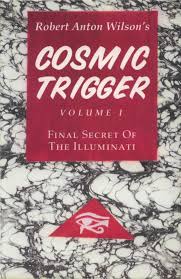
cosmicCosmic Trigger 1: The Final Secret of the Illuminati– Running in parallel to my lifelong interest in spirituality has been an equally lifelong interest in the paranormal and conspiracy theories. As a kid, I literally kept files of clippings and photocopies of articles on unexplained phenomenon- I recall UFOs, ghosts, ESP, Bigfoot, the Loch Ness Monster and several other topics each having their own file. I’m pretty sure Chris Carter owes me some kind of copyright infringement settlement. But what I’m actually here to talk about is how writer/philosopher/maverick Robert Anton Wilson spent his life tuned in to the intersection of conspiracy theories, the paranormal, mysticism, science and religion. And from that, he produced (among many other things) this delightful volume that asserts nothing, implies everything, and encourages the reader to keep an open mind. I’m basically the perfect target audience for this book, and upon reading it in my mid-30s, the paranoia that is the birthright of Gen-Xers like myself somehow turned to profound amusement, and I’ve never looked at things in quite the same way again.

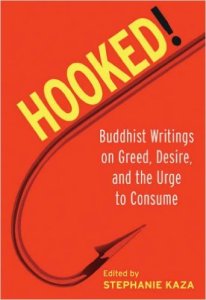
hookedHooked: Buddhist Writings on Greed, Desire, and the Urge to Consume– This book is actually a collection of essays that addresses the unrest without (consumer culture, capitalist excess, environmental degradation) and links it to the unrest within (addictions, greed, spiritual dissatisfaction). It turns out that Buddhism has been keyed in to this essential human difficulty in experiencing “enough” the whole time, and the voices collected in this volume have a lot to say about possible ways forward through our modern dilemma. Reading this as I approached 40 really helped me see where my decades-long interest in Buddhism could directly speak to both my internal unrest and the unrest of the world whose future I increasingly fear for. In a dark age, it’s important to remember that there are deeper forces in the world, and there’s a chance that our karma may be in the process of working itself out.

And that’s the ten books that have most influenced my spiritual development (so far). I would love to hear some of yours!


Four things I’ve avoided by not writing about the 2016 election until now

Capture

I’m going to be breaking from my usual themes occasionally over the next year to talk about the presidential election. I really can’t help it, I’ve been a political junkie for actually longer than I can remember- my mom tells me as a three year old, I was fascinated with watching “the Watergate” on TV. My promise in my coverage: I have my leanings (solidly Democratic). But my analysis will be fact-based, to the chagrin of both leftie friends and rightie friends. You can look back at my postings from 2012 to get an idea of what that will look like.

However, to keep it in synch with my more usual blog themes, this first entry will be in the form of a list. The thing about Presidential politics is, there’s a lot of noise in media coverage that tends to drown out the signal. Before Nov. 1 of the year before the election, it isn’t even worth paying attention to, really, because the early speculation is based on so little, empirically, and early numbers aren’t indicative of much of anything. Here’s a few things I’ve been able to avoid talking about by not writing about it until now:

1. 4 whole candidates! First, and in an originally 22-candidate field, the value of this is not to be overlooked, by waiting I’ve avoided having to talk about Chaffe, Perry, Walker and Webb at all! Especially relieving, because I would have thought Walker had a decent chance at the Republican nomination, so it’s nice not to have to endure the daymare that would have been.

2. Joe Biden. I love Uncle Joe! Always have. He was actually one of my two preferred candidates at the start of 2008 (the other was Bill Richardson, which goes to show you what I know). But it would have been a long shot for him, and explaining that to people imbibing the latest media narrative would have grown tiresome. Now I don’t have to!

3. Arguing about Bernie Sanders. I actually can’t win with Bernie. My small cadre of rightie friends starts in on the whole tired socialist trip whenever I talk about Bernie. And my Progressive friends call me a cynic when I try to talk realistically about his chances (which have been, and remain, low according to every reliable indicator). Then I have my mainline Democratic friends who try to convince me that Bernie is worthless or even dangerous and Hillary is golden. By not writing about the election until now, I’ve at least had some break from this argument.

4. Dismissing Trump. My early take was that he would be gone before voting started, and certainly would not be in the top three by Super Tuesday. I’m glad I didn’t have a chance to write more about this, because I’m starting to question my premise. Nate Silver at 538.com, who I put a lot of stock in, still thinks Trump is ultimately doomed, because he’s so unpalatable to the party power brokers, and they have numerous opportunities in the process to derail him one way or another. It’s a solid argument. But, now that he’s been in the lead for three and a half months straight, is polling first or second in the three first primaries, and actual voting starts in 90 days, I’m a little less sure. I still don’t expect him to be the nominee (my current best guess is Rubio), but he’s actually in this thing for real.

More to follow!

A Brief History of the “Freak” Song

My earliest memories of budding romantic-sexual awareness at grade school dances are punctuated again and again by one thing: the “Freak” song. Having been raised in its Golden Age, I’ve always been interested in its development. So here, from our occasional department of musical obsessions and listomania, is a brief history.

Le Freak (CHIC, 1978) This is sort of the prelude to freak songs, and also marks a vital pivot point in the musical use of the word. There’s still a sense here of the counterculture psychedelic trip sense of “I’m freaking out, man!”, but there’s also feeling the rhythm and checking the ride with a foxy lady at Studio 54.

Super Freak (Rick James, 1981) And now we come to the granddaddy of the whole movement. Here it’s still the scene that’s a little freaky (with the whole incense, wine and candles and what-not) but it’s mainly that she’s a freak through her sexual adventurousness. Also, this song makes me mourn the Rick James we might have had if crack hadn’t taken over.

Freak-A-Zoid (Midnight Star, 1983) We might have stopped with Rick James, and for two years we did. But then Midnight Star came along to tell us that they’d be our Freak-A-Zoid if we’d just wind them up. Thanks guys! And along the way they sparked a freak song revitalization. Thanks again!

Freakshow on the Dance Floor (The Bar Kays, 1984) Whereas the freakiness in the Midnight Star song was overtly sexual, we’re here back to getting freaky on the dance floor, kind of like in the CHIC days. However, there’s also a sense now that we’re the freaks, who are being called to get down as one big Freak Nation.

Freaks come out at Night (Whodini, 1984) Again, the freaks here are mostly dance freaks. When they come out at night, it’s to the dance floor. Although the song does allow that they’re breaking hearts, are real good lovers, and also always have at least one glove, which I don’t think means mittens in this case. This song is also significant in that it brings the freak song into the realm of hip-hop, which sets us up for…

Freaky Tales (Too $hort, 1987) And here we are, at the apotheosis of the freak song. No 60s freak-outs here, no dance floors, just pure NC-17. You shouldn’t listen to this if you’re at work. Or around small children. Or, probably, if you’re a woman. Maybe not even if you’re a man. When you do listen to it (c’mon, you know you will) you’ll see right away why the freak song couldn’t go any further.

These are the highlights, but I may have missed one or two. Let me know if you have anything to add to the list. And Freak Out! In whatever sense of the word suits your fancy…

A Brief Documentary History of Punk Rock

clash

I’m a music geek. I’m a total geek for lists. I also love documentaries. And history. If only there was some way to combine all of these. Wait– THERE IS!

Without further ado, I present you here a brief history of punk rock through documentaries, suitable for the audiophile, cinephile, and home-schoolers doing a unit on popular music. Note that these are presented in order of where they fall in the history of punk’s development, rather than when the films came out.

End of the Century: The Story of the Ramones (2003, Jim Fields and Michael Gramaglia) Often lost in the mix of its subsequent history is the fact that Punk actually started in the U.S.. Here’s the story of one of the first punk bands, highlighting the long shadow they cast on both sides of the Atlantic.

The Great Rock ‘n’ Roll Swindle (1980, Julien Temple) It may have started here, but it was in the U.K.that punk burst into the public consciousness, and there wasn’t a louder source of the P.R. burst than the Sex Pistols. This documentary of their rise and fall is set apart by coming from the era, and being itself a punk pastiche of sound and vision. 

The Filth and the Fury (2000, Julien Temple) Twenty years later, Julien Temple came back to do a more conventional (and thorough) documentary on the Sex Pistols. It lacks the verve of his earlier film, but makes up for it in accuracy, and really puts the band and the Punk movement in a wider context. 

The Clash: Westway to the World (2000, Don Letts) This documentary does a similar kind of treatment for the Clash. If the Pistols were the brains of U.K. Punk, the Clash were the brawn. Or maybe exactly vice versa… Either way, Letts makes great use of performance footage, interviews and news clips to remind you why it wasn’t purely hubris to call the Clash “the only band that matters”.

The Decline of Western Civilization (1981, Penelope Spheris) The funny thing about influence is, it runs both ways. If the Ramones helped jump-start U.K. Punk, U.K. Punk equally fed back into the scene in the U.S.. Heavy on live performance and interviews with the bands themselves, Penelope Spheris’ powerhouse showcase vividly brings the LA Punk scene of the early 80s to life.

We Jam Econo (2005, Tim Irwin & Keith Scheiron) From the general to the specific, this film hones in on The Minutemen, one of the more unique bands to come out of that Southern California scene before their highly literate, political and musically eclectic mix was brought to an end by their front man’s premature death just as they were on the verge of wider success.

American Hardcore (2006, Paul Rachman) Who the hell needs wider success? In the course of the 80s, LA Punk became LA Hardcore, and similar scenes popped up around the nation. This film chronicles the development of the nationwide scene, and makes a persuasive argument that Hardcore Punk was the only functioning political opposition in Reagan’s America.

1991: The Year Punk Broke (1992, Dave Markey) One thing about American Hardcore is that it ends the 80s on a distinctively downbeat note- a la the scene is gone now, and the kids all suck. This 1992 documentary puts the lie to that kind of defeatism. It chronicles a tour by Sonic Youth and the bands they brought with them, including priceless footage of a fledgling Nirvana, and is a reminder that, even as Punk flamed out throughout the 80s, it was giving birth to an alternative music scene that still had a splash or two left to make.

This list will get you going, but there’s more to discover. And I’d love to hear some that you recommend!

What I’m reading: August edition

litcat

In 12ish years of attending writing workshops, writing conferences, and reading umpteen “so you want to write” articles, I’ve seen a lot of advice for writers slosh through. The three pieces of advice I most consistently see reflected for aspiring writers are:

  1. Keep a regular journal
  2. Get in to a feedback group or other community to support and review your writing
  3. Read

I’ll check in on the third now, with a list of what I’m currently reading (and why).

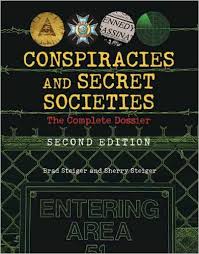
conspiracies Conspiracies and Secret Societies (Brad and Sherry Steiger) This is on my Nook. I like to have a paranormal type book on there at all times for lights-out bedtime reading. You get more interesting dreams that way. Since this is basically an encyclopedia, it’s custom-made for reading an entry or two a night.

Qur'anHoly Qur’an I like to be reading a sacred text at any given time, in order to stay tuned in to the transcendent wavelength. I’ve done this for years, and this is my second time through the Qur’an, this time in digital version.

meetIf You Meet the Buddha on the Road, Kill Him! (Sheldon B. Kopp) I find it useful to have a spiritualaic book for brief morning as well. These days, that means it’s in my car, for a quick few minutes of centering before heading in to work. This was recommended by a friend in recovery, and I’m really appreciating it!

JLA 5JLA: Volume 5 (Mark Waid, Bryan Hitch, Paul Neary) At any given time, I’m also reading a graphic novel of some sort. There are all kinds of complex very adult graphic novels one could be reading. Not for me- I want my superheroes. Comic book geek for life, yo! And the heroes don’t get any bigger than the Justice League.

MuahmmadMuhammad: A Prophet For Our Time (Karen Armstrong) This is my “main” book. I try to rotate between fiction, non-fiction and spiritual. We’re on to the spiritual rung in the cycle now, and I’ve read and admired several things by Karen Armstrong, so I was eager to see what her brief biography of the man behind the origin of Islam would be like.

GraceThe Grace of Kings (Ken Liu) Shout out to the Geek Mountain State Book Club! This is our next next book, but it’s so long I wanted to get a jump on it. We’d read Ken Liu’s translation of a Chinese sci-fi novel a few months back, so I was intrigued to see some of his original work. This is his fantasy take on an alternate-world version of China’s Warring States period, and so far it is excellent!

lostThe Lost Symbol (Dan Brown) This is what you might call my “bathroom book”. Strictly speaking, it can also be read for a few minutes in bed before turning out the light, at the beach, on train rides, etc. So, no hurry to get through it. But, being Dan Brown, it is a rapid page-turner whenever I do pick it up.

How about you? What’s on your current reading list?

Five reasons you shouldn’t be afraid of (Literary) Rejection

kamikazeI think a lot of us let fear of rejection keep us from taking the risks necessary to move toward our goals. I am certainly no exception. This doesn’t only apply to literary endeavors, of course. And I still work on it in many areas of my life. But one area where I absolutely don’t sweat it anymore is literary rejection. If I want to get published, I need to submit. If I submit, I’m going to get rejections. It’s just the price of admission. And, fortunately, it’s not so bad. Here are a few things I’ve learned in the course of submission and rejection that help soften the blow. I hope they encourage you to get your writing out there:

1. It’s not personal. Some of the fear comes from the idea of receiving an ego-destroying comment in the dismissal. In reality, you probably won’t receive enough content for your ego to latch on to in any form. Here’s a rejection I just received, stripped of the identifying information:

Dear <X>,

Thank you for sending us your work. We appreciate the chance to read it. Unfortunately, the piece is not for us.

Thanks again. Best of luck with this.
Sincerely,

<Y>

Since being on the accepting/rejecting side of the equation as the Poetry co-editor with Mud Season Review, I’ve actually developed a lot of sympathy for this. For most of the places you’re submitting to, sheer volume doesn’t allow for personalized response. They won’t have time to get nasty!

2. You may not hear back at all. I’ve been keeping stats on my submissions since 2008. So far, I have not heard back on around 28% of my submissions. Some of these are from the last 12 months, so they’re probably still in the consideration pipeline. But many of them are years old. I figure they probably aren’t going to get back to me if they haven’t by now. It isn’t good form on the literary journal’s part, but it does happen. Once again, no ego-damaging blow. Although the eerie whistling void can be just as unnerving…

3. Because of #1 and #2, when you do get feedback, it’s usually good. In between the form responses and non-responses, when they do feel moved enough to respond, it’s probably because there’s something about your submission they responded positively to. I’ve come to really appreciate the “this is strong, but not quite there”, “it was a semi-finalist, and we encourage you to submit again”, and “it felt like aspect X could have been developed a little more”, Not quite as encouraging as an acceptance, but these kinds of responses do keep me going.

4. It’s tough for them too. More than once, I’ve gotten an e-mail, or (gasp!) a piece of real mail, that I thought was a rejection notice. Instead, it was a literary journal thanking me for my support and reporting that they, sadly, are folding up shop. Or even soliciting me for donations! There are some journals that are hot right now, and other marquee names that have been around for decades. But, more commonly, lit mags and journals are underfunded labors of love run by unpaid or lightly paid staff, doing this because they believe literature matters. Which is what you believe as a writer too. It can feel like we’re the plucky stowaways trying to sneak aboard their luxury liner. But it’s more often like we’re all in a leaky rowboat together.

5. You can do surprising things with semantics. I mean, come on, we’re writers, right? At a certain point, the “rejection” tally on my tracking sheet started to bum me out. Not the number of items under it, but the word “rejection” itself. So I changed it to “nonacceptance”, which felt a lot more value neutral. This has worked for a surprisingly long time, but it’s starting to lose some of its effectiveness. I may change it again soon. “They missed the boat on the greatest lightly published writer of his generation” is a little ponderous, but something like that. I’ll keep working on it.

How about you? What have you found that helps lighten rejection’s stinging blow?

Five Things I’ve Learned as a Poetry Editor

In May of last year I started working on the Mud Season Review, a new online (and soon coming out with our first print edition!) journal. The journal is an outgrowth of the Burlington Writer’s Workshop, itself a fantastic community resource for writers here in my new homeland. The journal strives to bring some of the workshop’s sense of writers supporting and in dialogue with each other into the literary journal format, and I’m super-proud of what we’re doing.

I started out as one of two Assistant Poetry Editors, responsible for reviewing what’s passed on by our readers, and then participating with the senior editors in their final decision process. Through various perambulations, I’ve now become a poetry Co-Editor. Having spent a lot of the past few years on the “submitting” side of the process, it’s fascinating to now be on the other end, and I wanted to pass on a few key things I’ve learned to my fellow submitting poets out there:

1. It is such a high-volume business, rejections don’t (necessarily) mean you’re bad: I get discouraged by my literary rejections sometimes, for sure. And I knew, intellectually, what the numbers were like. But now, from the other side, I really appreciate it. In the six months since we started, we’ve had around 570 poetry submissions, usually of 3-5 poems each. And we’ve put out five online editions so far, with maybe 5 poems in each. Math tells me that (5*5)/(3*570)= 25/1,710= 1.47%. The numbers for Mud Season Review are not atypical-many journals publish more pieces, but they also get more submissions per issue. In other words, your poem could be in the top 2% of submissions an editor is receiving and still not make the cut-off of what they have room to publish.

2. You need to bring your best work-every detail matters: See above- given that you can be in the top 2% of what a journal receives and still miss the cutoff, what you submit needs to be your very, very best. Send your favorite poems, not your “maybe this will work”. First (or even second or third) drafts probably won’t get you there. That misspelling that you missed, or awkward line that you know doesn’t quite work, but it probably doesn’t matter? It might. Knowing this now has actually sharply re-focused me on the quality of submissions I send out.

3. Form is really important: By which I mean the physical form of the poem. Having read literally hundreds of poems every month, I’ve noticed that one of the primary things that can throw me off is the format of the poem. Even if I really like the poet’s voice, and am intrigued by the content and appreciate the imagery, word choice, etc., a physically difficult format can keep me from connecting with it. Things like line breaks, regularity of structure (even if the structure itself is unorthodox, does it at least have internal consistency in how it’s working?), and spacing or other devices to keep the flow of reading going make a big difference. Again, knowing this leaves me chastened about some of my submissions over the years, and has got me thinking about how I can improve.  

4. Your cover letter probably doesn’t matter, so don’t spend too much time on it: We use Submittable, which separates out the content (i.e. the poems) from the personal note or cover letter that accompanies them. So as not to prejudice my reading, I usually don’t look at the letters until after I’ve read, ranked and made my comments for the team. Talking with the other editors, they generally do the same. This is not to say that I don’t appreciate a good cover letter, but it’s not going to influence my read, so it shouldn’t be a major focus of your time and effort. Short and sincere will probably more than do.

5. There are a lot of really good poets out there: Since I wasn’t a first-line Reader, I didn’t read all of those 1,700 poems myself. But I did read a significant number of them, and it turns out there are a lot of really good poets out there. And they aren’t necessarily the established poets. I won’t name names, but I have often appreciated the work of new or lightly-published poets over people with impressive-looking credentials. Since it is such a numbers game (see #1 above), you may need to submit a lot to get your work out there. But don’t give up- there are so many good poets whose work deserves to be read. You could be one of them!


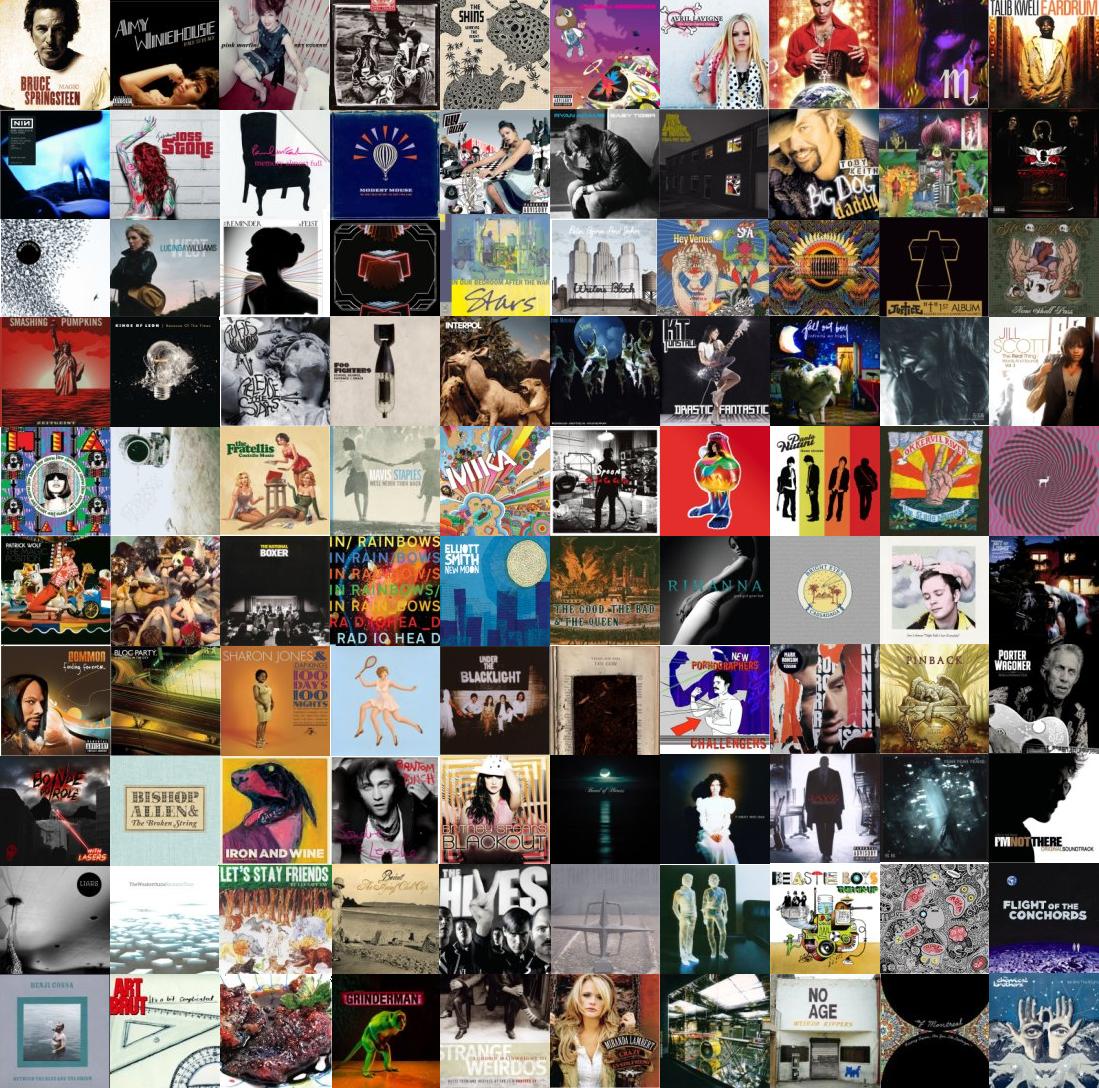
Revisiting the 2000s: 20 albums (11-15)


For me the 2000s were a musical “lost decade”. And what does one do with what is lost? Find it! And so I set out to identify and review 20 of the top albums of the decade that I had heretofore missed. You can read the Intro to see how I compiled my list, and then my reviews of albums 1-5 and 6-10. And next up? Well, 11-15, of course! Highlighted in yellow below…

Animal Collective, “Merriweather Post Pavillion” (3)
Arcade Fire, “Funeral” (7)
Beck, “Sea Change” (5)
Daft Punk, “Discovery” (4)
D’Angelo, “Voodoo” (3)
Eminem, “Marshall Mathers LP” (3)
Interpol, “Turn on the Bright Lights” (4)
Jay-Z, “The Blueprint” (6)
Kayne West, “Late Registration” (4)
LCD Soundystem, “Sound of Silver” (6)
Madvillian, “Madvilliany” (3)
MIA, “Arular” (3)
MIA, “Kala” (4)
Outkast, “Stankonia” (6)
Phoenix, “Wolfgang Amadeus Phoenix” (3)
Spoon, “Kill the Moonlight” (3)
Sufjan Stevens, “Illinois” (3)
The Flaming Lips, “Yoshimi Battles the Pink Robots” (3)
TV on the Radio, “Return to Cookie Mountain” (3)

Wilco, “Yankee Hotel Foxtrot” (8)   

Madvillain, “Madvillainy” (2004, 3 votes)
If you start off your album with a two minute collage of supervillains from movie serials, it’s pretty much like you’ve slipped me a twenty for the review. Track two, “Accordion”, seems to feature one. I’m also appreciating how they pronounced the “w” in “swords” to make a rhyme work, and justified the accordion. Next thing to love: average song length of two minutes! A good deal for anyone, and a miracle in a hip-hop album. I’m really liking this so far- spare beats, restrained sound effects, and the ongoing supervillain subplot. It reminds me, in a good way, of the conscious hip-hop of the 90s that gangster drove off the radio and practically out of existence. It’s a really clever use of some classic soul & jazz samples, sound effects and news and media clips to back lyrics that have something going on and aren’t wall-to-wall violence and misogyny. All of which, in track 6 “America’s Most Blunted” gets us an ode to how weed helps creativity. These guys are practically hippies! So far I’d have to say that this doesn’t aim as high, or get as dangerously personal, as the best albums from this list so far. But it’s more consistent, and fun to listen to, than almost any of them. This is the kind of album that would lend itself to heavy rotation. “Shadows of Tomorrow” track 12 is delivering a meditation on the relation of past & present & future. I think I’m getting this album- it’s like the musical equivalent of the conversation that follows getting stoned while watching Mystery Science Theatre 3000. Which explains why I like it so much! And track 15 “Hardcore Hustle” is turning into a manifesto on making music that’s not crap- take that 2000s! The next one gets political/philosophical about terrorists just being tools of those in power, part of the same old game, and the next track is a more personal post-breakup song. Like the whole thing is opening up thematically, even as it relaxes the supervillain theme. Man, these guys are pretty good. My esteem for it is growing by the track. Although I am sad that they have a song titled “Rhinestone Cowboy” that didn’t sample the original song. Stupid copyright laws… Still and all, if this isn’t one of the best things anyone turned out last decade, I don’t know what is.


M.I.A, “Arular” (2005, 3 votes)
First off, kudos to M.I.A., in fact, to anyone who would have the stones in the mid-2000s to begin an album with “In’shallah”. And then into the muscular metallic beats of the second track exhorting us to “pull up the people, pull up the poor.” This was like the 99% early, and with rap braggadocio spin and a reminder that she’s a soldier, a fighter, and has the bombs to make us blow. You really haven’t gotten much as self-consciously politically dangerous since Public Enemy, made even more edgy by its call-outs to the signs and symbols of the era of global terrorism. Which is great, but would get tiresome if it wasn’t working as music too. I’m really liking the spare production behind this, and the driving nature of her boom-boom delivery. I think it’s no accident that I mentioned Public Enemy a few lines back. Now track six “Amazon” is here, and has such layers of sound and dense lyrics while delivering a story about her being held for ransom with handclaps in the background. This is delightful! Nice laser sounds starting off track 7 too. I’m already mourning the fact that this is over in 6 more tracks. It’s getting more world beat in the middle, but I won’t hold that against it. And getting more personal, track eight “Hombre” is like a straight up sex you up number. Well, she’s thrown us enough substance at this point to earn it. In fact, on the comparative front, that’s what strikes me. This is as fun as Daft Punk or LCD Soundsystem, but with more substance, as tough as Jay-Z or Eminem, but with less bragging and beefs. Totally deserving to be near the top for the 2000s. I mean “Ten Dollar” seems to be about child prostitution, name checks “Lolita” and is delivered with a sound reminiscent of the best of mid-80s hip-hop. Come on! And it all comes together on the last track “MIA” into something like a manifesto. A manifesto you can dance to! Someone should give this woman (and this album) a medal.


M.I.A, “Kala” (2007, 4 votes)
Say what? “Bamboo Banga” is starting by lyric-checking “Roadrunner”. Not much music, as such, on this yet, almost more like performance poetry, ah and now we ease into it halfway through. A little more droney and repetitive than the last album. Also lighter, content-wise, as in empty of. Maybe I need to stop comparing and see if I can appreciate it for what it is. “Bird Flu” on track two is much more musically experimental than anything on “Arular”. And I don’t like it. (Yes, I’m failing at not comparing.) Allright, track three “Boyz” has some more dynamic beats and soul samples, but her lyrics are still a little chanty and monotonous. And the lyrics are also a little, “eh, so?” Track four “Jimmy” now has the music and the vocals going for it. Still a little content-lite compared to “Arular” (it’s just a song about a boy) but at least the lyrics are starting to fire. Ah, here we go, track five “Hussel”. It finally has all three going for it- dynamic vocal, lyrical content and musical engagement. Five tracks is a while to wait for it, though. “Mango Pickle Down” is a beautiful strange thing, though, and her early 80s style rap on it is as unguarded as I’ve heard her on either album now. Yeah, it’s definitely into a groove now (ha, and sampling from New Order and lyric-checking the Pixies) on track 7 “Twenty Dollar”, and slipping in the line “I put people on the map who’ve never even seen a map”. So really, I just think I’d drop the first three tracks, start with four, and all will be well. As for “Down River” she’s politically feisty again, and sampling gun and typewriter sounds. That I can get behind. Even more so on next track, which is quiet and disquieting, and possibly remixing polka music. Then “XR2” which is maybe channeling the spirit of global rave culture. And now “Paper Planes” is getting ethereal and floating, with some shots, cash registers and “Straight to Hell” sampling thrown in for effect. Doing my AMG & Wikipedia research at the end, and reading that it was made with multiple producers and all over the world, it doesn’t surprise me that it sounds more scattered, musically and thematically, than “Arular”. Folks seem to like it better, which I don’t agree with, but, well, I’m a sucker for narrative. Isn’t some kind of through line important for an album? Still 10 out of 13 great tracks in a variety of styles is nothing to sneeze at…

Outkast, “Stankonia” (2000, 6 votes)
Live from the Center of the Earth? Seven Light Years below the surface? Which reminds me of Parliament and then goes straight into a series of sexual slurping sounds that could be straight out of Prince. Then they’re straight into talking about burning the American Dream on “Gasoline”. You know, the second interlude is straight out of Prince too. Oh, but then we start to slow jam into “So Fresh, So Clean”. I’ve got to say that makes a nice contrast to the political rage of the first song. These guys have range! Then “Mrs. Jackson”, a seemingly heartfelt mea culpa to the baby mammas and their mammas. That’s their words, not mine. Hey, and I just spotted a Kanye West sample, which makes sense, because the lyrical strength and musical sophistication here remind me of him. I wonder if he had a part in production here, or just followed their lead? By track 6 “Snappin’ & Trappin’”, we’re down in some gangster material thick with paranoia and a weird warbling sound effect in the background. Got to say I really like these guys so far, a quarter of the way in. Oh, and a “My Adidas” call-out on the otherwise darkly-inflected “Spaghetti Junction”. The next interlude and track actually gives the female voice some equal time, a rarity in 2000s hip-hop for sure. (Though admittedly, with its October 2000 release date, this album is more like 90s afterburn.) After which “B.O.B” gets fast and furious and brings up the Gulf War before Iraq II started. The next track is on to talk of hand grenades and homemade bombs. Pretty interesting given that this is all pre 9/11. I do like my artist as prophet. Then on “We Luv Deez Hoez” we get the artist as womanizing misogynist. Oh, boys… Which gets fully redeemed on “Humble Mumble”, half social critique and half silly rhyme play. Like I said earlier, these guys have range. They also have a good sense of sequencing in terms of sounds and themes, aka this is a really honest-to-goodness album. I like to think the next track “Red Velvet” is actually about cake. Not sure if I’m able to follow enough to tell, but they did just name-check Bill Gates. The interlude that follows is probably the first time a rap song featured the shout “break” since 1987. So, wrapping up now (track 20 of 24), where are we? I feel like this is either a gangster rap album with some uncommon self-reflection and mirthful musical inventiveness, or a conscious hip-hop album gone gangster. Either way, it doesn’t sound like everything else and I really like it. Oh, even more now that “Toilet Tisha” has chilled me with its heartfelt anguished tale of suicide. Which they knew to follow with a slow jam, a skit, and a gospel finale. I’d definitely put this toward the top of what I’ve listed to so far. Which is nice to be able to do since it’s the last hip-hop album in the mix. Well done 2000s hip-hop, well done…


Phoenix, “Wolfgang Amadeus Phoenix” (2009, 3 votes)

Well, I have to say this is a pleasant surprise. Based on the knowledge that they’re an indie band, and the self-consciously smart title, I was expecting something that would be like a lot of 00s Indie Rock: droning and bleary, or experimentally over-arty. Whereas “Listzomania” actually made me happy and had my head bouncing from the first second. This was more of an instant “like” than anything I’ve heard so far on this list. Definitely New Wave influenced, as a lot of the 00s Indie scene is, but not in a way that sounds like a day-glo mausoleum of the 80s. There are lyrics. Fairly dense lyrics. I think they mean something. But I don’t care because the surging Neo-New Wave rock is so much fun to listen to! Four tracks in now to “Fences”, and this is something I could picture listening to a lot. It certainly reminds me of things- Tegan and Sara’s “So Jealous”, Pretty Girls Make Graves, the Postal Service. And those are all things I like too. So it does appear, after all, that the Indie scene has somethinggoing for it. I’m sending that this probably doesn’t get to the profundity of Arcade Fire or Beck, but I don’t care! Listening to it makes me feel like a teenager waiting for my favorite moment in my new favorite song. Whoa-whoa-whoa-what? They’re French? Mon dieu! Goes to show you how accurate my prejudices are. Well done, continentals, well done.   

Next stop-albums 16 through 20!

Revisiting the 2000s: 20 albums (6-10)

Welcome to the next installment of my excavation of the 2000s, a musical “lost decade” for me. The Intro and Part I (with the first five albums) can be found here and here, but to briefly recap, I scrolled through a cross section of nine reputable and varied “best of the decade” lists, and compiled a list of those albums that got mentioned as “top 25” in at least three places. After eliminating ones I already had, or knew wouldn’t work for me (sorry, Radiohead, Strokes, Coldplay), I was left with 20 albums from 2000-2009 that I never got around to and (according to my sources) deserved a listen.

Part I covered the first five, highlighted in blue here. Today we’re doing the next five, in yellow. All reviews were written live upon listening to the album for the very first time. And with that, we’re off!  

Animal Collective, “Merriweather Post Pavillion” (3)

Arcade Fire, “Funeral” (7)

Beck, “Sea Change” (5)

Daft Punk, “Discovery” (4)

D’Angelo, “Voodoo” (3)
Eminem, “Marshall Mathers LP” (3)

Interpol, “Turn on the Bright Lights” (4)

Jay-Z, “The Blueprint” (6)

Kayne West, “Late Registration” (4)

LCD Soundystem, “Sound of Silver” (6)
Madvillian, “Madvilliany” (3)
MIA, “Arular” (3)
MIA, “Kala” (4)
Outkast, “Stankonia” (6)
Phoenix, “Wolfgang Amadeus Phoenix” (3)
Spoon, “Kill the Moonlight” (3)
Sufjan Stevens, “Illinois” (3)
The Flaming Lips, “Yoshimi Battles the Pink Robots” (3)
TV on the Radio, “Return to Cookie Mountain” (3)
Wilco, “Yankee Hotel Foxtrot” (8)

Eminem, “The Marshall Mathers LP” (2000, 3 votes)
Eminem is one of those people who I always enjoy when I run across their work, but have never actually gone the next step to getting an album. Until now, I guess. And already, after the opening PSA informing me that Slim Shady does not give a fuck what I think, and the dense menacing kick-off of “Kill You” I’m glad I did. It’s pretty great, how this rant is simultaneously frightening and yet frightened, in the character of Slim Shady and yet questioning that character, and then ending with “I’m just kidding.” Then “Stan”, which I was already familiar with, and remains one of the most chilling things ever committed to record (yes, in my mind, music is still committed to record). I mean damn, an artist writing a song in the voice of an obsessed fan who takes that artist’s violent imagery seriously, over a remixed bed of Dido. Dude, doesn’t do black music, doesn’t do white music, does fight music! In fact, the whole thing is full of the braggadocio, swagger and threat of hip-hop at its best, but full of an anxiety about the effect of that projection that is half genuine and half self-justification. Which is track seven, “The Way I Am” to a T. “The Real Slim Shady”, track eight, is bringing back one of my favorite Grammy memories, when he performed this as like, a hundred Eminem look-a-likes with microphones flooded the auditorium. One of the best moments to every happen in that mausoleum of musical mediocrity. “Remember Me”, track nine, even seems to be sampling horror movie voices, as if there wasn’t enough menace in its rant already. And on track eleven, “Marshall Mathers”, is the mask slipping, revealing the real guy behind Slim Shady, with all his insecurities? Or is it in itself a construction, a put on? Something that can even bring up these questions makes me happy. And the reason this track works, the whole album works, in fact, is because there’s clever musical mixing and vocal delivery behind it all, giving us a layer of entertaining to go along with the heavy and occasionally vile contents. I’m digging on “Drug Ballad” too, which is equal parts celebratory and cautionary on drugs. In other words, what an actual addict’s mind sounds like once the doubt has begun to creep in. And how am I not going to love a horror rap whose tag line is “Mentally ill from Amityville”? Ah, and now “B**** Please II” gives us the two sons of Dre together, Snoop and Eminem. Nice. Then “Kim”, a fantasy of kidnapping his ex in front of his baby daughter and driving her off to kill her that may be one of the most frightening things I’ve ever heard in popular music. Okay, by track seventeen the “suck my dick if you don’t like it” is getting a bit old. But I think it’s a testament to artistry that an hour+ of resentment and boasting doesn’t wear thin sooner. And the last track, “Criminal” dives right in to the am I serious/am I not, I’m a criminal/I’m just kidding. Overall, definitely a keeper.               

Interpol, “Turn On The Bright Lights” (2002, 4 votes)
(Full disclosure: on review, my iPod seems to have put these tracks on shuffle rather than playing the album in order. My apologies to readers, and Interpol, if this affected my ability to discern artistic intent.)

While I’ve been painstaking in not reading about these albums beforehand so as not to prejudice my reviews, I was aware of Interpol by general reputation. You know, Second Coming of Joy Division and all that. Which immediately begs the question: isn’t the First Coming enough? Nevertheless, I’ll try to deliver a fair assessment here. First off: “untitled”. Actually kind of soft and gauzy, doesn’t remind me of Joy Division as much as soft-boiled Coldplay. “Obstacle 1” isn’t bad, with some driving rock sound, and vocals that remind me of, of all things, the Killers. Also not sure of the significance of this, but this song is talking about what “She” did, whereas I think JD is usually more personal, talking about what “You” did to “Me”. Track three has more of the shimmery Coldplay B.S., but with a driving beat and the vocals hitting a peak of bitterness and resignation that pulls it out. Apparently, as the song would have it, “Stella was a Diver and she was always down”, man I really am digging this one. “Roland” is much more in Joy Division mode, so I see what people mean. But it also has a strong layer of, well I don’t know what else to call it- 2000s indie rock in its New Wave infatuation subset- sound to it. I wonder if this album was more like chicken or egg to that phenomenon? Given the 2002 release date, I’m betting on its being causal rather than following, and that alone is noteworthy. “NYC” is a better post-9/11 New York elegy than the Strokes, I think. Ah, and this is where the album title comes from too. Well, so far I can say I don’t hate it. It won’t get you listening as closely as the Beck, the best Hip-hop albums from this list, etc. But it doesn’t grate in mediocrity either. I think it might be like Daft Punk’s album- a good fit for a mood, and going down smoothly when you’re in that mood. I do want to know more about the 200 couches where we can sleep tonight in “PDA”. Another thing about this album that’s coming out strongly in “Say Hello To The Angels” is that, in contrast to the studied grimness of the lyrics and vocals, the music can be rather poppy and is informed by some of the bounciness of New Wave. New tag line: at its finest, there are moments on this album, like Leif Erickson” that are wonderfully disquieting. For the most part, though, it feels more deliberately produced and less emotionally genuine, and ends up in a kind of “nice background music that nobody could object to” Coldplay territory. In my developing rating nomenclature, I would call this a Good/Good-. And the fact that so many critics thought this was a superb album? Well, compared to the masses of dreck that they have to listen to, it surely is. But compared to the truly sterling?             

Jay-Z, “The Blueprint” (2001, 6 votes)
Hip-hop is a particularly blank spot for me in the 2000s. I’m a big fan of the 1985-1995 “Golden Age”, but after that my knowledge drops off rapidly. And Jay-Z is a blank spot for me within 2000s hip-hop- I know the kids I was in rehab with at the end of 2006 loved him, but that’s about it. So I’m looking forward to this review increasing my knowledge, if nothing else. First impressions? You’ve gotta like an album that starts off thanking you for your purchase, which track one “The Ruler’s Back” does. Also nice use of musical sampling, what sounds like some soundtrack selections and a classic soul riff in there too. Seriously, track two “Takeover” is sampling the Doors? Love it! Nice strong beat too, almost reminds me of the metallic beats I so loved from 80s hip-hop a-la Run-DMC, Public Enemy, LL Cool J’s first album, etc. I can certainly hear Kanye West’s production influence here, and the things I really like about his first album I also like about this- clever use of sampling, variations of tempo and pacing that avoids the droning sound badly produced hip-hop can get in to, the braggadocio backed up by intelligent lyrics. “Girls, Girls, Girls” for example, is the kind of cock-boasting you might expect, but with such great soul-sampled hooks and funny twists of phrase that it gets away with it. This album definitely does the obsession with feuding with other big rap names and super-materialist trip that I don’t especially dig about East Coast rap, but it’s so far pretty free from gangster bullshit, which is nice. Oh, well it was until track six- “You Don’t Know”, which could be seen as critical commentary of inner city life, but is on the edge of celebrating it too. Damn do I love it musically, though! And Hola’ Hovito is getting points from me for the Hispanic call-outs. Track eight, “Heart of the City” is a beautiful thing to behold, too, at once existing in, and criticizing, the trash-talk between hip-hop artists. Track nine, “Never Change” is a nice mellow slow jam, and is also making realize that one thing I haven’t been for one second so far in this album is bored. Also, as I listen more closely, I’m realizing it’s a mellow slow groove about carrying guns and living a life of crime because, hey, I’ll never change. Hmmmm. Then “Song Cry” is a breakup song that understands how the woman wants out, while still calling her “the bitch”. Oh hip-hop… I don’t imagine he gets away with that with Beyonce these days. So far I’d say I’m 110% with this album in terms of music and production, and 75% with it in terms of lyrics and intention. That’s still 92.5% on average, so there you go. Certainly digging the Emminem guest appearance on “Renegade”. And then there’s the last track, “Blueprint”, where all the boasting and self-promotion just evaporates and is replaced by a heartfelt tribute to his family. Mighty fine way to finish.

Kanye West, “Late Registration” (2005, 4 votes)
Given how much I loved, loved, motherfuckin’ LOVED “The College Dropout”, I’m expecting to get along well with this album. And indeed, I’m loving the lead-in “Wake Up Mr. West” with the blow-hard Professor/Dean type from the skit going immediately into the explosive beat of “Heard ‘Em Say”, which then fades into a slow R&B grove with keyboard sounds tinkling in the background. Also nice to hear on “Touch The Sky” the standard hip-hop “I made it/I’m on top of the world” trope delivered with heavy helpings of gratitude and wonder. And a good time party vibe! And then “Gold Digger”, which I knew, but didn’t know was on this album. Nice little misogynist ditty. Or is it? That’s the beauty of delivering a criticism of women behaving badly- is that pro or anti-woman? Both at the same time? And if it comes with this groovy a beat, how can you not bop your head along to it? As with his last album, the mix of braggadocio and vulnerable self-revelation, smooth flow, unapologetically intelligent wordplay and clever musical remixing of everything in the soul tool-bag just works. Boy do I miss this Kanye, versus the arrogant braggart we have now. Damn, “Crack Music” is like gangster rap turned inside out, drawing all the connections between the street drugs and the social and political setting that puts them there, and touting music as the community’s counter-attack. Then “Roses”, a heartfelt song about his grandmother in the hospital that rolls up into a scathing attack of the social-economic setting of unequal healthcare, and comes back down into the personal pain again. Seriously, hardly anybody in the last decade in any musical genre was able to tell lyrical stories that tackle as many issues, personal and political, while still ringing true. I’m proud that he’s my cousin. I mean, we haven’t traced out the family tree yet, I’ve always just assumed based on the name. And “Addiction”, damn. He gets it, that pursuing money, girls and weed is all about the same thing. And then mixing “Diamonds Are Forever” into a song about Blood Diamonds from Sierra Leone and linking that back to urban bling and his own complicity. They should have just named the whole decade after him. Also, it’s kind of nice to see him take out a whole track “Hey Mama” to talk about how much he loves his mother. I mean, who gets away with that? Hip-hop and Country, those are the only genres you can do that in. I’m really liking the “broke Fraternity” skit running between tracks too. Okay, nearing the end now, track 19 of 21. About the only thing critical I can say about this album is that it lacks some of the truly soaring moments of his debut, like “Jesus Walks” and “Never Let Me Down”. But considering that it’s not uncommon for a sophomore album to suck ass, saying that this one isn’t quite as awesome as its predecessor, well, that still puts him ahead of, oh, I don’t know- MOST EVERYTHING ELSE THAT CAME OUT THAT DECADE.

LCD Soundsystem, “Sound of SIlver” (2007, 6 votes)
In my mind, one of the biggest sins any song can commit is a slow start. Sometimes, if you’re engaged in some very atmospheric arty Pink Floyd or Deathcab for Cutie type-shit, I’ll allow it. But otherwise no. For Electronica, which already threatens to be boring by its very nature, this is a double-sin. All of this is a roundabout way of saying that track one on this album, “Get Innocuous!” is off to a very fine start. Immediately set in with the beat, developed some Bowiesque vocals later on, and is ending with a background refrain and break that reminds me of early 80s hip-hop. And some honest to goodness laser sound effects toward the end. So far, these cats are earning their reputation as the Electronica outfit that a rock fan can still love. Track two, “Time to Get Away” is starting with some nice fat 80s beats, and is kind of reminding me of a lost Prince song circa “1999”. Now on to “North American Scum”, which wins my sympathies on title alone. Ha, the whole thing is them trying to convince us they’re North American, not English. Love it! Not least of which because, in form and refrain, this is a rock song, handclaps and all. They’ve got the early 80s synthesizers out for track four “Someone Great”, and bless their furry souls for it. This really could be something lost in time from the American half of synth-pop New Wave, say maybe Missing Persons. Made it to track five now, “All My Friends” which is, gosh darn it all, a rock song as well. With a beat you can dance to! Halfway in now, I’d have to say the big difference between this and our earlier Electronica entry from Daft Punk is that this is more emotionally affecting. There are songs, like this one, that really evoke a mood (nostalgic regret and longing for the pre-mistake phase of a relationship gone bad, in this case) and get you interested in them lyrically. Not all of them (track six, “Us Versus Them” for instance, is having fun experimenting with cross-breeding 60s psychedelic garage rock and New Wave alienation, but isn’t doing anything personal), but more than Daft Punk, which was really like feel good party music, with clever twists, but no real attempt at depth. Oh geez, and the next track, “Watch The Tapes” could be like an artifact from the era when punk collapsed into synthesizer New Wave, kind of Gang of Fouresque with a dash of Wire. “Sound of Silver” (track eight I mean, eponymous with the album), in between early 80s beats and metallic handclaps, seems to be encouraging us to remember how vivid our emotions were as teenagers. Interesting… Okay, final thoughts as we hit the last track. This is definitely a cut above Daft Punk in terms of substance (while being no less fun and inventive), but I feel it’s not going for something real and true often enough, or showing enough cohesiveness as an album, to quite get to the league of the Arcade Fires, Becks, Emminems, Jay-Zs, etc of the list so far. Got to say though, ending with “New York, I Love You, But You’re Bringing Me Down”, a downbeat, somehow earnest while being tongue in cheek, paen to a city not quite as dirty and interesting as it used to be, is pretty fucking awesome.       

Stay tuned for albums 11-16…