Last year was the 50th anniversary of hip hop, and in honor of this anniversary, the idea bloomed in my mind that I should review the top 50 albums of that 50 years. As I crunched together a list from various sources, 50 proved to be too restrictive- many of the classics were getting squeezed out. So, to make a little more room, I opted for 100 albums, two for each of hip hop’s 50 years.
For its formative years, hip hop was a live entertainment form, with the first recorded singles not emerging until 1979, and the first albums in 1980. So my review will cover 1980-2023, with 50 posts of two albums each. The only ground rule I made for myself (besides looking for 2×50, aka 100, albums that were widely well-regarded) was that I had to have at least one from each year. As you’ll see by and by, some years get multiple albums, but since we have 100 spots for 43 years, it tends to all work out.
*June 2024 addendum: Due to some medical situations, I took a three+ month hiatus from blogging. It’s unlikely I’ll finish this series this year. But I’m back at it, and I won’t mind extending into 2025 if you don’t!*
And with that, let’s embark on our next installment!
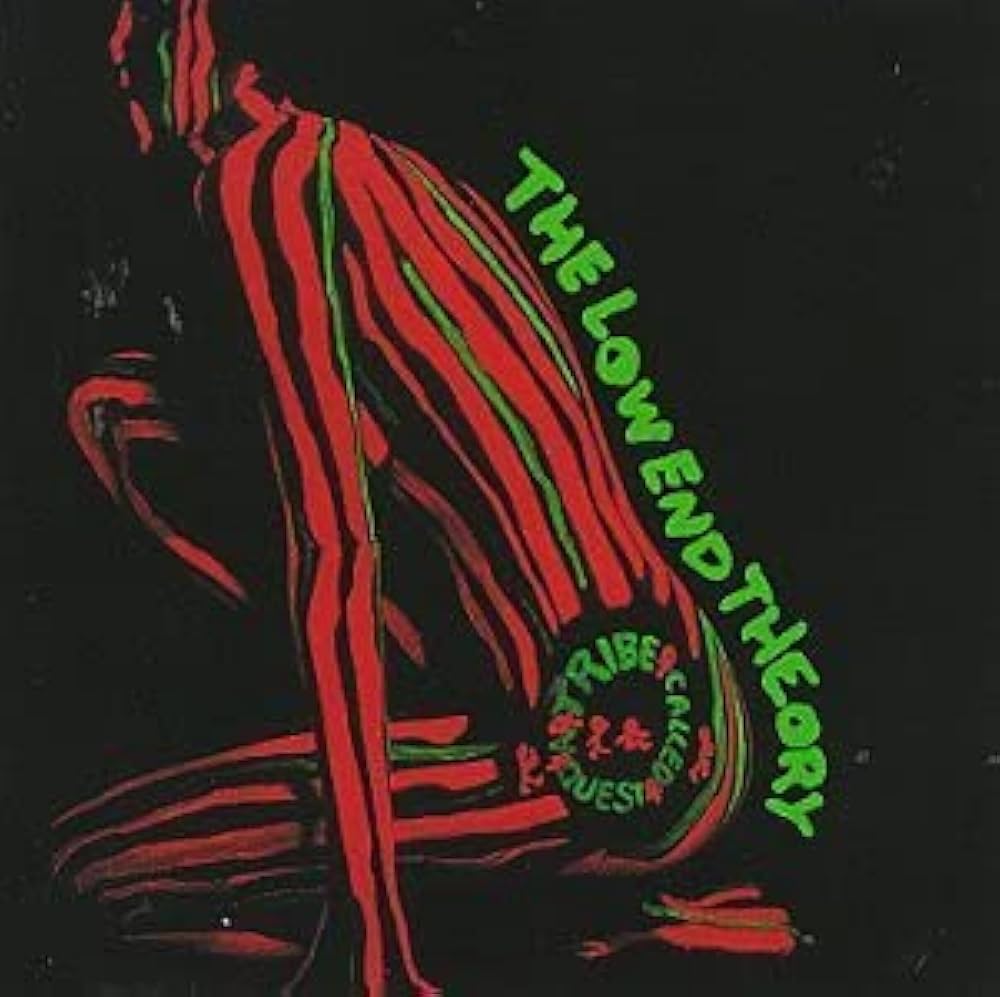
A Tribe Called Quest, The Low End Theory (1991)– They weren’t the first to do this, in fact we’ve had several examples so far in this list, but this album is a whole new level of jazz sample-fueled hip hop. More than that, it consciously seeks to link the genre to the larger history of Afrocentrism and Black music in America, and to use that history to critique the ways the contemporary industry isn’t measuring up to the social and political legacy of the music. All of that might be a bit heavy, except it’s delivered with such an innovative music mix, and poetic and quirky flow and rhyme. In other words, this album overflows with the energy and positive power of the conscious hip hop of the nineties. Formed by a circle of high school friends from Queens, A Tribe Called Quest were co-founders of the Native Tongues Collective with Jungle Brothers, De La Soul, Queen Latifah, and Monie Love. They went into this, their second album, with group MC Phife Dawg’s recent diagnosis of diabetes leaving him and fellow member/rapper/producer Q-Tip determined to make something beyond what they’d previously done, which led them to focus on the “low end” of the status of Black men and the bass end of music. The results speak for themselves, with an album that was their commercial breakthrough, a long term critical favorite, and an ongoing influence on the next generation of hip hop artists and producers. As for me, this genre of hip hop was my jam in the nineties. Listening to it now, there’s certainly an element of familiarity and nostalgia, but the energy, innovation, and downright fun is as fresh as ever.
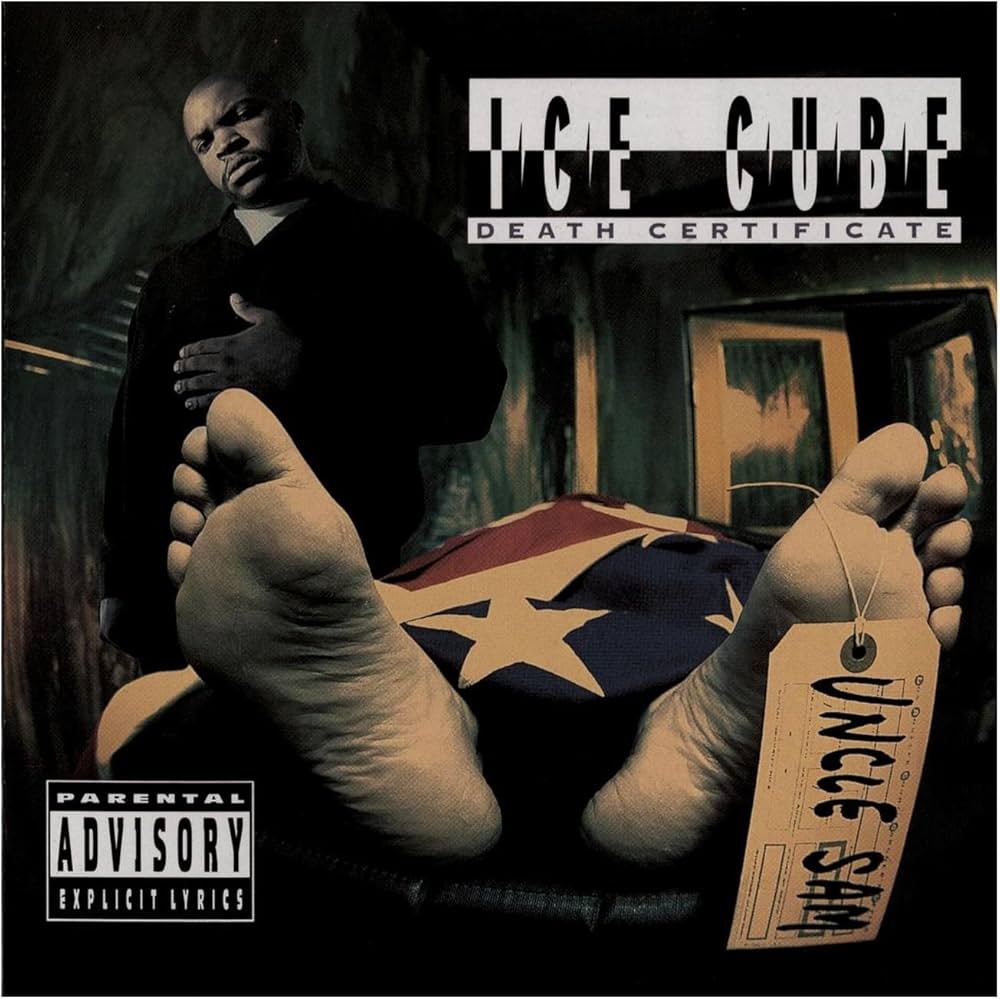
Ice Cube, Death Certificate (1991)- It’s interesting that these two albums ended up together in post order, because this might very well be the yang to the yin of the prior selection. In all kinds of ways- the anger in the flow, the hard and dense mix, the lyrics sketching out the darkest sides of street life. But as is true of all yins and yangs, you can also see the inextricable link between the two. Both are founded on response to the frustration of the Black American experience, both are musically innovative while hearkening back to cultural heritage (jazz for A Tribe Called Quest, 70s funk and soul for Ice Cube), and both deliver their message with humor and artistic ambition. In Death Certificate‘s case, the very structure shows the intent to aim for statement, with a “death” side stating the problems of contemporary life, followed by a “life” side describing his vision of where things need to go, and intros/outros and sketch sections holding the whole thing together. So, despite personifying two nineties sub-genres that seem diametrically opposed musically and thematically- alternative/conscious hip hop and gangsta/g-funk hip hop- the aims and the means of these two albums are not so different. This is not to excuse the racialism, homophobia, and misogyny of Ice Cube’s lyrics so often on display here, that all deserves criticism. But I can see how much more crafted and ambitious this is than his previous album, AmeriKKKa’s Most Wanted, how much of the West Coast nineties sound it anticipates, and understand how it ended up on so many “best” lists.
If you’re curious about the sources I used to compile my list, you can check them out here:
- Beats, Rhymes & Lists- The 50 Best Hip Hop Albums of the 1980s
- Beats, Rhymes & Lists- 250 Best Rap Albums of All Time
- Complex- The Best Rap Albums of the 80s
- GQ UK- The 28 best hip-hop albums that you should listen to immediately
- Hip Hop Golden Age- Top 100 Hip Hop Albums of the 1980s
- Music Grotto- 51 Best Hip Hop Albums of All Time
- ONE37pm- The 62 Best Hip Hop Albums of All Time
- Pitchfork- Highest Rated Hip Hop Albums of All Time
- Rolling Stone- The 200 Greatest Hip-Hop Albums of All Time
- The Source- Hip Hop Albums Rated 5 Mics Out of 5 (as of January 2011)
And if you want to catch up on the previous installments, here they are…
- Sugarhill Gang- Sugarhill Gang (1980)/Kurtis Blow- Kurtis Blow (1980)
- Sugarhill Gang- 8th Wonder (1981)/Grandmaster Flash- The Message (1982)
- Wild Style Original Soundtrack (1983)/Fat Boys- Fat Boys (1984)
- Kurtis Blow- Ego Trip (1984)/Run-D.M.C.- Run-D.M.C. (1984)
- Whodini- Escape (1985)/The Treacherous Three- The Treacherous Three (1985)
- Run-D.M.C.- King of Rock (1985)/LL Cool J- Radio (1985)
- Beastie Boys- Licensed to Ill (1986)/Run-D.M.C.- Raising Hell (1986)
- Boogie Down Productions- Criminal Minded (1987)/Eric B. & Rakim- Paid in Full (1987)
- LL Cool J- Bigger and Deffer (1987)/Big Daddy Kane- Long Live the Kane (1988)
- Boogie Down Productions- By All Means Necessary (1988)/EPMD- Strictly Business (1988)
- Eric B. & Rakim- Follow the Leader (1988)/Jungle Brothers- Straight Out the Jungle (1988)
- N.W.A- Straight Outta Compton (1988)/Public Enemy- It Takes a Nation of Millions to Hold us Back (1988)
- Slick Rick- The Great Adventures of Slick Rick (1988)/Ultramagnetic MCs- Critical Beatdown (1988)
- Beastie Boys- Paul’s Boutique (1989)/Big Daddy Kane- It’s a Big Daddy Thing (1989)
- De La Soul- 3 Feet High and Rising (1989)/EPMD- Unfinished Business (1989)
- Geto Boys- Grip It! On That Other Level (1989)/Kool G Rap & DJ Polo- Road To The Riches (1989)
- The D.O.C.- No One Can Do It Better (1989)/Ice Cube- AmeriKKKa’s Most Wanted (1990)
Finally, if you’d like a playlist for the entire list, you can find that here. Listen to it sequentially for the historical development of the genre, or play on shuffle for maximum historical scramble!

 Chris LaMay-West