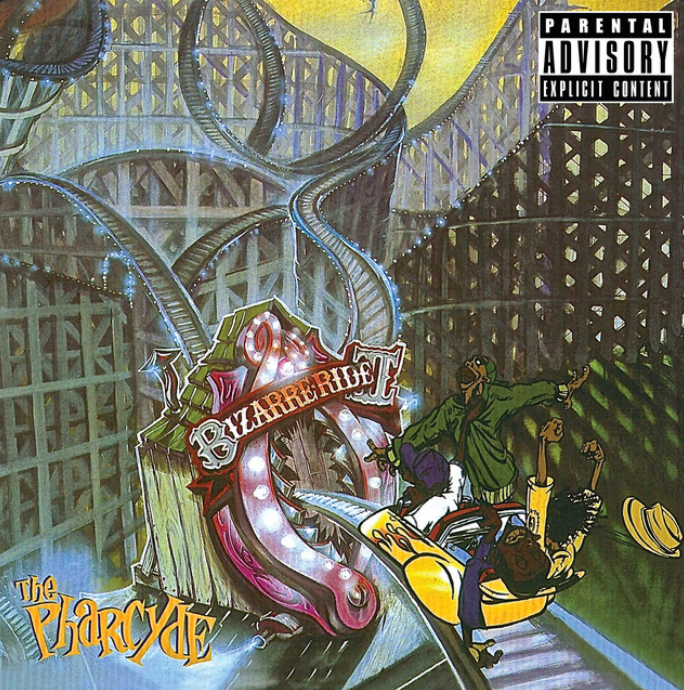
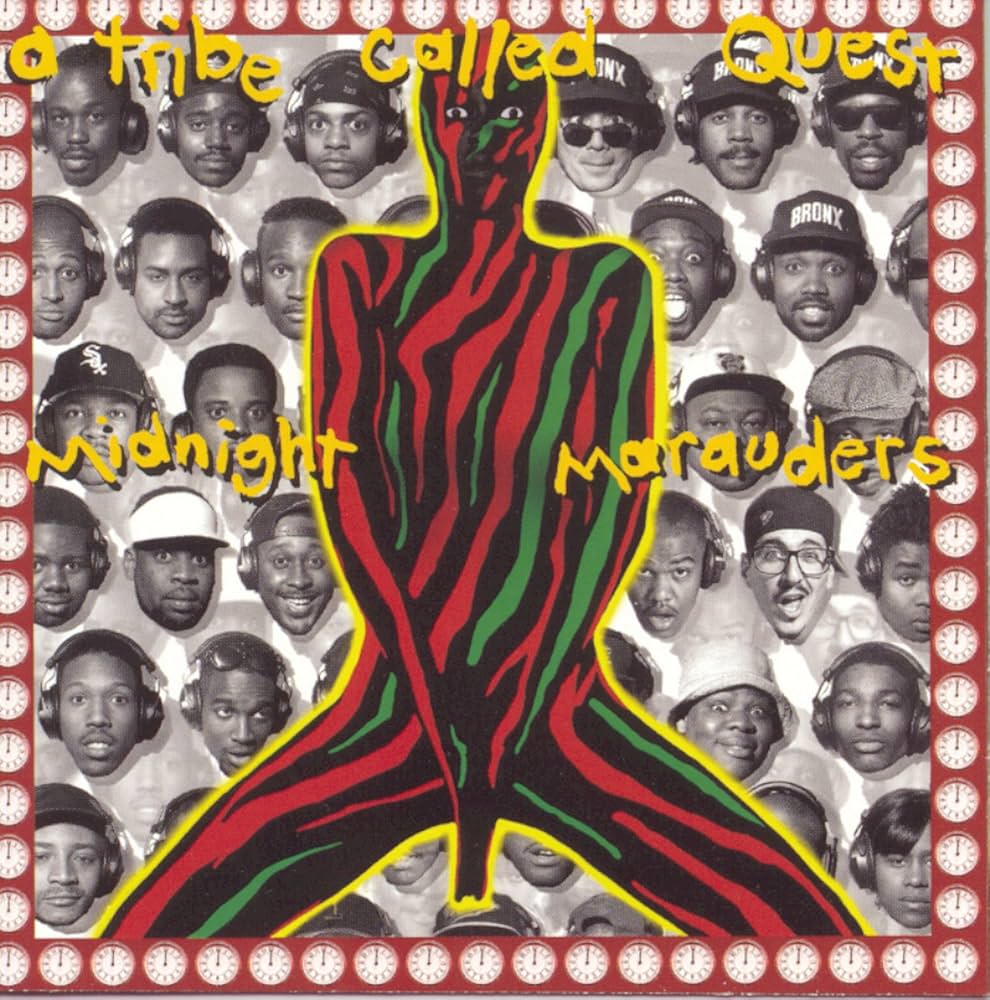
Last year was the 50th anniversary of hip hop, and in honor of this anniversary, the idea bloomed in my mind that I should review the top 50 albums of that 50 years. As I crunched together a list from various sources, 50 proved to be too restrictive- many of the classics were getting squeezed out. So, to make a little more room, I opted for 100 albums, two for each of hip hop’s 50 years.
For its formative years, hip hop was a live entertainment form, with the first recorded singles not emerging until 1979, and the first albums in 1980. So my review will cover 1980-2023, with 50 posts of two albums each. The only ground rule I made for myself (besides looking for 2×50, aka 100, albums that were widely well-regarded) was that I had to have at least one from each year. As you’ll see by and by, some years get multiple albums, but since we have 100 spots for 43 years, it tends to all work out.
*June 2024 addendum: Due to some medical situations, I took a three+ month hiatus from blogging. It’s unlikely I’ll finish this series this year. But I’m back at it, and I won’t mind extending into 2025 if you don’t!*
And with that, let’s embark on our next installment!
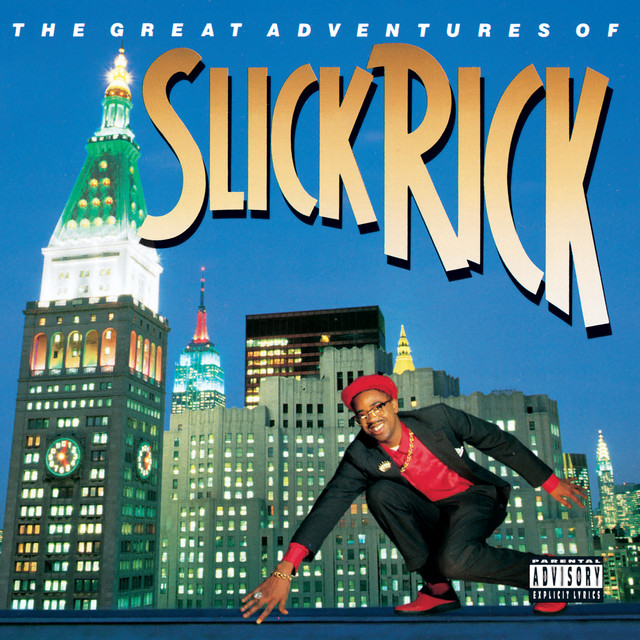
Slick Rick, The Great Adventures of Slick Rick (1988)– The influence of Slick Rick in general, and this particular album, are undeniable. Born in the U.K. and raised in the Bronx, Slick Rick rose to fame for his work with Doug E. Fresh before going solo as the third artist signed to Def Jam. He’s renowned for his story-telling chops, which are on display here, and for his unique voice (which carries the UK influence). Somewhere between these factors he’s been sampled well over a thousand times by other hip hop artists, and artists as diverse from each other as Busta Rhymes, Kool Moe Dee, and Nas have cited this album as a favorite. Listening to it, I can get on board with that- it is vintage hip hop in the Def Jam style of the era, and swings with the swagger and ego of the best MCs while also deflating the tropes of the scene with Slick Rick’s humor.
Ultramagnetic MCs, Critical Beatdown (1988)- You may have noticed that this album is our ninth entry in the series from 1988. That’s no accident, that was a peak year in innovation from hip hop’s golden age, and many of the albums issued that year have influenced everything that came after. Critical Beatdown is no exception. The production work of member Ced-Gee, already a great under-recognized contributor to the sounds of Boogie Down Productions and Eric B. & Rakim, included an unusual range of samples and innovative sampling re-arrangement techniques that immediately influenced Public Enemy and gangsta rap, and have continued to echo down since then. Beyond the sonic joy, the rapid flow of the vocals and sometimes surreal lyrics really caught my attention as well. I can see why this got on so many lists!
If you’re curious about the sources I used to compile my list, you can check them out here:
Finally, if you’d like a playlist for the entire list, you can find that here. Listen to it sequentially for the historical development of the genre, or play on shuffle for maximum historical scramble!
Last year was the 50th anniversary of hip hop, and in honor of this anniversary, the idea bloomed in my mind that I should review the top 50 albums of that 50 years. As I crunched together a list from various sources, 50 proved to be too restrictive- many of the classics were getting squeezed out. So, to make a little more room, I opted for 100 albums, two for each of hip hop’s 50 years.
For its formative years, hip hop was a live entertainment form, with the first recorded songs not emerging until 1979, and the first albums in 1980. So my review will cover 1980-2023, with 50 posts of two albums each. The only ground rule I made for myself (besides looking for 2×50, aka 100, albums that were widely well-regarded) was that I had to have at least one from each year. As you’ll see by and by, some years get multiple albums, but since we have 100 spots for 43 years, it tends to all work out.
*June 2024 addendum: Due to some medical situations, I took a three+ month hiatus from blogging. It’s unlikely I’ll finish this series this year. But I’m back at it, and I won’t mind extending into 2025 if you don’t!*
And with that, let’s embark on our next installment!
N.W.A, Straight Outta Compton (1988)– With this installment, we’re a quarter of the way through with the review, and both entries here are all kind of momentous. Though there were earlier examples (like Boogie Down Productions first album) this album is without a doubt the cornerstone of gangsta rap, and the beginnings of real influence for the L.A. rap scene. It’s also a new high point for furiously political hip hop. And a messy contradiction- the album criticizes the system, but also revels in the violence on the street, is full of messages of uplifiting pride, and also truly awful misogyny. But the mess is never inauthentic, backing up the group’s contention that they were doing “reality rap”. Other things that stand out to me listening to it now are the often surprising lightness and humor of the mix and lyrics, the early rumblings of the g-funk style of Dr. Dre, and also an appreciation for how great a producer Eazy-E was despite Dre’s subsequent ascendance. Every which way, the influence of this album looms large, even more remarkably given that it was recorded in six weeks for just $12 thousand.
Public Enemy, It Takes a Nation of Millions to Hold Us Back (1988)- If Straight Outta Compton was noteworthy for its explicitly political stance, this album, and indeed the entire career of Public Enemy, is what really makes it clear that hip hop had matured into a fearsome engine of social criticism by 1988. And musically, lyrically, and vocally “fearsome” remains a good description. The density of the mix, heavy metallic drive of the musical and vocal flow, and the clarity of intelligent fury in the lyrics all work perfectly together. All of this is no accident- the group specifically set out to make a hip hop equivalent to Marvin Gaye’s What’s Going On, they were looking for a higher tempo that would better suit their live shows than their debut album, and producer Hank Shocklee developed a sample-dense “wall of noise” production style. In many ways, this album and N.W.A’s were, and remain, more rock than any rock of the era was. One other thing these two albums have in common is that they went platinum and rose in the charts with almost no radio airplay. Explicit lyrics? Or explicit challenge to America’s systemic racism?
If you’re curious about the sources I used to compile my list, you can check them out here:
Last year was the 50th anniversary of hip hop, and in honor of this anniversary, the idea bloomed in my mind that I should review the top 50 albums of that 50 years. As I crunched together a list from various sources, 50 proved to be too restrictive- many of the classics were getting squeezed out. So, to make a little more room, I opted for 100 albums, two for each of hip hop’s 50 years.
For its formative years, hip hop was a live entertainment form, with the first recorded songs not emerging until 1979, and the first albums in 1980. So my review will cover 1980-2023, with 50 posts of two albums each. The only ground rule I made for myself (besides looking for 2×50, aka 100, albums that were widely well-regarded) was that I had to have at least one from each year. As you’ll see by and by, some years get multiple albums, but since we have 100 spots for 43 years, it tends to all work out.
*June 2024 addendum: Due to some medical situations, I took a two month hiatus on blogging. It’s probably now unlikely I’ll finish this series this year. But I’m back at it, and I won’t mind extending into 2025 if you don’t!*
And with that, let’s embark on our next installment!
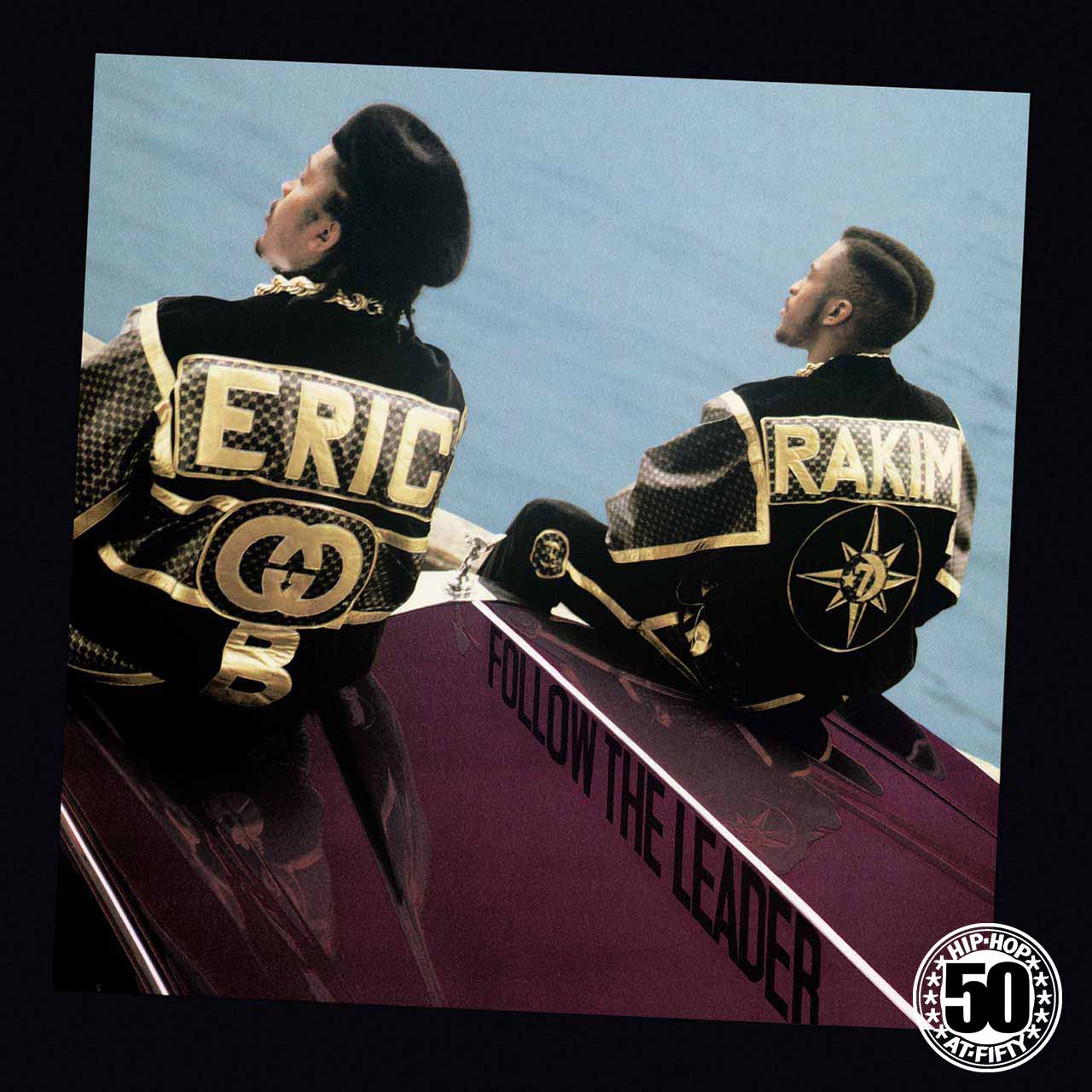
Eric B. & Rakim, Follow the Leader (1988)– Oh I like this! It feels like it combines both the heavy beats and aggressive scratching of the hardcore rap style of the mid-80s and the funk and soul samples, relaxed delivery, and more complex mixing of the new jack style of the late 80s. The duo produced and arranged it themselves, with live instruments from Rakim’s brother and some ghost production by Queen Latifah collaborator the 45 King. It was widely lauded at the time and is still well-regarded today. Which I think it richly deserves!
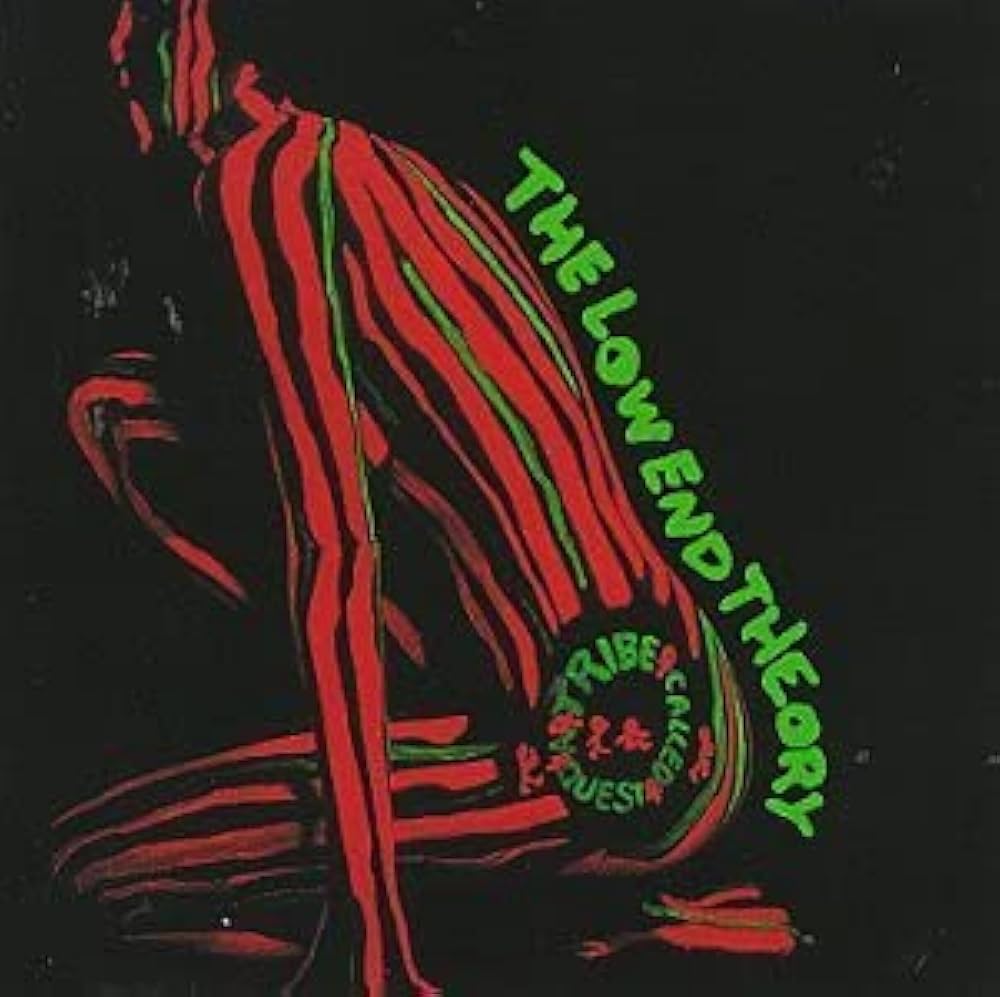
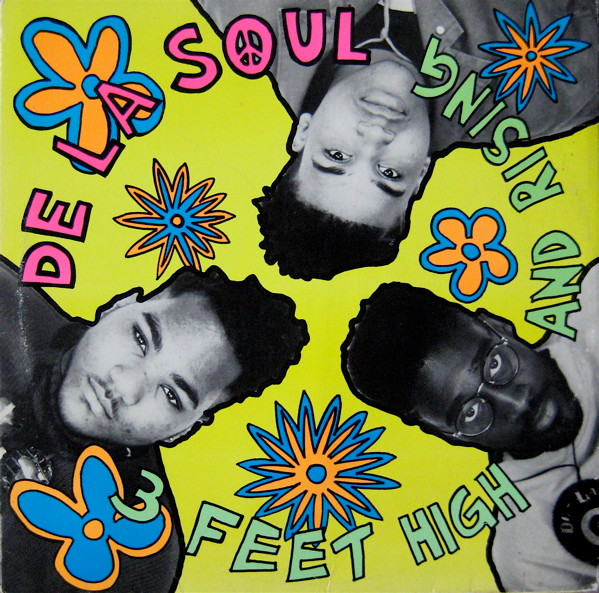
Jungle Brothers, Straight Out the Jungle (1988)- This is the first album in this review where I hear the specifically Afrocentric themes (and samples!) that would become emblematic of conscious hip hop in the 90s. It’s beautifully conversant with past music on the political wavelength, from Marvin Gaye to Grandmaster Flash’s “The Message”, full of positive lyrics on racial uplift, and has a lively mix that is almost psychedelic in its variety. That was my initial take, and indeed it turns out this New York trio (also known for bringing in jazz and house music influences) were the founders of the Native Tongues collective, which later featured such artists as De La Soul, A Tribe Called Quest, Queen Latifah, and Black Sheep. So this album genuinely is foundational to conscious hip hop, and given how much I loved that sub-genre in the 90s, it’s no surprise that I love this!
If you’re curious about the sources I used to compile my list, you can check them out here:
Last year was the 50th anniversary of hip hop, and in honor of this anniversary, the idea bloomed in my mind that I should review the top 50 albums of that 50 years. As I crunched together a list from various sources, 50 proved to be too restrictive- many of the classics were getting squeezed out. So, to make a little more room, I opted for 100 albums, two for each of hip hop’s 50 years.
For its formative years, hip hop was a live entertainment form, with the first recorded songs not emerging until 1979, and the first albums in 1980. So my review will cover 1980-2023, with 50 posts of two albums each. The only ground rule I made for myself (besides looking for 2×50, aka 100, albums that were widely well-regarded) was that I had to have at least one from each year. As you’ll see by and by, some years get multiple albums, but since we have 100 spots for 43 years, it tends to all work out.
*June 2024 addendum: Due to some medical situations, I took a two month hiatus on blogging. It’s probably now unlikely I’ll finish this series this year. But I’m back at it, and I won’t mind extending into 2025 if you don’t!*
And with that, let’s embark on our next installment!
Boogie Down Productions, By All Means Necessary (1988)– While their previous album, Criminal Minded, is widely seen as the birth of gangster rap, this album is often seen as the birth of politically conscious rap. This is no accident, or a mere marketing stance. Following the violent death of his Boogie Down Productions partner Scott La Rock in 1987, KRS-One radically changed his approach, developing the identity of “The Teacher” and calling out the ills that beset Black America while urging for their transformation. From the opening statement “My Philosophy”, to the bruising Deep Purple sample on the second track, to the urgent call to “Stop the Violence” on the third track, the meaning and power don’t let up. Along the way, the mix is stripped down and hard-hitting, the flow both furious and full of humorous charisma, and the lyrical content sharp. I’m fully on board with this album’s reputation as a classic!
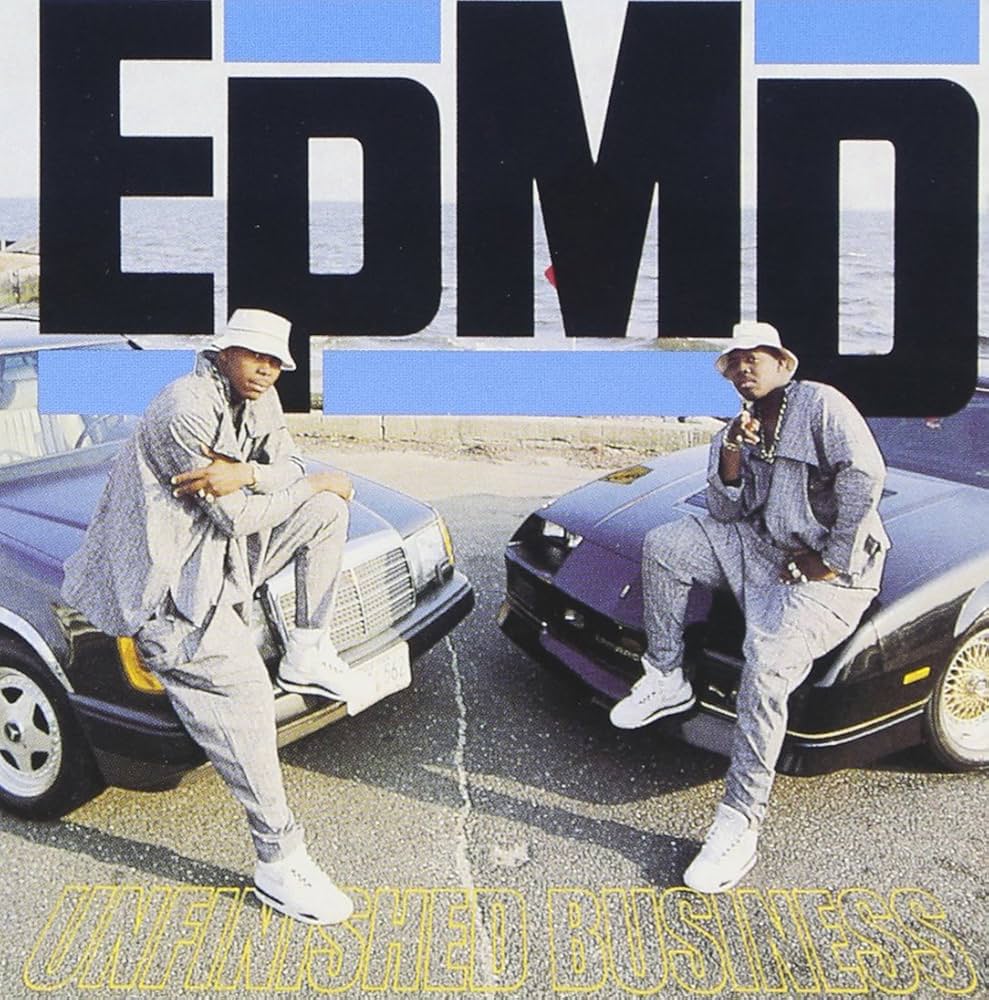
EPMD, Strictly Business (1988)- Not having been very familiar with EPMD previously, I’m immediately struck by the smooth flow, and the inventiveness of the musical mix, which makes excellent use of funk samples (and even Eric Clapton and Steve Miller!). This definitely feels like peak 80s golden age. It may not have the kind of substance and heft of Boogie Down Production’s album, but it’s definitely still a solid and fun listen.
If you’re curious about the sources I used to compile my list, you can check them out here:
Last year was the 50th anniversary of hip hop, and in honor of this anniversary, the idea bloomed in my mind that I should review the top 50 albums of that 50 years. As I crunched together a list from various sources, 50 proved to be too restrictive- many of the classics were getting squeezed out. So, to make a little more room, I opted for 100 albums, two for each of hip hop’s 50 years.
For its formative years, hip hop was a live entertainment form, with the first recorded songs not emerging until 1979, and the first albums in 1980. So my review will cover 1980-2023, with 50 posts of two albums each. The only ground rule I made for myself (besides looking for 2×50, aka 100, albums that were widely well-regarded) was that I had to have at least one from each year. As you’ll see by and by, some years get multiple albums, but since we have 100 spots for 43 years, it tends to all work out.
*June 2024 addendum: Due to some medical situations, I took a two month hiatus on blogging. It’s probably now unlikely I’ll finish this series this year. But I’m back at it, and I won’t mind extending into 2025 if you don’t!*
And with that, let’s embark on our next installment!
LL Cool J, Bigger and Deffer (1987)– Let me give credit where credit is due: LL Cool J’s second album is harder, more rocking, has more inventive mixes, and more complex lyrics that his first. In other words, it’s the sound of an artist reaching for something beyond their debut on their sophomore album, and succeeding. The album did well by him too- it remains well-regarded to this day, and in its own day was the fourth rap album ever to go platinum. For me personally, it doesn’t have the charm or originality of Radio, but then again that remains one of my favorite albums ever. I think Bigger and Deffer has done well enough that he’ll forgive me for the review.
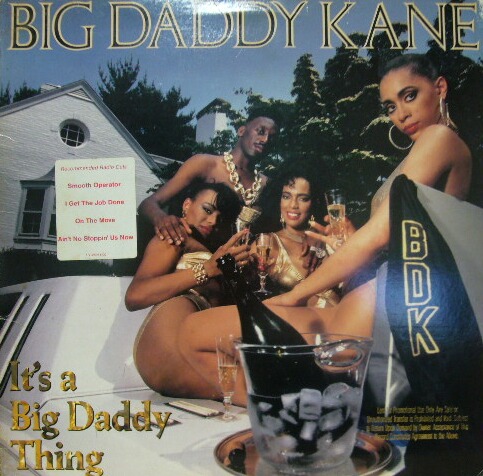
Big Daddy Kane, Long Live the Kane (1988)- This is kind of peak 80s on pop radio friendly hip hop. It’s got the braggadocio and attitude, but pitched at PG for mass consumption. Which isn’t to say there are traces of conscious and political themes, but even they are streamlined and neutered. The mix too is very consciously compatible with 80s R&B. If it sounds like I’m damning with faint praise, well it’s true the sound isn’t a lot to my taste. That, ironically, may have to do with it’s success though- with producer Marley Marl, Kane put out a sound that featured classic soul samples in a way that presaged the 90s, his fast vocal flow was very influential, and even the very songs from this album have been extensively sampled by others. So if I feel like maybe I’ve heard this before, I heard it from things that came out after, and because of, this album.
If you’re curious about the sources I used to compile my list, you can check them out here:
Last year was the 50th anniversary of hip hop, and in honor of this anniversary, the idea bloomed in my mind that I should review the top 50 albums of that 50 years. As I crunched together a list from various sources, 50 proved to be too restrictive- many of the classics were getting squeezed out. So, to make a little more room, I opted for 100 albums, two for each of hip hop’s 50 years.
For its formative years, hip hop was a live entertainment form, with the first recorded songs not emerging until 1979, and the first albums in 1980. So my review will cover 1980-2023, with 50 posts of two albums each. The only ground rule I made for myself (besides looking for 2×50, aka 100, albums that were widely well-regarded) was that I had to have at least one from each year. As you’ll see by and by, some years get multiple albums, but since we have 100 spots for 43 years, it tends to all work out.
*June 2024 addendum: Due to some medical situations, I took a two month hiatus on blogging. It’s probably now unlikely I’ll finish this series this year. But I’m back at it, and I won’t mind extending into 2025 if you don’t!*
And with that, let’s embark on our next installment!
Boogie Down Productions, Criminal Minded (1987)– One common take on this album is that it’s the first “gangster rap” album, i.e. something steeped in the more violent side of inner city reality (the South Bronx in their case). The other common take is that after the untimely death of group member Scott La Rock while trying to defuse a violent situation, KRS One took the group in a more conscious direction in his identity as “The Teacher”. That may be, but there’s plenty of social consciousness, and crackling furious teaching going on here. The other thing that stands out for me on the mix side is how solid a “hardcore rap” vintage mid-80s sound it is, and how it’s one of the first albums we’ve come across to mix in the “ragamuffin” reggae style as well, which became a staple for many acts later in the 80s. All in all, a sterling outing.
Eric B. & RakimPaid in Full (1987)- If the previous album was perhaps the birth of Gangster Rap, this one is an early exemplar of the swinging and relaxed “New Jack” style. When DJ Eric B. put out an ad looking for “New York’s top MC” and was answered by Long Island native Rakim, it was a serendipitous pairing. Rakim brought a lyrical complexity, relaxed vocal flow and complex rhyming schemes unlike the hard hitting rhymes that were in style, influence of jazz, and the empowering message of the Five Percent movement. Even more impressive given that it was recorded in a week, Paid in Full was an influential album for several generations of hip-hop to follow. Listening to it now, I can see why!
If you’re curious about the sources I used to compile my list, you can check them out here:
Wait, didn’t I already review the 2010s? Indeed I did! See here for my picks for the best albums of the 2010s from that first review. But we’re not quite done, and the reason why involves 2024…
It turns out that 2024 is the 25th year of the millennium. And that is just too rich a symbolic target for me to forgo- the chance to discover the 25 best albums of the past 25 years! I have all the source material I’ll need: I’ve reviewed the 2000s in several venues, did the above-mentioned 2010s review, and have top 20-23 lists for 2020, 2021, 2022 & 2023, with the search for 24 for 2024 now underway.
But my 2010s list is a little light comparatively. While my 2000s list from various sources sports around 60 entries, my 2010s review of 52 of the the critic’s top-ranked albums resulted in 34 picks. In order to balance that out a bit decade by decade, I’ve decided to go ahead and review the next tier down of 2010s albums per my original source lists. That will give us 36 more albums to review, which I’ll do in 6 blocks of 6. And hopefully thereby have a few more picks for our Grand Review of 2000-2024 to come!
Got it? Okay, let’s go with part 3!
Get Disowned (Hop Along, 2012)– There is plenty here that’s interesting, and maybe even prescient, in its emo confessionalism married with pop sensibility and harder rock edges. So maybe it’s not the fault of an album from 2012 that so much of the 2020s sounds like it. But it does mean that it reaches my ears sounding like a lot of other things. However much it might have stood out in the teens, I don’t think it’s going to be remembered long into the 20s compared to more recent exemplars of the same sound.
James Blake (James Blake, 2011)– I mean, really? It sounds, in the main, like a lot of autotune and low-key mumbling. I’ll grant that some interesting stuff is happening with the audio mix. But despite that, which even occasionally flashes into brilliance, it just doesn’t add up to a consistent album.
The ArchAndroid (Janelle Monae, 2010)– The ambition of this debut is present from its grand cinematic start. But then, because one cannot live by orchestra alone, we are immediately challenged to “Dance or Die” on the next track. And it just gets more varied, excellent, and delightful from there. This album, if somewhat sprawling, definitely shows the promise of what was to come from her, and shows that her talent was at full force right from the start.
Watch the Throne (Kanye West & Jay-Z, 2011)– I mean, they practically defined the hip hop of the 00s. And therein lays the problem with this album. I’m not comparing it just to other outings from the teens. I’m comparing it to The College Dropout. To The Blueprint. To Late Registration. To The Black Album. On its own merits, it’s pretty good, if a tad unfocused, but I don’t know if it’s best of decade good, and it’s certainly not best of career good for either one of them. Which, granted, is maybe an unfair standard. I do feel like both of them was individually on the track of a solid album here, but the pieces don’t quite fit together. But I will give it another listen!
The Epic (Kamasi Washington, 2015)– Okay, look. I’m not the guy who’s going to well review a three hour long jazz saxophone album. I can well believe it may have been an important and pivotal jazz album in the decade. Not my genre, not going to make it on my top list, but I did like it fairly well for the first hour.
Born to Die (Lana Del Rey, 2012)– From being enveloped by her warm voice in the first track, with the whole thing undermined by the stark lyrics and traces of sonic unease in the music mix, to the bouncy pop ode to a horrible partner in the second track, there’s no let-up here. Lana Del Rey delivers lush pop perfection, dark subversion and unease, and multilayered complexity in every song.
So there we are with batch three of six of the 36 overflow albums for the 2010s that I’ll be reviewing! From this batch, I would say the ArchAndroid and Born to Die are definite “yeses”, and Watch the Throne is a “maybe”. What awaits us in albums 19-24?
For those just tuning in: In 2021 I set out to catch up on newer music. I listened to the critics choices for the best albums of the 2010s, and picked my favorites. I did the same for 2020, picking my top 20 from the critics most highly rated albums. And I listened to new releases monthly in 2021, eventually picking the 21 best albums of 2021. That was so much fun that I decided to do it again in 2022 and 2023, listening each month and picking out the 22 best albums of 2022 and the 23 best albums of 2023.
There are links to the albums in those posts above, but if you’d like a one-stop playlist, I’ve got that set up in Spotify for the 2021 top 21 and the 2022 top 22, and in YouTube Music for 23 Best Albums of 2023. (Eventually I’ll move the 2021 and 2022 lists to YouTube, because artists are asking us to avoid Spotify for very good reasons.)
Okay, so now you know what we’re doing. Well guess what? I’m doing it again! Here’s the previous edition if you missed it:
A quick word on the “yes” and “maybe” categories I’ve sorted things into, before we get going with February:
Yes– This isn’t a guarantee, but it represents the albums that, upon first listen, I think could definitely be in running for best of the year.
Maybe– These albums have something to recommend them, but also something that gives me pause. I’m putting them in their own category, because I have found “maybes” sometimes linger and eventually become “yeses”.
And now, without further ado, let us get on with my top picks from 75 new releases that I listened to from February!
Allie X, Girl With no Face– The snark of “Off With Her Tits”, delivered with brisk electronic beats that sound both modern and eighties avant garde is a great indication of what’s going on here! The whole thing sounds unbound in time, and it never let me down for a single track. Alexandra Ashley Hughes, known by her stage name Allie X, is a Canadian singer, songwriter, and visual artist, and is up to something pretty fascinating here.
Bear1Boss, Super Boss!– This fragmented mix of video game samples, rally horns, and autotuned pop is not only fresh, the album is held together by repeated sonic motiffs. Look, I’m just saying someone’s got to manifest new sounds to get us out of our current musical impasses, and I think this Atlanta 24 year-old could be part of that!
Bonnie “Prince” Billy/Thee Conductor, Ennoia– The combination of earnest yearning Americana, crackling lo fi, and experimental flourish here is winning. I like the Bonnie “Prince” and I like this collaboration even more.
Brittany Howard, What Now– From the bruising and soaring soul opening, to the classic yet somehow off-kilter groove of the second track, on to the more challenging and contemporary electronic beat of the third, every song here delivers sterling sound from the past few decades of soul and R&B, but keeps feeling unexpected. This excellence is no surprise- this is the second solo album from Alabama Shakes co-lead Howard, and her mastery of her craft is evident.
Corb Lund, El Viejo– He was on my honorable mention list a year or two ago for Songs My Friends Wrote, and now with a batch of his own songs (some of which were inspired by the passing of one of those friends), he’s done it again. If you want country that sounds spontaneous, sincere, and not of the current formula, this could be for you!
Declan McKenna, What happened to the beach?– Well this is a welcome kaleidoscope of sound! I went in hearing that he had Hendrix, Bowie, and the Beatles as reference points, and loved rock operas, which was all promising. And indeed, you can hear all of that here, but it undersells how varied and creative it is at bringing many decades of pop strands together. The artist has talked about how the album came from an attempt to free himself from the expectations that came with initial stardom at 15, and diving more fully and confidently into sounds he loved. It shows!
Heems & Lapgan, Lafandar– Left of center neo-psyche hip hop with a heavy South Asian influence via this Queens-born, Punjabi American rapper. It is full of social consciousness and sonic inventiveness and reminds me of the high holy days of Madlib. Which is very welcome!
Laura Jane Grace, Hole in My Head– Solo album from the lead of Against Me! Eleven songs in 25 minutes! Good old fashioned third generation punk sound! With plenty of verve, wit, and music that pushes beyond the obvious with lyrics consciously looking back on the singer’s and the genre’s history. Heck yeah!
Liam Bailey, Zero Grace– A reggae album with both a sun-kissed fuzzy 70s AM radio sound, multiple contemporary touches, and some deeply probing lyrics. This 40-year-old English singer-songwriter from Nottingham noted for his soul, reggae, and blues-influenced vocal style has produced a touching and special album.
Mary Timony, Untame the Tiger– Beautiful guitar lines reminiscent of nineties rock, and going back to 60s and 70s classic rock beyond that. There is a vocal and musical spareness to it that keeps things straight-up and feels real as the singer’s literate lyrics describing the emotional insides of relationships.
Mdou Moctar, Funeral for Justice– This is musically such a breath of fresh air, a stirring mix of sounds invoking classic rock of yesteryear while incorporating African influences. It ends up feeling intensely familiar and yet new at the same time. My only regret is that the language barrier keeps me from the lyrics, which I’m guessing by the album and song titles have some serious punch to them as well.
The Dead South, Chains & Stakes– Well this is a thoroughly delightful batch of short sharp country/bluegrass (North) Americana songs delivered with a rock edge and punk spirit. This Regina, Saskatchewan band has been going since 2012, and the noise is joyful!
The Last Dinner Party, Prelude to Ecstasy– This is really something! It reads like sometimes over the top delivery times classic theatrical soundtrack times earnest exploration of the inner turmoil of love (with a great deal of queer content as well). This London group has been getting a lot of buzz since 2021, and I think it’s well-founded!
The Paranoid Style, The Interrogator– The Paranoid Style is the DC-based rock outfit of singer, songwriter, multi-instrumentalist, labor organizer, and sometime journalist Elizabeth Nelson. That sounds like a promising start, and then i read that the album was inspired by ZZ Top’s Eliminator. Nelson explained what drew her: “Billy Gibbons’ incipient fascination with Depeche Mode and Orchestral Maneuvers in the Dark, and his desire to embroider the sound of those bands onto the Top’s inimitable Texas boogie. To me it sounds like heaven.” That is all a big up-front just to say if anything her description undersells how delightful the arch wit, no-nonsense vocals, and rocky sheen balanced by a way with melody are.
Maybe
Grandaddy, Blu Wav– The review that got me to listen to this said, “sort of like a weird, very post-modern take on the Flying Burrito Brothers if they owned a bunch of Flaming Lips records.” They aren’t wrong! And it is more haunting than that lets on. Sort of all in one tone sonically which is my one reservation with this indie band from Modesto which has been going since the nineties.
Hurray for the Riff Raff, The Past Is Still Alive– Beautiful indie rock with a strong Americana/alt country flavor. The music, lyrics, and vocals sound natural and unforced on every track, it comes out like a spontaneous classic. The back end had one big sequential slow-down that almost lulled it out, but that is my only complaint.
J Mascis, What Do We Do Now– Suitably weary veteran album from Dinosaur Jr. frontman Mascis, backed by a clear and crackling band. It’s full of hazy guitar yearning, and, if all a tone, it’s a welcome tone!
Lee “Scratch” Perry, King Perry– I am such a fan of dub in general and Lee “Scratch” Perry in particular that I have a lot of room in my soul for posthumous releases as long as they’re well-founded. This one certainly passes that test, billed as his final studio album, it’s comprised of tracks he worked on until days before his death in 2021. If the sounds aren’t the newest ever, it’s as beautiful (and often, challenging and interesting) set of dub as one could ask for, right down to the final “goodbye” on the last track.
Persher, Sleep Well– This is striking me like a pop screamo album. Not in the watered-down pop sense, but in the “fun, song knows how to move along” kind of way. And yet sludgy, dark, sometimes industrial, and appropriately grating. Listening to this is perhaps what stumbling across a young Nirvana might have been like. Persher is a side project of techno producers Blawan and Pariah, otherwise known as the duo Karenn, who have been working together since 2011, and while it might be a little rough listening for some, there’s magic here.
Pouty, Forgot About Me– Forgot About Me is Rachel Gagliardi’s debut LP as Pouty, but she has been around power-pop for a while as one half of Slutever and a collaborator of Japanese Breakfast’s Michelle Zauner and, in Upset, played with members of Hole and Vivian Girls. As you might predict from all that, I was knocked back to the 90s in a way I quite appreciated and was thereupon done for. It is by design not the newest sound in the world, but boy did I groove on it the whole way through.
Revival Season, Golden Age of Self Snitching– This album brings together the spirit of hip hop and rock in a way that feels like a continuation of the inventive and playful eighties experimentation. AMG says: “Atlanta rap duo whose exploratory sound blends dub, indie rock, and post-punk influences.” Yes, I’ll go along with that! And, if it starts to sound a little samey toward the end, it opens new sonic space in-between.
Usher, Coming Home– I kind of hate myself for loving this, but the perfect production here suits a master of 21st century pop. It’s all just too damn groovy track by track to dislike, even if I do have qualms about the length.
And there you have it, February out before the end of June! Let’s see if we can get March & April before July ends…
Wait, didnt I already review the 2010s? Indeed I did! See here for my picks for the best albums of the 2010s from that first review. But we’re not quite done, and the reason why involves 2024…It turns out that 2024 is the 25th year of the millennium. And that is just too rich a symbolic target for me to forgo- the chance to review the best albums of the past 25 years! I have all the source material I’ll need: I’ve reviewed the 2000s in several venues, did the above-mentioned 2010s review, and have top 20-23 lists for 2020, 2021, 2022 & 2023, with the search for 24 for 2024 now underway.
But my 2010s list is a little light comparatively. While my 2000s list from various sources sports around 60 entries, my 2010s review of 52 of the the critic’s top-ranked albums resulted in 34 picks. In order to balance that out a bit decade by decade, I’ve decided to go ahead and review the next tier down of 2010s albums per my original source lists. That will give us 36 more albums to review, which I’ll do in 6 blocks of 6. And hopefully thereby have a few more picks for our Grand Review of 2000-2024 to come!
Got it? Okay, let’s go with part 2!
Coloring Book (Chance the Rapper, 2016)– Acid Rap was one of my favorites of the v1 2010s review, so I definitely came in to this album interested. And it does share exuberant sonic landscapes and a winning personality with that earlier album. In fact, the best tracks here are really great, easily up to decade’s best status. But as a whole it doesn’t quite feel coherent sonically, thematically, or in terms of flow. Not for the first time, a collection of great songs does not necessarily a successful album make!
Pop2 (Charli XCX, 2017)– Similar to the above entry, Charli XCX was already on my radar for her album how i’m feeling now having been one of my top 20 picks for 2020. This outing is also tickling my fancy. It is, to be sure, very highly produced and sometimes autotuned EDM. But it has a sharp jagged energy to it, keeps moving, and pulls out many sonic surprises along the way. Dance music isn’t going anywhere. Dance music shouldn’t go anywhere. So may it be this good!
Settle (Disclosure, 2013)– I am told that Disclosure is an English electronic music duo. This seems plausible, and I find no reason to doubt it. Indeed, a quick listen here bears that out, and it the album down a good background groove. I especially appreciate the more than occasional dips into classic 303 synth bass territory. But I don’t really feel like this adds up to more than a sum of parts.
If You’re Reading This It’s Too Late (Drake, 2015)– You know, it is really nice to see a mix tape succeed! His 2011 album Take Care made my original 2010s list, but it did strike me as a little too slick. This is much rawer, with at times even an air of desperation, without sacrificing quality. Some of that’s inherent to mixtape as a form, but maybe also having hit it really big with the earlier album, he had some ambivalent feelings to process (there’s lyrical evidence for this), or just had the confidence and comfort to release something with less trimming and grooming? Wherever it comes from, with a little more than an hour run time there isn’t a single track I tuned out on.
I Love You, Honeybear (Father John Misty, 2015)– I’ve certainly heard of Father John, and seen him play on a late night show here and there, but wouldn’t have considered myself super-familiar. That being said, this kind of thing is right up my alley- a country-inflected southern California folk with reference to some classic R&B sounds and a lush production level on top that raises everything to theatrical levels. The shimmery beauty is perfectly offset by the frequently highly bitter and cutting lyrics, and a heartfelt voice that feels totally sincere in celebrating the beauty and the pain. I think we’ve got a winner!
World War 3 (Gas) (Gucci Mane, 2015)– There’s definitely some skill and welcome flow to this hip-hop album, and some welcome disruptive tongue in check energy. It’s also very autotuned, cliche bound, and kind of sing-songy and same after a while. In a decade with so much hip hop wealth, I just don’t see this as being a decade’s best.
So there we are with the batch two of six of the 36 overflow albums for the 2010s that I’ll be reviewing! From this batch, I would say If You’re Reading This It’s Too Late and I Love You Honeybear are definite “yeses”, and Pop2 is a “maybe”. Who knows what may await us in albums 13-18?
Okay, lets start off with the obvious question- why am I revisiting the 2010s again? Didn’t I already do that? Indeed I did! See here for my picks for the best albums of the 2010s from that first review. But we’re not quite done, and the reason why involves 2024…
It turns out that 2024 is the 25th year of the millennium. And that is just too rich a symbolic target for me to forgo- the chance to review the best albums of the past 25 years! I have all the source material I’ll need: I’ve reviewed the 2000s in several venues, did the above-mentioned 2010s review, and have top 20-23 lists for 2020, 2021, 2022 & 2023, with the search for 24 for 2024 now underway.
But my 2010s list is a little light comparatively. While my 2000s list from various sources sports around 60 entries, my 2010s review of 52 of the the critic’s top-ranked albums resulted in 34 picks. In order to balance that out a bit decade by decade, I’ve decided to go ahead and review the next tier down of 2010s albums per my original source lists. That will give us 36 more albums to review, which I’ll do in 6 blocks of 6. And hopefully thereby have a few more picks for our Grand Review of 2000-2024 to come!
Got it? Okay, let’s go!
21 (Adele, 2011)– I really can’t comprehend how this didn’t rank higher in the critical consensus and end up in the first batch of 52 albums I reviewed. Is there a better album start out there in the decade than the one-two punch of the bombastic churn of “Rolling in the Deep” and the stomping beat and savage ending of “Rumor Has It”? And that’s just tenderizer before you eventually get emotionally ransacked by “Set Fire to the Rain” and “Someone Like You”. I don’t know about you, but every one of those songs still lives in my soul now a dozen years later. And, between the depth and yearning tenderness of her voice, rich blue-eyed soul instrumentation, and lyrical emotional complexity, even the “filler” here is gorgeous. If this isn’t a best of that decade, I don’t know what is.
Malibu (Anderson .Paak, 2016)– His 2021 collaboration with Bruno Mars, Silk Sonic, made my honorable mention for that year, so I’m coming in to this well-disposed. This has many of the the same charms of that outing, namely Paak’s masterful mix of neo-soul, hip-hop, and club music, smooth vocals, interesting sample choices, and witty and complex lyrics. The best songs here are flat out great, but it doesn’t sound or feel totally together, which you need to make an hour+ album work. Still, there isn’t a track along the way that I was unhappy to be there for.
X 100PRE (Bad Bunny, 2018)– I am told I should like Bad Bunny, and so I tried with his album YHLQMDLG (which I was assured I should like) for my 2020 review. And it’s not like I’m mad at him, but… I’ll give it that his music on this album has personality, and some interesting mix and vocal moments. There are some singles I quite like. But a lot of it is very much the autotuned 21st century hip-hop sound that leaves me cold. And at nearly an hour, I need it to be compelling the whole way through to work as an album.
Cupid Deluxe (Blood Orange, 2013)– I am told that Dev Hynes, aka Blood Orange, is an American-born English singer, songwriter, and record producer based in New York City, who has worked extensively writing and producing for others in addition to his own work. That sounds promising enough, but the opening track is some kind of autotuned low-key soul mush. It does pick up and get more lively and funky on the second track, thank goodness. And from there goes on to pleasantly explore several modes of contemporary soul/R&B, with occasional dips back into mushy tracks. It’s often quite good, but given the uneveness, I don’t see it as “decade’s best” material.
22, A Million (Bon Iver, 2016)– This album has an interesting, somewhat dizzying start, bridging the gulf between an acoustical indie and electric kazoo chipmunk sound before drifting off into jazz. The second track has a kind of 70s AM radio feel delivered via glitchy electronic. I could go on narrating track by track, but the point is that there’s a surprising and varied experimentalism that stays just enough in touch with pop song conventions to make the songs work. By its very nature all this comes off as a bit disjointed, and is abstract, but it was headed toward at least a strong “maybe” until it had too many songs in a row that were too lulled out in the second half.
Teens of Denial (Car Seat Headrest, 2016)– My initial take is that this feels like an album that was a few years late for the 2001-2006 heyday of the garage rock revival scene. Subsequent research reveals that the Seattle-based, Virginia-derived band behind it got going in 2010, so it makes sense as the kind of second wave of that scene. This is also apparently their tenth album in a 7-year period, and as witness to that, it’s a tight and confident sound that’s on display here. All of that is just a blah-blah-blah though, and the real story is music that never lets up, and smart lyrics on varied topics. I’m a little leery of the length- you have to work hard to pull off a 70-minute run time, but that’s my only source of hesitation here.
So there we are with the first 6 of the 36 overflow albums for the 2010s that I’ll be reviewing. From this batch, I would say 21 is a definite “yes”, and Malibu and Teens of Denial are “maybes”. Let’s see what we find in albums 7-12!