Happy Birthday to the Special Counsel’s investigation! That’s right, it was one year ago that, in the wake of President Trump firing FBI Director James Comey and Attorney General Jeff Sessions recusing himself from the Russian investigation, Robert Mueller was appointed as Special Counsel. And what a year it’s been! So far, we have one conviction, two trials pending for Paul Manafort, guilty pleas from five cooperating witnesses, and the indictment of 13 Russian nationals and three companies.
With more to come (barring the ever-looming possibility of his being fired), as Mueller has been up to multiple things since our previous update. The Congressional investigations have also been active, which you can read more about below, along with the ongoing drama around the newer investigation of Trump’s personal lawyer, Michael Cohen.
As a quick programming note, I’ve added a !!!!new section!!!! below that gathers together important source documents in addition to Mueller’s filings. I also made a few changes last time, namely re-positioning information from the Congressional and FBI/Mueller sections so, for example, Congressional or Mueller news involving Paul Manafort will now be under the Manafort section. I’ve also highlighted which sections have new material in the list below, so you know what to check out, and moved the data tags for the sections to the end of each section. When you click on the list, you’re now taken right to the end of that section, and all you have to do is scroll up to see the latest news.
Before we get further in to the latest, an overview of where we are so far:
Established
- Russian interests systematically interfered in the 2016 U.S. Presidential election beginning as far back as 2014. By 2016, the major thrust of this interference was to boost Trump, and harm Clinton.
- This interference involved senior intelligence officials and business leaders close to Putin, and was approved of and directed by him.
- Russians working to interfere in the election, posing as U.S. actors, had extensive ongoing contact with up to 100 unwitting state and local Trump campaign workers and Republican activists.
- The specific targeting of some of this manipulation indicates access to sophisticated election data analytics.
- There is an unusual density of business & personal contacts with Russian interests among key people in Trump’s campaign and/or administration. There isn’t a similar density of contacts with other nations equally (or more) important to the U.S..
- The actions of several Trump confidants in connection with Russia involve things that are illegal, either in initial commission or subsequent denial. Michael Flynn and Richard Gates have already pled guilty and are cooperating with Mueller’s investigation, Paul Manafort has two trial dates set, and Michael Cohen, Jared Kushner, Carter Page, Felix Sater, Jeff Sessions, Roger Stone, and Donald Trump Jr. all have taken known actions that could leave them legally liable.
- Despite denials and disavowals, Trump has years-worth of history of praising Putin and seeking contact with him.
- Despite denials and disavowals, Trump has years-worth of extensive involvement with Russian businesses and financiers, many of whom are part of Putin’s inner circle, and some of whom have ties to Russian organized crime.
- The Russian interests working to interfere in the election actively cultivated and sought to make use of contacts with Trump-connected individuals.
- Despite prior denials and disavowals, people involved with the Trump campaign were talking about Russian connections helping with the election at least as early as December 2015, and senior campaign officials were aware that the Russian government was seeking to harm Clinton’s candidacy and help Trump’s at least as early as March, 2016.
- In at least two cases, the ongoing correspondence of George Papadopoulos with Russian representatives and campaign officials from March 2016 forward, and the arrangement of the June 2016 meeting in Trump Tower between Trump’s son, son-in-law, and campaign manager with Russian representatives, some Trump campaign officials reacted positively to the potential offer of information from Russian sources.
- Trump administration officials, including the President himself, have taken multiple actions to discourage the progress of the investigation.
Open Questions
- How much did Trump confidants come to know about Russian election interference after first becoming aware of it in March 2016?
- Were any of them aware of it before that date?
- Were any of Trump’s confidants active, knowing participants in this interference?
- Did Trump share his senior campaign officials’ awareness of Russian election interference, either during the campaign or afterwards, and is thus liable for not exposing it?
- Or, even worse, was Trump himself an active, knowing participant in these efforts?
- Do the actions that the President and his administration have taken to discourage the investigation amount to an actionable case of obstruction of justice?
- Given that the Russian election manipulation seems to have been based at least in part on sophisticated election data analytics, how (and from whom) did they get this information?
- What else may come out as a result of this investigation now that an independent counsel is investigating the finances of Trump and his associates? Recall that Clinton’s Lewinsky scandal was an outgrowth of, but not in any way directly connected to, the Whitewater investigation.
It’s also instructive to read the indictments and court filings from Robert Mueller’s investigation, as they are the most concrete and detailed (and surprisingly readable!) source of information of verified criminal charges that have come out of the investigation:
- George Papadopoulos, 10/5/17
- Paul Manafort & Richard Gates, 10/27/17
- Michael Flynn, 12/1/17
- Paul Manafort (additional charges), 2/16/18
- 13 Russian Nationals and three companies including Internet Research Agency, 2/16/18
- Richard Pinedo, 2/16/18
- Alex van der Zwaan, 2/16/18
- Paul Manafort (superseding charges), 2/16/18
- Alex van der Zwaan (guilty plea), 2/20/18
- Paul Manafort & Richard Gates (additional charges), 2/22/18
- Richard Gates (guilty plea), 2/23/18
- Alex van der Zwann (sentencing filing), 3/27/18
- Paul Manafort (denial of request to review warrants), 4/6/18
- Paul Manafort (memorandum in opposition of request to dismiss evidence), 4/23/18
In addition to Mueller’s filings, these other primary source documents provide a wealth of information:
And if you want to explore even further based on this blog, the following resources may be of use as well.
Long-form articles:
Timelines and interactive graphics:
Now, on to the news. New items since the previous edition are at the end of each section in blue text. Our sections are (each numbered item here is linked to the corresponding section below, bold italicized items have new content):
- Congressional Hearings (other than specific people/topics below)
- FBI Investigation/Special Counsel (other than specific people/topics below)
- Russian Campaign Interference
- Trump-Russia Ties (pre-inauguration)
- Trump-Russia Ties (post-inauguration)
- Michael Flynn
- Jared Kushner
- Paul Manafort/Robert Gates
- Carter Page
- Jeff Sessions
- Roger Stone
- Donald Trump Jr. (including Trump Tower meeting)
- The Steele Dossier
- Unconfirmed (use with extreme caution)
********************************************************************************
Congressional Hearings
- Meanwhile, the House is not so interested in doing investigations on Russian election interference, or on Michael Flynn’s Russian contacts. However, Rep. Jason Chaffetz, the chairman of the House Oversight Committee, and Rep. Bob Goodlatte, chairman of the House Judiciary Committee sent a letter on 2/15/17 that urged the Office of Government Ethics to investigate who leaked information about Flynn to the media.
- The first Congressional hearings on Russian interference in the 2016 election and possible Trump ties to Russia, conducted by the House Intelligence Committee, opened on Monday 3/20/17 with testimony from FBI director James Comey and NSA Director Mike Rogers. Among the highlights:
- While not willing to step down, Nunes was willing on 3/29/17 to cancel a hearing on Russia where former acting Attorney General Sally Yates was to testify. This followed the Trump administration voicing objections to him about her planned testimony. Yates briefly led the Justice Department while Attorney General Jeff Sessions’ confirmation was pending, but was fired by Trump after she refused to defend in court his initial travel ban executive order. After she was fired, it was revealed that Yates had notified the White House that then-national security adviser Michael Flynn had not properly explained his contact with the Russian ambassador. The Washington Post reported that the Justice Department told Yates that her testimony would have to be seriously limited because of executive privilege, which she disputed.
- Subsequent reporting revealed that Nunes went to a secure National Security Council facility on the grounds of the White House and reviewed intelligence reports, with the assistance of Ezra Cohen-Watnick, senior director for intelligence at the National Security Council, and Michael Ellis, national security lawyer at the White House Counsel’s Office. Ellis is a former Nunes staffer, and Donald Trump had recently personally overruled H.R. McMaster, his national security adviser, to keep Cohen-Watnick in his position. The following morning, without informing any other members of the House Intelligence Committee about what he had learned, Nunes went back to the White House and briefed the President on those reports. He held press conferences, one at the Capitol and one outside the West Wing, before and after his meeting with Trump. In the controversy following these revelations, Nunes recused himself from further leadership of the House Intelligence Committee hearings on 4/6/17. Rep. Mike Conaway (R-Texas) will temporarily take over the committee’s investigation.
- The Senate Intelligence Committee began its hearings 3/31/17. Among the highlights from the first two days of testimony:
- Marco Rubio’s campaign was also targeted by hackers with Russian IP addresses during the 2016 election.
- Former FBI agent and cybersecurity expert Clinton Watts further revealed that all the major Republican candidates were targeted.
- Such cyber-targeting continued even after the election, including attacks against Rubio on the first day of hearings, and coordinated social media attacks against Paul Ryan over recent weeks.
-
National Security Agency Director Keith Alexander and FireEye chief executive Kevin Mandia, a pair of cybersecurity experts, described how Russian agents and upwards of 1,000 paid Internet trolls working out of a facility in Russia pushed “fake news” during the election.
- Senate Committee members of both parties also took pains to differentiate themselves from the increasingly politicized House hearings, promising an unbiased and bipartisan approach.
- The Senate Judiciary Subcommittee on Crime and Terrorism held hearings on Russia the week of 5/8/17. Key witnesses were former acting Attorney General Sally Yates and former Director of National Intelligence James Clapper. Among the highlights:
- Former Obama-administration national security advisor Susan Rice declined an invitation to testify to the Subcommittee on Russian hacking. Rice had initially accepted the invitation from committee chair Lindsey Graham, but then subsequently declined after being informed by Committee ranking Democrat Sheldon Whitehouse that the invitation was not issued with his knowledge, and was the only request for testimony the committee issued that was not bipartisan. Rice had earlier become the subject of allegations, which do not appear to be substantiated, that she had improperly unmasked and revealed information about surveillance of Trump-related personnel’s contacts with Russia.
- Yates detailed how she had informed Trump administration officials that then-national security adviser Michael Flynn was susceptible to blackmail from Russia 18 days before he was fired.
- She also testified that she warned White House counsel Don McGahn in late January that Flynn had misled Vice President Mike Pence and other senior officials and that as a result, public statements by White House officials were inaccurate.
- Clapper clarified earlier his remarks, oft-repeated by the Trump administration, that he had seen no evidence of collusion between the Trump campaign and Russia. He sought to make clear this statement reflects the fact that he had not seen the FBI evidence, and not an authoritative opinion that the evidence itself was lacking.
- Clapper stated that the Russians had also collected information on certain Republican Party affiliated targets but did not release any Republican related data, and only leaked information involving the Democratic Party.
- In relation to allegations involving Rice, Clapper explained that the request from intelligence officials for unmasking of a US citizen is “legitimate” and essential to determine motives of the foreign agent being monitored, and does not constitute “improper” leaking
- Yates and Clapper both told members of the Subcommittee that they had never leaked classified information to the news media, nor authorized anyone else to do so.
- Following questions to Clapper about information on Trump business dealings with Russia, Sen. Graham indicated that he wants to look into President Trump’s potential business ties to Russia as part of the Senate investigation.
- Congressional hearings on Russia continued as well. Some of the highlights from the second half of May include:
- On 6/7/17 Director of National Intelligence Dan Coats and Adm. Mike Rogers, director of the National Security Agency, testified before the Senate Intelligence Committee. There had been reporting that Trump had asked Coats and Rogers to influence the FBI to shut down its investigation. In response to repeated questioning along these lines, both men refused to answer, invoking confidentiality and security, indicating they could not answer further in open hearings but might be able to be more forthcoming in closed hearings. They indicated that even then they might need to consult with White House counsel first. This was widely understood to indicate that the allegations could not be clearly refuted, and that legal concerns are now front and center as figures involved in the investigation seek to make sure they do not commit perjury in public statements.
- Former FBI-Director James Comey testified before the Senate Intelligence Committee on 6/8/17. Highlights of his testimony, and its aftermath include:
- Comey stated that there was absolutely no doubt that Russia had interfered in the 2016 election.
- He confirmed previous public reporting of numerous encounters initiated by Trump in which Trump encouraged him to drop the Flynn investigation, asked for loyalty, and confirmation that he was not personally under investigation.
- Comey started to document these as he felt the communications were improper, endangered the integrity of the FBI investigation, and did not trust Trump to be honest about what was said later.
- He told the committee that it was Trump’s tweet about the possible existence of tapes that spurred him to leak contents of his memos documenting interactions with the President to the press.
- Comey contradicted a February New York times story about U.S’ Intelligence Agencies concerns about extensive contacts between Trump-related parties and Russian intelligence officials saying it was, “in the main, not factual”. Predictably, Right-leaning media outlets cited a single New York Times article being contradicted as a complete refutation of all mainstream media Russia-related reporting.
- Comey also revealed that former Obama Attorney General Lynch ordered him to refer to the investigation into Hillary’s e-mail server as the “e-mail matter” and not as an investigation, and he felt a need to accelerate the investigation following Lynch’s airport tarmac meeting with Bill Clinton.
- Comey declined to publicly answer several questions, including the status of investigations into the Steele Documents, Jared Kushner’s activity regarding a “back channel” with Russia, if the FBI had indications of contact between Trump officials and Russian intelligence, and whether he thinks the President colluded with Russia. Such refusals are not in and of themselves indications of wrongdoing, but they do often indicate sensitive areas of ongoing investigation.
- In a private hearing later in the day, Comey indicated that the FBI had evidence that Jeff Sessions may have had an undisclosed additional meeting with Russian Ambassador Sergey Kislyak. He cautioned that this was based on intercepted communications between Russian officials, and that it’s possible they were exaggerating.
- Following the testimony, Trump chief-counsel Marc Kasowitz went on record to deny that the President had asked Comey to drop the investigation or asked him for loyalty. Kasowitz countered that Comey should be investigated for leaking.
- Trump followed up on 6/10/17 by stating that Comey lied in key aspects of his testimony, and offering to sit down with Robert Mueller and testify to this.
- Several House and Senate committees followed up on the testimony by again asking for copies of all memos and tapes that either Comey or the Administration had produced.
- On 6/11/17, Senator Diane Feinsten indicated that, based on Comey’s testimony, Congress should investigate Loretta Lynch’s possible interference in the FBI’s Clinton investigation. Feinstein indicated that such an investigation should be separate from the ongoing Russian hearings.
- ABC news reported on 8/11/17 that Congressional investigators want to meet with Rhona Graff, a senior vice president at the Trump Organization who has worked at Trump Tower for nearly 30 years. Graff is widely considered to be a gatekeeper to Trump who has often been central to coordinating between business associates, politicians, and journalists who have sought access. Graff is one of the parties copied in the e-mail chain involved in setting up the June 2016 meeting in which representatives of Russian interests met with Donald Trump Jr., Jared Kushner, and then campaign manager Paul Manfort while offering material damaging to Clinton in what was described as part of the Russian government’s support of the Trump campaign.
- The New York Times ran a story on 10/22/17 about the slowing momentum and internal party divisions of the the Congressional investigations into Russian interference. Per the Times’ story: “All three committees looking into Russian interference — one in the House, two in the Senate — have run into problems, from insufficient staffing to fights over when the committees should wrap up their investigations. The Senate Judiciary Committee’s inquiry has barely started, delayed in part by negotiations over the scope of the investigation. Leaders of the Senate Intelligence Committee, while maintaining bipartisan comity, have sought to tamp down expectations about what they might find. Nine months into the Trump administration, any notion that Capitol Hill would provide a comprehensive, authoritative and bipartisan accounting of the extraordinary efforts of a hostile power to disrupt American democracy appears to be dwindling.”
- On 10/24/17 Congressional Republicans announced that they were launching two investigations related to Hillary Clinton. The Republican leaders of the Judiciary, Intelligence, and Oversight and Government Reform committees will jointly investigate the approval of Uranium sales to a Russian-backed firm while Clinton was secretary of state, and donations to the Clinton Foundation made by someone who had formerly been associated with the firm. The Judiciary and Oversight and Government Reform committees annoucned they will also jointly investigate the Obama Justice Department’s handling of the Clinton email investigation. The top Democrat on the Intelligence Committee, Adam Schiff, called the investigations, “…a partisan effort to distract. It’s a partisan effort aligned with what the White House has been urging, and Fox and Breitbart.” Schiff further noted that Republican leadershipmade the decision without consulting with any Democratic committee members.
- Politico reported on 10/27/17 that the Congressional Intelligence committees are moving toward a timeline to conclude their probes. Senate Intelligence Committee Chairman Richard Burr (R-N.C.) has suggested his panel’s investigation will end early in 2018, emphasizing that he wants to wrap up by February, ahead of the first 2018 primary elections. Rep. Mike Conaway (R-Texas), who’s leading the House Intelligence Committee’s Russia probe, told POLITICO that he hopes to finish before the Senate. Conaway said he intends to seek a meeting with Burr, as well as the House and Senate committees’ top Democrats — Rep. Adam Schiff of California and Sen. Mark Warner of Virginia — to sketch out their panels’ conclusions and attempt to generally align their reports. Wildly divergent conclusions, he said, could “embarrass the institution” and could send mixed messages about the urgency of the Russian threat.
- On 11/3/17 Keith Schiller, Trump’s former bodyguard and one of his most trusted aides, testified before the House Intelligence Committee in a closed-door session. Schiller’s testimony was focused on Trump’s 2013 trip to Moscow as part of the Miss Universe pageant that his company owned. The Steele Dossier alleges that Russian intelligence obtained compromising video of Trump and prostitutes during the visit. Schiller confirmed that a Russian participant in pageant planning meetings offered to “send five women” to Donald Trump’s hotel room, but that he took it as a joke. He later told Trump about it who also laughed. Schiller testified that nobody came to the hotel room when Trump went to bed, or as he was stationed outside the door for a period of time afterward. He could not testify to what happened after he left, but does not believe that anything happened, and told investigators that both he and Trump were aware that Moscow hotel rooms were likely to be bugged.
- The Associated Press reported on 11/18/17 that Congressional investigators are seeking more information on a June 2017 Moscow meeting between lobbyist Rinat Akhmetshin and Ike Kaveladze, a business associate of a Moscow-based developer and former Trump business partner. Investigators have questioned both men about why they met and whether there was some effort to get their stories straight about the June 2016 Trump Tower meeting between themselves, other Russian representatives, and Trump’s son, son-in-law and campaign manager who allegedly had come with the expectation of receiving damaging information about Democrat Hillary Clinton. Akhmetshin told congressional investigators that he asked for the Moscow meeting with Kaveladze to argue that they should go public with the details of the Trump Tower meeting before they were caught up in a media maelstrom. Akhmetshin also told the investigators that Kaveladze said people in Trump’s orbit were asking about Akhmetshin’s background. Akhmetshin’s lawyer, Michael Tremonte, declined to comment. Scott Balber, a lawyer for Kaveladze, confirmed that his client and Akhmetshin met over coffee and that the Trump Tower meeting a year earlier was “obviously discussed.” But Balber denied his client had been contacted by associates of Trump before he took the meeting with Akhmetshin, or had been aware of plans to disclose the Trump Tower gathering to the U.S. government.
- An 11/23/17 article in The Hill discussed the status of the three congressional investigations into Russian election meddling and the possible role of Trump associates. The Senate intelligence panel, which has been the most bipartisan in its approach, has interviewed more than 100 people. Chairman Richard Burr of North Carolina has said that he wants to wrap up the probe by early spring, when congressional primaries begin. While there are many areas of bipartisan agreement on the meddling, it’s unclear whether all members will agree to the final report. It’s also unclear if the report will make a strong statement on whether the Trump campaign colluded in any way with Russia. In the House, Democrats hope the intelligence committee can remain focused on the Russia probe as the panel’s GOP chairman, Rep. Devin Nunes, and other Republicans have launched new, separate investigations into Democrat Hillary Clinton and a uranium deal during President Barack Obama’s administration. The committee has intervieiwed dozens of witnesses involved with the Trump campaign, the top Democrat on the panel, California Rep. Adam Schiff, told AP the committee has multiple interviews before the New Year. He said the Republican investigations into Clinton and Obama could be “an enormous time drain,” but they have not yet fully organized. He says the committee must be thorough and he doesn’t believe the Russia investigation should end soon. The Senate Judiciary Committee has also divided along partisan lines as Chairman Chuck Grassley, R-Iowa, and California Sen. Dianne Feinstein, the panel’s top Democrat, haven’t agreed on some interviews and subpoenas. Nevertheless, the panel is showing recent signs that it is aggressively pursuing the investigation. Grassley has been focused on a law that requires foreign agents to register and the firing of James Comey as FBI director. It’s not known if the panel will issue a final report, or if its probe will conclude before next year’s elections.
- The House Intelligence Committee met with Blackwater founder Erik Prince on 11/30/17 for a closed-door interview. The interview is designated as an “open hearing in a closed space,” which means it will be conducted privately but the committee will later release a public transcript, likely with some redaction.
While Prince never formally worked for President Donald Trump during or after the 2016 campaign, he has maintained close ties to the Trump orbit and has acted as an informal adviser on foreign policy. His role in the Russia investigation centers on a secret meeting in the Seychelles, a remote island chain in the Indian Ocean, with a Russian businessman tied to Russian President Vladimir Putin. Prince has previously insisted that the meeting had nothing to do with Trump.
- The vice-chair of the Senate Intelligence Committee, Mark Warner (D-VA) spoke on the status of his committee’s investigation on 12/22/17. Warner stated that based on witness testimony and documents that he has seen behind closed doors, the Russia probe is “the most important thing I will ever work on.” He further stated that Facebook still hasn’t been fully candid, and the committee plans to require more information about what happened in 2016, and more transparency on future political ads. They also intend to call back Jared Kushner, Donald Trump Jr. and other “principals involved in some of these activities” for more questioning.
- On 1/19/18 Congressional Republicans and Conservative Media began a social media campaign to release a classified House Intelligence Committee memo, apparently drafted by GOP committee members, that outlines how the controversial Trump-Russia Steele dossier was purportedly used as a pretext for the FBI to obtain FISA wiretaps against American citizens. House Intel’s ranking Democrat Adam Schiff blasted its contents as “a profoundly misleading set of talking points.” On 1/21/19 the FBI announced that their request to see the memo “in order to evaluate the information and take appropriate steps if necessary” was denied. Meanwhile, on 1/25/18 it was reported that requests by the Republican chair of the Senate Intelligence Committee to view the memo had been denied by House Republicans, as had calls from the Republican chair of the Senate Judiciary Committee to release it publicly. The Department of Justice has recommended against releasing the memo, saying it would be “reckless”. Trump is said to have been furious at their stance on the issue. On 1/29/18, the Committee voted on party lines to release the memo, and also voted to not allow Committee Democrats to release a dissenting analysis of the memo’s contents. Following the vote, President Trump has five days to decide if he has any objection to releasing it. In a passing remark before the State of the Union speech on 1/30/18, Trump indicated he was “100 percent” in favor of releasing it. Schiff reiterated his criticisms of the memo, and also revealed that his office has received death threats for objecting to it. House Speaker Paul Ryan joined the fray on 1/30/18, backing the release of the memo and saying it was time to “cleanse” the FBI and Justice Department of any problems. Meanwhile FBI Director Christopher Wray is reported on 1/31/18 to have warned the White House against releasing the memo, saying that some of the information in the document is inaccurate, and later in the day on 1/31/18 the FBI took the unusual step of releasing a public statement of concern about the memo: “As expressed during our initial review, we have grave concerns about material omissions of fact that fundamentally impact the memo’s accuracy.”
- Following all of the above hubbub, the memo itself was released on 2/2/18. The central allegation of the memo is that the Russian investigation in general, and the FISA warrant for monitoring Trump associate Carter Page in particular, is based largely on the Steele Dossier. The memo alleges that the dossier is biased by Steele’s dislike for Trump and the fact that his research was being paid for by people connected to the Democratic party, and also that Rod Rosentstein and other figures acted improperly in not informing the FISA court about the political funding of the research. There are a few problems with this version of events: Fusion GPS had started the research under Republican clients, Steele himself didn’t know who was funding it, whatever his personal beliefs his intelligence work in general has been widely respected, the memo doesn’t demonstrate that the dossier was the major source of the FISA application especially since Page was already on the radar of several intelligence agencies since 2013 due to boasting of his Russian ties, had also boasted of his contacts with Trump, it turns out that the court was appraised of the funding source of the research, it also granted a renewal of the application which would not be granted unless the surveillance itself had produced relevant new information, and the memo itself even acknowledges that comments from Trump campaign staffer George Papdopoulos were the initial impetus of the FBI investigation.
- On 2/25/18, the response to the House Intelligence Committee’s memo from the Democratic members of the committee was released. Although heavily redacted to respond to security concerns expressed by the Trump administration, the Democratic memo makes a through and well-cited case that, contrary to the assertions of the earlier memo from the Republican committee members, the Justice Department did nothing improper in applying for FISA surveillance of former Trump campaign staffer Carter Page, that multiple lines of evidence in addition to the Steele Dossier were used to justify the application, and that issues with that dossier’s political funding were known to the FISA court at the time it made its decision.
- White House communications director Hope Hicks appeared before the House Intelligence Committee on 2/28/18 for a closed-door interview. Hicks met with the committee for more than nine hours, initially refused to answer any questions from investigators about the presidential transition or her time in the White House, with her lawyer telling the panel she was doing so under instructions from the White House. It was only after Democrats tried to subpoena Hicks for her testimony on the spot, and it became clear that Hicks had discussed the transition in a recent interview with the Senate Intelligence Committee, that she and her legal team conferred with the White House and then answered “most” of the committee’s questions about the transition according to sources familiar with the testimony. One area she was unwilling to discuss was the crafting of Donald Trump Jr.’s initial misleading statement about the June 2016 Trump Tower meeting as she flew aboard Air Force One with President Trump. When Hicks was pressed about whether she had ever lied for President Donald Trump, she acknowledged she has had to tell what amounted to “white lies”. This admission possibly displeased the President, as Hicks resigned within 48 hours.
- A 3/15/18 story by Politico highlighted frustrations by House Republican’s with the rollout of the House Intelligence Committee’s announcement that it was concluding its investigation. The headline the GOP wanted from the rollout was that the Committee found no evidence that President Donald Trump or his associates aided Moscow’s scheme to interfere in the 2016 election. Instead, much of the focus has been on lawmakers’ startling conclusion that the nation’s intelligence agencies botched their analysis when they determined Russia wanted Trump to defeat Hillary Clinton, which pitted the committee’s Republicans against the leaders of the intelligence community. Speaker Paul Ryan’s office felt compelled to intervene, and convened a meeting with members of the Intelligence Committee’s communications staff to make sure that the Committee stayed focused on the broader point that Russia interfered in the 2016 election and must be stopped from doing it again.
- On 4/27/18 the House Intelligence Committee released the final report on its investigation of Russian interference in the 2016 election. The report found “no evidence” of ties between President Trump’s campaign and Russia. “While the Committee found no evidence that the Trump campaign colluded, coordinated, or conspired with the Russian government, the investigation did find poor judgment and ill-considered actions by the Trump and Clinton campaigns,” it said. The report did document extensively that Russia did carry out a “multi-faceted” active measures campaign against the U.S. in an effort to “sow fear and division in American society.” The committee voted along party lines to release the report, wrapping up a yearlong investigation that was filled with contentious panel infighting. President Trump responded by declaring that the report proved there was no conclusion and that the “witch hunt” of an investigation, “MUST END NOW!”
- Ranking Democrat on the committee Adam Schiff countered the release of the report by accusing his GOP colleagues of ignoring evidence of collusion. “Throughout the investigation, Committee Republicans chose not to seriously investigate — or even see, when in plain sight — evidence of collusion between the Trump campaign and Russia, instead adopting the role of defense counsel for key investigation witnesses.” Committee Democrats released their own report, which they indicated was a preliminary report intended to counter misrepresentations in the House Republicans version, to hopefully be followed by a complete report after further investigation. The report documents evidence suggestive of collusion, avenues of investigation not followed by the committee Republicans and other actions of the Republicans on the committee that impeded the investigation, and produces an extensive list of further witnesses and topics that the Democrats on the committee believe need review.
<End “Congressional Hearings” Section>
FBI Investigation/Special Counsel
- Fallout from Trump’s 5/10/17 firing of James Comey continued to unwind for several days. Significant developments included:
- The FBI investigation into Russian influence and ties meanwhile continued, with the following major developments in May:
- Deputy Attorney General Rod Rosenstein announced on 5/18/17 that the FBI investigation is now not only an intelligence probe, but also a criminal investigation, which could result in charges.
- On 5/22/17, Mueller was briefed on the contents of Comey’s Trump meeting memos.
- It was confirmed on 5/26/17 that Trump’s son-in-law and senior advisor Jared Kushner is a person of interest in the investigation. Specifically, while not naming him as a target, investigators indicate that they want information from him on meetings with the Russian ambassador and Russian bankers.
- On 5/27/17, the FBI indicate that it is not complying, for the moment, with Congressional requests to turn over Comey’s memos, as it first wants to coordinate with Mueller’s investigation.
- In response to the ongoing investigation, the Trump administration is retaining defense attorneys, and creating a “war room” within the White House to coordinate responses.
- A good case can be made that Trump’s firing of Comey constitutes a case of obstruction of justice. This would be true of Session’s behavior as well, and could additionally result in him losing his license to practice law, as it would seem to violate his previous recusal of himself from anything Russia-related. Making the case would require establishing (1) “Corrupt” intent, (2) Interference with a pending judicial proceeding, (3) A material impact on that proceeding, and (4) Knowledge of that proceeding. #2 & #4 are easily demonstrable, so it would depend on #1 and #3. Obstruction of Justice was one of the impeachment charges brought against Nixon in Watergate.
- It was announced on 7/15/17 that Washington Lawyer Ty Cobb was joining Trump’s legal defense team. Indications are that Cobb, whose legal expertise lies in white-collar crime and congressional investigations, will be coordinating all legal defense and media issues related to Russia. He will coordinating with Trump’s personal defense lawyer Marc Kasowitz, and his appointment has led some to wonder if this is part of a process of sidelining Kasowitz. Also, since the question must arise, Cobb is indeed related to baseball legend Ty Cobb.
- On 7/27/17 Senator Lindsey Graham unveiled plans for legislation that would make it much harder for any special counsel to be fired. He specifically stated that the intention of the legislation was to make it impossible for President Trump to file Special Counsel Mueller without a separate judicial review to okay it. The constitutionality of such a measure is unclear. Meanwhile, both Democrats and Republicans in the Senate took measures to adjourn for the Summer without formally going into recess so that the President could not fire Attorney General Sessions during the recess and replace him with an interim appointee (who might be willing to fire Mueller) without need for Senate confirmation.
- On 9/6/17, in a series of private e-mail exchanges, Trump legal team head Ty Cobb indicated he may not be in his position long. The exchanges were with Washington noodle shop owner Jeff Jetton, who has been contacting people involved with the Russia investigation whose e-mail addresses he can figure out, and in this case was quite aggressive. The conversation eventually got to a more civil place, but along the way Cobb made a statement that he might not be in his position for long, and indicated that he was one of the few “adults in the room” in the White House.
- On 9/16/17 Ty Cobb, the head of President Trump’s legal defense team, was overheard by a reporter for The New York Times discussing disputes within the legal defense team during a lunchtime conversation at a popular Washington steakhouse. Mr. Cobb was heard talking about a White House lawyer he deemed “a McGahn spy” and saying White House Counsel Donald F. McGahn had “a couple documents locked in a safe” that he seemed to suggest he wanted access to. He also mentioned a colleague whom he blamed for “some of these earlier leaks,” and who he said “tried to push Jared out,” meaning Jared Kushner, the president’s son-in-law and senior adviser. The crux of the dispute seems to be a disagreement between whether to turn over everything to try and end the inquiry as quickly as possible (which Cobb favors) or whether to assert privilege over some information in order to protect the President’s institutional authority (which McGahn favors).
- A New York Times piece on 9/18/17 reveals that Mueller’s team is looking into thirteen separate categories of documents as part of its investigation. The story also reveals that Mueller’s team has shown a measure of deference to White House officials, sparing them grand jury subpoenas and allowing them to appear for voluntary interviews. Trump legal team head, Ty Cobb, has instructed White House officials to be cooperative in order to avoid any subpoenas. Mueller’s office is putting more pressure on figures currently outside the White House, such as Michael Flynn and Paul Manafort, and it seems increasingly likely that there will be indictments involving these individuals.
- CNN reported on 9/26/17 that the IRS is formally sharing information with Robert Mueller’s investigation, after the two entities clashed this summer over both the scope of the investigation into Russia’s meddling in the 2016 election and a raid on former Trump campaign chairman Paul Manafort’s home. Part of the concern centered on the far-reaching and broad requests from Mueller’s team. In the case of Manafort, Mueller’s investigators are reaching back 11 years as they investigate possible tax and financial crimes, according to search warrant documents. Mueller is bound by a written order issued by Deputy Attorney General Rod Rosenstein in May which allows the special counsel to investigate “any matters that arose or may arise directly from the investigation.” After several months of being at odds, the IRS Criminal Investigation division is now sharing information about campaign associates, including Manafort and former White House national security adviser Michael Flynn.
- The New York Times reported on 10/7/17 that Trump’s legal defense team has decided on a strategy of speedy cooperation with Mueller’s investigation, in the hopes that they can convince Mueller’s team to publicly clear Trump of suspicion.
White House officials once debated a scorched-earth strategy of publicly criticizing and undercutting Mueller, but now hope that Mr. Mueller will declare in the coming months that President Trump is not a target of the Russia inquiry. Trump has long sought such a public declaration. He fired F.B.I. director James Comey in May after Mr. Comey refused to say openly that Trump was not under investigation. According to more than a half dozen White House officials, witnesses and outside lawyers connected to the Russia inquiry, the President’s legal team is working swiftly to respond to requests from Mr. Mueller for emails, documents and memos, and will make White House officials available for interviews. Once Mr. Mueller has combed through the evidence, Mr. Trump’s lawyers plan to ask him to affirm that Mr. Trump is not under investigation, either for colluding with Russian operatives or for trying to obstruct justice.
- On 10/24/17, NBC reported that Mueller’s team is also investigating Democratic lobbyist Tony Podesta for his work in the Ukraine. The probe of Podesta and his Democratic-leaning lobbying firm grew out of Mueller’s inquiry into the finances of Paul Manafort. Manafort had organized a public relations campaign for a non-profit called the European Centre for a Modern Ukraine (ECMU). Podesta’s company was one of many firms that worked on the campaign, which promoted Ukraine’s image in the West. NBC’s sources say the investigation into Podesta and his company began as more of a fact-finding mission about the ECMU and Manafort’s role in the campaign, but has now morphed into a criminal inquiry into whether the firm violated the Foreign Agents Registration Act, known as FARA. Podesta announced on 10/30/17 that he was stepping down from his consulting company.
- On 10/28/17 the Wall Street Journal editorial board issued an opinion piece calling on Robert Mueller to resign due to conflicts of interest. The editorial makes the case that Comey may have acted improperly with regard to the Steele Dossier, and that the Dossier itself is discredited by having been funded by the Democratic party. “Did the dossier trigger the FBI probe of the Trump campaign, and did Mr. Comey or his agents use it as evidence to seek wiretapping approval from the Foreign Intelligence Surveillance Court of Trump campaign aides?” For his part, the editorial contends, Mueller’s history with the FBI and freindship with Comey prevents him from being able to conduct an impartial investigation.
- While Trump administration officials responded by portraying Papadopoulos as a junior volunteer who almost nobody knew and who was acting on his own, subsequent reporting shows that he engaged in extensive domestic and foreign travel in which he met with various people and appeared before groups as a representative of the campaign. Records also seem to indicate that, while the campaign didn’t follow up on many of his requests, it also did not discourage him or ask him to stop. His efforts actually met with encouraging remarks from a campaign supervisor subsequently identifed as Sam Clovis (after these revelations, Clovis withdrew his already controversial nomination for a top post in the Agriculture Department). It is also notable that, through Papadopoulos, multiple campaign officials were made aware of Russian claims to have Clinton-related e-mails well before the June 2016 Trump Tower meeting, and contradict repeated statements from Trump and others throughout the 2016 campaign that nobody in the campaign had any knoweldge of the DNC hack.
- An 11/1/17 story from Vanity Fair described the reaction inside the White House to Robert Mueller’s first round of indictments. According to the article, Trump is blaming Jared Kusner for bad advice on firing Comey that led to Mueller’s investigation, aides are openly discussing the threat of impeachment, and Trump is in frequent communication with Steve Bannon, who is urging measures to discredit Mueller and shake up Trump’s legal defense team.
- On 11/3/17 three House Republicans introduced a measure to remove Robert Mueller as special counsel. Separately, measures that were introduced months earlier to prevent Trump from removing Mueller are also on the floor, but are not advancing. For now, the majority of Congressional Republicans seem satisifed to let him continue through the conclusion of his investigation.
- The Daily Beast provided more background on Polonska in an 11/10/17 article. According to Polonskaya’s brother, Sergei Vinogradov (her maiden name is Vinogradov) she has never worked for the Russian government, and was introduced to Papadopoulos while discussing an internship with Mifsud. She didn’t speak English well enough to fully follow the conversation between Papadopoulos and Mifsud, he added. Federal prosecutors, though, allege that Papadopoulos hoped that Putin’s “niece” would introduce him to the Russian ambassador in London. After he first met the “niece,” Papadopoulos emailed the Trump campaign to report that he had talked with her about arranging “a meeting between us and the Russian leadership to discuss U.S.-Russia ties under President Trump.” Mifsud meanwhile has told an Italian newspaper, “she was just a student, a very good-looking one” and that Papadopoulos’ “interest in her (was) very different from an academic one.”
- An 11/19/17 article in the Washington Post described divisions in the White House and among those close to Trump on that status of Special Counsel Robert Mueller’s investigation. According to the report, some in the West Wing avoid the mere mention of Russia or the investigation whenever possible in order to keep the President focused on governing. Others take solace in the reassurances of White House lawyer Ty Cobb that special counsel Robert S. Mueller III will be wrapping up the probe soon and the president and those close to him will be exonerated. Still others regard these hopes as naive as the investigation increasingly focuses on current and former White House staffers and campaign officials, and are also concerned about President Trump’s reported belief that the investigation is nearly concluded compared to their expectation that it is still in early stages.
- Reporting emerged on 11/16/17 that Mueller’s team is preparing to interview White House communication director Hope Hicks. Hicks has been a key Trump confidant throughout the campaign and through the first year of the administration, and some legal experts believe the decision to interview her indicates Mueller has reached a critical point in the overall investigation. “Anytime you can get someone who is the right-hand person or who’s been around the primary target of an investigation, under oath, answering detailed questions, means you’ve progressed very far along in the investigation,” said Adam Goldberg, a former Clinton White House lawyer.
- In the “can’t blame them for trying” category, on 11/27/17 Conservative watchdog Freedom Watch filed a lawsuit to have Mueller removed as Speical Counsel. The lawsuit was filed by Freedom Watch founder Larry Klayman against Attorney General Jeff Sessions, FBI Director Christopher Wray and the heads of the Justice’s Office of Professional Responsibility (OPR) and Inspector General in their official capacities, and seeks to have Mueller removed for “gross prosecutorial misconduct” over the leaks of grand jury information. “Robert Mueller is not a ‘man of integrity’ as the Washington, D.C., Democrat and Republican political establishment like to spin. He is just another pol who is representing his establishment benefactors in both political parties who want to see the presidency of Donald Trump destroyed,” Klayman said in a statement on the lawsuit.
- The day after former National Security Advisor Flynn’s 12/1/17 guilty plea to the Special Counsel, President Trump tweeted, “”I had to fire General Flynn because he lied to the Vice President and the FBI,” Trump wrote. “He has pled guilty to those lies. It is a shame because his actions during the transition were lawful. There was nothing to hide!” This led several parties to note that this seemingly implied he already knew Flynn had lied to the FBI before firing Deputy Attorney General Sally Yates, and before pressuring FBI Director James Comey to drop the investigation. On 12/3/17, President Trump’s personal lawyer, John Dowd, took responsibility for writing the tweet under the President’s name, which he says he gave to social media director Dan Scavino. Dowd also maintained that the tweet did not admit obstruction, and in any case, as the chief law enforcement officer, the President inherently cannot obstruct justice when giving a view on a legal case. Most legal experts were skeptical of this argument.
- A column in FiveThirtyEight on 12/4/17 compared the progress of Mueller’s investigation to previous special counsels over the last few decades. The comparison noted that it has resulted in indictments sooner than many other investigations, and that it is common for such investigations to last years.
- It was incorrectly reported on 12/5/17 that a U.S. federal investigator probing alleged Russian interference in the 2016 U.S. presidential election asked Deutsche Bank for data on accounts held by President Donald Trump and his family. After Trump’s lawyer denied any such subpoena had been issued, subsequent reporting clarified that the records had been provided by Deutsche Bank in response to a subpoena from several weeks earlier, and involved people affiliate with trump, and the not his family itself.
- It was reported on 12/16/17 that Robert Mueller’s investigation into Russian contacts with President Donald Trump’s campaign had gained access to thousands of emails sent and received by Trump officials before the start of his administration. The investigators did not directly request the records from Trump’s transition group, Trump for America, and instead obtained them from the General Services Administration, a separate federal agency that stored the material. Kory Langhofer, an Arizona-based attorney representing Trump for America, accused Mueller of unlawfully obtaining the messages. Langhofer spelled out the complaint in a letter to the main House and Senate oversight committees where he raised potential violations of attorney-client privilege and the Fourth Amendment, which protects against unlawful search and seizure. Mueller’s team rejected this characterization. “When we have obtained emails in the course of our ongoing criminal investigation, we have secured either the account owner’s consent or appropriate criminal process,” Peter Carr, a spokesman for the special counsel’s office, said in a statement released to the press.
- On 1/24/18 the President made statements that he was ready, and even eager, to answer questions from Mueller’s investigation under oath. The President’s attorney’s quickly clarified that Trump was speaking hurriedly, and only meant that he is willing to meet with the special counsel, not that he will testify in front of a grand jury under oath. The terms of how and where the President will testify may shortly become vital, as news indicates that the Special Counsel appears to be wrapping up the part of his investigation examining whether President Trump obstructed justice. In recent weeks, Mueller has moved closer to those around Trump by interviewing Director of National Intelligence Dan Coats, National Security Agency Director Michael Rogers, Attorney General Jeff Sessions, former FBI Director James Comey, and CIA Director Mike Pompeo. The President meanwhile defended his attacks on investigations into Russian interference in the 2016 election, denying that it amounts to obstruction and saying he was merely “fight[ing] back”. Privately, White House sources are said to be concerned about the potential for the often freewheeling Trump to perjure himself under questioning. On 1/31/18 the President’s attorneys were reported to be arguing that special counsel Robert Mueller’s team has not met the high threshold they believe is needed to interview a President in person.
- While President Trump has recently added “no obstruction” to his previous favorite phrase “no collusion”, it was reported on 1/31/18 than in a December meeting he had asked Deputy Attorney General Rod Rosenstein if he was “on my team.” Rosenstein was reportedly surprised by Trump’s question and replied, “of course, we’re all on your team, Mr. President.” The exchange is the latest instance of Trump demanding loyalty from senior officials at the Justice Department who are directly involved in the Russia investigation, a practice many say violates longstanding norms surrounding the independence of federal law enforcement. On 2/2/18, asked if he retained confidence in Rosenstein or was planning on firing him, Trump replied, “You figure that one out.” On 2/8/18 an ad attacking Rosenstein by a group connected to the Tea Party Patriots organization began to air. The ad slams Rosenstein for “incompetence and abuse of power” and calls on him to “do his job or resign.” A narrator in the ad also describes Rosentstein as “a weak careerist at the Justice Department protecting liberal Obama holdovers and the deep state instead of following the rule of law.” It was reported on 2/9/18 that Associate Attorney General Rachel Brand was planning on stepping down from her post as the Justice Department’s number three official. This is significant as Brand would be next in line in terms of having authority to fire Mueller if Rosenstein was fired or resigned. A long-time veteran of the Justice Department serving under multiple administrations, Brand would be unlikley to be willing to fire Mueller, but a successor might.
- Reports on 1/31/18 indicated that special counsel Robert Mueller is planning on interviewing Mark Corallo, a former spokesperson for Trump’s legal team. Corallo is reported to be planning to discuss a previously undisclosed conference call with Mr. Trump and Hope Hicks, the White House communications director. Mr. Corallo plans to tell investigators that Ms. Hicks said during the call that emails written by Donald Trump Jr. before the Trump Tower meeting, in which the younger Mr. Trump said he was eager to receive political dirt about Mrs. Clinton from the Russians, “will never get out.” That left Mr. Corallo with concerns that Ms. Hicks could be contemplating obstructing justice.
- The Wall Street Journal reported on 2/25/18 that President Trump’s legal team was weighing multiple options for how the President would testify in Special Counsel Robert Mueller’s investigation. Possibilities reportedly included providing written answers, having the president give limited verbal testimony, or other options. “Everything is on the table,” a source close to the president’s legal team told the Journal. However, seemingly forgetting the perspective on the Conservative side during Kenneth Starr’s investigation of Bill Clinton, a member of Trump’s legal team told the newspaper that having him testify could set a bad precedent for future commanders-in-chief. According to the lawyer, Mueller’s investigators have “all of the notes and memos of the thoughts and actions of this president on all subjects he requested in real time without reservation or qualification, including testimony from his most intimate staff and eight lawyers from the White House Counsel’s Office. Any question for the president is answered in these materials and testimony. It would be a travesty to waste his (Trump’s) time and to set a precedent which would cripple a future president.” In related news, on 3/7/18 reports emerged that Trump had questioned aides who met with Mueller’s team about their interviews, which may not be the best way to discourage speculation about obstruction of justice. On 3/9/18 Trump’s legal defense team floated the trial balloon of allowing Trump to be interviewed in exchange for ending the probe within 60 days. Mueller’s team is not expected to be open to the offer. However, there were also reports on 3/12/18 that Mueller may be considering delaying action on the obstruction of justice investigation until a later time, in order to not discourage witnesses from cooperating with the multiple other open areas of investigation.
- On 3/1/18 Attorney General Jeff Sessions pushed back against President Donald Trump after the President chastised Sessions over an investigation into alleged surveillance abuses, calling his approach “disgraceful.” “Why is A.G. Jeff Sessions asking the Inspector General to investigate potentially massive FISA abuse. Will take forever, has no prosecutorial power and already late with reports on Comey etc,” Trump wrote. “Isn’t the I.G. an Obama guy? Why not use Justice Department lawyers? DISGRACEFUL!” Responding to Trump’s tweet, the attorney general said in a statement that the Justice Department “initiated the appropriate process that will ensure complaints against this department will be fully and fairly acted upon if necessary. As long as I am the attorney general, I will continue to discharge my duties with integrity and honor, and this department will continue to do its work in a fair and impartial manner according to the law and Constitution.”
- On 3/16/18 Attorney General Jeff Sessions fired FBI Deputy Director (and former Acting Director) Andrew McCabe less than 48 hours before his planned retirement, which would have qualified him for a pension after 21 years of government service. Sessions justified the removal on the basis of an internal review following questions about McCabe’s “lack of candor” in answers to Congress about his contacts with media outlets. President Trump, who had previously publicly criticized McCabe and called for his firing stated on Twitter, “Andrew McCabe FIRED, a great day for the hard working men and women of the FBI – A great day for Democracy. Sanctimonious James Comey was his boss and made McCabe look like a choirboy. He knew all about the lies and corruption going on at the highest levels of the FBI!” For his part, McCabe issued a statement denying any wrongdoing on his part, or on the part of Justice Department investigators: “I am being singled out and treated this way because of the role I played, the actions I took, and the events I witnessed in the aftermath of the firing of James Comey…This attack on my credibility is one part of a larger effort not just to slander me personally, but to taint the FBI, law enforcement, and intelligence professionals more generally,’ McCabe’s statement continued. “It is part of this Administration’s ongoing war on the FBI and the efforts of the Special Counsel investigation, which continue to this day. Their persistence in this campaign only highlights the importance of the Special Counsel’s work.” it was also revealed in the following days that McCabe had written memos following several phone and in-person interactions with Trump, and the Special Counsel Mueller’s investigation is in possession of those memos.
- Following McCabe’s firing, President Trump’s personal lawyer, John Dowd, told The Daily Beast on 3/16/18 that he hopes Deputy Attorney General Rod Rosenstein will shut down special counsel Robert Mueller’s probe into Russia’s election interference. “I pray that Acting Attorney General Rosenstein will follow the brilliant and courageous example of the FBI Office of Professional Responsibility and Attorney General Jeff Sessions and bring an end to alleged Russia Collusion investigation manufactured by McCabe’s boss James Comey based upon a fraudulent and corrupt Dossier.” After the story on his statement began to circulate, Dowd clarified that he was expressing a personal opinion and not speaking as the President’s counsel. Several prominent Republicans spoke up against talk of firing Mueller, including Senate Majority Leader Mitch McConnell, and Senator Lindsey Graham who said on 3/18/18 that doing so, “would be the beginning of the end of his presidency.” They stopped short, however, of backing any legislative action to insulate Mueller from firing. President Trump himself didn’t seem concerned, as he went on a 3/19/18 Twitter-storm in which he called Mueller’s investigation a “witch hunt” filled with “massive conflicts of interest”, lied about the number of Democrats serving on Mueller’s staff, and accused registered- Republican McCabe of improper links to Democrats due to his wife having run for a race in Virginia as a Democrat, and implied that former FBI Director Comey knew about all of this and “much more”. Some experts noted that Trump’s outburst was not the best way to be seen as not interfering with the investigation.
- On 3/19/18 counsel to the president Jay Sekulow announced that longtime Washington lawyer Joseph diGenova was joining Trump’s legal team. This was widely considered as signalling a tougher approach to Mueller’s investigation from Trump’s legal team, which has so far advised him not to attack Mueller. diGenova has made past statements indicating that the investigations of Trump are meritless, such as a January Fox appearance in which he stated: “There was a brazen plot to illegally exonerate Hillary Clinton and, if she didn’t win the election, to then frame Donald Trump with a falsely created crime. Make no mistake about it: A group of FBI and DOJ people were trying to frame Donald Trump of a falsely created crime.” However, by 3/26/18 it emerged that diGenova would not be joining the legal team due to conflicts of interest. This came amidst other signs of disarray in the President’s legal team, including a 3/20/18 story indicating Trump has discussed firing team lead Ty Cobb, a 3/20/18 story that former Bush Administration Solicitor Genral Ted Olson had declined an offer to join the team, lead attorney John Dowd resigning from the team on 3/22/18, and a 3/27/18 story that former federal prosecutors Tom Buchanan and Dan Webb had declined an offer to join the team. However, the Daily beast reported on 3/25/18 that Trump’s legal team may be more robust than it appears, as it also includes about half a dozen attorneys affiliated with the conservative non-profit American Center for Law and Justice (ACLJ). On Reuters reported on 3/28/18 that a little-known attorney, Andrew Ekonomou, a former prosecutor with a doctorate in medieval history, will assume a more central role. Ekonomou has been helping Jay Sekulow in representing Trump, but has not worked on high-profile cases such as the Russia investigation, however, according to Reuters.
- On 3/29/18 Attorney General Jeff Sessions declined to name a second special counsel to investigate allegations of surveillance abuse within the Department of Justice (DOJ), despite pressure from the Republican Party for him to do so. In his letter to Congressional GOP Committee Chairmen, Sessions said, “To justify such an appointment, the Attorney General would need to conclude that ‘the public interest would be served by removing a large degree of responsibility for the matter from the Department of Justice.” He said he had named a federal prosecutor in Utah, John Huber, to lead the investigation into Republicans’ allegations that the FBI and DOJ abused a surveillance program against a former Trump campaign aide. “The additional matters raised in your March 6, 2018, letter fall within the scope of his existing mandate, and I am confident that Mr. Huber’s review will include a full, complete, and objective evaluation of these matters in a manner that is consistent with the law and the facts.” Trump also took to Twitter on 4/2/18 to accuse the Justice Department and the FBI of “slow walking” documents requested by Congress for the inquiry into what Republicans say is potential abuse and criminality at the department during the 2016 presidential race. FBI Director Christopher Wray had recently announced the bureau was doubling the number of personnel working to respond to the document requests, to 54 staffers working in two shifts from 8 a.m. to midnight. Lawmakers have received about 3,000 documents so far.
- CNN reported on 4/4/18 that Robert mueller’s team has directly investigated several Russian oligarchs. It took the unusual step of questioning one Russian oligarch and searching his electronic devices when his private jet landed at a New York area airport, according to multiple sources familiar with the inquiry. A second Russian oligarch was stopped during a recent trip to the US, although it is not clear if he was searched. Mueller’s team has also made an informal voluntary document and interview request to a third Russian oligarch who has not traveled to the US recently.
- On 4/9/18 the FBI raided the home, office, and hotel room of President Trump’s personal lawyer, Michael Cohen. Seized in the raid were emails, tax documents and records related to his payment to adult-film star Stormy Daniels. the FBI. Other seized documents include business records and communications between Cohen and Trump. The raid was authorized by a New York-based Federal Court, and was approved by Assistant Attorney General Rosenstein based on information forwarded by Robert Mueller’s investigation, but is not directly a part of Mueller’s investigation. On 4/10/18 the Wall Street Journal reported that Federal prosecutors have requested records from the Trump Organization on Chen’s payment to Stormy Daniels, a move described as related to the raid on Cohen. On 4/13/18 CNN reported that the FBI agents who raided Cohen sought communications that Trump had with attorney Michael Cohen and others regarding the infamous “Access Hollywood” tape. This marks the first known time Trump has been personally named in a search warrant. The story also notes that the agents removed Cohen’s cell phone and computer along with documents. It also appears that the raid seized recording Cohen has made of various meetings. The possible relevance of the investigation into Cohen to the larger Russian investigation is uncertain (if any). Revelations so far seem to highlight Cohen arranging hush money for the Deputy RNC Chair’s affair with a Playboy model, burying an Us Weekly story about affairs involving Trump and Donald Trump Jr., and representing Fox’s Sean Hannity for as yet unnamed matters (which Hannity denies). Prosecutors argued against a plea by Cohen to review the seized material on 4/13/18, in filings that also revealed that Cohen has been under investigation for several months, but Judge Kimba Wood decided on 4/16/18 that Cohen’s team could review the material, although leaving open the details of how this would happen.
- On 4/13/18 Justice Department inspector general Michael Horowitz released the finding of his investigation into fired former FBI Deputy Director Andrew McCabe. Horowitz found McCabe “lacked candor” on four occasions when discussing the disclosure of information for a Wall Street Journal article about the FBI’s Clinton Foundation investigation. In addition, the inspector general determined that McCabe was not authorized to disclose the existence of the investigation because it was not within the department’s “public interest” exception for disclosing ongoing investigations. The inspector general said that the disclosure to the Journal was made “in a manner designed to advance his personal interests at the expense of department leadership.” Proving that his administration’s firing of McCabe had nothing to do with his general beef with the FBI and desire to impede the Russia investigation, President Trump tweeted: “DOJ just issued the McCabe report – which is a total disaster. He LIED! LIED! LIED! McCabe was totally controlled by Comey – McCabe is Comey!! No collusion, all made up by this den of thieves and lowlifes!”
- Amidst ongoing speculation that President Trump may seek to fire Special Counsel Robert Mueller or replace Deputy Attorney General Rod Rosenstein with someone more wiling to limit Mueller’s investigation, Politico ran a 4/17/18 profile of Solicitor General Noel Francisco, who would be next in line if Rosenstein is fired. While Francisco’s views of the Russia probe are not publicly known, as a private lawyer in 2016, he accused Comey’s FBI of overreaching in high-profile political investigations and overstepping its investigative authority — arguments similar to those voiced by Mueller’s conservative critics. Some Conservative House members have gone so far as to start to draft articles of impeachment for Rosenstein, who responded on 5/1/18 by saying, “There are people who have been making threats, privately and publicly, against me for quite some time. I think they should understand by now the Department of Justice is not going to be extorted. We’re going to do what’s required by the rule of law.” The Department of Justice also declined a 5/2/18 request from members of the conservative House Freedom Caucus to view an unredacted memo detailing the scope of Mueller’s investigation. Meanwhile, Attorney General Jeff Sessions has reportedly told the President that he will quit if Rosenstein is fired. It was meanwhile reported on 4/19/18 that Rosenstein has issued assurances to Trump that he was not personally a target of either Mueller’s probe or the investigation of longtime Trump lawyer Michael Cohen. Sessions has meanwhile indicated that he will not recuse himself in the Cohen investigation, but will “step back” for any areas related to the Russian inquiry. The Senate Judiciary Committee meanwhile voted on 4/26/18 to approve a bipartisan bill to protect special counsel Robert Mueller from being fired, despite warnings from Senate leaders that the bill is unlikely to receive a vote in the full Senate. On the same date, Trump again hinted that he may intervene in the probe, and on 5/3/18 a Republican House member introduced a measure to end Mueller’s probe if it does not produce evidence of collusion within 30 days. President Trump also issued a statement on 5/6/18 accusing Mueller unrevealed conflicts of interest. Vice President Mike Pence joined in on commenting on Mueller’s investigation on 5/10/18, stating, “What I think is that it’s been about a year since this investigation began. Our administration has provided over a million documents, we’ve fully cooperated in it and in the interest of the country, I think it’s time to wrap it up.”
- I won’t be covering aspects of the case(s) involving Michael Cohen that don’t seem to centrally involve the Russian investigation. To the extent that Cohen does have information relevant to that investigation though, a 4/20/18 article by the New York Times highlights that Trump’s poor past treatment of him may incline his loyalty to be limited when push comes to shove. According to multiple sources, Trump treated Cohen poorly, with gratuitous insults, dismissive statements and, at least twice, threats of being fired. Among other, Roger Stone noted that, “Donald goes out of his way to treat him like garbage.” Trump himself may be aware of this, judging by 4/20/18 tweets heaping praise on Cohen and expressing respect for him. Cohen may also be inclined to cooperate due to significant unpaid taxes and underwater loans related to his taxi medallion investments. The tax debt alone may exceed $280,000. Trump also made statements to “Fox & Friends” that Cohen, performed only “a tiny, tiny little fraction” of his legal work. On 4/26/18 Federal prosecutors in New York used these statements to argue that materials seized from attorney Michael Cohen are “unlikely” to contain large amounts of privileged information, thus invalidating Cohen’s argument that they should be inadmissible. To guard against this possibility, the judge involved in the case appointed a “master” to review all the seized material (including, it was revealed on 4/26/18, more than a dozen phones, and, on 5/2/18, phone records of calls including to the White House) and determine what may be covered by attorney-client privilege. It was also reported on 4/30/18 that the Trump campaign had paid for portions of Cohen’s legal fees for investigations involving him in late 2017 and early 2018, and Trump’s personal financial disclosure forms reveal he paid Cohen between $100,000-$250,000 in 2017. Further reporting on 5/8/18 indicated that a holding company of Cohen’s had received payments totaling several million dollars from several major corporations, and from Russian oligarch Viktor Vekselberg. Mueller’s investigation has apparently been aware of some of this, meeting with one of the companies, Novartis, in 2017, and asking for documents from Ford Motor Company, which declined offers of services from Cohen in January 2017.
- On 4/30/18, the New York Times reported on a list of around 50 interview questions that Special Counsel Robert Mueller’s investigation has submitted to Trump‘s legal team. The list reveals a depth of specificity and breadth of items that Mueller wants to question Trump about, including the circumstances surrounding the firing of former National Security Advisor Mike Flynn, the firing of former FBI Director James Comey, communications with Jeff Sessions regarding the Russian investigation, and any knowledge of various campaign contacts with Russian parties. Legal experts noted that this would amount to roughly two full days of questioning, and, in the words of a former U.S. Attorney, “For each of the questions, there is already an elaborate follow-up question tree, supported by marked exhibits ready to be presented to refresh Trump’s recollection, impeach him, or otherwise test his credibility. The question tree has a flow: ‘If yes, then [follow up] down this branch. If no, then f/u down this branch. If maybe or non-responsive, then f/u down this branch.’ This is what we do. And no one is better at it than Mueller.” Regarding how the questions came to be in the public sphere, multiple misspellings and grammatical errors in the list strongly suggest it is not an original document, and is instead a reproduction leaked by someone on Trump‘s team. Nixon White House counsel (and Watergate indictee) John Dean observed that if Trump’s team had leaked the questions, that itself could become part of the a case for obstruction of justice. New Trump legal team member Rudy Giuliani offered on 5/6/18 that Trump might refuse to accept a subpoena to testify, and could invoke the 5th Amendment. There was also reporting on 5/8/18 that Mueller’s team has rejected a proposal from the Trump team to accept written answers to the questions. Trump’s team is know to be apprehensive about a live interview, even more so after, in a mock interview, it took the President four hours to get through two questions.
- For all the attempts on the Right to allege that Mueller has some kind of anti-Trump bias that results in a conflict of interest, news emerged on 5/14/18 involving a much more bona-fide seeming conflict of interest on Mueller’s part relating to a Russian involved with the probe. In 2009, when Mueller ran the FBI, the bureau asked Russian oligarch Oleg Deripaska to spend millions of his own dollars funding an ultimately-unsuccessful FBI-supervised operation to rescue a retired FBI agent, Robert Levinson, captured in Iran while working for the CIA in 2007. Although Deripaska is involved in business-dealings with Paul Manafort, he has not been named in any of the Manafort indictments. Harvard law professor Alan Dershowitz believes Mueller has a conflict of interest because his FBI previously accepted financial help from a Russian that is, at the very least, a witness in the current probe. “The real question becomes whether it was proper to leave [Deripaska] out of the Manafort indictment, and whether that omission was to avoid the kind of transparency that is really required by the law.” Melanie Sloan, a former Clinton Justice Department lawyer and longtime ethics watchdog, also questioned whether the earlier FBI operation was even legal: “It’s possible the bureau’s arrangement with Mr. Deripaska violated the Antideficiency Act, which prohibits the government from accepting voluntary services.”
<End “FBI Investigation/Special Counsel” Section>
Russian Campaign Interference
- Russian media also announced that three senior officials of the FSB, the successor to the KGB, and a cyber-security contractor working with the FSB had been arrested and charged with treason on 1/28/17. Analysts believe that, given the timing, and the kinds of people involved, that this move likely has something to do with the U.S. intelligence finding on high-level Russian official participation in manipulating the U.S. election.
- A report that was issued on 4/20/17 (by Reuters) revealed that a Russian government think tank controlled by Vladimir Putin developed a plan to swing the 2016 U.S. presidential election. According to three current and four former U.S. officials, a document prepared by the Moscow-based Russian Institute for Strategic Studies in June recommended the Kremlin launch a propaganda campaign on social media and Russian state-backed global news outlets to encourage U.S. voters to elect a president who would take a softer line toward Russia. A second institute document, drafted in October, warned that Democratic presidential candidate Hillary Clinton was likely to win the election. For that reason, it argued, it was better for Russia to end its pro-Trump propaganda and instead intensify its messaging about voter fraud to undermine the U.S. electoral system’s legitimacy and damage Clinton’s reputation in an effort to undermine her presidency.
- The Wall Street Journal reported on 6/29/17 that Russian hackers had discussed during the 2016 presidential campaign whether they could obtain emails pilfered from the Clinton campaign and get them to someone who could pass them on to then-Trump advisor and future National Security director Michael Flynn. The article referenced a Republican operative, Peter Smith, who was convinced emails missing from Clinton’s server were in the hands of Russian hackers, and who implied in conversations that he was working with Flynn. White House spokesmen denied any knowledge of Smith, or that he worked with Flynn. Smith died in May 2017 at age 81. A follow-on post on the Lawfare blog by one of the sources of the WSJ article, cybersecurity researcher and former information security specialist at Britain’s Government Communications Headquarters Matt Tait, described how Smith listed top Trump advisers Kellyanne Conway, Steve Bannon, Michael Flynn, and Sam Clovis as part of KLS Research, a group he had formed to conduct opposition research that involved asking hackers, Russian or not, whether they had Clinton’s missing emails. Conway and Bannon have since denied any knowledge of or connection to KLS Research.
- The New York Times traces the development of false online profiles in a 9/7/17 article. The article describes how social media profiles using false names and pictures borrowed from other users began to proliferate in June 2016. The first generation of these accounts pointed to the website DCLeaks, which was a clearinghouse for the relase of hacked e-mails from Democratic officials. There were eventually hundreds of thousands of these kinds of accounts on Facebook and Twitter, with strong signs of Russian origin.
- After initial hesitation, Facebook agreed on 9/21/17 to turn over all information on thousands of Russian-bought ads purchased during and after the 2016 campaign to Congressional investigators. The roughly 3,000 ads had previously been shared with Robert Mueller’s team, but Facebook was reluctant to turn them over to Congress, citing privacy concerns. The reversal came amid public backlash, and increasing interest in Congress on examining social media’s role in the election, and possible need for further regulation. On 10/2/17, the company issued an extensive FAQ on the nature of the ads, why they were not flagged as being improper, and what motivated the decision to share them with Congress. On 10/4/17, executives from Facebook (and Twitter) confirmed that they will testify at November Senate Intelligence Committee hearings. Google has been asked to testify as well.
- On 10/4/17 CNN reported that a number of Russian-linked Facebook ads specifically targeted Michigan and Wisconsin, according to four sources with direct knowledge of the situation. Some of the Russian ads appeared highly sophisticated in their targeting of key demographic groups in areas of the states that turned out to be pivotal. The ads employed a series of divisive messages aimed at breaking through the clutter of campaign ads online, including promoting anti-Muslim messages. While one source said that a large number of ads appeared in areas of the country that were not heavily contested in the elections, some clearly were geared at swaying opinion in the most heavily contested battlegrounds. Michigan saw the closest presidential contest in the country — Trump beat Democratic nominee Hillary Clinton by about 10,700 votes out of nearly 4.8 million ballots cast. Wisconsin was also one of the tightest states, and Trump won there by only about 22,700 votes. Both states were key to Trump’s victory in the Electoral College.
- Acoording to 10/6/17 CNN reports, a Russia-supported group sold merchandise through “Blacktivist”-branded Facebook and Twitter accounts, which “have been suspended and are among those handed over to Congress as part of its investigation into Russia’s meddling in the 2016 presidential election.” The Blacktivist Facebook page sold various T-shirts and sweatshirts with messages including “melanin and muscles,” “our sons matter,” and others that mirror slogans for the Black Lives Matter movement. Jonathon Morgan, founder and CEO of New Knowledge, a company that identifies online propaganda, told CNN that the page’s activity “fits a pattern of Russian propagandists’ attempts at appearing as authentic Americans participating in politics,” by selling merchandise and promoting events.
- The AP released an anlaysis on 10/12/17 of the Facebook page “Being Patriotic”, one of several hundred pages active in the 2016 election now believed to have been Russia-backed. The analysis showed that some of the most common words and phrases on the page were “illegal,” ″country”, “American” and phrases like “illegal alien,” ″Sharia law” and “Welfare state.” “Being Patriotic” was among 470 pages and accounts that Facebook shut down in recent weeks in response to a congressional probe into Russian meddling in last year’s election.
- Twitter announced on 10/26/17 that it was removing all advertisement from Russian-backed US media companies Russia Today and Sputnik. “Early this year, the U.S. intelligence community named RT and Sputnik as implementing state-sponsored Russian efforts to interfere with and disrupt the 2016 Presidential election, which is not something we want on Twitter,” Twitter said in a blog post on the matter. “This decision is restricted to these two entities based our internal investigation of their behavior as well as their inclusion in the January 2017 DNI report. This decision does not apply to any other advertisers. RT and Sputnik may remain organic users on our platform, in accordance with the Twitter Rules.”
- In preparation for upcoming Congressional testimony, the major social media companies made new revelations on 10/30/17 on the extent of Russian activity during the 2016 election. Facebook identified 80,000 Russia-linked posts on its platform that sought to interfere in the 2016 election and were viewed by up to 126 million people, Twitter found 36,746 automated accounts with possible links to Russia that generated about 1.4 million election-related tweets that were viewed about 288 million times, and Google found two accounts associated with the Russia-linked Internet Research Agency that spent $4,700 on search and display ads during the 2016 election cycle and 18 YouTube channels likely also associated with the Russian entity that published videos in English with “content that appeared to be political.”
- Representatives of Facebook, Google, and Twitter met with the House Intelligence Committee on 11/1/17. Highlights of their testimony include:
- The committee publicly released examples of dozens of Facebook adds purchased by Russian accounts that targeted issues ranging from Black Lives Matter to illegal immigration.
- The ads targeted both Republicans and Democrats and were paid for in rubles. As an example, one “Black Matters” ad targeted adults in Georgia, Maryland, Missouri and Virginia and received more than 200,000 impressions and more than 12,000 clicks. It cost 53,425 rubles ($915).
- Committee members expressed frustration that the CEOs of the companies did not attend the hearings.
- They also revealed limited understanding of some technical terms. One lawmaker asked Twitter’s general counsel to explain the difference between a bot and a troll. Several inquired about the definition of “impressions.”
- The companies stressed they are investing in trying to solve the election interference issue. Facebook is doubling the people working on safety and security issues to 20,000 by the end of 2018, for example.
- The same day, Senate Intelligence Committee chair Richard Burr (R-NC) revealed that Russian actors had organized competing anti-Islam and pro-Islam protests in the same location at the same time on May 21, 2016, using separate Facebook pages operated from a troll farm in St. Petersburg. A Facebook page named Heart of Texas organized a rally at noon on May 21 at the Islamic Da’wah Center in Houston to “Stop Islamization of Texas.” Another Russia-linked account, United Muslims of America, organized a counterprotest — a “Save Islamic Knowledge” rally for the same place, date, and time.
- 11/2/17 reporting by the Associated Press portrayed the global reach of Russian hacking efforts. In addition to targeting related to the 2016 election, the hackers targeted the emails of Ukrainian officers, Russian opposition figures, U.S. defense contractors and thousands of others of interest to the Kremlin. The article describes targets in 116 countries in efforts that go back years, and involved over 4,700 Gmail users, from the pope’s representative in Kiev to the punk band Pussy Riot in Moscow. “It’s a master list of individuals whom Russia would like to spy on, embarrass, discredit or silence,” said Keir Giles, director of the Conflict Studies Research Center in Cambridge, England, one of five outside experts who reviewed the AP’s findings.
- The New York Times reported on 11/22/17 that Rep. Dana Rohrabacher (R-Calif.) is so highly regarded by the Kremlin as an intelligence source that he has his own code name from the Russian government. The FBI reportedly warned the Republican lawmaker about this as early as 2012, but he has downplayed suggestions that he was a source to the Russians and said that he does not recall being briefed on the matter. Special counsel Robert Mueller’s team has investigated a meeting between Rohrabacher and President Trump’s former national security adviser, Michael Flynn, the congressman met with WikiLeaks founder Julian Assange at the Ecuadorian Embassy in London to discuss the 2016 hacking of the Democratic National Committee, and Rohrabacher also met with Russian lawyer Natalia Veselnitskaya two months before she took part in a meeting with members of the Trump campaign at Trump Tower in 2016. The FBI and the Senate Intelligence Committee are looking to interview Rohrabacher about the meeting.
- The Associated Press reported on 11/25/17 that the FBI failed to notify scores of U.S. officials that Russian hackers were trying to break into their personal Gmail accounts. AP reported that nearly 80 interviews with Americans targeted by Fancy Bear, a Russian government-aligned cyberespionage group, turned up only two cases in which the FBI had provided a heads-up. Even senior policymakers discovered they were targets only when the AP told them, a situation some described as bizarre and dispiriting. FBI policy calls for notifying victims, whether individuals or groups, to help thwart both ongoing and future hacking attempts. The FBI declined to discuss its investigation into Fancy Bear’s spying campaign, but three people familiar with the matter — including a current and a former government official — said the FBI has known for more than a year the details of Fancy Bear’s attempts. A senior FBI official, who was not authorized to publicly discuss the hacking operation because of its sensitivity, declined to comment on when it received the target list, but said that the bureau was overwhelmed by the sheer number of attempted hacks.
- A 12/15/17 story in the Dallas Morning News focused on political contributions made by U.S. citizens with close ties to Russia. To quote the lead from the article: “Buried in the campaign finance reports available to the public are some troubling connections between a group of wealthy donors with ties to Russia and their political contributions to President Donald Trump and a number of top Republican leaders. And thanks to changes in campaign finance laws, the political contributions are legal. We have allowed our campaign finance laws to become a strategic threat to our country.”
- The AP released further reporting on 12/22/17 on the hacking activities of the Russian hacking group “Fancy Bear”. There were at least 200 journalists, publishers and bloggers targeted by the group as early as mid-2014 and as recently as 2017. The AP identified journalists as the third-largest group on a hacking hit list obtained from cybersecurity firm Secureworks, after diplomatic personnel and U.S. Democrats. About 50 of the journalists worked at The New York Times. Another 50 were either foreign correspondents based in Moscow or Russian reporters like Lobkov who worked for independent news outlets. Others were prominent media figures in Ukraine, Moldova, the Baltics or Washington. Previous AP reporting revealed Fancy Bear used phishing emails to try to compromise Russian opposition leaders, Ukrainian politicians and U.S. intelligence figures, along with Hillary Clinton campaign chairman John Podesta and more than 130 other Democrats.
- Twitter announced on 1/18/18 that that the company is trying to “identify and inform individually the users who have been exposed to [Russian troll farm] accounts during the election.” Twitter released information on 1/20/18 making the extent of the activity more clear: They had identified 3,814 accounts that are likely under the control of the Kremlin-linked troll farm called the Internet Research Agency (IRA). These accounts produced a staggering 176,000 tweets in the 10 weeks preceding the election, which were then retweeted by another 50,258 automated accounts tied to the Russian government. At least 700,000 users interacted with the troll tweets.
- Wired reported on 2/15/18 that, in the wake of a school shooting in Parkland, Florida troll and bot-tracking sites reported an immediate uptick in related tweets from political propaganda bots and Russia-linked Twitter accounts. Tracking from the Alliance for Securing Democracy and RoBhat Labs, show that shooting-related terms dominated Russian-linked Twitter site’s trending hashtags and topics, including Parkland, guncontrolnow, Florida, guncontrol, and Nikolas Cruz, the name of the alleged shooter. Popular trending topics among the bot networks include shooter, NRA, shooting, Nikolas, Florida, and teacher. Some of the Russian bots have even pushed pro-gun control views, which matches a now-familiar pattern of promoting both sides of controversial issues in U.S. politics to maximize discord.
- On 2/16/18 Special Counsel Robert Mueller’s investigation issued an indictment of 13 Russian nationals and three Russian corporations outlining details of a massive electoral interference operation. Some key details include:
- The individuals and companies were connected to the Internet Research Agency, previously known to be behind many of the Russian social media efforts in the 2016 election.
- The operation began in 2014, and shifted into a high level of activity in 2016, at its height employing several hundred people in St. Petersburg with a monthly budget of over $1 million.
- Its explicit purpose was to boost the candidacy of Donald Trump, while harming that of Hillary Clinton. To that end, it also boosted Bernie Sanders and Jill Stein, attacked other Republican candidates, and sought to increase tensions between political groups.
- This involved extensive use of Facebook, Google, Instagram, Paypal, and Twitter, and up to 80 individuals making trips to the United States and organizing rallies and campaign events as well.
- Using false identities, these individuals posed as U.S. nationals and were in ongoing contact with up to one hundred state and local Trump campaign officials and party activists, using them to help arrange events, spread social media, and gaining information from them to sharpen their messaging and targeting.
- The U.S. individuals cooperating with this Russian effort believed they were in contact with U.S. nationals.
- Reaction to the indictments was varied. National Security Advisor H.R. McMaster said, “As you can see with the FBI indictment, the evidence is now really incontrovertible and available in the public domain, whereas in the past it was difficult to attribute for a couple of reasons.” President Trump engaged in a Friday-Sunday tweet–storm in which he claimed vindication in the campaign not knowingly engaging in collusion, noted the efforts started before he ran, called out McMaster for not noting that the indictments didn’t say the effort affected the election, blamed the FBI, blamed Obama, cited anti-Clinton conspiracy theories, and falsely denied he had ever claimed that the Russians weren’t involved. Facebook Vice President Rob Goldman issued a series of tweets touting Facebook’s cooperation with the investigation, but disputing that the aim of the Russian operation was to help Trump, as opposed to causing general division and chaos. Goldman later walked back his comments, saying it was his personal opinion and only applied to specific Facebook ads he had seen. Spokesman for Russian President Vladimir Putin, Dmitry Peskov, said the indictments provided “no substantial evidence” of Russian meddling, and that there were “no indications that the Russian state could have been involved.” Analysts meanwhile noted that the indictment established a conspiracy but didn’t charge anyone with criminal conspiracy, didn’t address the DNC hacking or demonstrate Russian government involvement, and didn’t deal with previous indications of Trump campaign communications with Russians, suggesting that all these cases are still being developed. Meanwhile, several commentators noted that what was established was a detailed case of Russian interference, massive (though unwitting) participation by people in the U.S., and validation of the work of the FBI and the Justice Department, which makes it more difficult for the President to fire Mueller, deputy Attorney General Rod Rosenstein, or FBI director Christopher Wray.
- On the other side of the aisle, Rep. Devin Nunes, who chairs the House Intelligence Committee, sent a tweet on 2/21/18 in which he sarcastically called on Russian bots to help an article he had linked to go viral. “Catch up on mainstream media Russian conspiracy theories in this piece by @FDRLST PS-If you are a Russian Bot please make this go viral PSS-If you’re not a Russian Bot you will become one if you retweet.” The article in The Federalist ridiculed alleged conspiracy theories about the Russia investigation, particularly the contention by site Hamilton 68 that the hashtag #ReleaseTheMemo was pushed by Russia-linked Russian bots. The article though casts doubt on Hamilton 68’s methodology, and points to the fact that the site does not disclose which specific accounts it is tracking.
- NPR reported on 3/1/18 on Russian politician Alexander Torshin’s ties to the NRA.
Torshin has methodically cultivated ties with leaders of the National Rifle Association and documented efforts over six years to leverage those connections and gain deeper access into American politics, and even claimed that his ties to the NRA provided him access to Donald Trump, and the opportunity to serve as a foreign election observer in the United States during the 2012 election. Torshin is a prolific Twitter user, and has written numerous times about his connections with the NRA, of which he is a known paid lifetime member. NPR translated a selection of those posts that document Torshin’s relationship to the group. These revelations come amid earlier news that the FBI is investigating whether Torshin, the deputy governor of the Bank of Russia, illegally funneled money to the NRA to assist the Trump campaign in 2016.
- In a 2/27/18 podcast interview with Politico, Michael Hayden, a retired general who led the NSA and the CIA under President George W. Bush, discussed his views on the “convergence” of interests between Trump and Russia and the Russian attack on the 2016 election. “There is an eerie and uncomfortable echo between some of the things the president tweets, the different points of emphasis on Fox News, the thematic stories in the alt-right media, and Russian bots,” Hayden told Politico. “I don’t have to create collusion here: Each for their own purposes are well-served by creating deeper divisions within American society. The president, to play to his base; Fox News, for ratings; the alt-right, because they have a conspiratorial view of everything; and the Russians, to mess with our heads.” Hayden further stated that, “The overall objective of the Russian effort was to mess with our heads and erode confidence, and they decided by midsummer that the very best way they could mess with our heads was to make more people vote for Donald Trump, period.”
- On 2/28/18 PBS reported the results of a study by computational social scientists at the University of Southern California documenting that Conservative Twitter users retweeted posts from Russian trolls more than 30x more than Liberal users in the run-up to the 2016 election. By using machine-learning algorithms, the researchers analyzed 43 million election-related tweets produced by 5.7 million Twitter accounts in the month before the 2016 election. From this large swath of data, the team revealed three key things: the Twitter users’ political ideologies, how many of these users were Russian trolls or bots, and the geographic location of the American users who interacted with the trolls. The team labeled the people who interacted and retweeted with Russian trolls the most as “spreaders.” They found 28,274 spreaders overall. Of those, 892 were liberal spreaders, and 27,382 were conservative spreaders. Most of the retweets of Russian trolls came from two southern states, Texas and Tennessee. Texans shared more than 26,000 Russian tweets and Tennesseans shared nearly 50,000.
- The New York Times reported on 3/4/18 that the State Department has yet to spend any of the $120 million allocated to it in order to address foreign efforts to interfere in U.S. elections. Because of the lack of spending, the Global Engagement Center, which is responsible for addressing Russia’s disinformation efforts, does not have a single Russian-speaking analyst. In the final days of the Obama administration, Congress told the Pentagon to give $60 million to the State Department so it could coordinate efforts to fight Russian and Chinese “anti-democratic propaganda,” the Times reported. (Now former) Secretary of State Rex Tillerson took seven months to decide whether to spend the money but, because the fiscal year was just a few days from ending, the Pentagon said the State Department could no longer get it. The State Department had another $60 million available for the next fiscal year but, after deliberating for five months, finally said last Monday that it would take $40 million.
- On 3/5/18 Reddit stated that they had removed “a few hundred accounts” linked to Russian propaganda. Reddit CEO Steve Huffman, writing under the username spez, said the site removed accounts that they “suspect are of Russian origin or content linking directly to known propaganda domains.” Huffman further wrote, “We have found and removed a few hundred accounts, and of course, every account we find expands our search a little more. The vast majority of suspicious accounts we have found in the past months were banned back in 2015–2016 through our enhanced efforts to prevent abuse of the site generally.” Huffman also said the site hasn’t seen many ads from Russia “either before or after the 2016 election” and that ads from Russia are currently banned from the site, but did concede that propaganda was shared indirectly using the platform. His statements came a few days after The Daily Beast reported that it had obtained leaked files from a prominent Russian “troll farm” about its efforts on Reddit.
- NPR ran a 3/15/18 profile on Russian Internet activist Lyudmila Savchuk, who spent two months working undercover at the Internet Research Agency’s troll factory in 2015, creating fake social media accounts and writing blog posts meant to sow divisions in the U.S. and turn Russians against Americans. “The factory worked 24 hours a day, seven days a week. There was a day shift, a night shift, and even shifts over the holidays. The factory worked every single second,” Savchuk says. According to Savchuk, there were a few hundred people in the building at any given time, divided into groups. Those with the best English skills posed as Americans and created accounts on Facebook and Twitter. They’d use those troll accounts to stir up trouble on subjects such as U.S. elections or race relations. Each troll was given a list of topics to focus on by a supervisor. She says there were usually about 10 topics on the list. “It is laughable when Putin says that we do not know about trolls or trolls do not exist,” she says, “because when anyone looks through the Kremlin-controlled newspapers or state TV, they can see that the propaganda in that media is the exact same stuff that the trolls are posting.” Savchuk eventually leaked documents, videos and her story to the independent Russian news outlet Moy Rayon in 2015.
- Government agencies announced on 3/15/18 that Russian hackers are conducting a broad assault on the U.S. electric grid, water processing plants, air transportation facilities. According to the alert issued by the Department of Homeland Security and the FBI, “Since at least March 2016, Russian government cyber actors” have targeted “government entities and multiple U.S. critical infrastructure sectors,” including those of energy, nuclear, water and aviation. The announcement was the first official confirmation that Russian hackers have taken aim at such facilities. Bloomberg News had reported in July 2017 that Russian hackers had breached more than a dozen power plants in seven states, an aggressive campaign that has since expanded to dozens of states, according to a person familiar with the investigation.
- There was a flurry of activity involving Cambridge Analytica and Facebook starting with the 3/17/18 announcement from Facebook that it was blocking the company from the site: “In 2015, we learned that a psychology professor at the University of Cambridge named Dr. Aleksandr Kogan lied to us and violated our Platform Policies by passing data from an app that was using Facebook Login to SCL/Cambridge Analytica, a firm that does political, government and military work around the globe.” The Guardian provided further information in a 3/17/18 article based on information provided by Christopher Wylie, a whistleblower from Cambridge Analytica who claimed the company illegally harvested information from up to 50 million Facebook users and used it to craft targeted political messaging. Following this, The New York times reported on 3/18/18 that Cambridge Analytica’s employees had been in contact with executives from Russian oil giant Lukoil in 2014 and 2015. There were reportedly three meetings with Lukoil executives in London and Turkey and Lukoil was interested in how data was used to target American voters. On 3/18/18 The Guardian reported that Cambridge Analytica had employed non-American citizens to work on US election campaigns in apparent violation of federal law, despite receiving a legal warning that this was forbidden by U.S. campaign law. On 3/19/18 Britain’s Channel Four News aired undercover footage of the head of Cambridge Analytica saying that his firm used bribes and sex workers to trap politicians in compromising situations. Channel Four also produced footage of Cambridge CEO Alexander Nix claiming they were in charge of the Trump campaign’s digital efforts, “We did all the research, all the data, all the analytics, all the targeting. We ran all the digital campaign, the television campaign and our data informed all the strategy.” Stories also circulated on 3/19/18 that Alex Stamos, Facebook’s chief security officer, was planning an eventual departure from the company after having been at odds with other company executives about how to deal with disclosures of Russian election activity on the site. On 4/4/18, the estimate of the number of Facebook users who potentially had their data shared with Cambridge Analytica was upped to 87 million.
- The Daily Beast reported on 3/22/18 that U.S. investigators have discovered that “Guccifer 2.0,” the hacker who claimed credit for a breach of the Democratic National Committee (DNC) during the 2016 presidential race, revealed himself as a Russian intelligence operative. U.S. investigators identified the hacker as a Moscow-based Russian intelligence operative after the hacker failed to activate a virtual private networking (VPN) service meant to obscure the operative’s location before logging on. The result was the operative’s Moscow IP address showing links to the Russian Military Intelligence Service’s servers being caught in the logs of a U.S. social media company, allowing U.S. investigators to track the individual.
- On 4/10/18 and 4/11/18 Facebook founder and CEO Mark Zuckerberg appeared before Congress for public testimony. Questions chiefly delved into Facebook’s privacy policies and the business uses it makes of users’ personal information. Regarding Cambridge Analytica, Zuckerberg stated that the company should have banned them when it first learned of the misuse of personal data in 2015. “When we heard back from Cambridge Analytica that they had told us that they weren’t using the data and deleted it, we considered it a closed case. In retrospect, that was clearly a mistake. We shouldn’t have taken their word for it. We’ve updated our policy to make sure we don’t make that mistake again.” He also stated that Facebook has been cooperating with Robert Mueller’s investigation, and that he regrets not doing more to combat Russian manipulation efforts in 2016, stating that the company is now focused on it, but that, “This is an ongoing arms race. As long as there are people sitting in Russia whose job is it to try to interfere in elections around the world, this is going to be an ongoing conflict.”
- Reddit announced on 4/10/18 that it has found nearly 1,000 accounts suspected to be linked to a Russian troll farm. Reddit CEO Steve Huffman wrote that the platform had identified 944 accounts suspected to be created by the Russian Internet Research Agency, “few of which had a visible impact on the site.” Huffman wrote that of the accounts that had gained “karma,” or the site’s metric for activity, more than half had already been banned ahead of the site’s investigation into Russian accounts. He said that seven accounts with a significant amount of activity “made it past our defenses.”
- On 4/20/18 the Democratic National Committee filed a lawsuit against the Russian Federation, Wikileaks, and the Trump Presidential campaign for conspiring to damage the DNC and its candidate during the 2016 Presidential election. In the complaint filed in federal district court in Manhattan, the DNC claims that the “illegal conspiracy inflicted profound damage” on their organization, impacting their campaign work, scaring away donors, causing over a million dollars in damages and inspiring personal attacks against their employees. While it is an unusual move, there is precedent in the DNC having eventually won damages from a similar lawsuit stemming from the Watergate investigation.
- On 5/8/18 the Senate Intelligence Committee released the unclassified version of its investigation into Russian cyberattacks on digital U.S. voting systems ahead of the 2016 presidential election. The report is the first installment of the committee’s overall report on Russian interference in the election, and finds that Moscow conducted an “unprecedented, coordinated cyber campaign” against the nation’s voting infrastructure. It affirms the intelligence community’s assessment that hackers associated with the Russian government targeted state election infrastructure, and states that intelligence officials have “varying levels of confidence” that 21 states were targeted by Russia, including 18 that officials have definitive evidence showing targeting efforts. The lawmakers also found that other states witnessed “suspicious or malicious behavior” that the intelligence community could not trace back to Moscow. Most of the attempts amounted to hackers scanning a state’s secretary of state website or voter registration infrastructure for vulnerabilities, and did not amount to successful breaches. However, “In a small number of states, Russian-affiliated cyber actors were able to gain access to restricted elements of election infrastructure,” the report states. “In a small number of states, these cyber actors were in a position to, at a minimum, alter or delete voter registration data; however, they did not appear to be in a position to manipulate individual votes or aggregate vote totals.” On 5/11/18 the Committee also reiterated previous finding of the intelligence community that Russia’s interference in the 2016 election was to help the Trump campaign, and on 5/16/18 the Republican and Democratic chairs of the committee co-signed an initial report to the same effect. This specifically differs from the House Intelligence Committee’s conclusions that Russia sought to sow general discord, but did not specifically favor Trump.
- On 5/10/18, Democrats on the House Intelligence Committee published more than 3,500 Facebook and Instagram ads linked to the Russian propaganda group Internet Research Agency. The ads ran on those platforms between Spring 2015 and Summer 2017. USA Today conducted an analysis of the ads and found that relatively few mentioned Clinton or Trump directly, while the majority seemed generally intended to exacerbate racial tensions. More than half explicitly mentioned race, and 25% involved crime or policing with racial connotations. The ads ranged for 44 a month in 2015, rising to 400 a month between September and November 2016, and collectively were served around 50 million times. The New York Times also launched an interactive feature where users can provide their demographic information to see which ads may have been served to them.
<End “Russian Campaign Interference” Section>
Trump-Russia Ties (pre-inauguration)
- One open question is what, if anything, the legal ramifications of various Trump associates’ Russia ties might be. Unseemly contact with an unsavory regime, after all, is not a crime as such. Vox has published an article that lays out the three broad categories of activity that might involve actual legal infractions: violation of the Computer Fraud and Abuse Act, failing to comply with the Foreign Agents Registration Act (FARA), and making false statements to federal investigators. All of them are felonies and carry the potential penalty of prison time. While everyone Left and Right likes to use “treason” to describe the activities of their opponent de jour (see: Clinton, Hillary, Benghazi, for all of the Right for all of 2016), the Vox piece notes that being guilty of treason would mean that someone from Trump’s team would have to have been aiding a country or group that was legally at war with the US. Russia isn’t. Per Carlton Larson, a law professor at the University of California Davis, “Formally, we’re at peace with Russia, so even the most outrageous assistance to Russia or benefit to Russia wouldn’t count as treason.”
- President Trump has thus far denied any knowledge of the June 2016 meeting between Donald Trump Jr., Jared Kushner, and Paul Manafort with a Russian lawyer who Trump Jr. had been promised had damaging information on Clinton provided as part of the Russian government’s support for Trump’s candidacy. Kushner and trump Jr. have both indicated they never passed on information about it. What can be verified is that the person who arranged the meeting, Bristish-born consultant Rob Goldstone, and the alleged providers of the information, Azerbaijani-Russian billionaires Aras Agalarov and Emin Agalarov, have been involved in business transactions with Trump and previously socialized him. Their relationship dates back to the 2013 Miss Universe Pageant in Moscow, which is also where Trump once stated he first met Putin, before denying during the 2016 campaign that he had ever met him.
- The Wall Street Journal reported on 7/12/17 that U.S. Intelligence agencies started to overhear Russian government officials discuss Trump associates as early as 2015. Sources told the Journal that this wasn’t considered particularly concerning at the time, but was seen as puzzling. Investigators are now reportedly combing through those reports again in light of the emails released by Donald Trump Jr..
- McClatchy DC reported on 9/21/17 that Trump’s former bodyguard had extensive knowledge of Trump associate Felix Sater’s connections to Russian criminal figures. Trump has played down his relationship with Sater, despite growing evidence of links between the two, including recently published emails detailing how Sater worked with a top Trump Organization lawyer on a planned Moscow property deal as late as 2016, during the presidential campaign. Before he became Trump’s bodyguard in 2015, Gary Uher was an FBI agent involved in a complex deal to bring Sater back from Russia in the late 1990s. The resulting plea deal allowed Sater to avoid prison time in a Wall Street probe by serving as a government informant until his sentencing in 2009. During much of the time that he was a secret informant, Sater was a Trump Organization business associate, working on projects in New York, Florida and Arizona.
- The Washington Post reported on 10/2/17 that an additional two previously undisclosed contacts between the Trump Organization and Russian parties during the 2016 election have come to light. Trump’s personal attorney Michael Cohen and a business associate exchanged emails weeks before the Republican National Convention about Cohen possibly traveling to an economic conference in Russia that would be attended by top Russian financial and government leaders, including President Vladimir Putin. In the other case, Cohen received a proposal in late 2015 for a Moscow residential project from a company founded by billionaire Sergei Gordeev who once served in the upper house of the Russian parliament. The previously unreported inquiry marks the second proposal for a Trump-branded Moscow project that was delivered to the company during the presidential campaign. While Cohen does not appear to have followed through on either initiative, all of these contacts stand out sharply against Trump’s repeated denials of having any communication or business interests involving Russia.
- Vanity Fair reported on 11/23/17 that Israeli intelligence officials were warned in January that American intelligence agencies believed Russia had “leverages of pressure” over President Donald Trump. Members of Mossad, Israel’s foreign espionage agency, and other Israeli intelligence officials attended a meeting in Langley, Virginia, a short time before Trump’s inauguration. At the meeting, an American intelligence official warned Israel to “be careful” once Trump was inaugurated, adding that it was possible sensitive information shared with the White House and the National Security Council could be leaked to Russians.A few months later, Trump made headlines when he revealed highly classified intelligence information during a meeting with Russian Foreign Minister Sergey Lavrov and Russian Ambassador Sergey Kislyak. The article provides extensive coverage of what was revealed in that meeting, and the ramifications of the leak.
- A Bloomberg article on 11/22/17 described issues related to the Trump SoHo Hotel project. The Trump Organization has recently sold its interest in the propeorty, which opened in 2010. It had been a financially troubled investment, but beyond that, it had also attrcated many Russian-linked investors who are involved in investigations into potential money-laundering. The relationship between the Trump Organization and these Russian financial interests is believed to be one of the focuses of Special Counsel Robert Mueller’s investigation.
- A 12/15/17 story in the Dallas Morning News focused on political contributions made by U.S. citizens with close ties to Russia. To quote the lead from the article: “Buried in the campaign finance reports available to the public are some troubling connections between a group of wealthy donors with ties to Russia and their political contributions to President Donald Trump and a number of top Republican leaders. And thanks to changes in campaign finance laws, the political contributions are legal. We have allowed our campaign finance laws to become a strategic threat to our country.”
- On 3/8/18, excerpts were published from veteran political reporter Michael Isikoff’s forthcoming book “Russian Roulette: the Inside Story of Putin’s War on America and the Election of Donald Trump”. These first excerpts covered Trump’s November 2013 trip to Moscow for the Miss Universe Pageant, during which many of the connections that are currently being examined between trump and Russia-linked parties were first formed.
- On 3/23/18 Bloomberg News reported that an influential Trump fundraiser offered to help a Moscow-based lawyer get U.S. sanctions lifted on some Russian companies. Elliott Broidy, the deputy finance chairman for the Republican National Committee, sent a proposal to Andrei Baev, a lawyer at Chadbourne & Parke LLP, shortly before Trump’s inauguration outlining a plan to influence U.S. officials.Both men acknowledged the offer in statements to Bloomberg, but insisted that the plan never came to fruition. “From the beginning I made it clear that while I would consider trying to help the firm build a team and to put them in touch with some experts, I am not a lobbyist and didn’t plan on becoming one. I also made clear from the beginning that any arrangement we reached would need to be in full compliance with U.S. law. We never made any agreement, and the project never went anywhere. I never contacted any U.S. officials on behalf of Chadbourne or its clients and never had any contact with Chadbourne’s clients,” Broidy told Bloomberg in a statement.
<End “Trump-Russia Ties (Pre-Inauguration)” Section>
Trump-Russia Ties (post-inauguration)
- A Trump associate with definite ties to Russia is now Secretary of State Rex Tillerson. As head of ExxonMobil, Tillerson was instrumental in negotiating billions of dollars worth of business with Rosneft. He was even been awarded the Order of Friendship by Vladimir Putin, one of the highest honors Russia gives to private citizens. Tillerson has also frequently spoken out in the past against the sanctions placed on Russia after its intervention in the Ukraine, perhaps not coincidentally because lifting those sanctions and pipeline access to the Ukraine, would make Exxon’s deal with Rosneft vastly more profitable.
- In a pre-Superbowl interview with Bill O’Reilly on 2/5/17, President Trump responded to O’Reilly’s questioning his support for the Putin regime given that Putin is a “killer” by saying, “There are a lot of killers. You think our country’s so innocent?” This echoes statements he made in response to similar questions from Joe Scarborough in December 2015: “I think our country does plenty of killing also, Joe, so you know. There’s a lot of stupidity going on in the world right now, a lot of killing, a lot of stupidity.” Many, including some Republicans, questioned this latest assertion of moral equivalence between the U.S. and the Putin regime. Meanwhile, Putin spokesman Dmitry Peskov demanded an apology from Fox.
- Shifts in Russian media coverage of Trump following Flynn’s resignation have led some to wonder if Russia is souring on Trump. Such media coverage is thought to usually takes its cues from Putin. This comes as Defense Secretary Mattis and Secretary of State Tillerson, and Vice President Mike pence have all made statements criticizing Russia and/or re-affirming support for NATO and Ukrainian independence.
- One open question is what, if anything, the legal ramifications of various Trump associates’ Russia ties might be. Unseemly contact with an unsavory regime, after all, is not a crime as such. Vox has published an article that lays out the three broad categories of activity that might involve actual legal infractions: violation of the Computer Fraud and Abuse Act, failing to comply with the Foreign Agents Registration Act (FARA), and making false statements to federal investigators. All of them are felonies and carry the potential penalty of prison time. While everyone Left and Right likes to use “treason” to describe the activities of their opponent de jour (see: Clinton, Hillary, Benghazi, for all of the Right for all of 2016), the Vox piece notes that being guilty of treason would mean that someone from Trump’s team would have to have been aiding a country or group that was legally at war with the US. Russia isn’t. Per Carlton Larson, a law professor at the University of California Davis, “Formally, we’re at peace with Russia, so even the most outrageous assistance to Russia or benefit to Russia wouldn’t count as treason.”
- On the eve of his 7/7/17 first official meeting with Russian President Putin at the July 2017 G20 summit, President Trump made remarks that once again seemed to cast doubt on his acceptance of Russia’s role in influencing the 2016 election: “I think it was Russia. And I think it could have been other people and other countries. It could have been a lot of people interfered. I’ve said it very simply. I think it could very well have been Russia but I think it could very well have been other countries, and I won’t be specific. But I think a lot of people interfere. I think it has been happening for a long time. It has been happening for many, many years.” He also took advantage of the opportunity to again attack fake news, and blame Obama for not taking stronger action against electoral influence.
- After meeting with Russian President Vladimir Putin in the course of APEC meetings during his Asia trip, President Trump stated on 11/11/17 that Putin again denied having any role in election meddling, and that Trump believes him. Trump’s statements to reporter’s questions included the following: “He said he didn’t meddle, he said he didn’t meddle. I asked him again. You can only ask so many times…I just asked him again. He said he absolutely did not meddle in our election, he did not do what they are saying he did…Every time he sees me he says I didn’t do that and I really believe that when he tells me that, he means it. But he says I didn’t do that. I think he is very insulted by it, which is not a good thing for our country.”
- Meanwhile, 11/11/17 statements by Putin’s office contradicted President Trump’s assertion that they had again discussed Russia’s alleged election meddling. “No,”Putin’s press secretary Dmitri Peskov responded when asked by CNN, “as far as you know, did the two leaders discuss meddling?” And CIA Director Mike Pompeo announced that he stood by US intelligence assessments that Russia meddled in the 2016 election. Former intelligence officials raised concerns that the interactions with Putin show the Trump can be “played” by adversaries. “I think he’s giving Putin a pass,” John Brennan, CIA director under President Barack Obama, said Sunday on CNN’s “State of the Union.” “It demonstrates to Mr. Putin that Donald Trump can be played by foreign leaders who are going to appeal to his ego and to try to play upon his insecurities, which is very, very worrisome from a national-security standpoint.” James Clapper, former U.S. director of national intelligence, agreed with that assessment and said he thinks “both the Chinese and the Russians think they can play” Trump with flattery.
- The Trump administration and its defenders used three reporting mistakes in early December to bolster its argument that the Russia investigation is “fake news”. Although all three reporting errors- early reports that candidate Trump had directed Flynn to contact the Russians, that Mueller had subpoenaed Trump family records from DeutsceBank, and that WikiLeaks had sent a link to documents to Donald Trump Jr. before they were publicly available- were corrected the same day to less directly implicating but still relevant versions of each incident, the sloppy reporting lent itself to efforts to discredit the entire subject.
- Former Director of National Intelligence James Clapper said on 12/18/17 that Russian President Vladimir Putin appears to be handling President Trump like “an asset.” “I think this past weekend is illustrative of what a great case officer Vladimir Putin is. He knows how to handle an asset, and that’s what he’s doing with the president,” Clapper said on CNN’s “The Lead with Jake Tapper,” clarifying that he means this “figuratively.” Clapper took aim at the news that Putin called Trump to thank him and the CIA for sharing information that helped prevent a terrorist attack in St. Petersburg, describing the move as a “rather theatric gesture.”
- 1/29/18 was the date set by legislation passed by overwhelming majorities of both houses and signed by the President in 2017 on which the government was required to list individuals and businesses who had ties with the Putin regime, and authorizing the President to impose sanctions on them. The administration formally declined to do so, citing the fact that the threat of sanctions was already having a detrimental effect on Russia’s activities and weapons sales to the country, so there was no need to enforce them.
- In an added twist, a section of the law aimed at carefully targeting the Russian elite seems to have been undermined by the administration. The law called on the Treasury Department, in consultation with the Director of National Intelligence and the State Department, to submit a detailed report identifying “the most significant senior foreign political figures and oligarchs” in Russia, “as determined by their closeness to the Russian regime and their net worth” and an “assessment of the relationship between individuals” and “President Vladimir Putin or other members of the Russian ruling elite” and an “identification of any indices of corruption with respect to those individuals.” The agencies did prepare this list, which was due at midnight on 1/29/18, but at the last minute an unknown party threw out the experts’ work and instead wrote down the names of the top officials in the Russian presidential administration and government plus the 96 Russian billionaires on the Forbes annual billionaires list. This defeats the measure’s intention to split the Russian elite and offer prominent Russians who are not tied to Putin or corruption the option to do business with and live in the West.
- As President Trump attended the National Prayer Breakfast on 2/8/18, a record-breaking Russian presence was in attendance as well. As many as 60 representatives from Russia’s religious and political elite were expected to attend, more than three times last year’s number. One Russian official, Aleksandr Zharkov, told the Russian business newspaper RBC, “It’s a very unique situation, because despite all these difficulties we have (in relations with the US), the quota for Russians is very high this year. It is a sin not to use any platform possible for negotiations between different layers of society.” Two Russian officials said a “Russia house”, a space to hold informal meetings, would be organized at the event.
-
Exxon Mobil Corp. announced on 3/1/18 that it is exiting some of its joint ventures with Russia’s state-owned oil company, citing sanctions first imposed in 2014. Exxon had originally tried to fight the sanctions, which were imposed in retaliation for Russia’s annexation of Crimea, internationally recognized as part of Ukraine. The company reached the deals with Rosneft starting in 2012 under the leadership of former Exxon chief Rex Tillerson, who is now secretary of State. Rosneft spokesman Mikhail Leontyev told Reuters that Exxon “will suffer serious losses as a result of this.” Rosneft plans to continue with the affected projects by itself.
- On 3/15/18 the Treasury Department announced that the U.S. will impose new economic sanctions on two-dozen Russian individuals and entities for cyberattacks in the U.S. and meddling in the 2016 election. Sanctions will target five entities and 19 individuals from Russia for actions ranging from the “destabilizing efforts” in the 2016 presidential election to the “NotPetya” malware attack, the costliest and most disruptive in history. Some of those entities and individuals — including the “Internet Research Agency,” which allegedly used fake social media accounts to sow division in the U.S. — have already been indicted by special counsel Robert Mueller. The new sanctions also target two Russian military intelligence firms and a half-dozen people associated with them, and come as the U.S. has joined the UK and EU on condemning the Russia government for the recent nerve gas poisioning of a former Russian intelligence official and his daughter in the UK.
- On 3/26/18 the Trump administration announced Monday it will expel dozens of Russian diplomats from the United States in retaliation for the poisoning of a former Russian spy living in the United Kingdom. U.S. officials said 48 Russians stationed at posts around the country, including the embassy in Washington, and 12 at the Russian mission to the United Nations in New York face banishment for conducting intelligence activities under diplomatic cover that undermine national security. Russia retaliated on 3/30/18 by expelling 60 US diplomats and closing the US Consulate in St. Petersburg. Lt. Gen. H.R. McMaster, in his last public remarks as President Trump’s national security adviser on 4/4, also strongly denounced Russia for its increased aggression around the world and declared: “We have failed to impose sufficient costs.” In a further move, on 4/6/18 the Trump administration announced it would sanction seven Russian oligarchs and a dozen companies they own and control. The sanctions were imposed under a law Congress overwhelmingly passed last year to punish Moscow for interfering in the 2016 presidential election and other destabilizing activities, including its military intervention in Ukraine and involvement in the Syrian civil war. “The Russian government engages in a range of malign activity around the globe,” Treasury Secretary Steven Mnuchin said in a statement. “Russian oligarchs and elites who profit from this corrupt system will no longer be insulated from the consequences of their government’s destabilizing activities.”
-
- On 4/8/18 UN Ambassador Nikki Haley responded to White House attempts to undercut her after she asserted that the administration was poised to impose new economic sanctions on Russia. National economic adviser Larry Kudlow said that Haley “got ahead of the curve” and that “there might have been some momentary confusion about that.” Haley wasted no words in her written reply: “With all due respect, I don’t get confused.” It was separately reported on 4/23/18 that U.S. officials will consider easing sanctions on Rusal, an aluminum producer controlled by a businessman with ties to Russian President Vladimir Putin. The Treasury Department on Monday extended the time frame (currently until October 23rd) during which companies could wind down their dealings with the faltering aluminum producer targeted by U.S. sanctions. Treasury Secretary Steven Mnuchin also said the department would consider a petition from Rusal to lift the sanctions, given the economic troubles the actions caused for U.S. allies.
- On 5/2/18 Ukraine’s chief prosecutor froze four pending investigations into former Trump campaign chairman Paul Manafort as the U.S. finalized a weapons sale to the Eastern European country. One Ukrainian lawmaker, Volodymyr Ariev, stated that the cases were put into the “long-term box,” so as to avoid upsetting President Trump. “In every possible way, we will avoid irritating the top American officials,” Ariev told the New York Times. The decision to halt the investigations came shortly after the U.S. approved the sale of 210 Javelin anti-tank missiles and 35 launching units to the Ukrainian government.
<End “Trump-Russia Ties (Post-Inauguration)” Section>
Michael Flynn
- The Guardian reported on 8/4/17 that Michael Flynn belatedly disclosed a brief advisory role with Cambridge Analytica, a data analysis company that aided the Trump campaign. The disclosure came in an amended public financial filing in which shows that just before the end of the campaign, Flynn entered into a consulting agreement with SCL Group, a Virginia-based company related to Cambridge Analytica, the data mining and analysis firm that worked with Trump’s campaign. Cambridge Anlaytica is run by Robert Mercer, a prominent Trump funder and backer of former senior strategist Steve Bannon. The firm also (see the Unconfirmed section below) is alleged to ultimately have Russian funding, and to have possibly been a source of data Russian interests used to target their social media campaign to influence the 2016 election.
- The New York Times and Washington post reported on 11/23/17 that former national security adviser Michael Flynn’s legal team has informed President Trump’s legal team that they can no longer discuss matters relating to Special Cousel Robert Mueller’s investigation. The call from Flynn lawyer Robert Kelner to Trump attorney John Dowd suggests that Flynn, who has been a top target of special counsel Robert S. Mueller III and his team, may be looking to share information with the prosecutor and his team. Backing this up, it was reported on 11/27/17 that Flynn’s lawyer Robert Kelner met with members of Meuller’s team,
- One area related to Flynn that Mueller is known to be focusing on is Flynn’s role in producing a documentary about an exiled Turkish cleric at the height of the 2016 presidential race. Flynn failed to register as a foreign agent when his firm began lobbying on behalf of a businessman with ties to Turkish President Recep Tayyip Erdogan. Flynn’s firm, Flynn Intel Group, was paid $530,000 in August 2016 by the businessman, Ekim Alptekin. Flynn Intel Group was tasked with fomenting dissent inside Turkey and with lobbying the US government to extradite the cleric, Fethullah Gulen, who currently resides in Pennsylvania and whom Erdogan believes is responsible for planning an attempted coup in 2016. Also at issue is a June 2015 trip to Egypt and Israel, paid for by a U.S. company Flynn was advising. The company hoped to build more than two dozen nuclear plants in the region, in partnership with Russian interests. It’s questionable to conduct this kind of work while active with a Presidential campaign, and Flynn may have violated federal law by failing to disclose the trip in his security clearance renewal application in 2016.
- Former National Security Advisor Michael T. Flynn was charged on 12/1/17 by Special Counsel Robert Mueller in federal court in Washington DC with one count of making a false statement to the FBI about his Russian contacts. The court documents suggest that the charge is part of a plea agreement between Flynn and Mueller, suggesting Mueller has secured Flynn’s cooperation. This is bolstered by the fact that the plea was to a very limited and minor charge, ignoring multiple more serious potential charges, which indicates the likelihood that Flynn made a deal, as does the plea agreement itself, which promises full cooperation with the investigation and even willingness to participate in “covert law enforcement activities”. Initial coverage by ABC inaccurately reported that Flynn would testify that Trump directed him to make contact with the Russians. Subsequent filings revealed that Flynn spoke with a “senior official” in President Trump’s transition team to discuss what he should communicate to the Russian ambassador in December 2016 phone calls, and debriefed with the same official afterward. Reporting by several parties based upon court filings and senior sources indicated that the official in question is Trump’s son-in-law Jared Kushner. For its part, the initial White House response emphasized that Flynn was fired for lying to administration officials, and had only been with the administration for a short time. Behind the scenes, according to sources close to the President cited by The Beast, Trump had suspected for weeks that Flynn was going to turn on him. The Kremlin got in on the commentary too, with spokesman Dmitry Peskov stating on 12/4/17 that Russian President Vladimir Putin’s decision to not retaliate against the U.S. after Washington levied a new round of sanctions last year was not influenced by any official conversations with Michael Flynn.
- On 12/6/17 it was reported that Michael Flynn told a former business associate that sanctions against Russia would be “ripped up” early in the new presidency. Within minutes of Trump’s inauguration in January, Flynn informed his former associate that the plan to work with Russia to build nuclear reactors in the Middle East was “good to go,” because Flynn was ensuring the sanctions would be “ripped up” as one of Trump’s first orders of business. The whistleblower’s account is detailed in a letter from Rep. Elijah Cummings (D-Md.) which he sent to Rep. Trey Gowdy (R-S.C.), chairman of the House Oversight and Government Reform Committee.
<End “Michael Flynn” Section>
Jared Kushner
- While most of the attention for the June 3, 2016 meeting has been on Donald Trump Jr., Kushner also attended the meeting on Trump Jr.’s invitation. As reported in a 7/13/17 Time Magazine cover story on the meeting, Kushner has maintained that he didn’t read to the bottom of the forwarded e-mail invitation where Russian government support for Trump and the offer of material damaging to Clinton was discussed.
- On 7/24/17, ahead of private appearances before the House Intelligence and Senate Intelligence Committees, Trump son-in-law and senior aide Jared Kushner released an 11-page statement. Among the highlights (it should be noted that Kushner’s testimony was not issued under oath):
- Kushner strongly denied any collusion, or improper financial relations, with Russia-connected interests.
- He reiterated earlier statements that he had not read the full e-mail string on the June 2016 meeting with Russian representatives, Donald Trump Jr., and then-Trump campaign director Paul Manafort before attending.
- He stated that he deemed the meeting so unimportant that he e-mailed an assistant to call him so he had an excuse to leave. Kushner further stated that he never met with, or heard from, the Russian lawyer again after that point.
- He described briefly meeting Russian Ambassador Sergey Kislyak at an event at the Mayflower Hotel in April 2016, but disputed press reports that he had any further meetings or calls with Kislyak after that time, except for a brief meeting requested by the ambassador and Michael Flynn in December 2016 to discuss policy matters (chiefly Syria) related to the coming transition.
- Regarding his December 2016 meeting with Russian Banker Sergey Gorkov, Kushner said he took the meeting at Kislyak’s request after being told that Gorkov was “someone with a direct line to the Russian President who could give insight into how Putin was viewing the new administration and best ways to work together.” Kushner stated that no business ties or deals were discussed at the meeting.
- Kushner blamed serial revision of his disclosure forms after they had initially omitted the above meetings on the forms being prematurely filed by an assistant before they were ready.
- There are indications that Mueller’s team may be investigating Trump’s son-in-law Jared Kushner for matters beyond the Russian investigation. Mueller’s investigators have been asking questions, including during interviews in January and February, about Kushner’s conversations during the transition to shore up financing for 666 Fifth Avenue, a Kushner Companies-backed New York City office building reeling from financial troubles, according to people familiar with the special counsel investigation. Another line of questioning from Mueller’s team involves discussions Kushner had with Chinese investors during the transition, according to the sources familiar with the inquiry.
- NBC reported on 3/2/18 that Special Counsel Robert Mueller’s team is scrutinizing whether any of Jared Kushner’s business discussions with foreigners during the presidential transition later shaped White House policies in ways designed to either benefit or retaliate against those he spoke with. Mueller’s team has asked witnesses about Kushner’s efforts to secure financing for his family’s real estate properties, focusing specifically on his discussions during the transition with individuals from Qatar and Turkey, as well as Russia, China and the United Arab Emirates. As part of the scrutiny of Kushner’s discussions with Turks, federal investigators have reached out to Turkish nationals through the FBI’s legal attache office in Ankara. Separately, Qatari government officials visiting the U.S. in late January and early February considered turning over to Mueller what they believe is evidence of efforts by their country’s Persian Gulf neighbors in coordination with Kushner to hurt their country, four people familiar with the matter said. The Qatari officials decided against cooperating with Mueller out of fear it would further strain the country’s relations with the White House.
<End “Jared Kushner” Section>
Paul Manafort/Robert Gates
- Trump’s former campaign chair Paul Manafort was confirmed in August 2016 to have had former Ukranian-President Viktor Yanukovych as a consulting client. Manafort’s firm received over $12 million in payments from Yanukovych’s political party between 2007 and 2012. Yanukovych has close ties to Russia, and his push for Russian ties and alleged role in Russian incursions in the Ukraine was part of the impetus for his ouster as President following popular demonstrations. The status of Manafort’s communications with Russia are under FBI investigation.
- Some sources believe Manafort was behind the watering down of a plank to the Republican platform calling for U.S. support in arming the Ukraine. The plank had been introduced to the foreign policy sub-committee by a Texas delegate who was a Reagan-administration appointee and an observer in the Ukraine’s first free elections in 1998. It was then weakened to include only “non-lethal support” was under pressure from two pro-Trump delegates who were in cell phone communication with someone after saying they had to call to talk to “Mr. Trump.”.
- McClatchy DC reported on 11/24/17 on details of Paul Manafort’s travel to Russia and the Ukraine from 2004-2015. During this time, he visited Moscow 18 times, and was in the Ukraine 138 times, including 19 times consulting for a pro-Russian opposition party in 2014-2015 after the fall of the the Russian-backed leader of the Ukraine. In the course of these trips he was in frequent contact with Vladimir Putin’s allies while working as a consultant for oligarchs and pro-Kremlin parties. The details lead some Russia experts to suspect that the Kremlin’s emissaries at times turned Manafort into an asset acting on Russia’s behalf. “You can make a case that all along he …was either working principally for Moscow, or he was trying to play both sides against each other just to maximize his profits,” said Daniel Fried, a former assistant secretary of state in President George W. Bush’s second term. “He’s at best got a conflict of interest and at worst is really doing Putin’s bidding,” said Fried, now a fellow with the Atlantic Council.
- 2/16/18 was apparently a very busy day for Robert Mueller. In addition to the Russian indictments, the Pinedo guilty plea, and the filings indicating further charges against Paul Manafort, a sealed filing from that same day was reported on 2/20/18. The filing included charges against lawyer Alex van der Zwaan for allegedly lying to the FBI about work his law firm performed in 2012 related to Ukraine. The charging documents released on Tuesday say van der Zwaan made false statements about the last time he communicated with Gates and another unnamed person, only identified as “Person A.” He also allegedly told investigators he did not know why an email between him and Person A was not produced to the Special Counsel’s office, but had actually deleted or failed to produce emails that were being sought. Zwaan is the son-in-law of Russian oligarch German Khan, who is included in a State Department list of oligarchs that have close ties to Russian President Vladimir Putin. Mueller’s team filed a guilty plea from van der Zwaan on the charges mentioned in the 2/16 filing on 2/20/18.
- It was first announced on 2/21/18 that new (then sealed) charges had been filed against Paul Manafort and Richard Gates. The next day the detailed 37-page indictment was unsealed, revealing 32 new charges of bank and tax fraud adding to the 12 charges already filed in October 2017. On 2/22/18, amidst some turnover in his legal team, news emerged that Gates was going to cooperate with Mueller’s probe. On 2/23/18 Gates entered a guilty plea to several of the tax and foreign agent reporting charges, and on the same date a new indictment of Manafort was unsealed. The latest indictment provided additional details on earlier charges, and also accused Manafort, with Gates’s help, of secretly retaining a group of former senior European politicians to take positions that were favorable to Ukraine as part of their illegal lobbying work for Kiev’s government. Manafort allegedly wired more than $2 million from his offshore accounts to pay these former politicians. On 2/27/18, multiple sources reported that Mueller’s team was moving to drop 20 of the charges against Gates in return for his cooperation. On 2/28/18, a September 17th trial date in Washington D.C. was set for the federal trial against Paul Manafort. A second trial date for tax and bank fraud charges in Federal Court in Virginia was set for July on 3/8/18. On 3/13/18 U.S. Virginia District Judge Thomas Ellis III imposed house arrest on Manafort because of the strength of the case against him and the fact that he has the money, motive, and connections to flee the country. Manafort will now wear two ankle bracelets because two judges have put him under house arrest. Each of the nine counts the 68 year-old Manafort has been charged with carries a maximum sentence of 30 years, plus another 8 on tax evasion, along with roughly 27 years on the D.C. charges of failing to register as a foreign agent and conspiracy.
- Amidst the flurry of other Manafort-related news, it was also reported on 2/21/18 that Mueller’s team is looking into whether Manafort offered Chicago banker Stephen Calk, the president of a bank from which Manafort received a total of $16 million in home loans last winter, a White House position in exchange for making the loans.
- Politico ran a 3/28/18 profile on Richard Gates. The article noted that while Paul Manafort is a higher-profile target for Mueller’s investigation, Gates is one with potentially much more information on the Trump campaign and White House, as he stayed with the Trump team after Manafort was removed as campaign director in August 2016, and played an active and high-level role during the transition and early months of the administration. Halso lacks the personal loyalty to Trump through family ties or decades of association that many other figures in the investigation have.
- Information emerged on 3/28/18 that a sentencing memo filed in the case of Alex van der Zwaan, a London-based lawyer who pleaded guilty to lying to investigators, reveals that the FBI believes a business associate of former Trump campaign chairman Paul Manafort and his partner Richard Gates had ties to Russian intelligence. The documents, filed by special counsel Robert Mueller’s team, allege that Richard Gates, a longtime business partner of Manafort and President Trump’s former deputy campaign manager, was aware that an unidentified associate “was a former Russian Intelligence Officer.” The documents also allege that Gates and the individual continued to communicate with one another in the months before the 2016 presidential election. Such communication “was pertinent to the investigation,” prosecutors said. While the documents refer to the associate as “Person A”, seperate reporting from several sources indicates the reference is to Konstantin Kilimnik, a longtime Russian employee of Manafort’s. On 4/3/18 van der Zwaan was sentenced to 30 days in jail and $20,000 in fines for lying to the FBI, becoming the first person found guilty as a result of Mueller’s investigation. The Daily Beast reported on 4/4/18 that Kilimnik had also founded the consulting firm Begemot Ventures in Washington D.C. in February 2015. Begemont shared an office building with the offices of Sam Patten, a Republican lobbyist and foreign policy consultant who had previously worked on Cambridge Analytica’s targeting during the 2014 midterms, and Patten is also listed as Kilimnik’s partner in the venture.
- In further developments, 4/5/18 court filings indicate That Robert Mueller’s investigation into Paul Manafort is expanding, and that Mueller may be actively building a collusion case against the former Trump campaign chairman or other Trump campaign officials, and potentially basing it on the testimony of former Manafort deputy Rick Gates. The new details show that Mueller’s team acquired search warrants on five telephone numbers last month, just two weeks after Gates began to officially cooperate in Mueller’s probe. The filing was a response to a motion from Manafort’s attorneys to see additional details of search warrants related to Manafort. Mueller’s team has generally turned over these details. But as it pertained to a warrant obtained on March 9 for the phone numbers, the special counsel’s office insisted that the warrant be redacted because they are “relating to ongoing investigations that are not the subject of either of the current prosecutions involving Manafort.” I.e. not relating to any of the charges of tax evasion, money laundering, and unregistered foreign lobbying brought against Manafort.
- In the separate Alexandria, Virginia-based trial of Paul Manafort, Mueller’s team requested 70 “blank subpoenas” on 5/3/18. The subpoenas require witnesses to arrive in July for questioning in the trial, but are “blank” in the sense that witness identities and details are not listed at this time. On 5/4/18, the presiding judge, U.S. District Court Judge T.S. Ellis, strongly questioned the basis on which Mueller’s team is pursuing the case. “I don’t see what relation this indictment has with what the special counsel is authorized to investigate,” Ellis said during an hourlong hearing in Alexandria, Virginia. “You don’t really care about Mr. Manafort’s bank fraud. … What you really care about is what information Mr. Manafort could give you that would reflect on Mr. Trump or lead to his prosecution or impeachment.” Despite the challenge he issued to prosecutors, the 77-year-old Reagan appointee issued no immediate ruling on a defense motion to toss out the case over Mueller’s alleged excesses. At times, the judge suggested he may conclude that Mueller’s initial jurisdiction when he was appointed last May was effectively expanded at a later point to cover the case he brought against Manafort in Virginia in February.
<End “Paul Manafort/Richard Gates” Section>
Carter Page
- It was revealed on 3/7/17 that Page also made a trip to Moscow in July 2016, which he had first cleared with then-Trump campaign manager Corey Lewandowski. A few weeks before he traveled to Moscow to give a July 7 speech, Page asked J.D. Gordon, his supervisor on the campaign’s National Security Advisory Committee, for permission to make the trip, and Gordon strongly advised against it. Page then emailed Lewandowski and spokeswoman Hope Hicks asking for formal approval, and was told by Lewandowski that he could make the trip, but not as an official representative of the campaign. Lewandowski claims that he does not specifically remember the e-mail, but does not dispute the accuracy of the story.
- On 4/3/17, it was revealed that Page also had meetings with Russian intelligence agents in 2013. Page met with a Russian intelligence operative named Victor Podobnyy, who was later charged by the US government alongside two others for acting as unregistered agents of a foreign government. The charges, filed in January 2015, came after federal investigators busted a Russian spy ring that was seeking information on US sanctions as well as efforts to develop alternative energy. Page is an energy consultant who has worked for, among other clients, the Russian state energy company Gazprom. Podobnyy had apparently been seeking to recruit Page, but ultimately received nothing more than publicly available documents from him.
- On 11/3/17 former Trump foreign policy adviser Carter Page testified in a private session with the House Intelligence Committee. Page testified that he mentioned to Jeff Sessions he was traveling to Russia during the 2016 presidential campaign. Sessions had previously denied any knowledge of Page’s trips. In the interview, Page says that he sought permission for his trip ahead of time and asked for advice about his remarks at a university, and afterward he offered to provide a readout to the campaign. Page also floated the idea that Trump travel to Russia in his place to give an Obama-like foreign speech. This contradicts earlier statements by Page that he went to Russia as a private citizen and unrelated to the campaign. Page also indicated that during the trip he had in fact met with a senior Russian Minister, despite earlier denials of any contact with Russian government officials during the trip. Page also acknowledged having a conversation with a separate high-ranking official from Russian state-backed oil company Rosneft, which plays a prominent role in allegations in the Steele dossier, but indicated it was just catching up with an old friend, and nothing substantive was discussed. In a highly unusual move, Page did not bring an attorney to his interview. Lawmakers have described his testimony as meandering, at times confusing and contradictory.
<End “Carter Page” Section>
Jeff Sessions
- Attorney General Jeff Sessions testified before the Senate Intelligence Committee on 6/13/17. Among the highlights of his testimony:
- Sessions denied that he had deliberately withheld disclosures on his prior Russian contacts.
- He indicated that his recusal from the case was because of his campaign work for Trump, not because of any sense of impropriety about his Russian contacts.
- Sessions also denied that he had any undisclosed further meetings with Russian parties, though he allowed after further questioning that there may have been “an encounter’ but no substantive talk with Ambassador Kisylak at the Mayflower Hotel conference in April 2016.
- He did corroborate two key areas of Comey’s testimony: that Trump had asked Sessions to leave the room during a meeting and then talked with Comey privately, and that Comey had afterwards asked him not to leave him alone with Trump again.
- Sessions used some version of the line “I can’t recall” 21 times during his testimony.
- In an interesting aside, Sessions indicated that he had not closely followed the news on Russian campaign interference, and could not recall it being a subject of focus or concern at any point during the transition.
- On 7/13/17 (a day late), the Justice Department complied with a request to release Jeff Sessions disclosure form from his security clearance application. In the application Sessions answered “no” the following question: “Have you or any of your immediate family in the past seven (7) years [bold font in original] had any contact with a foreign government, its establishment (such as embassy, consulate, agency, military service, intelligence or security service, etc.) or its representatives, whether inside or outside the U.S.?” It has now been established that, prior to filling out the form, Sessions had multiple meetings with Russian Ambassador Sergey Kislyak, and also had meetings with lobbyists for Russian state-owned businesses.
- Attorney General Jeff Sessions testified on the Russian investigation before the Senate Judiciary Committee on 10/18/17. Highlights of Sessions testimony include:
- Sessions at first denied he had been interviewed by Special Counsel Robert Mueller’s investigation, then hedged and said he might have to clear his answer with Mueller.
- Asked by Senator Leahy whether he’d discussed e-mails with any Russian officials since the start of the 2016 campaign, Sessions replied, “I don’t recall.”
- In response to the same question on discussing Russian interference in the 2016 election: “No”.
- The Magnitsky Act: “I don’t believe I’ve ever had any discussion at any time about the Magnitsky Act.”
- And general discussions on Trump’s positions: “I think that’s a possibility.”
- Sessions also indicated that he believes former FBI Director James Comey made significant errors in the Clinton investigation, and that these played a part in his firing.
- Attorney General Jeff Sessions returned for testimony before the House Judiciary Committee on 11/14/17. The committee asked Sessions to return for questioning about how revelations about campaign contacts with Russia fit with his previous testimony of not being aware of any such contacts. Highlights included:
- His opening statement said that the “chaos” of Trump’s 2016 campaign caused him to forget meetings in which Trump campaign aides told him that they were reaching out to members of the Russian government.
- Regarding Papadopoulos: “I do now recall that the March 2016 meeting at the Trump hotel that Mr. Papadopoulos attended, but I have no clear recollection of the details of what he said at that meeting. But I did not recall this event which occurred 18 months before my testimony of a few weeks ago. And I would gladly have reported it had I remembered it, because I pushed back against his suggestion that I thought may have been improper.”
- In all, Sessions used some version of “I can’t recall” 85 times during his testimony.
- Sessions vehemently denied any intention to mislead. Separately, Wired has released a list of 43 specific points about Russian contact and the subsequent investigation that Sessions has been unable to recall in the 11/14 and previous Congressional testimonies.
- On 11/30/17 the House Intelligence Committee had closed-door testimony with Attorney General Jeff Sessions. Details were not released, but committee co-chair Democrat Adam Schiff indicated concern that, in his testimony, Sessions declined to answer whether President Trump ever asked him to obstruct the ongoing investigation into Russian inference in the 2016 presidential election. Schiff rejected Sessions claim of being unable to discuss the matter because of executive privilege. Schiff also criticized the “unilateral” decision of the committee’s Republican majority to not release the testimony, which Schiff said “extensively” covered the interactions Sessions had with former Trump campaign officials like Carter Page and the interactions that he had with George Papadopoulos.
<End “Jeff Sessions” Section>
Roger Stone
- It was revealed on 3/10/17 that Roger Stone, one of the four Trump campaign-related figures the FBI is known to be investigating for their Russian ties, had been in communication with the hacker responsible for providing the DNC files released by Wikileaks. Stone’s claim is that these August 2016 tweets with Guciffer 2.0 were casual communications praising him after the fact for the hacks, and that Stone had no indication that, as intelligence agencies have subsequently determined, the cyberattacks were arranged by Russian security forces. However, Stone’s tweets in the days after raised questions about whether he knew in advance that emails from Hillary Clinton’s campaign chairman, John Podesta, would be imminently published by WikiLeaks. “Trust me, it will soon the Podesta’s time in the barrel. #CrookedHillary,” Stone tweeted on August 21. And it has subsequently emerged that, despite at first saying it was only a handful of August tweets Stone in fact was in contact with Guciffer 16 times during the campaign season.
- Long-time Trump associate Roger Stone testified before the House Intelligence Committee on 9/26/17. The testimony itself was not public, but in a statement issued beforehand, Stone made the following points:
- He believes that the investigation is an irresponsible political proceeding.
- He denied having any ties to Russia or to pro-Russian Ukranian politicians.
- He indicated doubt that Russian interests generally, or the hacker Guccifer 2.0 specifically had anything to do with the DNC hack, which he believes evidence indicates was not a hack at all, but a download of data from someone on the inside.
- He cast doubt on the Intelligence community’s assessment of Russian campaign interference, noting many times that intelligence analysts have been wrong.
- He characterized his 8/21/16 tweet that “it will soon be Podesta’s time in the barrel” as having nothing to do with the hacked DNC materials that was released shortly afterward, and was instead prompted by his feeling that childhood friend Paul Manafort was being treated unfairly for his Russian connections, and that Podesta had improper connections that should also come to light.
- He denied ever having had direct contact with Wikileaks founder Julian Assange, and indicated that his Twitter communications with Guccifer 2.0 between 8/14/16 and 9/9/16 were entirely public, and benign.
- He closed by urging Congress to investigate evidence that the Clinton campaign was working with Russian and Ukranian interests to influence the election.
- On 3/4/18 Axios reported on the contents of a subpoena that an unnamed witness had shared with them after receiving it from Mueller‘s investigation. The subpoena asked for all communications between the person and multiple key Trump campaign-related parties from November 1, 2015, to the present. On 3/5/18 it became apparent the witness was former Trump campaign advisor Sam Nunberg, who announced that he was not going to cooperate, and then embarked on a frenzied round of television appearances where he made contradictory statements on cooperating with the investigation, and whether or not it had merit. By week’s end, Nunberg did show up for questioning, and also announced that he was seeking treatment for alcohol abuse after several television hosts noted he seemed inebriated during appearances. Nunberg is a longtime associate of Trump advisor Roger Stone, who he refers to as a mentor, leading to suspicions that the pressure on him was aimed at getting information on Stone. Related or not, reporting emerged on 3/13/18 that Nunberg had confirmed that Stone had phone conversations with WikiLeaks founder Julian Assange in the spring of 2016, and learned that WikiLeaks had obtained emails from the Democratic National Committee and Democratic presidential nominee Hillary Clinton’s campaign chairman, John Podesta ahead of any public knowledge about Democratic email leaks. Stone issued a public statement denying the reports.
- An associate of President Trump was also questioned about Stone, Assange and Wikileaks on 3/30/18. Ted Malloch, a regular contributor to the conspiracy theory outlet Infowars, was detained and questioned by the FBI at Logan Airport after flying to Boston from London. Malloch said the FBI asked him about his involvement in the Trump campaign, his relationship with former campaign adviser Roger Stone, and if he had ever visited the Ecuadorian embassy in London, where WikiLeaks founder Julian Assange lives. Stone has been accused of having advance knowledge of WikiLeaks hacking the Democratic National Committee’s emails before the emails were released. Malloch was also issued a subpoena to testify before special counsel Robert Mueller’s grand jury on April 13.
- The Wall Street Journal reported on 4/2/18 that, according to a person “familiar with the matter,” Special Counsel Robert Mueller is investigating whether Trump campaign adviser Roger Stone dined with WikiLeaks founder Julian Assange in 2016, ahead of Assange’s release of hacked emails damaging to Hillary Clinton.
In an email to former protégé Sam Nunberg on August 4, 2016, which the Journal obtained, Stone wrote: “I dined with Julian Assange last night.” The next day, Stone tweeted, “Hillary lies about Russian Involvement in DNC hack – Julian Assange is a hero.” In an interview with the paper, Stone stated, “I never dined with Assange, there was no such meeting. It’s not what you say, it’s what you do. This was said in jest.” Stone also appeared on Infowars on August 4th and indicated that Assange would soon reveal damaging information about the Clinton Foundation. In an e-mail to CNN following these latest developments, Stone stated, “Airline and credit card records establish that I flew on Jet Blue from NY to LA on August 1 and returned from LA to Miami on August 3. Credit card records show I stayed at the London hotel in West Hollywood on August 1st and 2nd. My passport shows I never left the country in 2016- never mind traveling to London. Even I have not perfected the ability to be two places at once.”
<End “Roger Stone” Section>
Donald Trump Jr. (including Trump Tower Meeting)
- At this point, his story changed to one where he had been offered the information, but when it came time for the meeting nothing of substance was provided. Minutes before the new York Times was going live with the text of the e-mails that lead to the meeting, Trump Jr. himself tweeted them out. For her part, Natalia Veselnitskaya denied any connection to the Russian government or having any campaign-related information. Veselnitskaya has extensive ties to close allies of Putin. She came to the United States last year in connection with a $230 million tax fraud case initially exposed by Sergei Magnitsky, the accountant who died in a Russian prison after accusing prosecutors in that country of the fraud.
- A 7/12/17 story from Politico examines what criminal charges could conceivably result from the meeting. The story makes the point that “collusion” is not an meaningful legal term, and seeking opposition research is not itself illegal. Actual charges could include conspiring to violate the election laws of the United States, which prohibit foreign nationals from contributing any “thing of value” to an electoral campaign. To the extent that the Trump campaign aided, abetted or advised the Russians (or any other hackers) about what would be most useful to steal from the Democrats or how best to enhance the impact of their release, they may well have violated the Computer Fraud and Abuse Act. And lying to the federal government in your registration forms or your security application is a false statement. Using the wires to perpetrate your crime is often wire fraud.
- While Donald Trump Jr. was able to delay a planned July appearance before a the Senate Judiciary Committee, President Trump’s eldest son has agreed to sit down for a transcribed interview. Trump Jr. will be interviewed by senior committee staff, and senators could also attend. The House and Senate Intelligence Committees are also interested in interviewing Trump Jr., Michael Cohen and Paul Manafort, as all three committees prepare to ramp up their activities in the fall.
- Donald Trump Jr. appeared before staff of the Senate Judiciary Committee on 9/7/17 to testify about his June 2016 meeting, along with Paul Manafort and Jared Kushner, with representatives of Russian interests who claimed to have damaging information on Hillary Clinton. Trump claimed in the testimony that he took the meeting, despite qualms about it, because he thought it was important to evaluate the fitness of Clinton for the Presidency. “To the extent they had information concerning the fitness, character or qualifications of a presidential candidate, I believed that I should at least hear them out…Depending on what, if any, information they had, I could then consult with counsel to make an informed decision as to whether to give it further consideration.” He also insisted that he did not collude with Russia, and that his e-mail saying “I love it” when promised Russian-provided information about Clinton was a colloquial way of expressing his appreciation for the meeting organizer, and not approving of the source or contents. This testimony is the fourth version of why he took the meeting that Trump Jr. has offered.
- The Atlantic ran a story on 11/13/17 chronicling frequent contacts between Donald Trump Jr. and WikiLeaks. The messages were also turned over by Trump Jr.’s lawyers to congressional investigators. They are part of a long, largely one-side correspondence between WikiLeaks and the president’s son that continued until at least July 2017. The messages show WikiLeaks, who the American intelligence community believes was chosen by the Russian government to disseminate the information it had hacked, actively soliciting Trump Jr.’s cooperation. WikiLeaks made a series of increasingly bold requests, including asking for Trump’s tax returns, urging the Trump campaign on Election Day to reject the results of the election as rigged, and requesting that the president-elect tell Australia to appoint Julian Assange ambassador to the United States.
- On 5/16/18 the Senate Judiciary Committee released 2,500 pages of documents relating to its investigation of the June 9, 2016 meeting at Trump Tower between Donald Trump Jr., Jared Kushner, then campaign manager Paul Manafort, and representatives of Russian interests who Trump Jr. and company believed had damaging material on Hillary Clinton. The documents include transcripts of hearings, related exhibits, and written correspondence with witnesses that took place between August 2017 and March 2018, involving the U.S. and foreign attendees of the meeting, arranger of the meeting Robert Goldstone, and Fusion GPS founder Glenn Simpson. The documents generally follow what is publicly known, although they do confirm that Natalia Veselnitskaya made charges that investors Dirk and Robert Ziff may have funneled money out of Russia to the Democratic National Committee. Veselnitskaya did not provide documentation of this at the meeting, and Trump Jr. seems to have not followed up on the claim. As part of the material, ranking Committee Democrat Senator Diane Feinstein released a memo critical of shortcomings in the Committee’s approach, noting that it had not interviewed key witnesses, and citing unanswered questions about whether Trump Jr. was in advance contact with then-candidate Donald Trump about the meeting, and who in the White House was involved in crafting false statements about the content of the meeting when it became public in 2017.
<End “Donal Trump Jr.” Section>
The Steele Dossier
- Christopher Steele, a former MI6 official posted in Russia in the 90s, produced a 35-page dossier detailing allegations of improper contacts between Trump and Russian officials. The research behind the memo originally began in September 2015 as part of opposition research by Republican opponents of Trump. Steele was hired by the firm doing the research, Fusion GPS , in June 2016 after Russian interference allegations surfaced. It was subsequently continued in the Fall with Democratic clients paying Fusion GPS for the research. The dossier is composed of multiple several page memos written between June and December 2016. Pieces of it had circulated among several news organizations, intelligence agencies, and senior officials including John McCain. An intelligence briefing on the memo was shared with President-elect Trump and President Obama in early January 2017. Multiple sources in British intelligence describe Steele as an experienced and professional asset, whose work was usually of very high quality.
- It is important to note that some details in the memos have been proven incorrect, most prominently a meeting between Trump lawyer Michael Cohen and a Russian official in Prague. The news organizations that were in possession of the memos pre-election had not gone public with them because they could not confirm enough details to feel comfortable releasing them.
- The Steele Dossier has been published in full by Buzzfeed. As you’ll see above, some parts of it have been shown to be incorrect. And as you’ll also see above and below, other parts of it have been verified. You can find a link to the full document and a description of some of the controversy around it in the story here. As a still-uncorroborated source, I don’t plan to get into the gory details in this venue, but the gist of the document’s allegations are as follows:
- Russia has been cultivating ties with Trump for years.
- Part of this cultivation involves financial incentives promised to him should he become President and lift sanctions.
- Russian intelligence agencies also have compromising material on Trump that leaves him vulnerable to blackmail.
- There were extensive ties and cooperation between Trump campaign officials and Russian intelligence.
- In December 2016, the Russian government sold a 19.5% share of the state oil company, Rosneft. The sale was facilitated by finance companies in Qatar and Singapore, involves a Cayman Island holding-company, and the ultimate identity of the purchaser cannot be verified from public documents. The potential significance of this is that one of the allegations of the Steele memos is that Putin offered Trump associate Carter Page the brokerage fee on the sale of a 19% share of Rosneft if Trump was elected and agreed to lift sanctions on Russia.
- Oleg Erovinkin, a former KGB official and key aide to Igor Sechin, the head of the Russian State Oil company Rosneft and prominent figure in the Steele memos, was found dead in Moscow on 12/26/16. Steele’s documents indicate one of his primary sources was a figure close to Sechin, and there is speculation that Erovinkin was that source. The death appears to be due to foul play.
- Axios ran a story on 10/29/17 covering the beginning of the Fusion GPS research that eventually led to the Steele Dossier. In Fall 2015, Fusion GPS began working on a deep dive into Republican presidential candidate Donald Trump. The Washington Free Beacon, funded by hedge fund manager Paul Singer a Republican backer of Trump rival Sen. Marco Rubio, was the client. Fusion is led by Glenn Simpson and Peter Fritsch, former Wall Street Journal reports who had specialized in international coverage. Fusion’s researchers noted that Trump’s business empire seemed inordinately weighted to Russia, and so they turned much effort to untangling that part of his business story. When it became clear that Trump was going to become the nominee, Singer ceased paying for the research and funding was taken over by representatives of the DNC and the Clinton campaign. GPS brought on Christopher Steele, a former premier Russia expert for British intelligence, since so much of what it had uncovered involved Russian connections. Fusion GPS briefed major news organizations on it’s findings in September 2016, but the allegations did not enter the public sphere until Buzzfeed broke the story in January 2017.
- On 1/5/18 the Senate Judiciary Committee recommended its first charges in the Russian investigation- against Christopher Steele, the author of the Fusion GPS dossier on Trump’s Russia ties, for lying about talking to reporters. Senator Charles Grassley (R-Iowa), the chairman of the Judiciary Committee, and Senator Lindsey Graham (R-SC), told the Justice Department that they had reason to believe that a former British spy, Christopher Steele, lied to federal authorities about his contacts with reporters regarding information in a dossier, and they urged the department to investigate. The Justice Department has not commented on the referral, but Committee Democrats were critical of the move, and its focus on discrediting the document’s author, rather than seeking to verify its contents.
- The New York Times published a 1/8/18 profile of Glenn Simpson, the founder of Fusion GPS, the political research firm that produced the Steele Dossier. The peice noted that Mr. Simpson himself has appeared before three congressional committees for some 20 hours of questions and answers, making him among the most significant players in the Trump-Russia affair, based on testimony. It also highlighted that Fusion GPS has done work for domestic and international clients, and both parties, specializing in opposition research. This has included work for pro- and anti-Putin forces, including working for June 2016 Trump Tower attendees Rinat Akhmetshin and Natalia V. Veselnitskayaon to find information on Putin opponent William Browder as part of their effort to overturn the Magnitsky Act. “We collect facts,” Fusion said in a statement, describing itself as a research company. “Occasionally, the facts turn out to be helpful to people we deplore, like Vladimir Putin, or undermine people for whom we have considerable sympathy, like Mr. Browder.”
- As the Congressional and Right-leaning media whispering campaign against Fusion GPS escalated, the comapny’s senior partners urged Congress to release the full transcript of their testimony, which they felt addressed many of the allegations being made against their work. Congressional Democrats were all for it, but the committee chair balked. Then, on 1/9/18, California Senator Dianne Feinsten took matters into her own hands, and publicly released the transcripts. The full document runs over 300 pages. Some highlights noted by various readers include:
- Fusion GPS has extensive background in investigating issues related to Russia, so its work in the area is well-informed.
- The firm has many Democratic and Republican clients, and first began the investigation while under the employ of a Republican client.
- Christopher Steele did not know who the clients were while he was investigating.
- The investigation started as a fact-finding mission, and wasn’t looking to build any particular narrative, but early, they realized financial ties to Russia and organized crime were a major part of the story.
- When Steele went to Russia, he found that ties between Trump and the Kremlin were a fairly open secret.
- When in Russia, Steele also found indications that hacking and digital espionage was being engaged in. Steele investigated and found the allegations credible.
- Based on this, Fusion GPS informed the FBI of the nature of some of their findings, believing that there were potential law enforcement and national security concerns involved.
- The FBI took this information seriously because it matched with concerns they were already developing about the Trump campaign, prompted in part by a source on the inside.
- After the election, concerned that the election had been compromised, and seeing news reports that the FBI was not convinced of Russian interference, Fusion GPS brought their material to John McCain hoping that he would share it with senior FBI officials.
- They were especially concerned because one of their sources had already been murdered under suspicious circumstances.
- It was reported on 2/12/18 that Buzzfeed has hired a former FBI investigator to confirm as much of the contents of the Steele dossier as possible. This company hired Anthony Ferrante, a former top FBI investigator who now works for FTI Consulting, to investigate the dossier’s claims. Ferrante and a team of experts spent the last six months tracking down leads, according to Foreign Policy. BuzzFeed’s interest in verifying the document is not editorial, rather it is in response to a libel suit against the company by 37-year-old Russian tech executive Aleksej Gubarev. Gubarev, who lives in Cyprus and heads a Luxembourg-based tech company.
- On 4/19/18, Politico reported that Michael Cohen was dropping his libel suits against BuzzFeed and Fusion GPS over publication of the Steele dossier. Cohen abandoned the suits after federal investigators seized documents and electronic records from his home, office and hotel room. “The decision to voluntarily discontinue these cases was a difficult one,” Cohen’s attorney David Schwartz said. “We believe the defendants defamed my client, and vindicating Mr. Cohen’s rights was — and still remains — important. But given the events that have unfolded, and the time, attention, and resources needed to prosecute these matters, we have dismissed the matters, despite their merits.” Dropping the suits also prevents them from doing discovery that could complicate any other cases he faces.
<End “Steele Dossier” Section>
Unconfirmed (use with extreme caution)
- The blogger behind Patribotics has put forth a speculative, but at least well-cited theory based on allegations that Alfa Bank and Dimitry Firtash, a Russian agent of influence, own Cambridge Analytica, the data targeting company used by Trump’s campaign, and its parent, self-described “global election management agency” SCL. The theory further alleges that Cambridge Analytica and SCL used Facebook data illegally stolen by a Russian spy working at Cambridge to build a target database of propaganda. In the closing days of the election, the Russian state hacked into the voter rolls of the United States. Russian intelligence did this in order that they could provide this information to Alfa Bank in order to use Cambridge Analytica’s targeting to precisely target voters and tip them to Trump. Paul Manafort, who has financial ties to Alfa Bank and Firtash, was involved in this effort.
- The alleged but not confirmed to be from real-White House staff RoguePOTUS Twitter account alleged that House Speaker Paul Ryan and Ryan-ally White House Chief of Staff Reince Priebus had insisted that Vice President Mike Pence sit in on Trump’s 1/28/17 informal first call with Vladimir Putin, despite Trump’s reluctance, over concerns that the Russian leader does indeed have compromising material on the President. Trump’s behavior during the call was said to increase those concerns.
- I am extremely leery of “death lists” such as mysterious deaths associated with the JFK assassination, the Clinton “death list” etc. They tend to lump together genuine puzzlers with things that really aren’t that suspicious, have only a tangential relationship, and ignore the many not dead people also involved. But I will pass on this list of eight figures associated with the Steele dossier who have died. Some of these are not easy to directly relate to anything in particular, but others, like the deaths of Erovinkin & Oronov which are discussed in the above sections, are extremely interesting in terms of details and timing. I report, you decide.
- WhoWhatWhy, an online news magazine founded by former Village Voice reporters and editors, has issued a 6,500 word expose alleging that the FBI cannot reveal the details of Trump’s contacts with Russia because doing so would jeopardize a long-running, ultra-sensitive operation targeting organized crime figures tied to Russian President Vladimir Putin, and to Trump.
- The indefatigable Patribotics blogger published research on 4/23/17 linking Hostkey.com, a hacking and spamming company owned by hacker Peter Chayanov with Russian-based servers provided to Wikileaks shortly before the DNC e-mail leak. The blog provides further evidence that Ocean Way Capital, a Florida-based shell company that hosts Hostkey.com and all its servers, is linked to Russian-Ukranian money laundering to Trump-connected shell companies.
- It was reported on 6/28/17 that the FBI had interviewed multiple U.S.-based employees of the Russian cyber-security firm Kaspersky Lab. No specific link to the Russian election interference investigation has been established, but senior intelligence official’s concerns about Kapersky were discussed in several Russian investigation congressional committee hearings. Kaspersky Lab paid former national security adviser Michael Flynn $11,250 in 2015 for cyber-security consulting, according to public documents, but that was not a focus of the FBI questioning, multiple sources said.
- It was revealed on 7/13/17 that Peter Smith’s April 2017 death was from suicide. Smith was a political operative who had been recruiting hackers (including Russian) to recover missing e-mails from Hillary Clinton in October 2016 on behalf of the firm KLS Research, which he claimed Michael Flynn was affiliated with. I hesitate to include this here, as there is no indication of foul play- Smith was in his 80s, experiencing health problems, and had a large life insurance policy which was about to expire, a pretty common suicide set-up. But I’d hate to be accused of withholding information!
- John Sipher and Steve Hall, two former CIA officials with expertise in Russia, penned an 8/2/17 New York Times editorial making the case that Russian collusion with the Trump campaign is plausible. They base this on examining the sequence of events from the June 2016 meeting between Trump campaign officials and Russian representatives, subsequent activity by Wikileaks, and coordinated events between the Trump team and the Russian influence campaign, in light of their own professional experience of how Russian counterintelligence operations work.
- On 9/5/17 a Russian politician threatened to “hit Donald Trump with our Kompromat” on state TV. Nikita Isaev, leader of the far-right New Russia Movement, said the compromising material should be released in retaliation over the closure of several Russian diplomatic compounds across the US. When asked whether Russia has such material, Mr Isaev, who is also director of the Russian Institute of Contemporary Economics, replied: “Of course we have it!”. Isaev is an extremist politician known for over the top pronouncements, so you may want to take the statement with all appropriate grains of salt.
- A 9/18/17 piece by former Federal Prosecurtor Renato Mariotti speculates on the case Robert Mueller’s team is building. Mariotti sees evidence that the team is preparing for indictments against Michael Flynn and Paul Manafort. And such indictments may be standalone, and not relate to the rest of the main body of the investigation, which includes a focus on possible Trump administration obstruction of justice, the details of the June 2016 Trump Tower meeting with representatives of Russian interests promising information damaging to Clinton as part of official Rusisan support for Trump, the mechanics of the Russian social media influence campaign, and some form of money laundering or financial impropriety. Mariotti expects the investigation will not conclude before the end of the year, and that the charges Mueller brings will likely be narrower and more targeted than many observers expect.
- The Associated Press carried a story on 1/17/18 reviewing Trump’s performance during previous legal questioning as it relates to what kind of witness he might be when interviewed by the Special Counsel. Per the story: “The transcripts reveal a witness who is by turns voluble, giving expansive answers far beyond the questions asked; boastful, using unrelated queries to expound on his wealth or popularity; unapologetic, swift to defend incendiary comments or criticized actions; and occasionally combative, once deriding a lawyer for “very stupid” questions. The garrulous style belies the “just the facts, ma’am” approach many defense lawyers advocate.”
- The Guardian reported on 1/30/18 that the FBI is reviewing a second dossier alleging collusion between President Trump and Russia. The dossier was written by former journalist and political activist Cody Shearer, and despite being viewed skeptically by media organizations he shared it with prior to the election, the bureau is still investigating its veracity. The memo was given to the FBI in 2016 by former British spy Christopher Steele, after the bureau asked him to “provide any documents or evidence that could be useful in its investigation.” Steele reportedly told the bureau he couldn’t vouch for the credibility of Shearer’s memo, “but that he was providing a copy because it corresponded with what he had separately heard from his own independent sources.”
- Hopefully it’s clear why this story would be in this section, but let it be noted that Anastasia Vashukevich, a Belarusian woman jailed in Thailand for offering sex lessons without a work permit, says she has a story to tell involving the Kremlin, Russian billionaires and the president of the United States. Vashukevich told The Associated Press that she fears for her life, and wants to exchange information on alleged Russian ties to Donald Trump’s campaign for her own personal safety. While it is not clear what evidence, if any, she actually has, in February Russian opposition leader Alexei Navalny, one of President Vladimir Putin’s top foes, published an investigation drawing on Vashukevich’s social media posts suggesting corrupt links between billionaire Oleg Deripaska and a top Kremlin official, Deputy Prime Minister Sergei Prikhodko. The report featured video from Deripaska’s yacht in 2016, when Vashukevich claims she was having an affair with him. Vashukevich is now claiming that she can link the Kremlin to Trump and Manafort, who worked for Deripaska a decade before Trump hired him.
- The extradition of an alleged Russian hacker could signal a break in the investigation of Kremlin meddling in the 2016 U.S. elections. Yevgeniy Nikulin made a 3/30/18 appearance in a San Francisco federal courtroom after an 18-month legal tug-of-war with the Russian government, which made a competing claim to extradite Nikulin from the Czech Republic. Nikulin, 30, was arrested in a Prague restaurant on Oct. 5, 2016 . On Oct. 20, Nikulin was indicted on federal charges of hacking the private user databases of three U.S. internet giants, LinkedIn, Dropbox and Formspring, and mail accounts tied to Google. Nikulin’s extradition is expected to lead to intense pressure from U.S. prosecutors for him to agree to a plea deal so that investigators can learn what he knows about the Kremlin’s cyber operations. Still to be learned is whether Nikulin has information that could assist Special Counsel Robert Mueller’s inquiry into whether Donald Trump’s presidential campaign colluded in Russia’s cyber attacks during the election.
<End “Unconfirmed” Section>



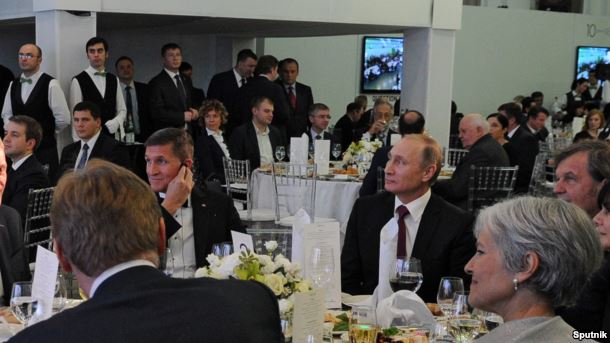
 Chris LaMay-West