Category Archives: 2024

In Search of the 24 Best Albums of 2024: May

24 2 4 Number Logo Design with a Creative Cut and Black Circle Background. Creative logo design.

Once upon a time there was a guy named Chris. Having spent years backfilling on decades gone past, in 2021 he set out on a quest to catch up on newer music. He listened to the critics choices for the best albums of the 2010s, and picked his favorites. He did the same for 2020, picking his top 20 from the critics most highly rated albums. And he listened to new releases monthly in 2021, eventually picking the 21 best albums of 2021. That was so much fun he decided to do it again in 2022 and 2023, listening each month and picking out the 22 best albums of 2022 and the 23 best albums of 2023. He is me!

There are links to the albums in the posts cited above, but if you’d like a one-stop playlist, I’ve got that set up in YouTube Music:

Also, do you want to know a secret? The review is still going on! Here are the previous editions of the 2024 monthly review if you missed them:

( January February March April )

A quick word on the “yes” and “maybe” categories I’ve sorted things into, before we get going with the latest:

Yes– This isn’t a guarantee, but it represents the albums that, upon first listen, I think could definitely be in the running for best of the year.

Maybe– These albums have something to recommend them, but also something that gives me pause. I’m putting them in their own category, because I have found “maybes” sometimes linger and eventually become “yeses”.

Now let’s get on with my top picks from 124 May new releases that I listened to!

Adeem the Artist, Anniversary– It’s country, but with a sheen reminiscent of 70s AM radio, and just the tiniest hit of electronic as well. Mostly, it’s good hooks, lyrical clarity, and emotional honesty. And songs describing same sex love, advocating for trans rights, mentioning Palestine, and discussing the historic legacy of racism tell you how out of country mainstream this North Carolina by way of New York artist is.
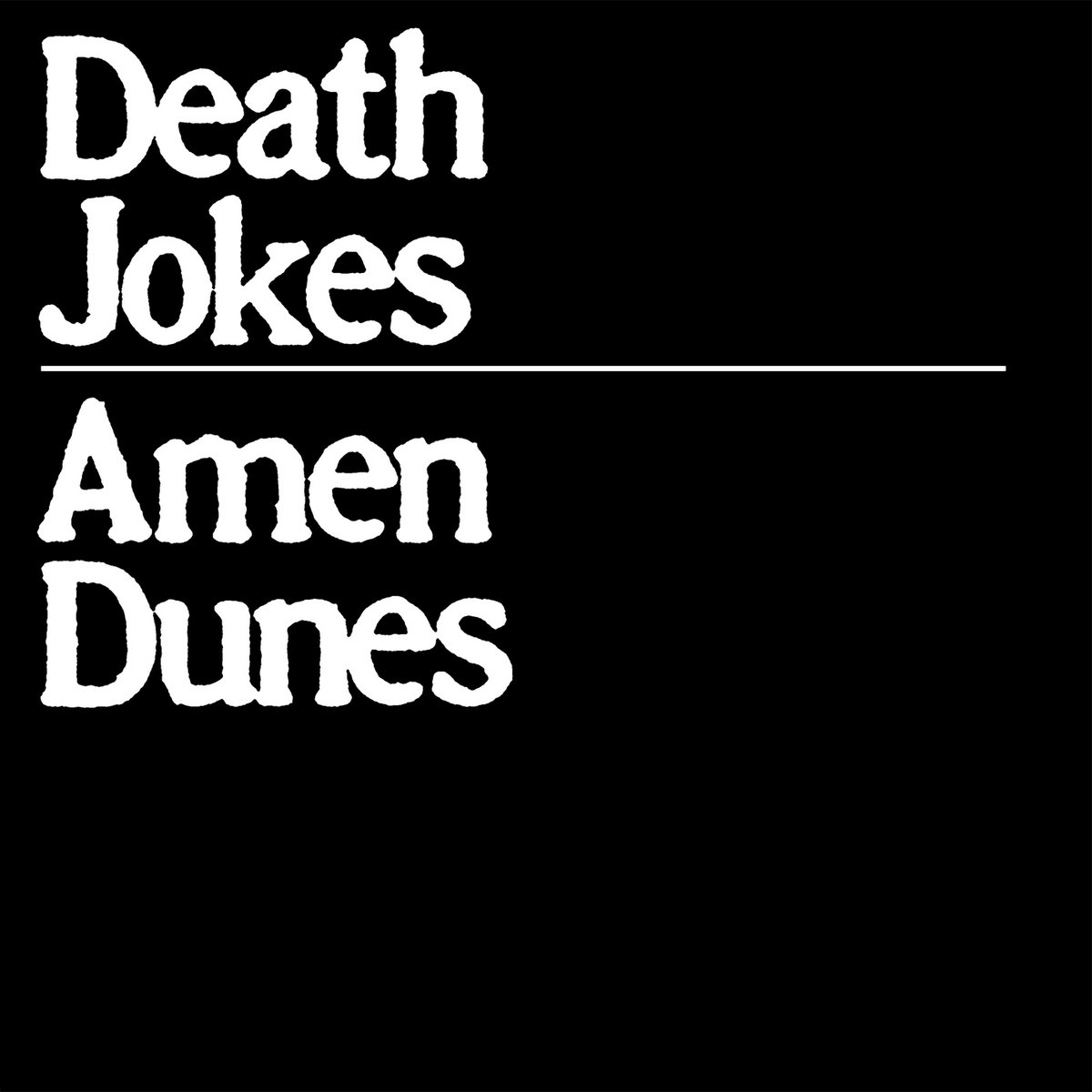
Amen Dunes, Death Jokes– Combining a sometimes-dark psychedelia with electronic music in a very evocative way. And sure enough, AMG subsequently told me that, “The project of Damon McMahon, Amen Dunes unites folk, psych-rock, electronic, and industrial elements into an intuitive, searching whole. ” Along the way there are samples from Lenny Bruce, Richard Pryor, and J Dilla, which gives you an idea of the scope of what the music and lyrics are going for here.

Anastasia Coope, Darning Woman– The vocal and musical loops and layers, the echoes, the stark voice, intelligent lyrics, and hint of the unearthly all steal one’s breath. Whatever it is this 21-year-old musician and painter is doing, it’s both beautiful and unsettling.

Belly, 96 Miles From Bethlehem– Spare and powerful hip hop based on the unrest in Palestine from this Palestinian-Canadian artist. In many ways, it sounds like a typical (though very good) socially conscious hip hop album in production and themes- family, faith, odes to one’s love. But in this case the family is in Palestine, the faith is Islam, and the lost love is Gaza and the West Bank. Powerful and timely.

Blitzen Trapper, 100’s of 1000’s, Millions of Billions– Warm, fuzzy pop with elements of singer-songwriter, psychedelia, and Neil Young-style ragged edges. Altogether, it brings to mind 70s AM radio, which is not to say that this Portland, Oregon band doesn’t feel fresh and vital. Well done Portland, Oregon band!

Crimeapple & Big Ghost Ltd, Bazuko– This collaboration between Colombian-born Crimeapple and anonymous blogger, hip hop writer and music producer Big Ghost is from another era, in several ways. Its stark mix, flow, and stories of the street feel like they belong to the late 90s/early 00s, and the subject matter largely revolves around the crack epidemic of the eighties. It doesn’t feel lost in time for all this, though, more like a great album that we all somehow missed.

F.U.N, Slum Village– J Dilla’s old group demonstrating that their excellence never was all about J Dilla. The mix is varied, metallic and urgent, the flow dynamic, and the lyrics interesting and positive. The whole thing feels redolent of the best of 00s hip hop. This Detroit group has been through a lot of changes, but they still know how to bring it!

Girl and Girl, Call a Doctor– Well, holy shit. The opening reminds me of one of Lou Reed’s story-poem songs. What follows carries on with that literate wordiness and uncomfortable emotional openness and marries it with a spare nervy rock as it sketches out the inner life of a troubled youth confronting some sort of medical crisis. An actual story arc! Delivered with equal helpings of wryness and sincerity. I’m keeping my eye on this Australian band!

Gyasi, Rock’N Roll SwordfightRock ‘n’ Roll Swordfight is a live album stitched together from three concerts in 2023. You could be forgiven for thinking that the concerts were by some kind of amalgam of Led Zeppelin and glam-era superstars like T Rex and David Bowie, which is to say, it is delightfully over the top rock in the best seventies fashion. Gyasi has me sold!

Hannah Vu, Romanticism– This second album from Los Angeles-based songwriter Hannah Vu certainly lives up to the title, it’s full of lush romanticism, though it serves equal parts darkness and difficulty with the sweetness. AKA it tells the truth about romance in a way that’s musically and lyrically compelling.

Ibibio Sound Machine, Pull the Rope– Such a joyful mix of multiple different strains of dance/electronic music! Fronted by London-born Nigerian singer Eno Williams, it is not a surprise that it’s redolent with Eurodance and Afrobeat. But what is, if not a surprise, a welcome find, is its knack for musical and lyrical hooks amidst the energy and fun.

King Hannah, Big Swimmer– Between hypnotically plainspoken vocals, poetic lyrics, and slow spare arrangements with a distorted feedback-laden guitar wall in the background, the songs here are arresting. This second album from singer Hannah Merrick has a lot to recommend it.
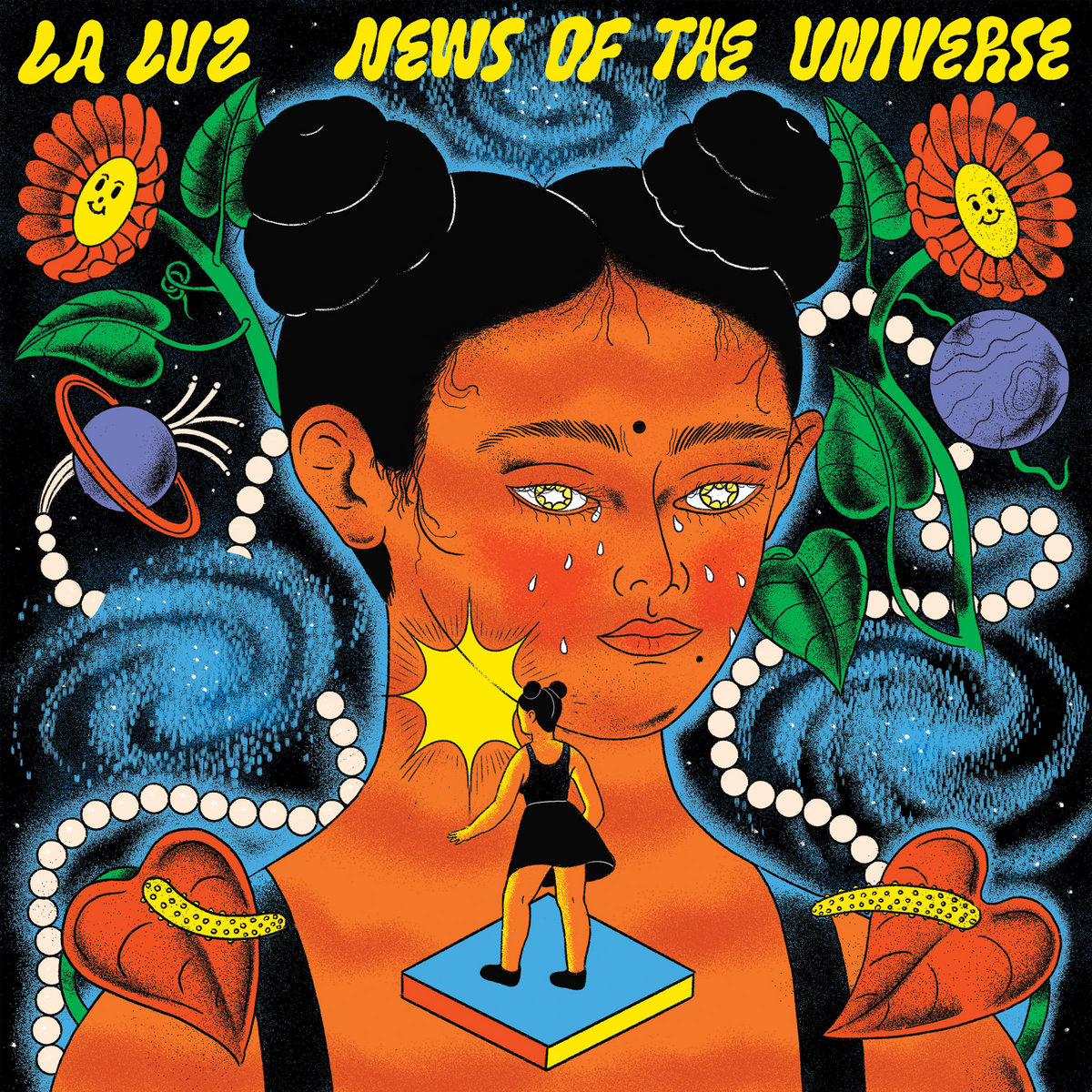
La Luz, News of the Universe– I’ve liked other things by La Luz, and how could I not? Their synthesis of surf music, reverb-drenched garage rock, and the sixties girl group sound is fuzzy, warm, and dark all at the same time. On this album the Seattle band is in top form, and the songs are informed by lead songwriter Shana Cleveland’s experience with cancer. It all adds up to a deep and powerful album.
Version 1.0.0

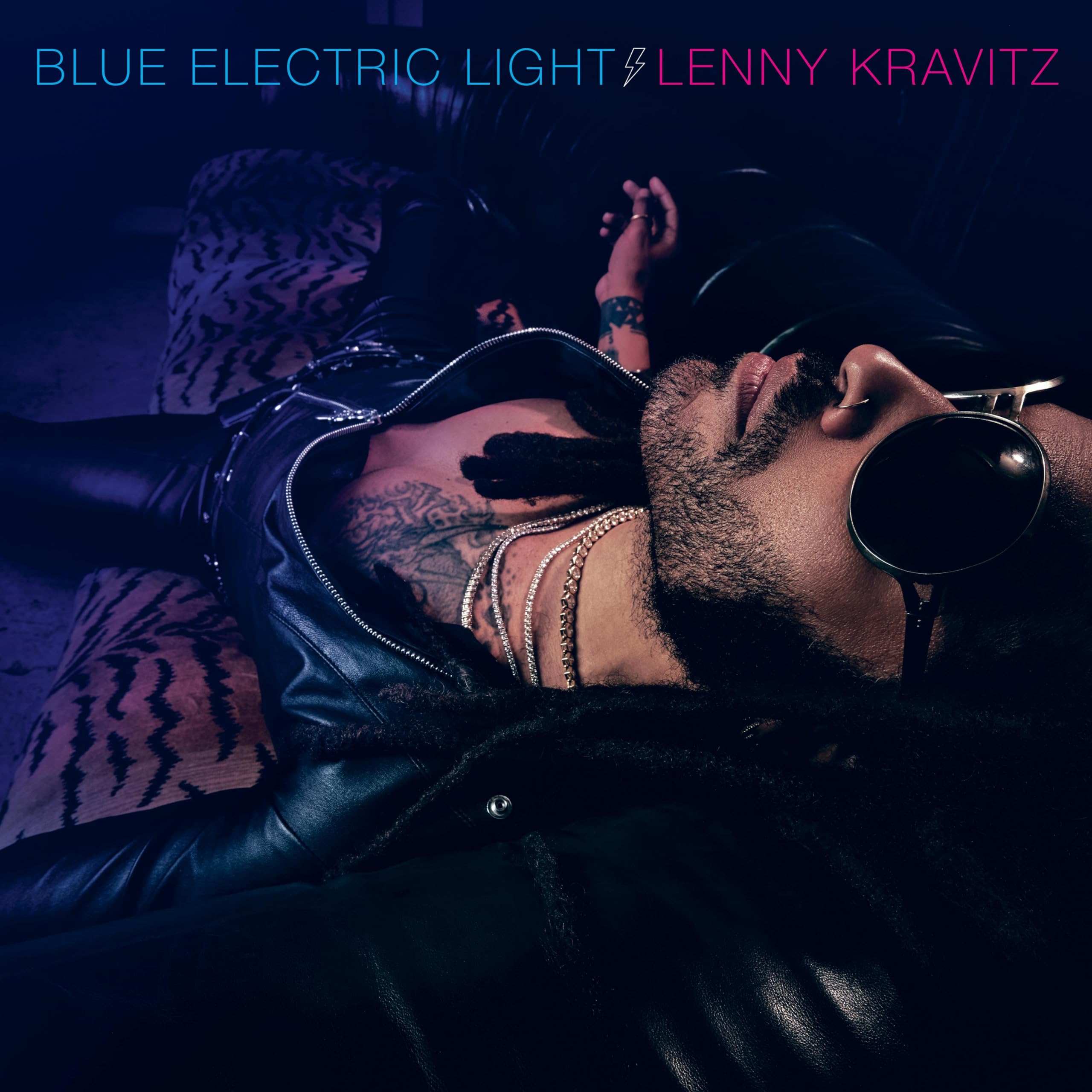
Lenny Kravitz, Blue Electric Light– Lenny Kravitz is in fine form here- 90s guitar god rock, funk, R&B, and electronic dance music all get their due, and never feel like they don’t fit together. It may not be especially new or different per his usual, but there’s genuine tenderness and vulnerability here, and musically it can’t be faulted.

Of Montreal, Lady on the Cusp– It starts off with a song declaring rock is dead, then transitions into another lamenting being too depressed to f&^%, and goes on in this lyrical arch vein supported by weary vocals, and a lively off kilter musical mix bridging the asynchronity of post-rock, impossibly stirring melodies, and the kaleidoscope mix style of electronic. Now I don’t want rock to be dead, but this 19th studio album from this Athens GA band at least gives us some hope that, if so, something interesting might replace it.
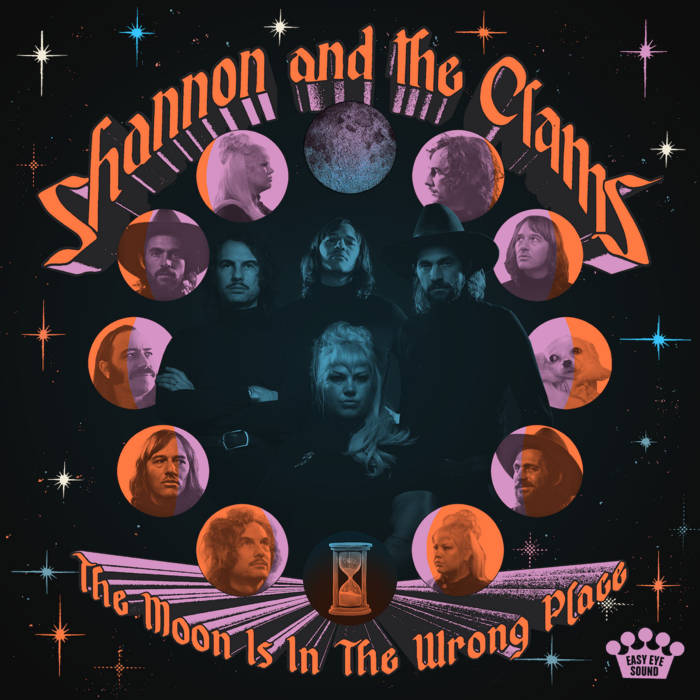
Shannon and the Clams, The Moon is in the Wrong Place– Shannon and the Clams have always been a great band, and I really love their retro garage rock/60s girl group feeling. But there’s no denying their music here is lent a terrible additional power and focus through lead singer Shannon Shaw’s wrestling with the untimely passing of her partner.

Shellac, To All Trains– While it definitely gets an added layer of import from being Steve Albini’s final album, honestly it does very well on its own even without that. This reminds me of the playful, more inventive side of 80s hardcore, and is full of clever surprises. All the way around, a fitting epitaph for one of noise rock’s greatest champions.
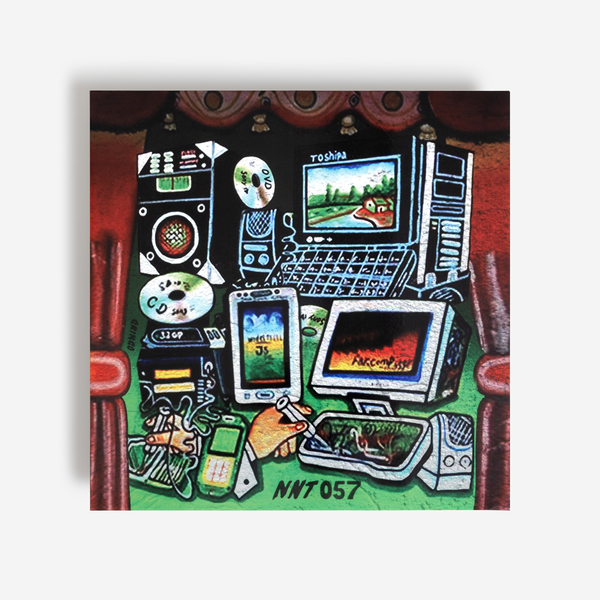
Sisso & Maiko, Singeli Ya Maajabu– Hello glitchy beats, over the top low-bit video game sound effects, and afro-pop exuberance! Tanzanian producer Sisso’s eponymous Dar es Salaam studio represents the forefront of the East African singeli genre. Singeli’s relentless speeds of over 200 BPM provide ample room for experimentation, which is taken further by collaboration with avant garde keyboardist Maiko. This is how the new is born.

The Courettes, Hold On, We’re Comin’– Potent garage punk combo featuring a Brazilian guitarist, a Danish drummer, and lots of cool rock & roll stomp. Amen. And an incredible set of covers ranging from early sixties pop rock to the New York Dolls to Taylor Swift. Really. Nothing but solid fun!
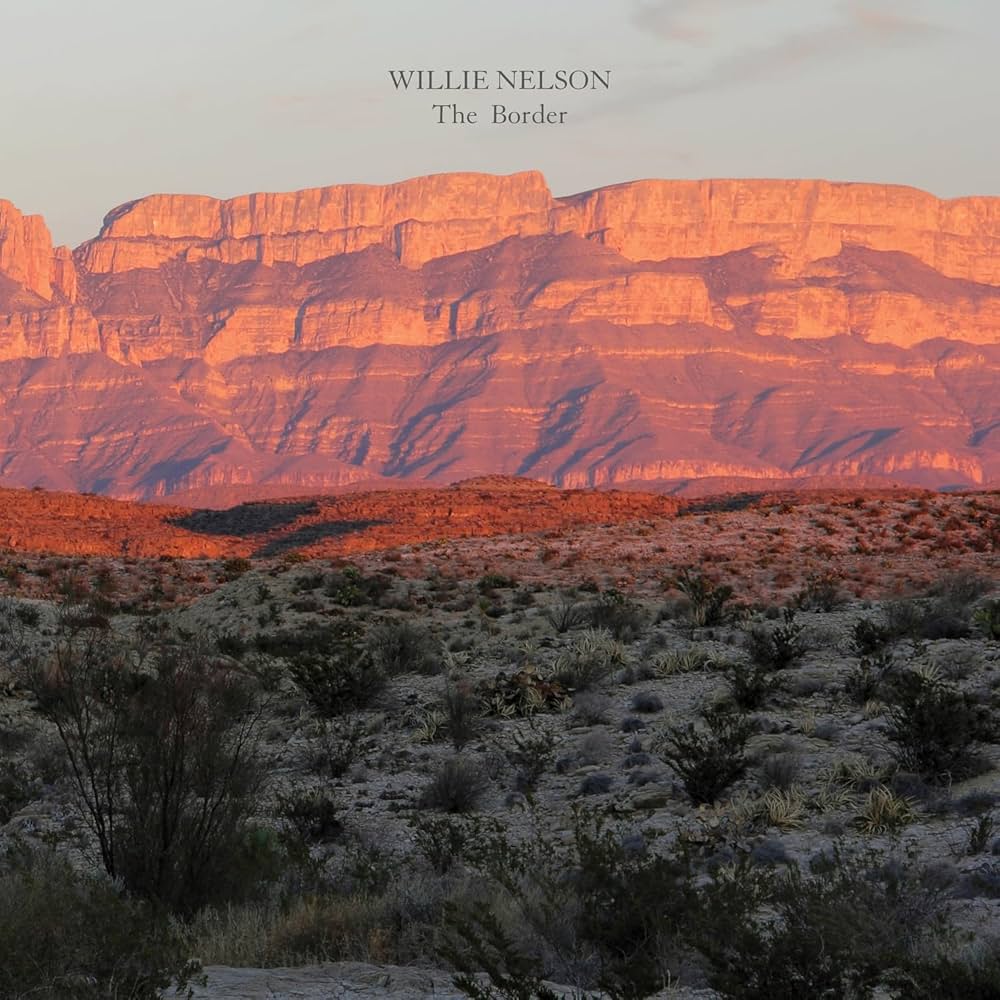
Willie Nelson, The Border– His 75th Album! And my goodness he’s in fine form here. A border patrol agent, a dream about being Hank Williams’s guitar, a passel of sweet love songs. Not thematic unity, but it sounds and feels like it belongs together and has a powerful intro and a sweet outro.

Willow, Empathogen– Willow has ended up on my Honorable mention list in two previous years, and for good reason- her music is inventive, brash and as smart as it is fun. She’s pushing her previous boundaries again here, with a glitchy electronic approach joined to something more like jazz, torch songs, and R&B crooning.

Young Jesus, The Fool– It feels like an anguished indie folk acoustic kind of thing, but sharper and darker than the typical outing in that oeuvre, and with surprising (and haunting, unsettling) music and vocal effects along the way. This Chicago band currently located in L.A. is on my watchlist now!

Maybe

  • Arab Strap, I’m Totally Fine With It Don’t Give a Fuck AnymoreAs Days Get Dark was on my Honorable Mention list for 2021, and this has the same things going for it- heavy shimmering wall of guitar, sometimes even slightly upbeat lyrics, and a vocal and lyrical commitment to tales of burned out bitter darkness. It doesn’t sound as fresh to me now, but it’s still a compelling combination.

  • Axolotes Mexicanos, 4ever– Of all the female lead vocalist poppy melodic fun Mexican punk bands, Axolotes Mexicanos are my favorite! Okay, they’re also the only example I know of, but I always love this band when it’s American, so I can’t help loving the Mexican version too, even if it isn’t the newest thing in the world.

  • Connie Smith, Love, Prison, Wisdom and Heartaches– Well my, my, my! Between her personal bona-fides- she was a hit-charting country singer in the 60s and 70s- and a smart selection of classics from a variety of country greats, this whole album sounds like a bygone school of country music living again. And if it’s frozen in time in that sense, it is a reminder of how grand a time that was for the genre.

  • Crumbs, You’re Just Jealous– I loved this album in the eighties! It was just the right amount of pop new wave edge on genuine punk exuberance. Now, my sources tell me this was recorded by a quartet from Leeds in 2024, so I’m not sure how I loved it in the eighties. But I know I did!

  • Dehd, Poetry– Is there room in your heart for slightly snotty, straightforwardly rocking indie rock? Then this Chicago trio might be for you! It’s solidly fun and energetic the whole way through.

  • Dua Lipa, Radical Optimism– Not quite the consistent level and energy of her 2020 big splash album, but her charms are still high, and the tracks never work less than well.

  • I.Jordan, I Am Jordan– This album brings in elements of dubstep, old school house, acid house, and is musically pure fun. As an often-instrumental piece I’m not sure if it gets in its hooks enough to be great, but it’s solidly good!

  • Joywave, Permanent Pleasure– Since my dear wife hails from Rochester NY, I always pay special attention when I run across a band from there. And this album is worth the attention- it has a bit of sleazy garage rock revival sound, a bit of EDM production/disco revival feel, a bit of 00s indie, and a bit of hazy and heavy guitar seventies. The bits all add up to a solidly enjoyable album, even if it isn’t the freshest or newest thing ever.

  • Mandy, Lawn Girl– This album has an appealing combination of 90s inspirations including grunge-pop, noise rock, and more introspective indie rock. It’s not a new thing under the sun, but it’s like sinking into a warm bath of 90s guitar-powered alt rock.

  • Mo Troper, Svengali– They were on my list in 2021, and darned if they’re not threatening to do it again! The music here is so sweetly melodic and delivered with such sincerity. Along the way you’ll hear sixties chiming, jangly eighties alt, and even electronic, and it all fits together. It would have been straight to yes, but I’m not sure about the multi-part abstract theme it ends with.

  • Pokey LaFarge, Rhumba Country– Pokey LaFarge’s blend of old school rock, swing, and dash of polka and rumba had me won over on his 2021 album In the Blossom of Their Shade, and I’m feeling it again here. Inherently not new, but damn well done and with a sincerity that makes it sound fresh.

  • Rapsody, Please Don’t Cry– Her album Eve was one of my favorites, and the poetry and power on display in that album is present here, with an extra bit of verve via wrestling with increased fame. The production tends a little often toward contemporary hip hop standard though, and the guest appearances don’t always serve the flow.

  • Shaboozey, Where I’ve Been, Isn’t Where I’m Going– There’s something to be said for traditionalism in country music, I certainly am a fan. But there is also, in any genre, a need for artists who seek the new, and push themselves to evolve. Musician, producer, and film maker Shaboozey has my attention with this take on country informed by EDM and hip-hop. It sometimes is a little too production slick for my tastes, but also holds the various sources in reverence, and I’m a sucker for the beats and minor chords.

  • Slash, Orgy of the Damned– You throw together Slash, covers of blues and soul standards, and an array of well-chosen and well deployed guests, and you’ll get me to go along! It’s not blazingly original, but solid good fun at what it does.

  • Trent Reznor/Atticus Ross, Challengers (Original Score)– The Nine Inch Nails’ veteran provided a techno-driven score to Luca Guadagnino’s love-triangle tennis dramedy, and producer Atticus Ross then remixed it into a pumping megamix. I expect soundtracks to be abstract and orchestral, and also long- both are not true here! It has moments like that, but is a fine and dynamic electronic mix, which feels not surprisingly like the nineties. And even seems to tell a story!

  • Various Artists, I Saw the TV Glow (Original Soundtrack)– In keeping with the film’s surreal take on nostalgia, a crew of indie pop musician, including Caroline Polachek, Bartees Strange, Jay Som, yeul pay tribute to the ’90s. Between the varied choices, their individual excellence, and how well they understood the assignment, the results are pretty excellent, and cohesive without being all the same. I have some concerns about length and relative fizzling out toward the end, but still, a solid contender.

  • Yaya Bey, Ten Fold– The range is a little narrow in the neo-soul direction, but there are places it gets livened, and regardless her voice and sharp lyrical wit are pure gold.

And there we are, May out. June should follow soon! And, since I’m about to start listening to September, July and August review notes are complete and those postings should be out before too long…
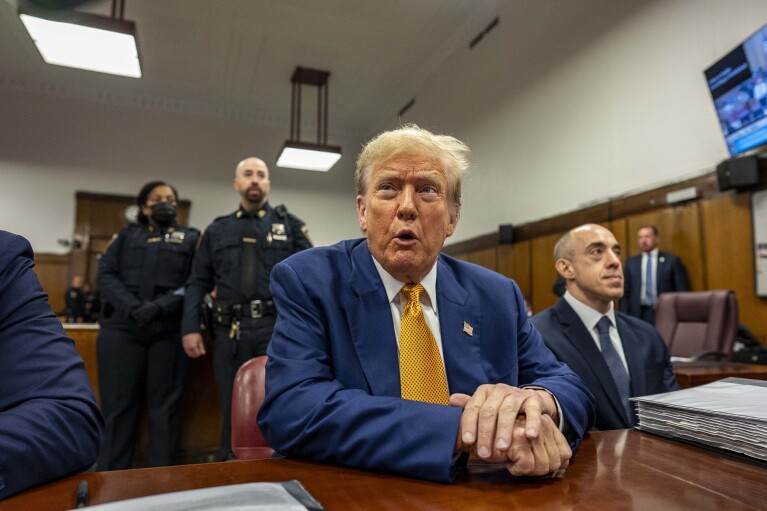
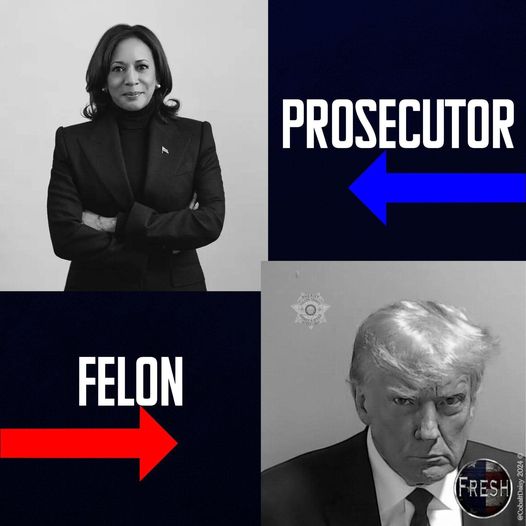
Election 2024: Prosecutor vs. Felon!

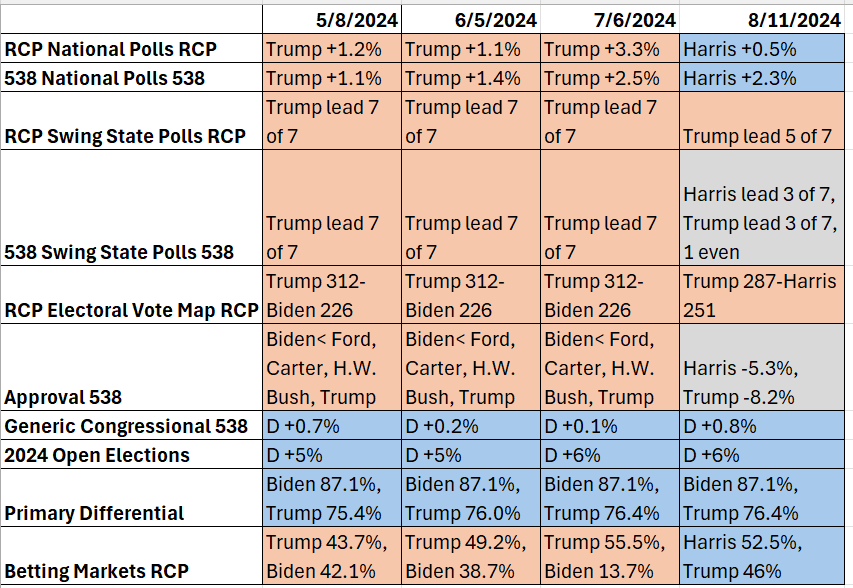
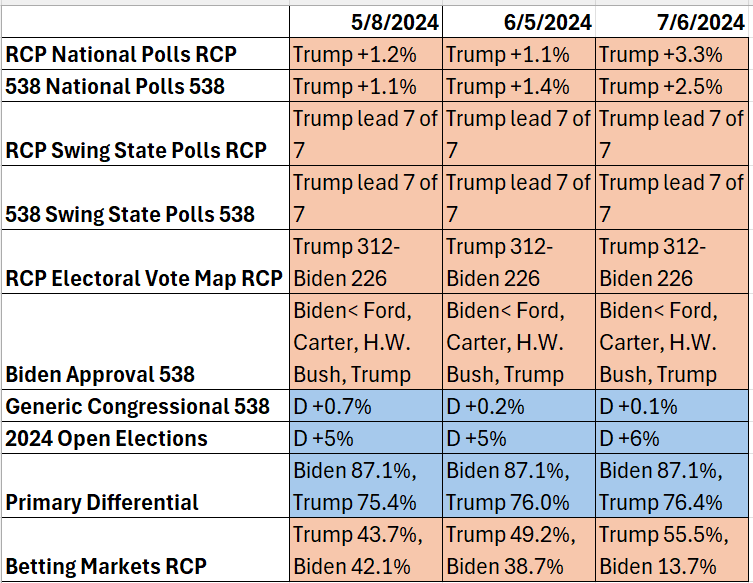
As I’m sitting down to write this Sunday night, there are about 35 hours until polls open. If you’re reading it Monday, it’s less than 24! So here we are, at our last update before the election itself. What does the semi-final picture look like?

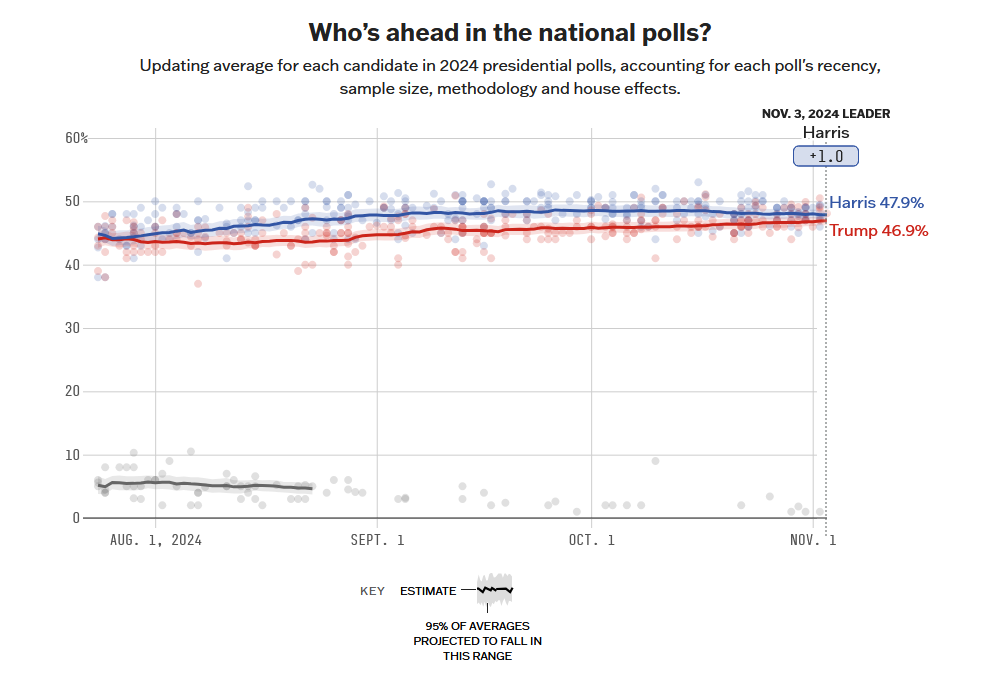
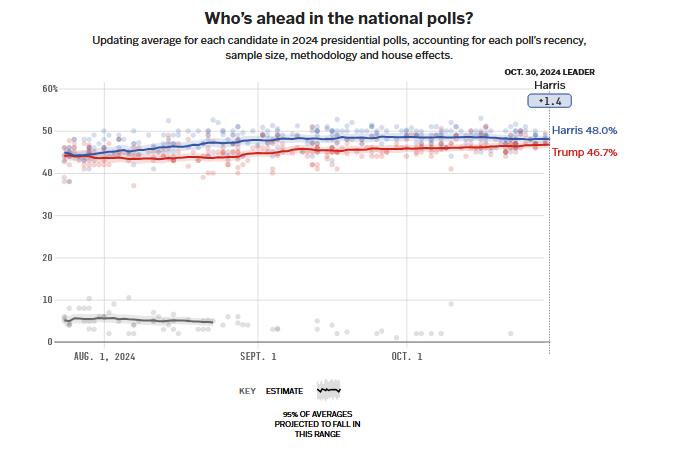
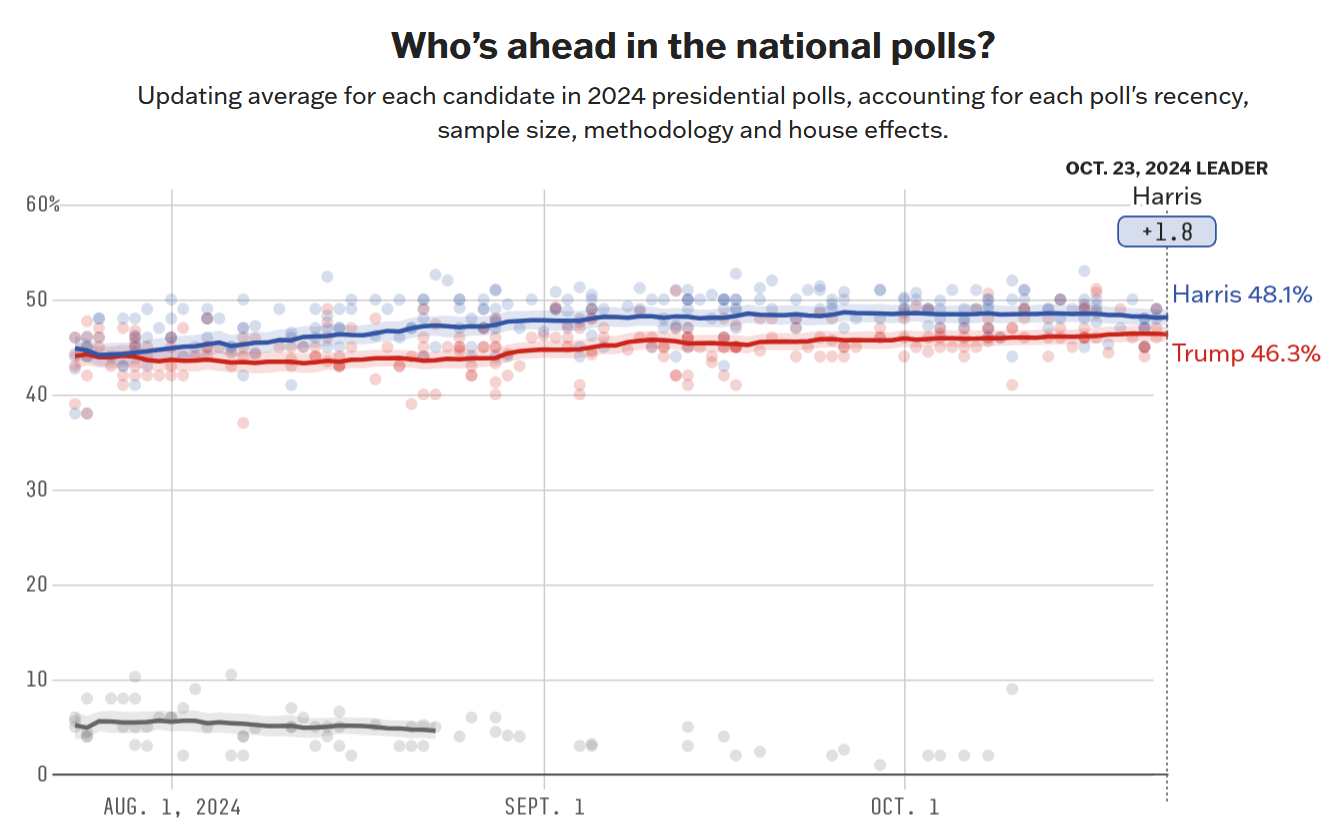
Trump’s lead in the RealClearPolitics poll average has narrowed over the last four days from 0.4% to 0.1%. Over at 538, with it’s more rigorous methodology of weighting polls according to the pollster’s track record of reliability and partisan tilt, Harris remains ahead, but her lead is down from 1.4% to 1% over the past four days:

That’s a bit of a mixed picture. It’s also well within the standard polling error of +/-3%. The other thing we can observe is that the 538 Harris lead is below the point- somewhere in the neighborhood of 2% to 3%- where a Democratic national lead doesn’t necessarily translate into an Electoral College lead. But, between the margin of error and the unknowns of how late deciders will break (the last two elections they have gone disproportionately to Trump, but there have been many other elections where they break toward the Democratic candidate, or go roughly equally to both sides) she definitely could get there.

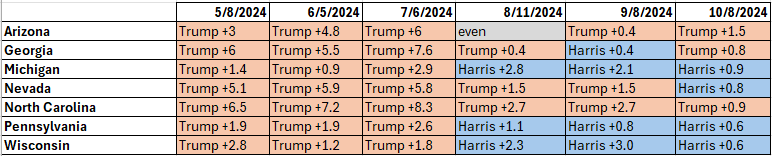
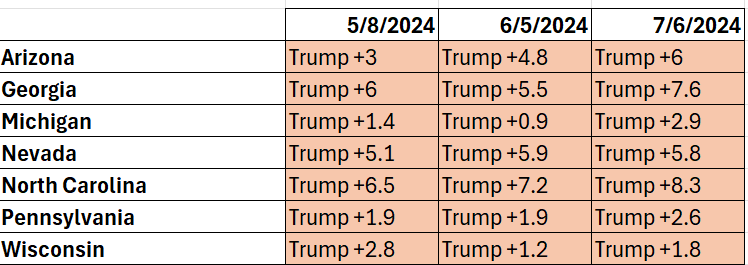
Can we get a clearer picture by looking at the states? For the 7 swing states, RCP continues to show Trump leading in 5 of 7 states. 538, with it’s more reliable methodology, now shows the same, with Nevada going from a tie four days ago to a 0.4% Trump lead. Other than that, it’s also a scattered picture- Trump’s leads in Arizona and North Carolina are up from four days ago, his leads in Georgia and Pennsylvania are down, and Harris has bumped up slightly in Wisconsin and down slightly in Michigan. All of these changes are so small though that they could be statistical noise. And, crucially, every swing state margin remains less than the polls margins of error, and the same 4 of 7 states from four days ago remain separated by less than 1%:

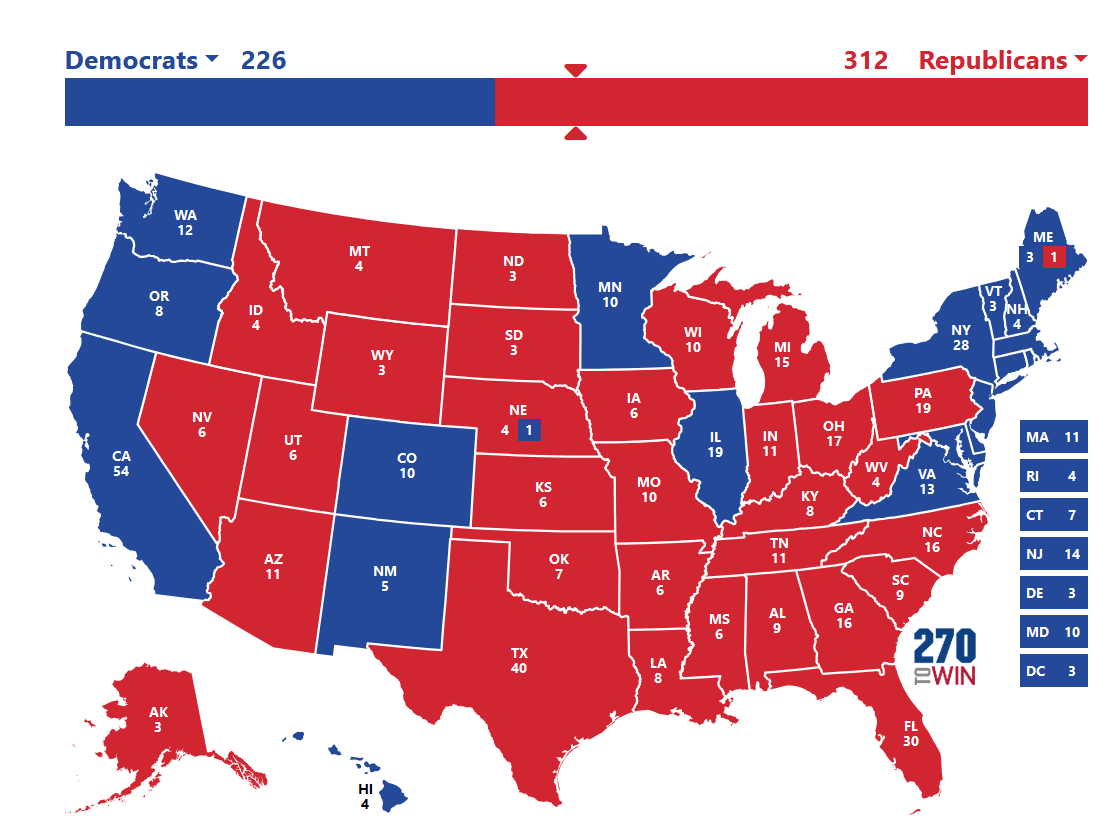
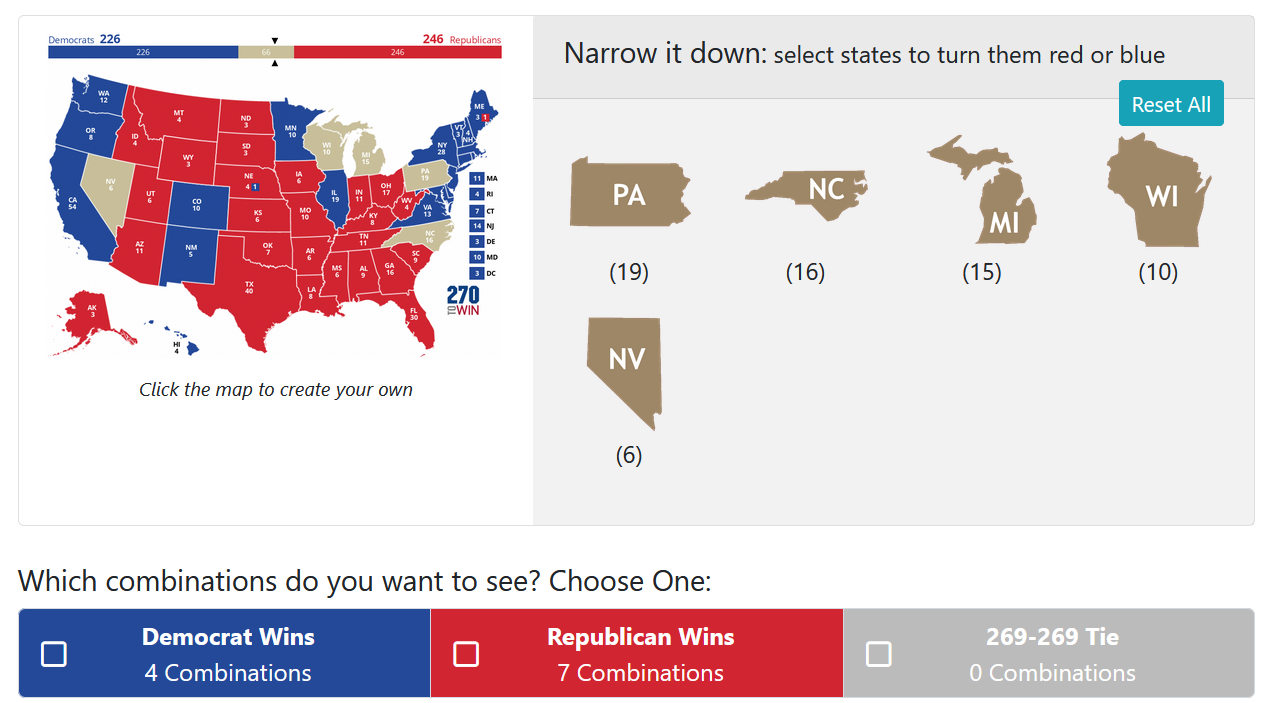
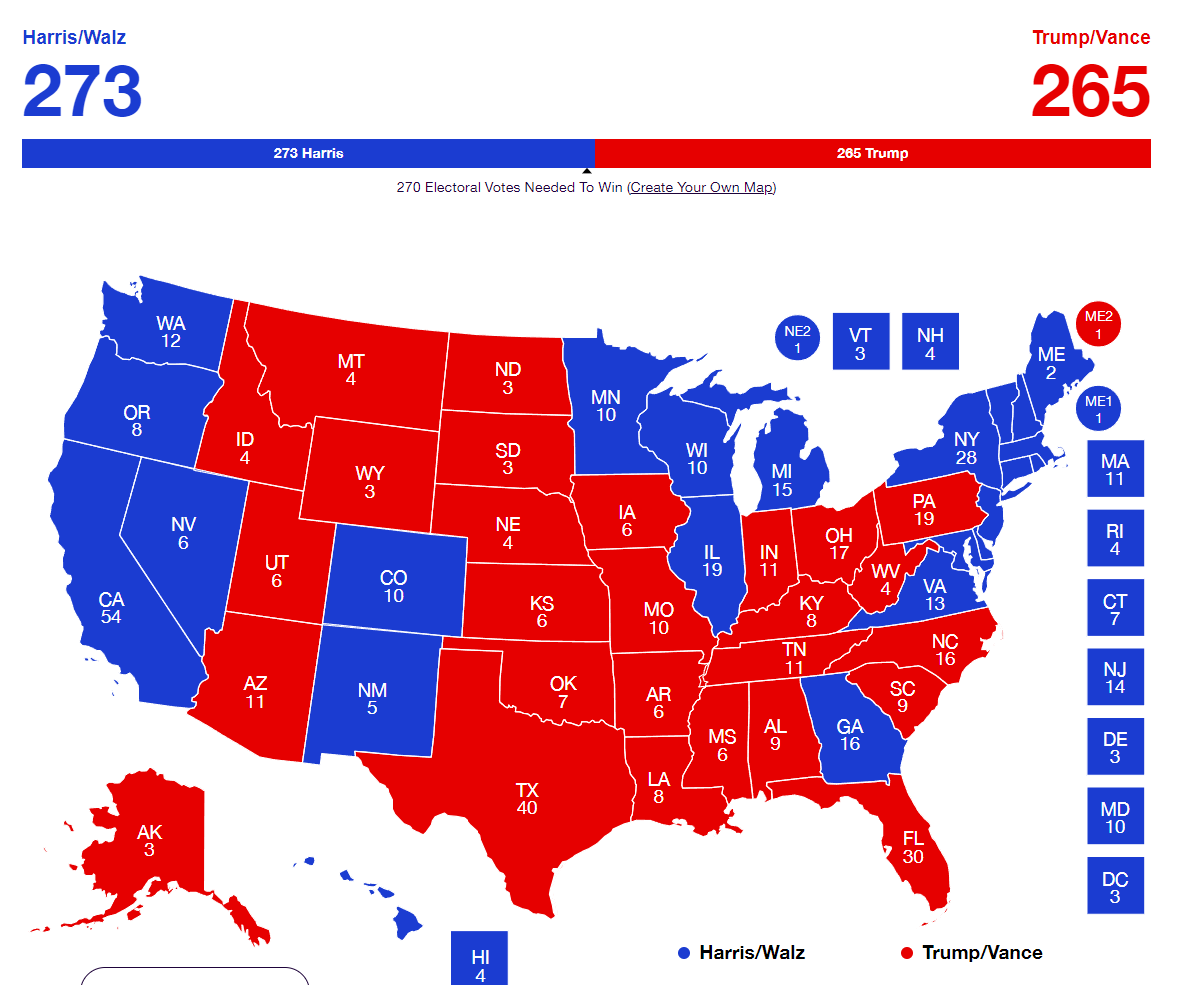
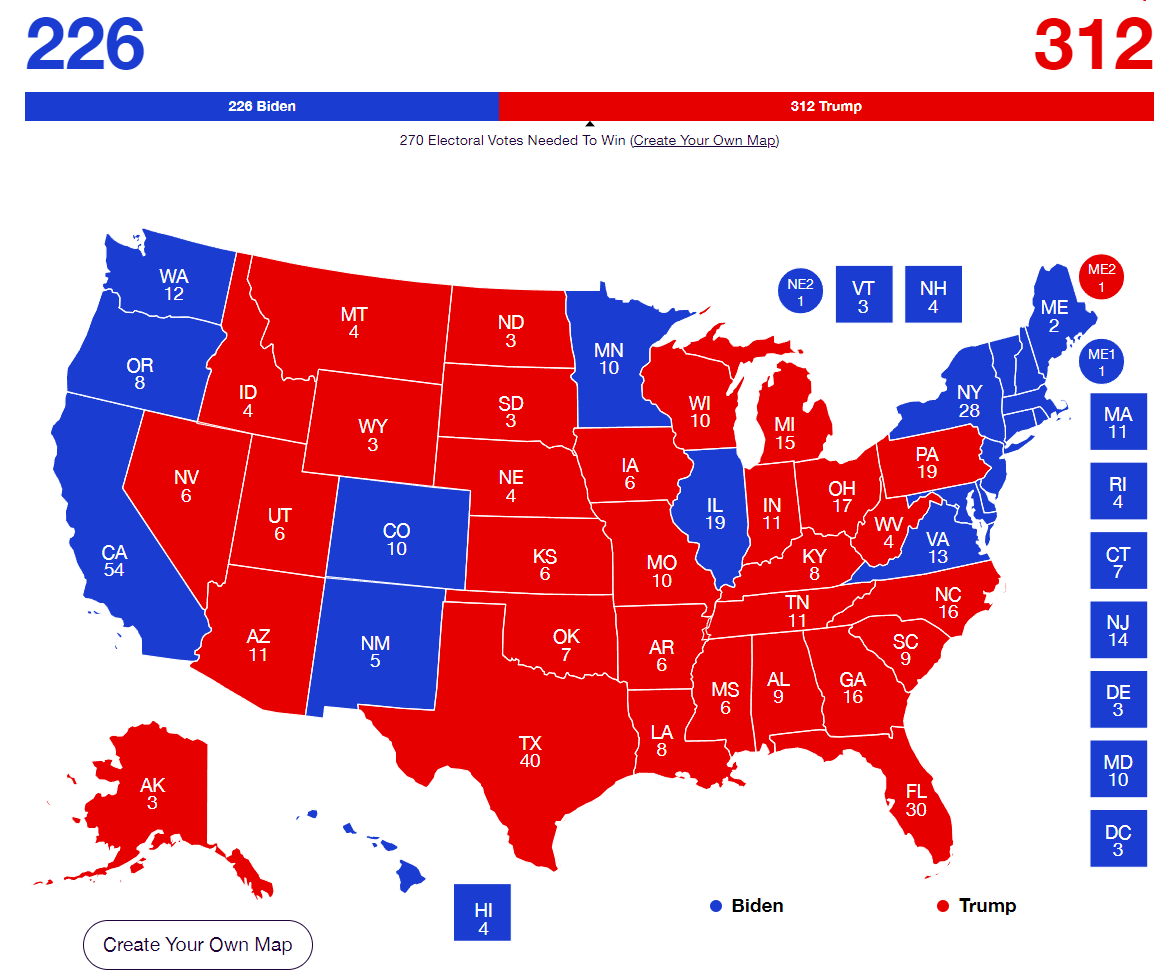
So what does that add up to? RCP still has the same map as four days ago (but note that their Pennsylvania average only has Trump ahead there by 0.3%, so if that state changed it would flip things to 270-268):

538’s state polls now would result in the same electoral map as above, with the exact same Pennsylvania proviso as above (their average only has Trump ahead by 0.2% in Pennsylvania).

And so, what was true four days ago remains true- with four states separated by less than 1%, and all seven below the margin of error, it wouldn’t be a major surprise to see either candidate win any given state. It would even be consistent with these numbers to see either Harris or Trump win all seven. It’s one thing to say that, but visually it’s kind of startling when you realize that both these outcomes would be entirely consistent with current polling:

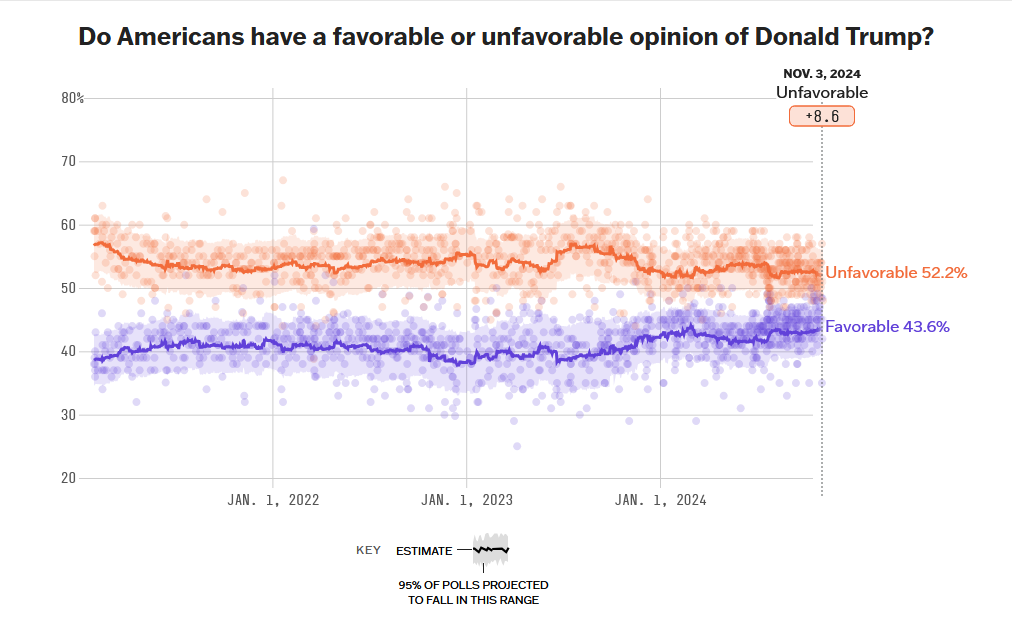
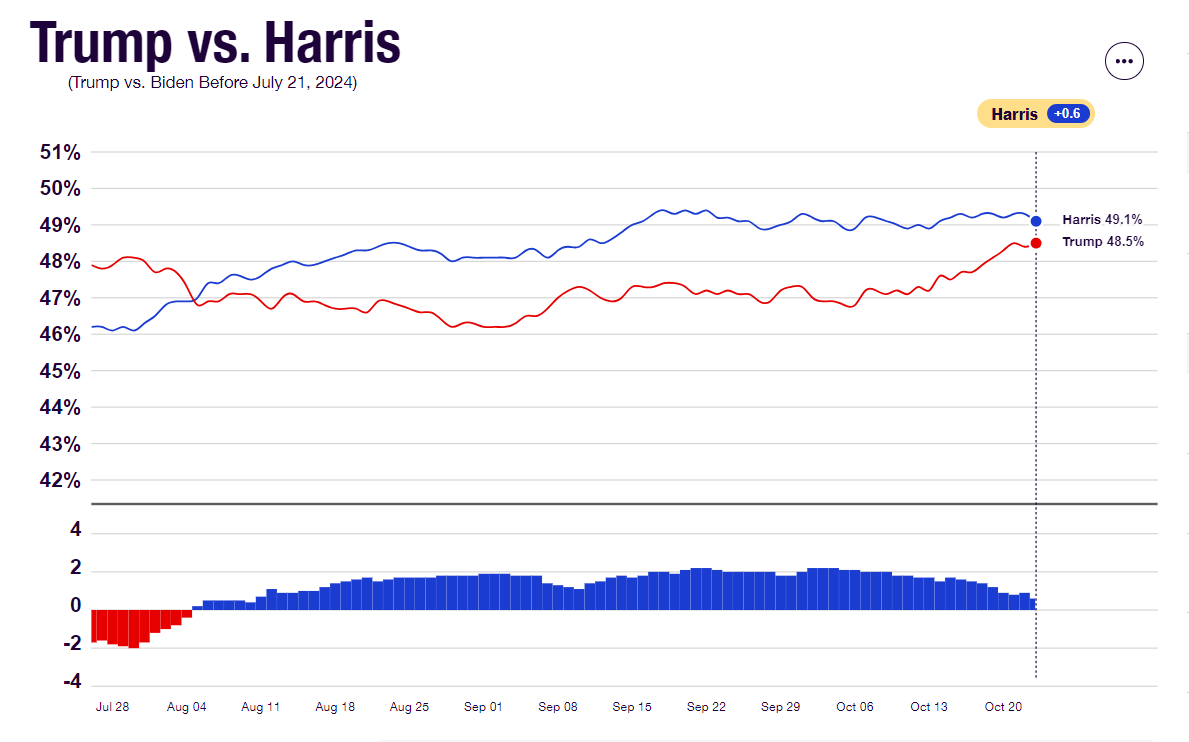
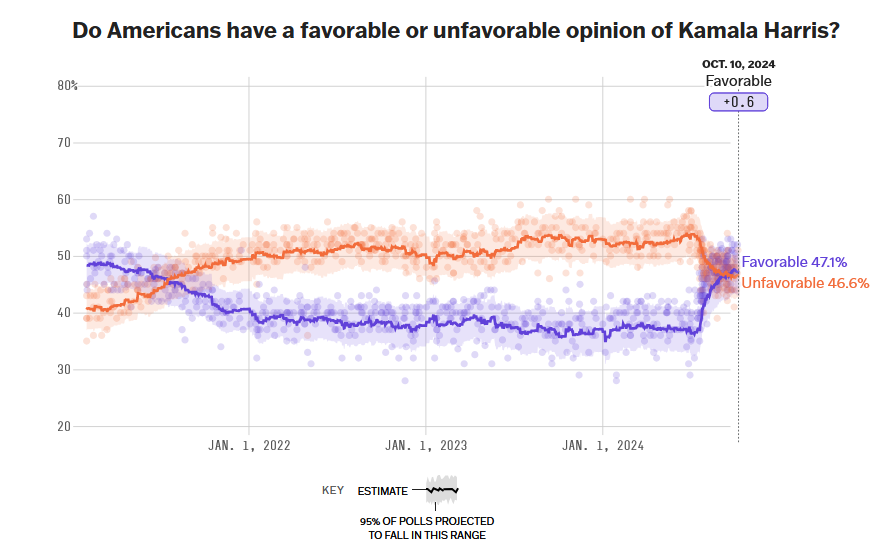
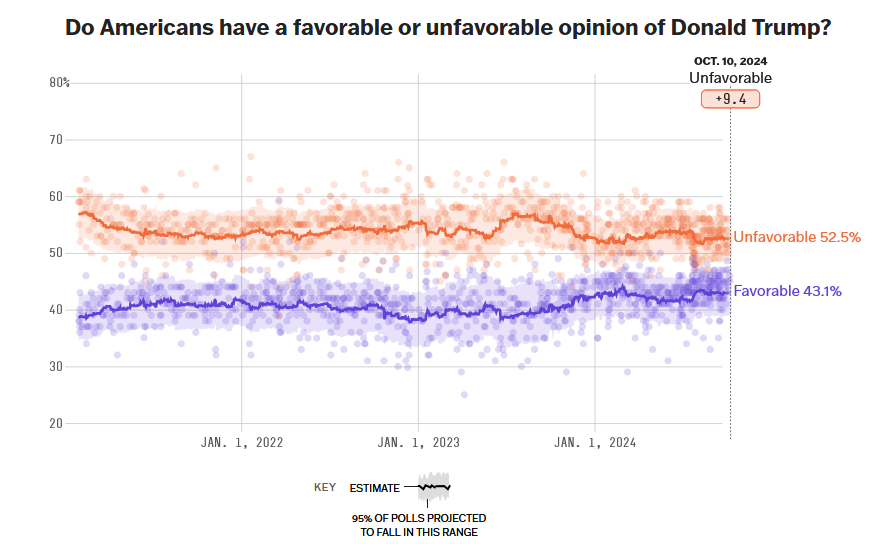
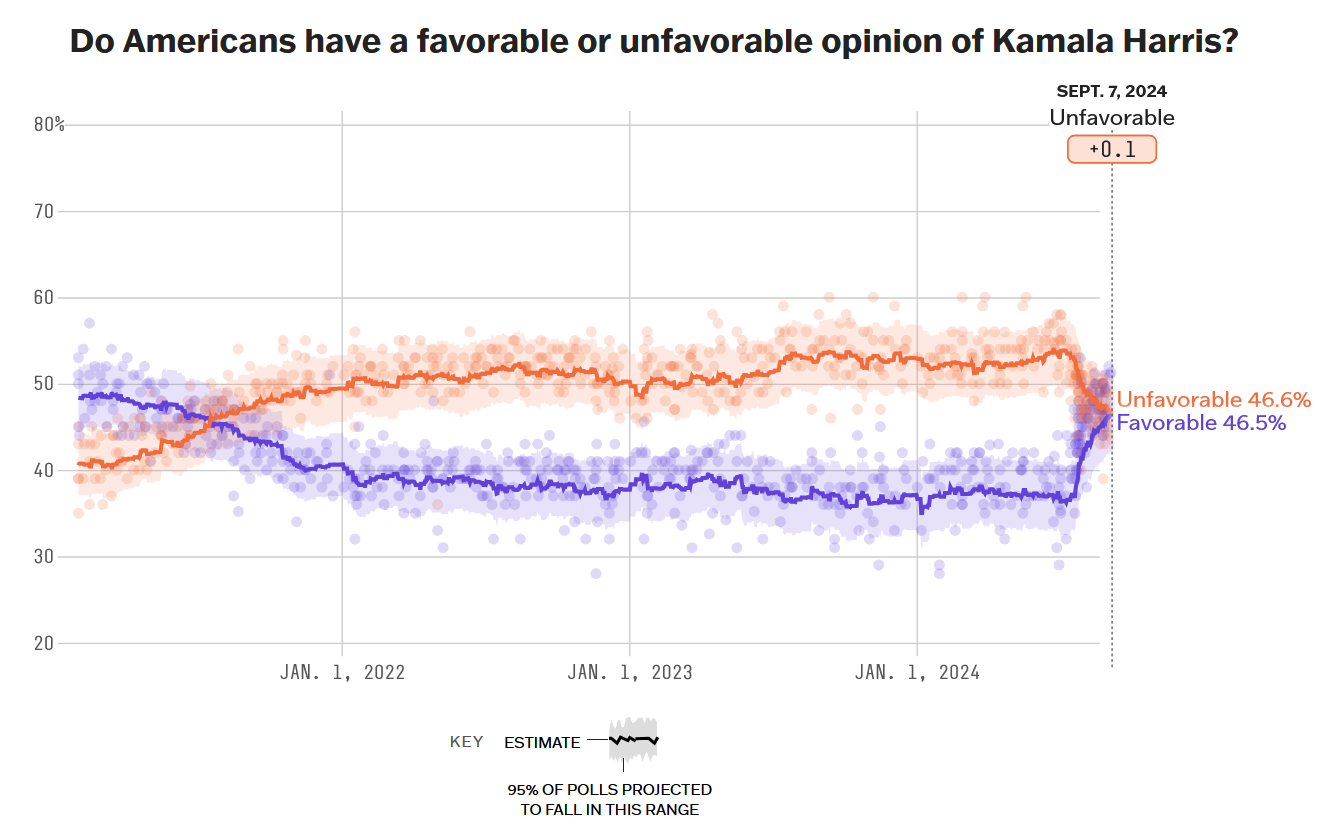
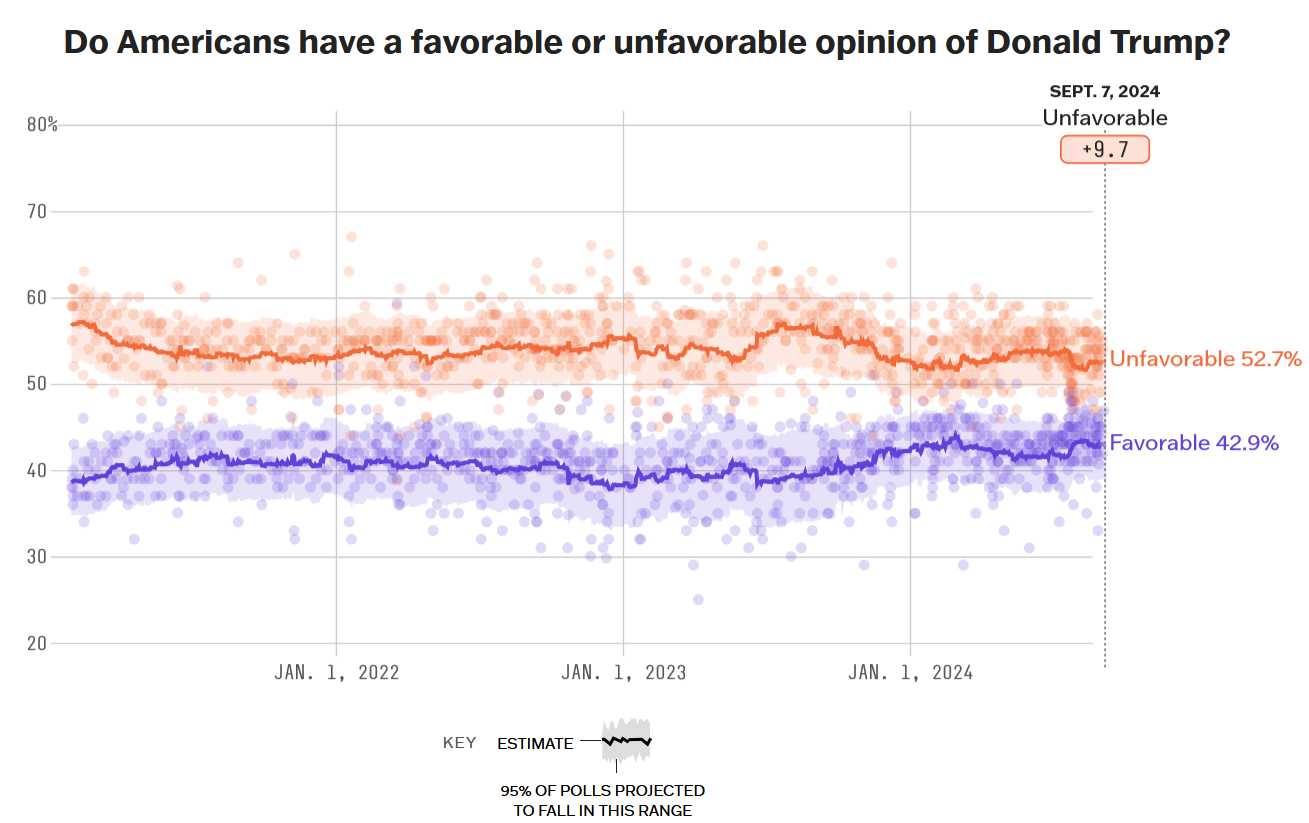
Approval ratings, which are another kind of stand in for preference, still show an edge for Harris, but her net negatives have grown from 1.5% four days ago to 2% today, while Trump’s net negative has improved by 0.4%. Still advantage Harris, but getting to the point where it’s not really a meaningful difference:

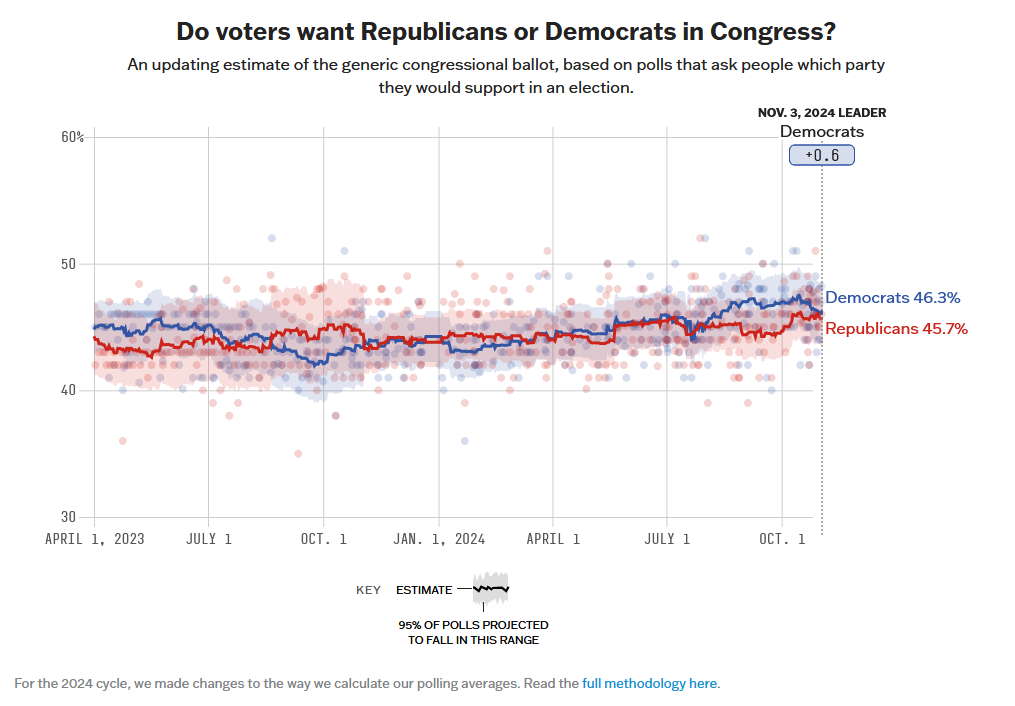
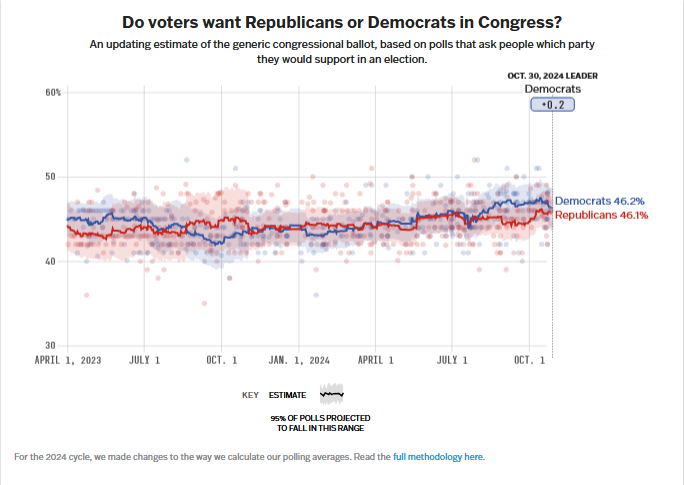
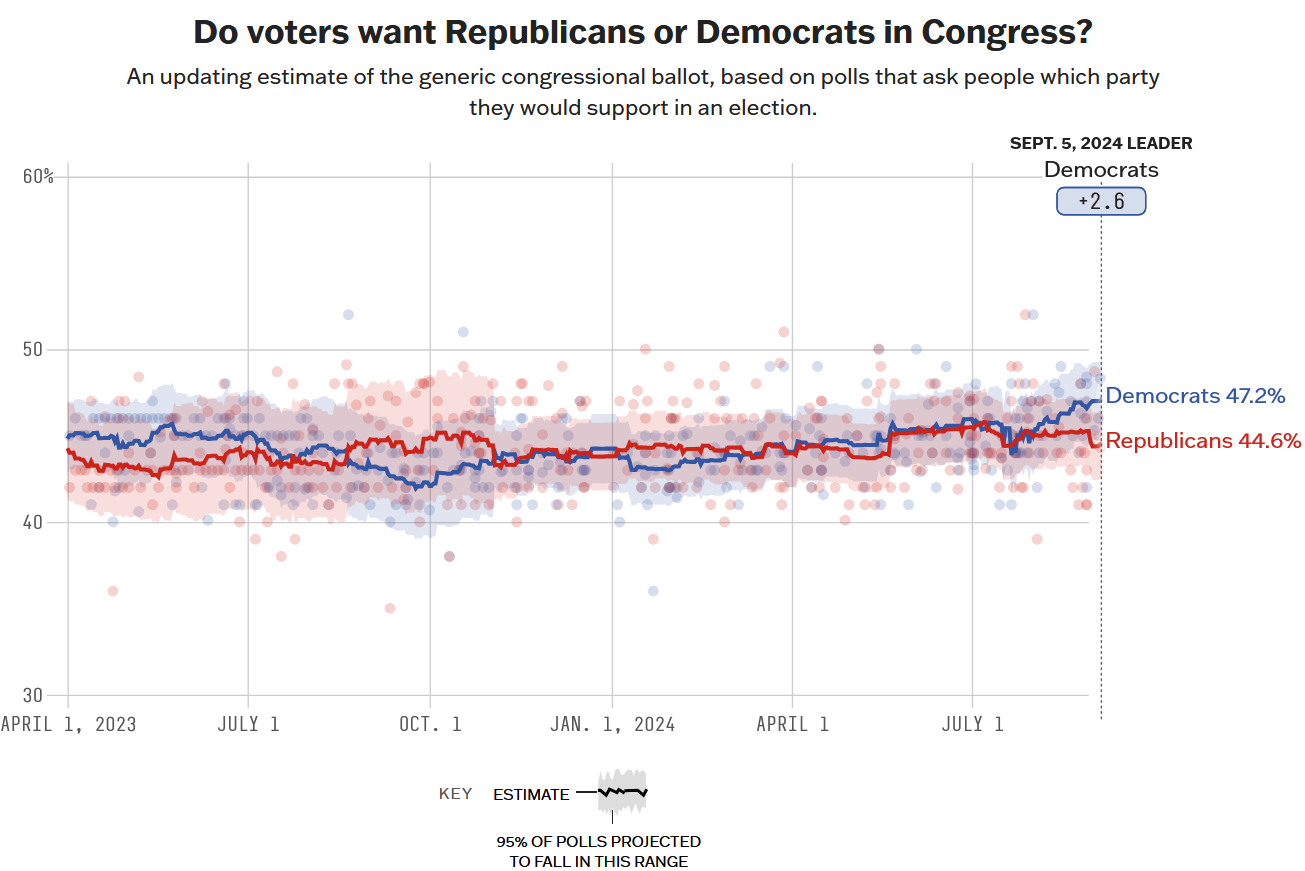
In some good news for Democrats as a whole, their Congressional preference edge has expanded a little from four days ago:

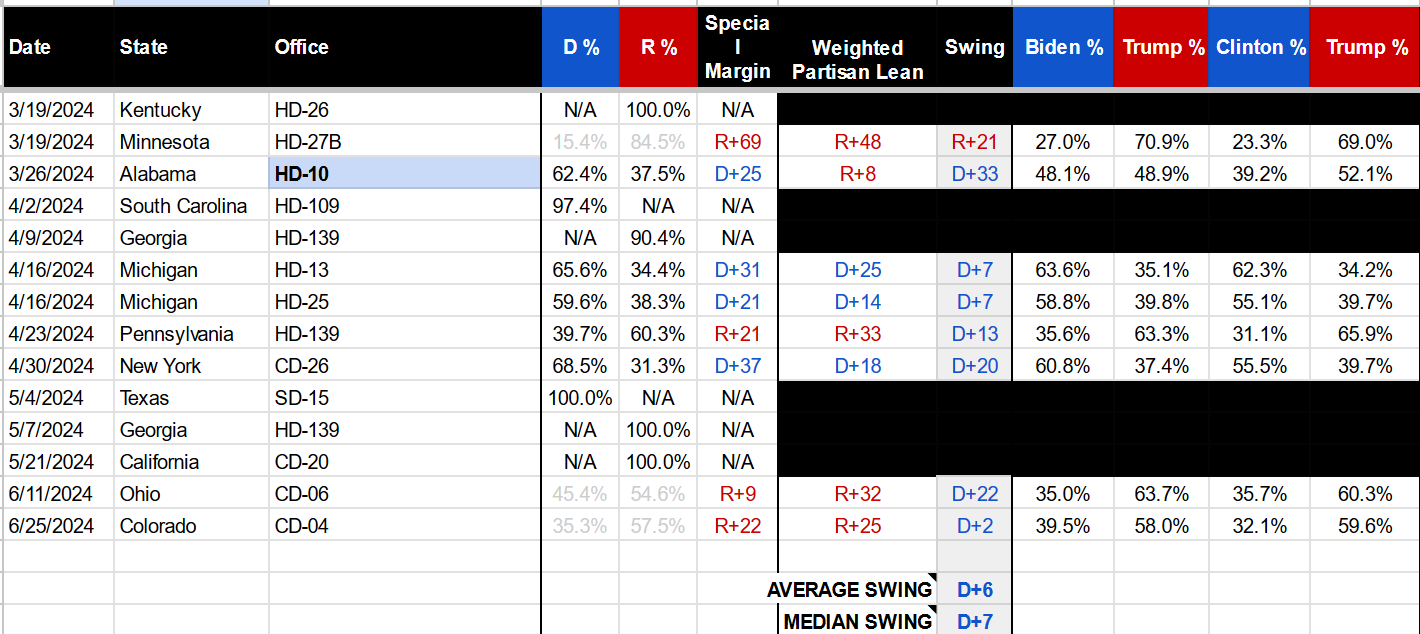
No change in this, but a significant indication of overall strength for Democrats remains that, through 100 special elections over the past two years, the party has outperformed by an average of 6% against the partisan lean of the races in question (per a spreadsheet compiled by Nathaniel Rakich of 538):

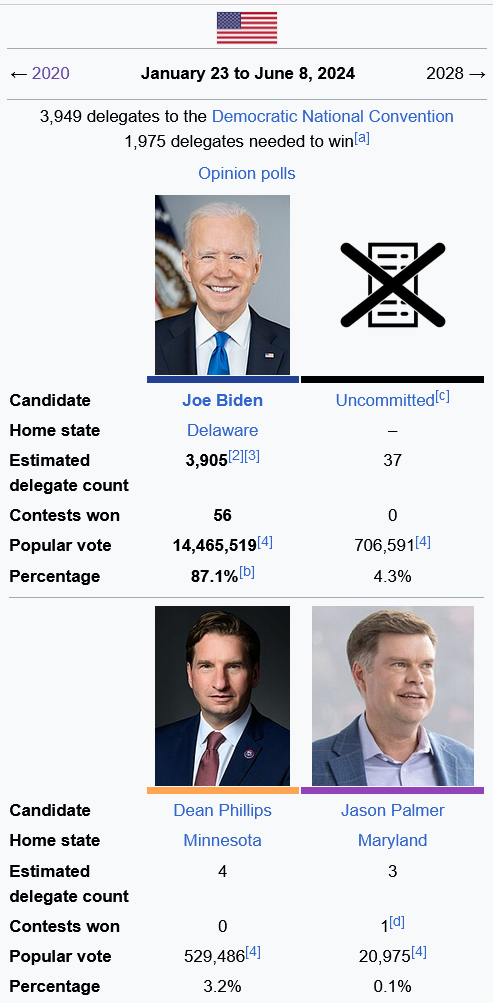
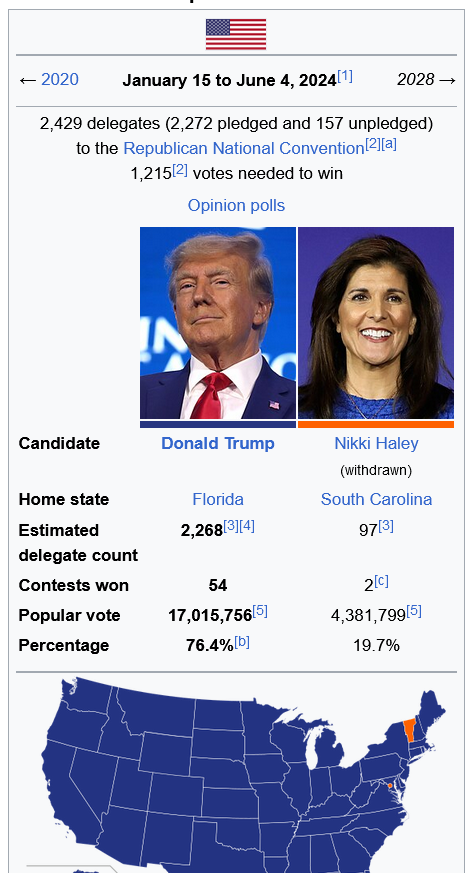
There’s also no change in this indicator, but it remains true that Biden’s percentage in Democratic primaries was ahead of Trump’s in Republican primaries, indicating that Republicans had comparatively more wavering partisan supporters to bring home for their nominee:

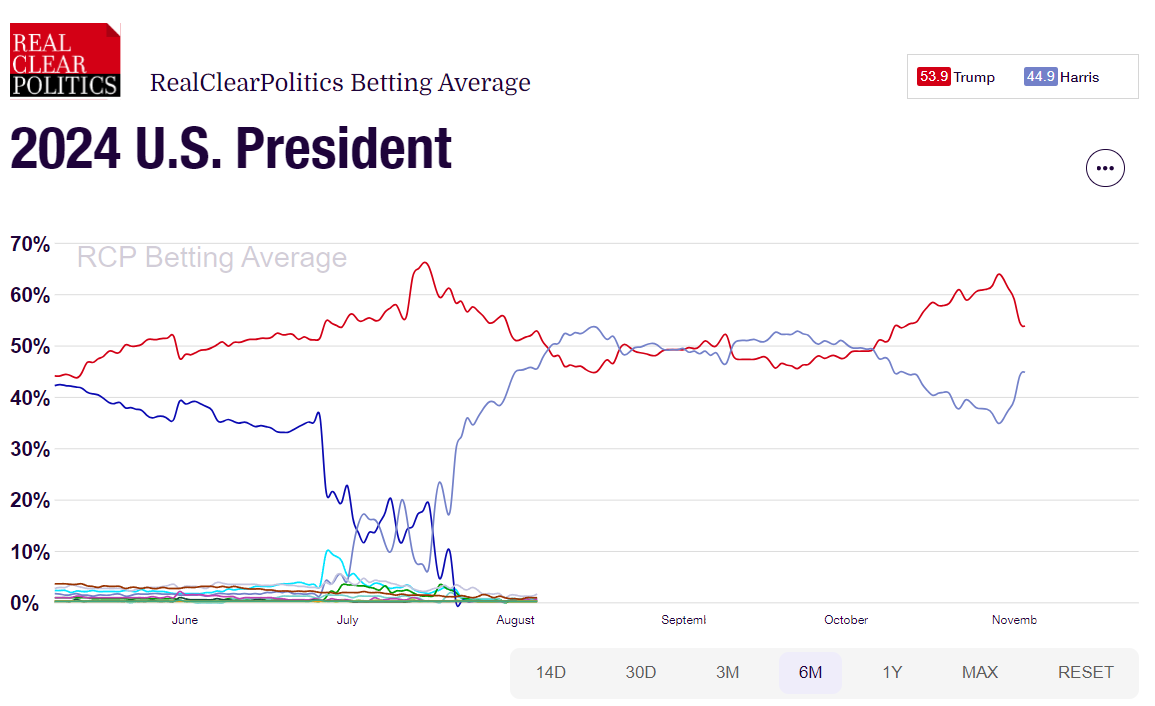
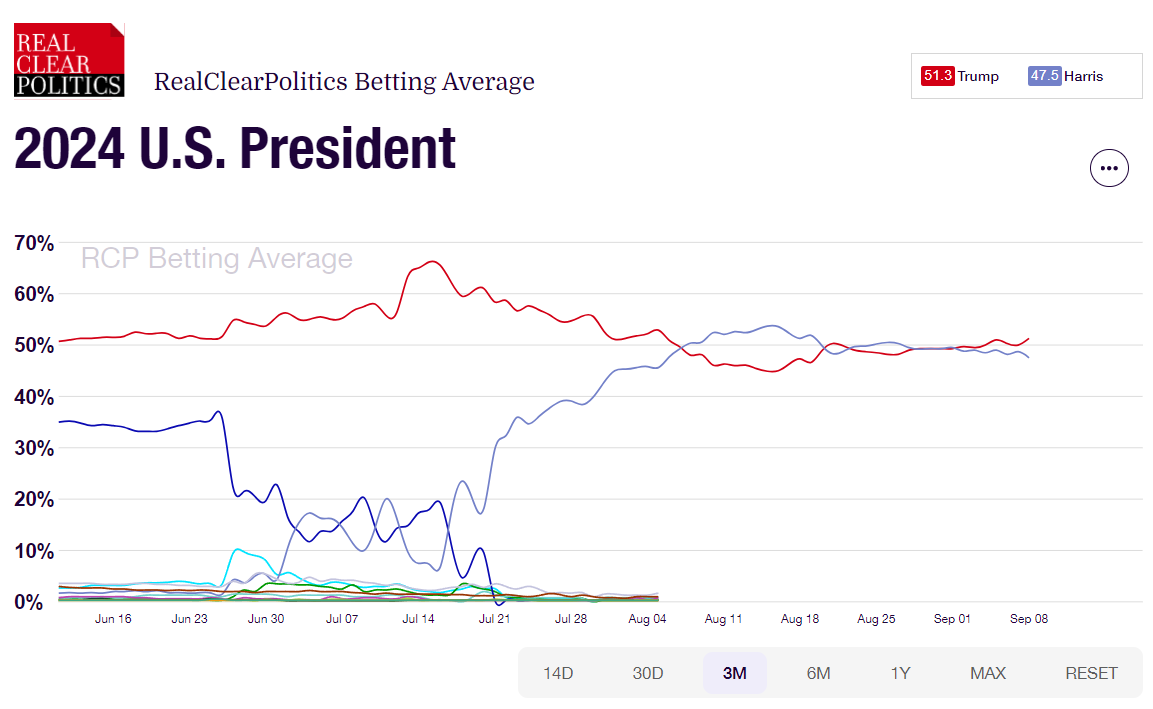
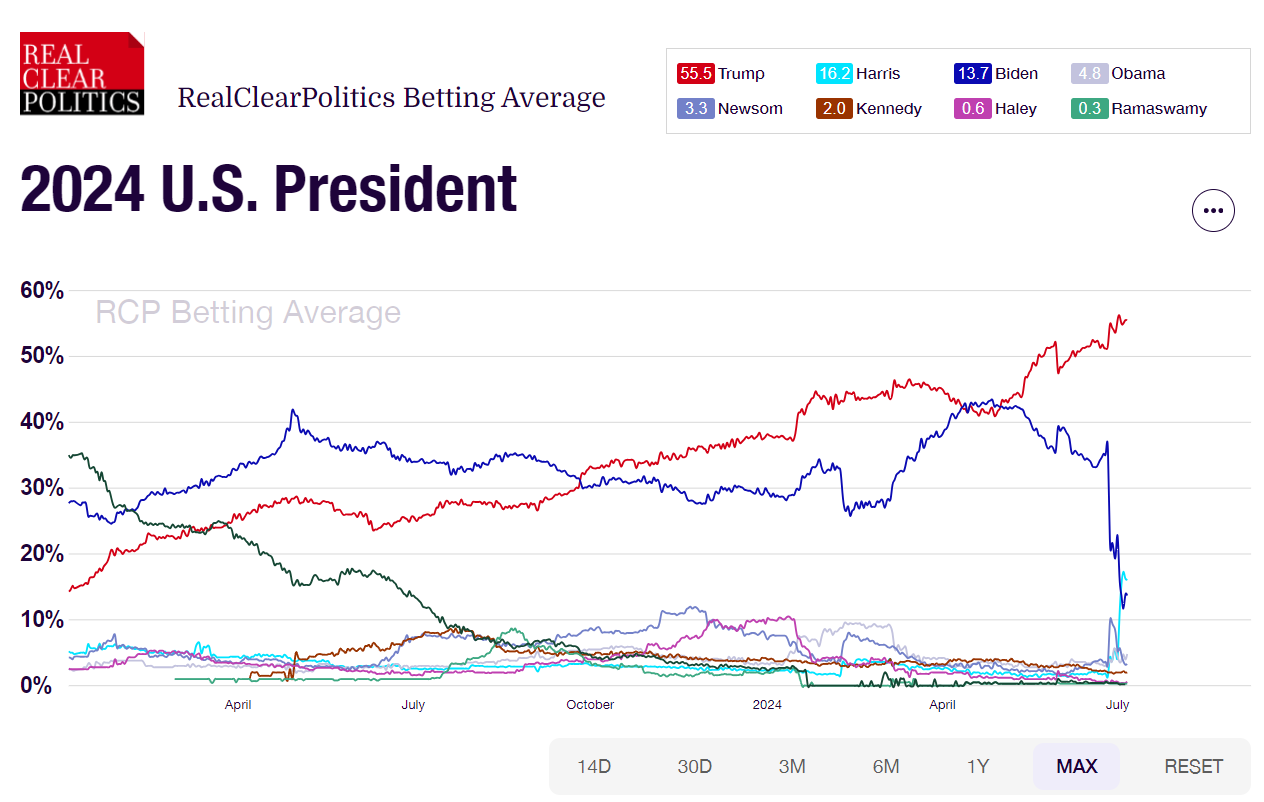
The one thing that has really shifted over the last four days is the betting markets, where Trump’s chances went down by 10% and Harris’s correspondingly rose. I think they spotted the arbitrage exposure I talked about in the last post and are hedging their bets (every pun intended):

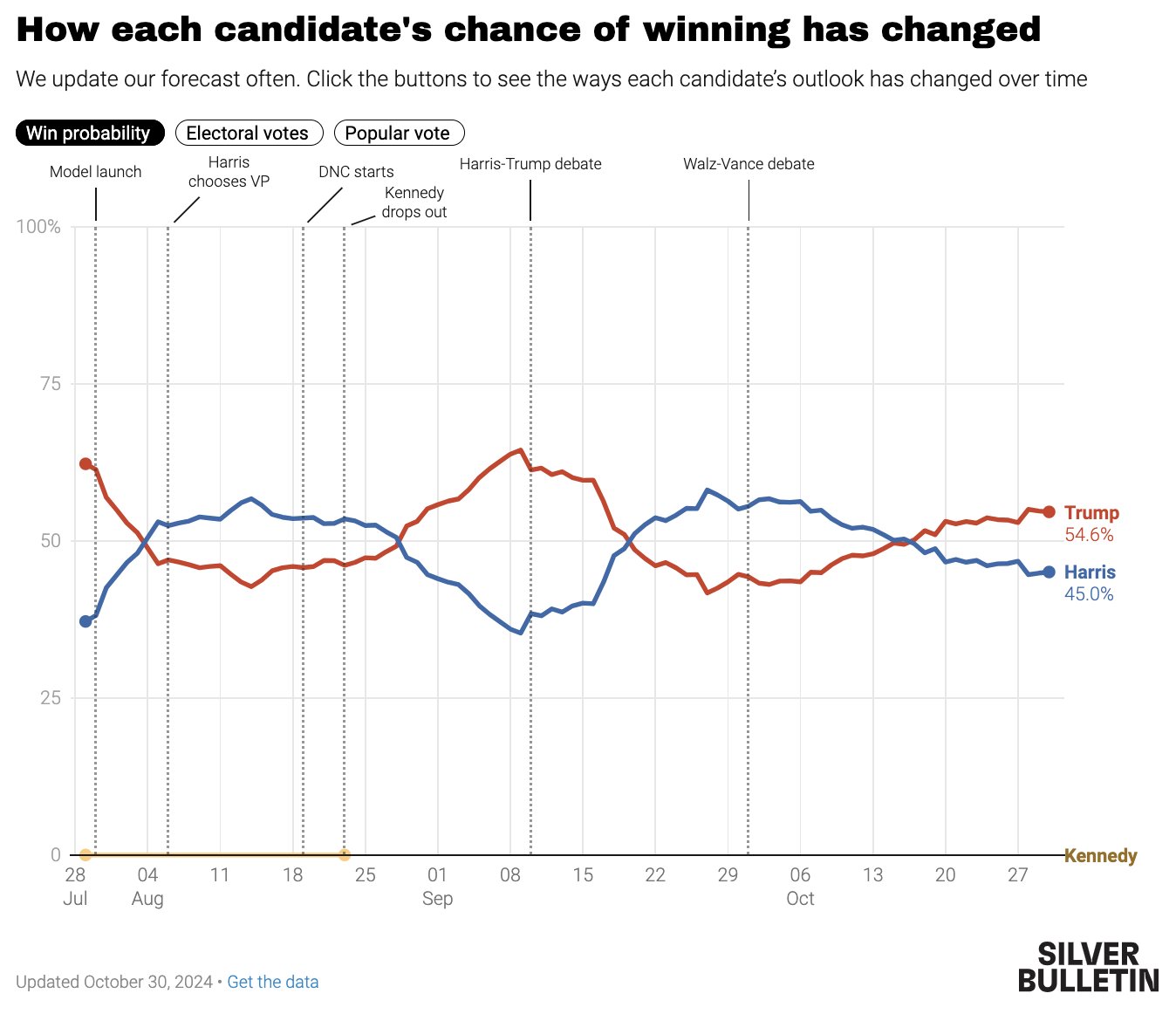
Perhaps unsurprisingly, the numbers the betting markets are converging on are pretty close to where the forecast modelers have ended up. 538’s forecast model is not far off from 50/50:

And 538’s now solo founder Nate Silver, who has his model behind a paywall but gives frequent updates, is even closer to 50/50:

We talked four days ago about doing a map that leaves blank the four states that are within 1%. Since those states haven’t changed, the results are the same- there is one path by which Harris could get there, winning all three of Michigan, Pennsylvania, and Wisconsin. Trump would win with any one of the three:

This is probably a good place to remind ourselves of something both 538 and Silver repeat often, that just because the forecast models are close, it doesn’t mean the outcome will be. To understand why, a quick look at the 538 model’s results is helpful. Though the overall distribution of outcomes equates to a 53% chance of Trump winning, the single most common way he does it in 1,000 runs of the model is to win all seven swing states (the big red spike on the right). Similarly, Harris has an aggregate 46% chance of winning over 1,000 runs of the model. But she’s as likely to do it with 286, 308 or 319 electoral votes as she is to squeak by (the four highest blue spikes on the left):

Overall, looking at the indicators, it feels to me like a just about even mix of signs of closing momentum towards Harris and Trump. As mentioned last time, there are some reasons to think that things could be better for Harris than the polls indicate:

  • In 100 special elections over the past two years, Democrats have consistently done better by several percentage points than the dynamics of the races would indicate.
  • Harris is running behind Democratic Senate candidates in several swing states and, other things being equal, it would be surprising if her numbers didn’t end up equalizing a little more there.
  • Democratic voters show an enthusiasm edge over Republican voters in recent surveys (which is usually, but not always, correlated with turnout).
  • As might be expected from the item above, there is every sign that the Democrats have a stronger ground game in this campaign (things like number of field offices, volunteers making calls and knocking on doors, turnout for rallies, etc.).
  • Pollsters may have bent over backwards to correct the sampling models that had them systemically underestimating Trump supporters in 2016 and 2020, and may now be systemically underestimating Harris’s support.
  • And, in a possible indication of this, the uncannily accurate Ann Selzer released her final Iowa poll over the weekend, and it showed Harris ahead there by 4%. The point is not that she will or won’t win Iowa, but if she really is doing much better there than expected, she’s probably doing much better in lots of places.

These are all logical takes, supported by empirical data, but the logic here cuts both ways. If polls are underestimating Harris by a few percent, she could be headed for a comfortable win. On the other hand, if they’re still underestimating Trump the way they did the last two cycles, he could be headed for a blowout. Or, things could be exactly as they appear, and a handful of votes in a few key states (with Pennsylvania being the most likely tipping point) could see either candidate squeak by.

My best advice remains what it was four days ago- follow some of the most empirically grounded commentators on the lead-up to election night (and on election night itself). Axios had a good round-up of suggested follows:

Pick a few trustworthy accounts rather than gorging on whatever pops up.

Jon Ralston (@RalstonReports) is your man in Nevada … Garrett Archer (@Garrett_Archer) in Arizona … Greg Bluestein (@bluestein) and the Atlanta Journal-Constitution crew in Georgia.

Dave Wasserman of Cook Political Report (@redistrict) is an essential follow if you want live play-by-play of crucial counties, as are the two Nates — @NateSilver538 and @Nate_Cohn.”

And the good folks at Electoral-Vote.com had some sage advice on where election night results could indicate a developing Blue or Red Wave (as opposed to a 50-50 muddle where it would take several days for the winner to become apparent):

“Many people have already voted but, due to various state laws, we are unlikely to know the winner of the presidential election on Nov. 5. Maybe not even on Nov. 6 if it really is as close as the polls say it is. Much of the problem is due to Republican-controlled state legislatures that want the election to devolve into chaos to provide cover for Donald Trump if he tries to claim victory on Nov. 5 and is then ultimately defeated. The biggest issue is whether absentee ballots can be pre-processed or even fully processed before Election Day. If the process of verifying the signatures on the envelopes may not begin before 7 a.m. on Election Day, there is no conceivable way they can all be verified, the envelopes opened, and the ballots taken out, prepped, and scanned by midnight. Here is the lay of the land by (swing) state:

  • Arizona: Although Arizona is in the Mountain Time Zone, its results may be available long before some of the swing states in the Eastern Time Zone because Arizona law allows processing of all ballots as soon as they are received and they can be counted as soon as they have been processed. The results may not be released until the polls close, though. If a large number of ballots are dropped off in person on Election Day, that could slow the process down.
  • Georgia: Not as good as Arizona, but still pretty good. Signatures are verified as the absentee ballots come in, but opening the envelopes may not begin until the third Monday before Election Day. That is to say, Oct. 21. This means that all the absentee ballots arriving before Election Day will be counted before Election Day. Polls close early (7 p.m.) on Election Day. The combination of precounting the absentee ballots and an early closing time in the Eastern Time Zone means that Georgia will probably be the first swing state to report a winner. If it is a blowout either way, that could set the tone for the rest of the night.
  • Michigan: In Michigan, in all but the smallest jurisdictions, ballots can be preprocessed and counted starting 8 days before the election. Since polls close at 8 p.m., an hour later than Georgia, most likely Georgia will report first, but Michigan will probably be the second swing state to report. If the same candidate wins both of them, that candidate will probably be in for a good night. However, a Harris (Michigan)/Trump (Georgia) split is probably more likely.
  • Nevada: Signature verification can begin as soon as ballots are received and counting can begin 15 days before the election, so absentee ballots will largely be counted before Election Day, as in Arizona. But since Nevada, unlike Arizona, is an all-mail-in-election state, its results might be available even before Arizona’s. That said, the Silver State is one time zone west of Arizona, and no state can release results until the polls are closed, so maybe not.
  • North Carolina: Oh boy. Hurricane Helene battered the western portion of the state, so the U.S. Supreme Court gets to call the winner. Not officially (yet), but there are sure to be endless lawsuits due to the difficulty in voting for people in the 25 affected counties. Other than that, the state isn’t so bad. Absentee ballots may be verified and put into the tabulating machines 5 weeks before Election Day. Polls close later than in Georgia (7:30 p.m.) but the big problem here is going to be the western part of the state. Still, fairly early on, there will be a big clue how things are going because the biggest cities (Charlotte, Raleigh, Greensboro, Durham, and Winston-Salem) were not hit by the hurricane and it will be possible to compare their vote totals with 2020. Harris must surge here to win the state and the presence or absence of a surge will be known before the western counties report.
  • Pennsylvania: Pennsylvania introduced early in-person voting only in 2020, so there is not much experience with it. Unfortunately, early in-person ballots are considered absentee ballots, and these may not be counted until 7 a.m. on Election Day. At least there is no need to verify signatures and open envelopes for the early votes. Still, in a large state that may determine the winner, and where every vote may count, it could take a couple of days to count all the ballots, unless there is an unexpected blowout.
  • Wisconsin: As we note above, Wisconsin was the third closest state in 2020 (after Georgia and Arizona). Like Pennsylvania, preprocessing of the ballots may not begin in Wisconsin until the polls open on Election Day. If everything ends up depending on Wisconsin, we likely won’t know for a while who won the Badger State. Wisconsin election officials have begged the state legislature to change the law so they can at least pre-process the ballots and have them stacked up, ready to put in the counting machines at 7 a.m. on Election Day, but Republicans in the legislature have no interest in doing so.

The bottom line here is that Georgia will probably come in first, then Michigan, then the eastern part of North Carolina. If there is a huge blue wave, it will show up in the big cities there and that will be a big clue how the state will go. If there is no blue wave, that will also be obvious fairly early.”

And there we are. Our final indicators are:

Election 2024: Prosecutor vs. Felon!

Remember my update from a week ago when there was a little under two weeks left? Guess what? It’s now less than one week! 6 days to go as I’m writing this, probably 5 by the time you’re reading it. What’s changed over the last week?

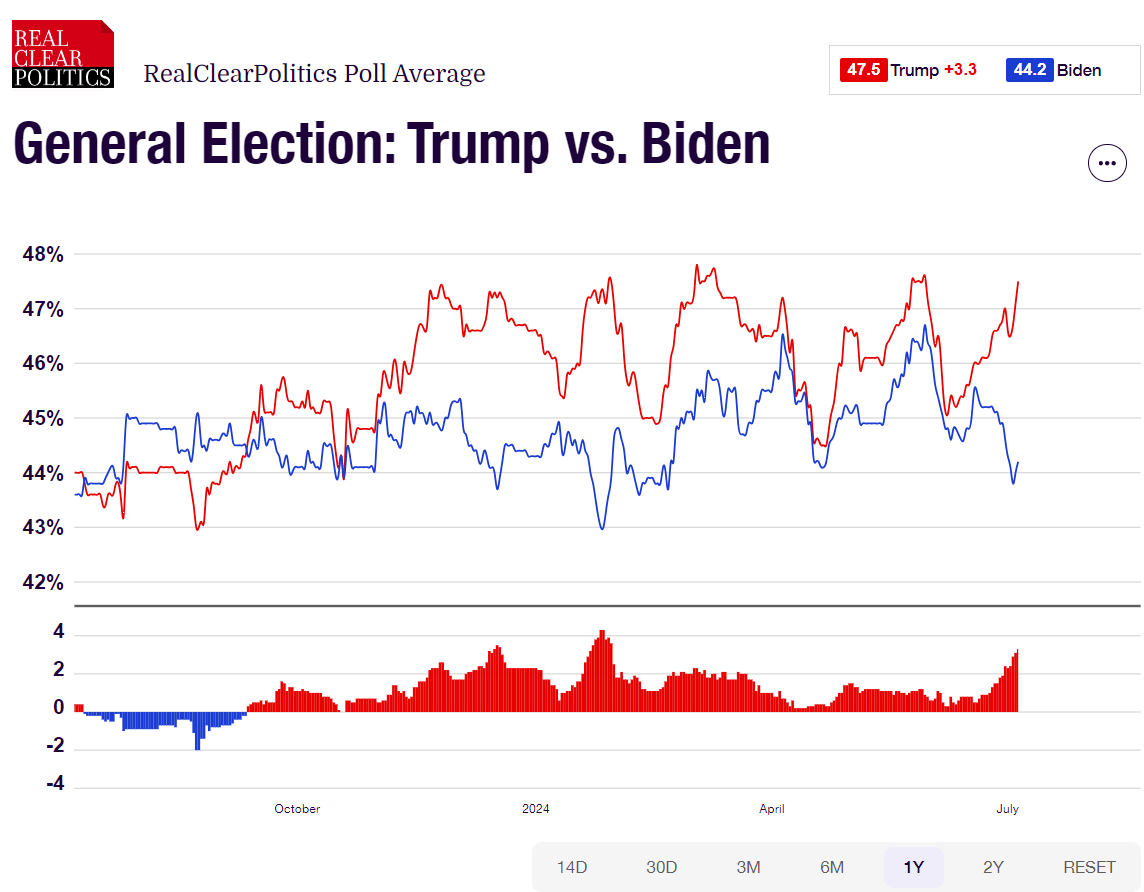
Trump now has a narrow lead in the Real Clear Politics tracking poll. In the more reliable 538 national polling average Harris retains a lead, but it’s down a bit from a week ago. In another perhaps not great sign for the Harris campaign, she’s actually down from her top numbers earlier in the year in both averages:

As noted a week ago there’s a point- somewhere in the neighborhood of 2% to 3%- where a Democratic national lead doesn’t necessarily translate into an Electoral College lead anymore, and Harris remains below that point. So let’s look at the Electoral Vote! On the swing state front, RCP now shows Trump leading in 5 of 7 states, a slip from his 7 of 7 lead a week ago states. 538 has a more robust methodology of weighting polls according to history of pollster accuracy and partisan lean, and it shows a scattered picture- Harris’s lead has expanded a bit in two states, Trump’s lead has expanded a bit in four, and in Nevada Harris is down a little, making that state a tie.

So, less blanket movement toward Trump than a week ago, at which time he had improved vs. Harris in every state except one. But Harris is also down a state from a week ago, and not making progress in four others where she was already behind. Another major takeaway from the chart is that none of the leads for either candidate is outside the margin of error, and in 4 of 7 states they’re separated by less than 1%:

So what does that add up to? RCP still has Trump winning the Electoral College, but not by the blowout form a week ago:

Their map has pretty much now converged with 538’s, except that 538 has Nevada tied:

What was true a week ago remains true- with four states separated by less than 1%, and all seven below the margin of error, it wouldn’t be a major surprise to see either candidate win any particular state. It would even be consistent with these numbers to see either Harris or Trump win all seven (although Trump’s lead in Arizona and Georgia is starting to look more substantial).

Approval ratings, which are another kind of stand in for preference, still show an edge for Harris, but a week ago she had swung back into net negative territory and her negatives have now grown over a week ago. Trump, meanwhile, continues to trend a little less negative, to the point that they’re only separated by 7 points:

Democrats still retain a narrow lead in the Generic Congressional ballot, but down by over a point from a week ago:

A significant indication of overall strength for Democrats remains that, through 100 special elections over the past two years, the party has outperformed by an average of 6% against the partisan lean of the races in question (per a spreadsheet compiled by Nathaniel Rakich of 538):

There’s no change in this indicator, but it remains true that Biden’s percentage in Democratic primaries was ahead of Trump’s in Republican primaries, indicating that Republicans had comparatively more wavering partisan supporters to bring home for their nominee:

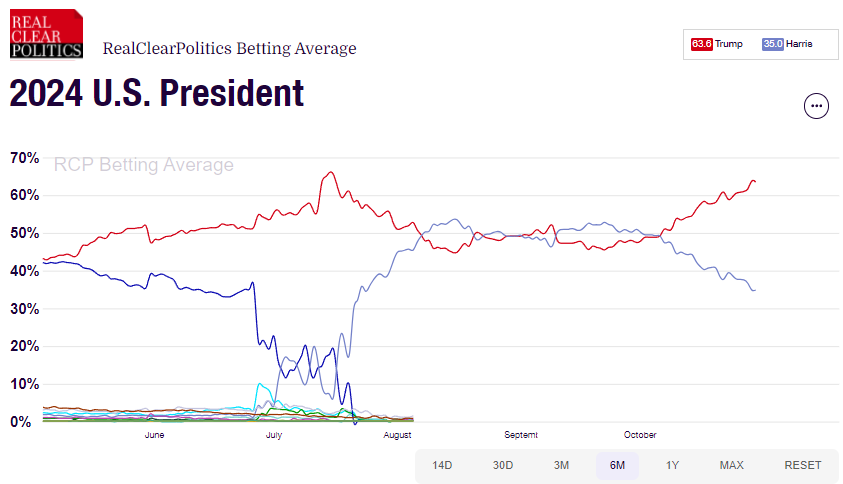
The betting markets had shifted toward Trump in a big way a week ago, and have gone even further in that direction over the last week, predicting a more than 63% chance of him winning the election:

Given the closeness of many of the numbers above, and what we’ll be discussing next, there may be an arbitrage opportunity there if anyone is interested… To whit, 538’s forecast model is basically 50/50:

538’s now solo founder Nate Silver has his model behind a paywall, but did give an update on it today that is a little more positive for Trump, but is still very close to 50/50:

If we do a map that leaves blank the four states that are within 1%, there is one path by which Harris could get there, winning all three of Michigan, Pennsylvania, and Wisconsin. Trump would win with any one of the three:

Overall, it feels to me like some slowing (but not stopping) of the motion toward Trump, mixed with an improved sign or two for Harris. There are some reasons to think that things could be better for Harris than the polls indicate:

  • As mentioned earlier, in 100 special elections over the past two years, Democrats have consistently done better by several percentage points than the dynamics of the races would indicate
  • Harris is running behind Democratic Senate candidates in several swing states and, other things being equal, it would be surprising if her numbers didn’t end up equalizing a little more there
  • Pollsters may have bent over backwards to correct the sampling models that had them systemically underestimating Trump supporters in 2016 and 2020, and may now be systemically overestimating his support

These are all logical takes, supported by some empirical data, but the logic here cuts both ways. If polls are underestimating Harris by a few percent, she could be headed for a blowout. On the other hand, if they’re still underestimating Trump the way they did the last two cycles, he could be headed for a blowout. Or, things could be exactly as they appear, and a handful of votes in a few key states could see either candidate squeak by.

My best advice is to follow some of the most empirically grounded commentators on the lead-up to election night (and on election night itself). Axios had a good round-up of suggested follows recently:

Pick a few trustworthy accounts rather than gorging on whatever pops up.

Jon Ralston (@RalstonReports) is your man in Nevada … Garrett Archer (@Garrett_Archer) in Arizona … Greg Bluestein (@bluestein) and the Atlanta Journal-Constitution crew in Georgia.

Dave Wasserman of Cook Political Report (@redistrict) is an essential follow if you want live play-by-play of crucial counties, as are the two Nates — @NateSilver538 and @Nate_Cohn.”

And the good folks at Electoral-Vote.com had some sage advice on where election night results could indicate a developing Blue or Red Wave (as opposed to ye olde 50-50 muddle which would take days to untangle):

“Many people have already voted but, due to various state laws, we are unlikely to know the winner of the presidential election on Nov. 5. Maybe not even on Nov. 6 if it really is as close as the polls say it is. Much of the problem is due to Republican-controlled state legislatures that want the election to devolve into chaos to provide cover for Donald Trump if he tries to claim victory on Nov. 5 and is then ultimately defeated. The biggest issue is whether absentee ballots can be pre-processed or even fully processed before Election Day. If the process of verifying the signatures on the envelopes may not begin before 7 a.m. on Election Day, there is no conceivable way they can all be verified, the envelopes opened, and the ballots taken out, prepped, and scanned by midnight. Here is the lay of the land by (swing) state:

  • Arizona: Although Arizona is in the Mountain Time Zone, its results may be available long before some of the swing states in the Eastern Time Zone because Arizona law allows processing of all ballots as soon as they are received and they can be counted as soon as they have been processed. The results may not be released until the polls close, though. If a large number of ballots are dropped off in person on Election Day, that could slow the process down.
  • Georgia: Not as good as Arizona, but still pretty good. Signatures are verified as the absentee ballots come in, but opening the envelopes may not begin until the third Monday before Election Day. That is to say, Oct. 21. This means that all the absentee ballots arriving before Election Day will be counted before Election Day. Polls close early (7 p.m.) on Election Day. The combination of precounting the absentee ballots and an early closing time in the Eastern Time Zone means that Georgia will probably be the first swing state to report a winner. If it is a blowout either way, that could set the tone for the rest of the night.
  • Michigan: In Michigan, in all but the smallest jurisdictions, ballots can be preprocessed and counted starting 8 days before the election. Since polls close at 8 p.m., an hour later than Georgia, most likely Georgia will report first, but Michigan will probably be the second swing state to report. If the same candidate wins both of them, that candidate will probably be in for a good night. However, a Harris (Michigan)/Trump (Georgia) split is probably more likely.
  • Nevada: Signature verification can begin as soon as ballots are received and counting can begin 15 days before the election, so absentee ballots will largely be counted before Election Day, as in Arizona. But since Nevada, unlike Arizona, is an all-mail-in-election state, its results might be available even before Arizona’s. That said, the Silver State is one time zone west of Arizona, and no state can release results until the polls are closed, so maybe not.
  • North Carolina: Oh boy. Hurricane Helene battered the western portion of the state, so the U.S. Supreme Court gets to call the winner. Not officially (yet), but there are sure to be endless lawsuits due to the difficulty in voting for people in the 25 affected counties. Other than that, the state isn’t so bad. Absentee ballots may be verified and put into the tabulating machines 5 weeks before Election Day. Polls close later than in Georgia (7:30 p.m.) but the big problem here is going to be the western part of the state. Still, fairly early on, there will be a big clue how things are going because the biggest cities (Charlotte, Raleigh, Greensboro, Durham, and Winston-Salem) were not hit by the hurricane and it will be possible to compare their vote totals with 2020. Harris must surge here to win the state and the presence or absence of a surge will be known before the western counties report.
  • Pennsylvania: Pennsylvania introduced early in-person voting only in 2020, so there is not much experience with it. Unfortunately, early in-person ballots are considered absentee ballots, and these may not be counted until 7 a.m. on Election Day. At least there is no need to verify signatures and open envelopes for the early votes. Still, in a large state that may determine the winner, and where every vote may count, it could take a couple of days to count all the ballots, unless there is an unexpected blowout.
  • Wisconsin: As we note above, Wisconsin was the third closest state in 2020 (after Georgia and Arizona). Like Pennsylvania, preprocessing of the ballots may not begin in Wisconsin until the polls open on Election Day. If everything ends up depending on Wisconsin, we likely won’t know for a while who won the Badger State. Wisconsin election officials have begged the state legislature to change the law so they can at least pre-process the ballots and have them stacked up, ready to put in the counting machines at 7 a.m. on Election Day, but Republicans in the legislature have no interest in doing so.

The bottom line here is that Georgia will probably come in first, then Michigan, then the eastern part of North Carolina. If there is a huge blue wave, it will show up in the big cities there and that will be a big clue how the state will go. If there is no blue wave, that will also be obvious fairly early.”

We’ll check in one final time Sunday evening with 36ish hours to go. Until then, our indicators are:

Election 2024: Prosecutor vs. Felon!

Holy avocado dip, it is now thirteen days until Election Day! Two weeks ago, our one monthish outlook showed advantage still Harris, but signs of a significantly tightening race. Where are we now with less than two weeks to go and early voting underway in 39 states?

Harris maintains a lead in both the Real Clear Politics and 538 national polling averages, though down in both compared to a week ago. In both cases her lead is within the margin of error, but the more solidly founded 538 average shows an unmistakable lead is being maintained:

That narrowing margin is significant though, because there’s a point- somewhere in the neighborhood of 2% to 3%- where a Democratic national lead doesn’t necessarily translate into an Electoral College lead anymore because of state by state dynamics and the misproportioned nature of how that system works. On the swing state front, RCP now shows Trump leading all 7 states. 538 has a more robust methodology of weighting polls according to history of pollster accuracy and partisan lean, and it shows a slightly better picture for Harris, but a similar dynamic.

Trump has improved vs. Harris in every state except North Carolina compared to two weeks ago, including pulling into a narrow lead in Pennsylvania, such that he is now ahead in 4 of 7. Another major takeaway from the chart is that none of the leads for either candidate is outside the margin of error, and in 5 of 7 states they’re separated by less than 1%:

So what does that add up to? RCP has Trump sweeping the Electoral College:

Using the 538 state polls it’s closer, but Trump still tops 270 with room to spare:

As was noted two weeks ago, though, with all seven swing states within a margin of error, and five of them separated by less than 1%, it would be perfectly plausible to see either Harris or Trump win all seven. The main thing that’s true is that it’s very, very close.

Approval ratings, which are another kind of stand in for preference, still show an edge for Harris, but she’s swung back into net negative territory, and Trump has trended up a bit compared to last time:

Democrats still retain their lead in the Generic Congressional ballot, and are up just a smidge from two weeks ago:

A significant indication of overall strength for Democrats remains that, through 100 special elections over the past two years, the party has outperformed by an average of 6% against the partisan lean of the races in question (per a spreadsheet compiled by Nathaniel Rakich of 538):

There’s no change in this indicator, but it remains true that Biden’s percentage in Democratic primaries was ahead of Trump’s in Republican primaries, indicating that Republicans had comparatively more wavering partisan supporters to bring home for their nominee:

The betting markets, meanwhile, are now going for Trump in a big way, predicting a more than 60% chance of him winning the election:

Taking all this together, the two main things that stand out compared to two weeks ago are that there’s been movement toward Trump, and everything is converging on being very, very close. And indeed, that’s where our forecast models are coming out. Witness 538:

538’s now solo founder Nate Silver has his model behind a paywall, but does give periodic updates on what it’s saying:

So, as was true two weeks ago, two of the best forecast models out there have the election basically down to a coin toss. Circling back for a second to 538’s state averages:

If we do a map that leaves blank the five states that are within 1%, there are four different ways Harris could get there, and seven ways Trump could, any of which might happen by not more than a few thousand votes:

We’ll check in again next week at a week to go to see if things are any clearer. Until then, our indicators are:

Election 2024: Prosecutor vs. Felon!

Tuesday this week was exactly 28 days (aka four weeks) until Election Day! When we did our two month outlook, things seemed to have turned sharply toward Harris. Since that post we’ve had the first (and apparently, only) debate between the two candidates, the Vice Presidential debate, a second assassination attempt, and bullish economic signs galore while the conflict in the Middle East meanwhile expands. And, significantly, the election is underway- 18 states are already doing early voting and/or have mailed out ballots. In the midst of all this, what are the numbers showing?

Harris maintains a lead in both the Real Clear Politics and 538 national polling averages, widening it a little in RCP, and narrowing it a little in 538, with total undecided down in each. In both cases her lead is within the margin of error, but the impression of Harris maintaining a lead is clear:

Ah, but the election isn’t decided nationally, is it? At this moment only seven states are seriously in doubt, and what happens in these states is what it will all come down to. RCP now shows Harris leading in 2 of 7, and 538 with its more robust methodology has her ahead in 4 of 7. This chart overwhelmingly gives an impression of tightening. One state flipped form Harris to Trump since last time, one flipped from Trump to Harris, and 6 of 7 have a margin of less than 1%:

So what does that add up to? RCP currently has Trump winning the electoral vote in its “no toss-ups” map:

As mentioned above, 538 uses a more robust methodology for its averages (they weight things according to pollster track record and history of partisan lean) and their current polling averages would give Harris a narrow win:

The important thing to keep in mind here is that, with all seven swing states within a margin of error, and six of them separated by less than 1%, the most substantive thing we can say is that it’s very close. While a mixed result is most likely, based on these polls it wouldn’t be ridiculous to see Harris or Trump win all seven.

So what else can we look at? The approval ratings comparison is another stand in for preference, and it shows a clear edge for Harris. She has swung into positive territory, while Trump remains more than nine points net negative:

Democrats also retain their lead in the Generic Congressional ballot, though by less than a month ago:

And, through 100 special elections over the past two years, Democrats have outperformed by an average of 6% against the partisan lean of the races in question (per a spreadsheet compiled by Nathaniel Rakich of 538):

There’s no change in this indicator, but it remains true that Biden’s percentage in Democratic primaries was ahead of Trump’s in Republican primaries, indicating that Trump had comparatively more wavering partisan supporters to bring home:

The betting markets, meanwhile, have doubled down on the edge they gave Trump last month (see what I did there?), predicting a 53% chance of him winning the election:

Taking everything together, Harris retains an overall edge in the leading indicators, but tightening of the race since a month ago is readily apparent. That’s where 538’s forecast model comes out, giving Harris an edge, but not a huge one:

538’s founder Nate Silver left 538 in May 2023 as Disney/ABC was making huge layoffs there and struck out on his own. He took the proprietary code for 538’s original model with him, and has built a new model based on it. It’s behind a paywall, but he issues periodic updates and his latest comes out nearly exactly where his former colleagues are:

So, the best models out there have the election pretty close to being a coin toss. And let us now pause to remember that the 2016 election came down to 78,000 votes in Michigan, Pennsylvania, and Wisconsin, and the 2020 election came down to 42,000 votes in Georgia, Arizona, and Wisconsin. Clinton lost 2016 despite winning the vote by +2.2%, and Biden barely won 2020 while winning the vote by +4.5%. This is probably going to be a long election night/week…

We’ll check in again week after next with two weeks to go! Until then, our indicators are:

Election 2024: Prosecutor vs. Felon!

This past Thursday marked just two months until Election Day! When we last checked in about a month ago, the dramatic switch from Biden to Harris had seemingly shaken up the race, and strengthened the Democratic Party’s position. Since then, we’ve had Harris officially become the nominee, her popular and meme-inspiring choice of Tim Walz as her running mate, and the Democratic convention. We’ve even had enough time for the effect of the convention to fade and normalize a bit, and Robert Kennedy Jr. abandoning his third party bid and endorsing Trump for good measure. So, given all of this, how are things looking?

To start with, Harris has maintained her lead in both the Real Clear Politics and 538 national polling averages, and in fact widened it in both versus a month ago. The more robust of the two, 538 (which weights things according to pollster track record and history of partisan lean, and adjusts for state polling), has a Harris margin just a smidge outside the typical margin of error of around 3%, so it’s close, but the momentum for Harris is clear in each average:

Polls of the swing states are showing a similar momentum toward Harris*. RCP now shows Harris leading in 4 of 7 with another one even, and 538 with its more robust methodology has her ahead in 5 of 7. It’s important to note that all of these leads in either direction are within the margin of error. And, per the * above, Harris now has leads in more states than a month ago, but also has seen some tightening in two of her leads versus a month ago. All in all this is a picture of a very close race, but the overall movement is toward Harris:

As you might expect from the state trends, the electoral vote outlook for Harris has improved over a month ago, and even the more Republican-tilted RCP map shows the Democrats ahead for the first time since we started tracking in May. Again it’s a narrow margin, a flip of any single swing state here could put Harris behind (or, if it’s a Trump state, give her a stronger lead):

The approval ratings comparison is now much clearer than a month ago as well. Harris has basically pulled even in net approval, whereas Trump’s negative numbers have widened somewhat, and are now approaching 10%. Once again, advantage Harris:

Democrats are also recording their largest lead this year in the Generic Congressional ballot:

And, while there haven’t been new data points on this since a month ago, in nearly 100 recent special elections through the end of July, Democrats have outperformed by an average of 6% against the partisan lean of the races in question (per a spreadsheet compiled by Nathaniel Rakich of 538):

Again, no change in this, but it remains true that Biden’s percentage in Democratic primaries was ahead of Trump’s in Republican primaries, indicating that Trump had more wavering partisan supporters to bring home than Biden:

In the one contra-indicator since last time, Trump has now re-taken a small lead against Harris in Presidential betting markets:

Putting all this together, Harris is even more clearly outperforming Trump at this point than she was a month ago. Not only is almost all the motion over the past month toward her, but with Kennedy out and the conventions concluded, the undecideds are now down to about 8.5%, meaning there are fewer folks out there to sort out.

At the same time, it’s difficult to miss that the numbers indicate a close race. It is now time for our standard disclaimer that the 2016 election came down to 78,000 votes in Michigan, Pennsylvania, and Wisconsin, and the 2020 election came down to 42,000 votes in Georgia, Arizona, and Wisconsin. Even if we take on face value 538’s 3% national lead for Harris, that’s right in the middle of Clinton’s 2016 +2.2% and Biden’s 2020 +4.5%, and both of those were squeakers on the electoral college front.

Still and all, there’s no mistaking the movement toward Harris over a month ago:

We’ll check in again in October, at which point we’ll have another debate or two behind us, and one month to go!

In Search of the 24 Best Albums of 2024: April

This is the true story of someone who set out in 2021 to catch up on newer music. They listened to the critics choices for the best albums of the 2010s, and picked their favorites. They did the same for 2020, picking their top 20 from the critics most highly rated albums. And they listened to new releases monthly in 2021, eventually picking the 21 best albums of 2021. That was so much fun they decided to do it again in 2022 and 2023, listening each month and picking out the 22 best albums of 2022 and the 23 best albums of 2023. That someone is me!

There are links to the albums in the posts cited above, but if you’d like a one-stop playlist, I’ve got that set up in Spotify for the 2021 top 21 and the 2022 top 22, and in YouTube Music for the 23 Best Albums of 2023. (Eventually I’ll move the 2021 and 2022 lists to YouTube, because artists are asking us to avoid Spotify for very good reasons.)

Okay, so now you know the story Well guess what? It’s still going on! Here are the previous editions of the 2024 monthly review if you missed them:

( January February March )

A quick word on the “yes” and “maybe” categories I’ve sorted things into, before we get going with the latest:

Yes– This isn’t a guarantee, but it represents the albums that, upon first listen, I think could definitely be in the running for best of the year.

Maybe– These albums have something to recommend them, but also something that gives me pause. I’m putting them in their own category, because I have found “maybes” sometimes linger and eventually become “yeses”.

Now let’s get on with my top picks from 91 new releases that I listened to from April!

1.86.0-QLB6XITOGRGJWX2JJ3PYRLCA6Y.0.1-4

Anders Osborne, Picasso’s Villa– I was inclined by the Scandinavian first name and the album title to expect something arty and abstruse. What we actually have here is an album with elements of alt country, heartland rock, and guitar squelching southern rock, with great hooks and sharp storytelling lyrics. And in fact, Anders Osborne is a Swedish blues singer and guitarist who move to New Orleans in the ’90s. The move must have been pretty successful, because he sounds like the real deal here!

Bad Bad Hats, Bad Bad Hats– High energy, redolent of new wave and power pop, but still sounding very fresh. Lead singer Kerry Alexander also often gets soulful crooning in along the way, and suitable lyrical snark, as befits her avowed love of the Breeders. This album from a Minneapolis trio is pleasing from start to finish.

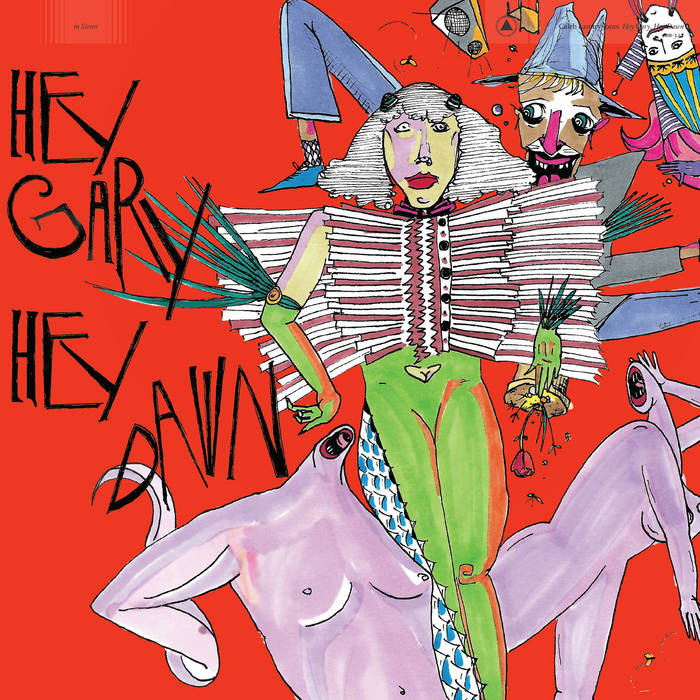
Caleb Landry Jones, Hey Gary, Hey Dawn This is really something! I started off getting strong grunge vibes, then it reminded me heavily of seventies Bowie, and along the way had Beatlesque moments of psychedelia. Texas native, actor, and musician Caleb Landry Jones has apparently been releasing this kind of music since 2020, and I’m happy to finally make his acquaintance!

Cuffed Up, All You Got– Some crunching garage rock, with just the right touch of sleazy boredom. This Los Angeles post-punk trio’s debut is a testament to their years of striving to break through, and a promise of things to come.

English Teacher, This Could Be Texas– There’s others treading this spare, post-punk yet classical, lyrically literate, vocally stripped-down UK path (think Yard Act, tuneyards, anything with yard in it). But darned if this Leeds four-piece band fronted by the hypnotic while understated Lily Fontaine it isn’t affecting!

Eris Drew, Raving Disco Breaks, Vol II– The title “Raving” gives you a clue that this is a kind of late nineties throwback. It also happens to be a dynamic propulsive DJ set with fantastic energy and interesting musical references- 80s hip-hop, nineties dance music, and classic rock including Led Zeppelin and Janis Joplin all make it into the mix. DJ/Producer Drew was on my honorable mention list for Quivering in Time in 2021, and this definitely makes it on my preliminary list for this year.

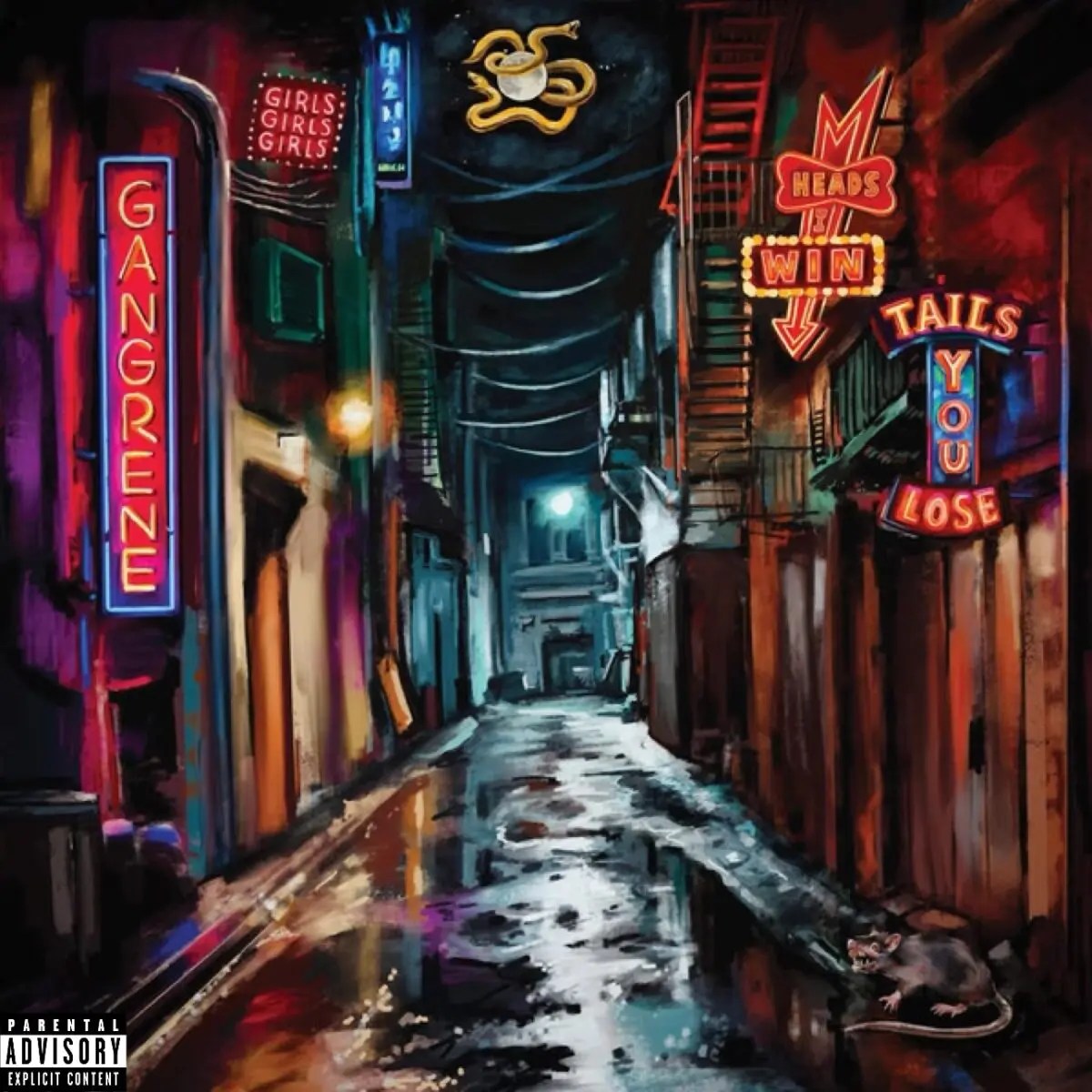
Gangrene, Heads I Win, Tails You Lose– On their fourth collaborative album, rapper-producers Oh No and the Alchemist have created a stark mix, full of the dynamism of their dueling flow, great and varied sampling including aspects of the last 25 years of hip-hop, and a general feeling of import to both the light and heavy moments.

Ian Hunter, Defiance, Pt 2: Fiction– Classic rock still sometimes makes contemporary albums. And those albums are often quite good! That is certainly the case here, with former Mott the Hoople frontman Ian Hunter. Technically, he bridges both classic rock and proto-punk (or at least glam), and that’s richly on display here, with co-contributors from all over the map- Brian May, the members of Cheap Trick, Jeff Beck, members of the Foo Fighters and Stone Temple Pilots, Lucinda Williams and others all show up to help Hunter do a fine rocking romp.

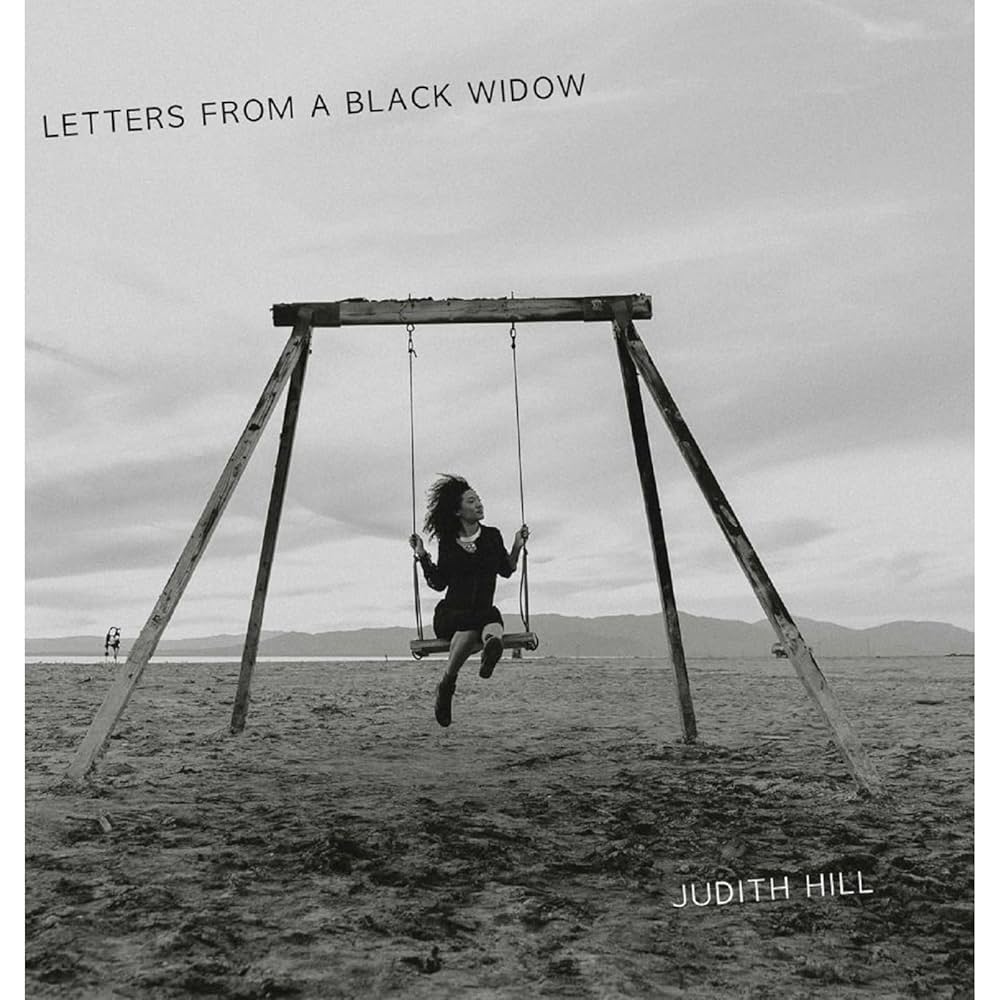
Judith Hill, Letters From a Black Widow– Trading on her not so flattering nickname from having worked with Prince and Michael Jackson just before their deaths, Judith Hill comes in with a powerful album that shows why everyone wanted to work with her. She rocks, she sings the blues, she gets funky, she does straight-up R&B, she pulls out the tricks of electronic dance music. Sometimes all on the same track! Her album Baby I’m Hollywood was on my list for 2021, and I think she may do it again!

Loren Kramar, Glovemaker– He’s a slut for his dreams! So the Southern California native Loren Kramar himself says in a song from his debut album. This album lives in the realms of cinematic soundtracks, theater music, torch songs, and power ballads, and it does so spectacularly. Musically hitting on track after track and powered lyrically by a wicked wit.

LustSickPuppy, Carousel From Hell– Absolutely blistering electronic hyperpop. At times impossibly sweet, at times grating, at times just overwhelming in the number of things its simultaneously tossing out. Omasyn Hayes, also known professionally as LustSickPuppy, is an American rapper, painter, make-up artist, and model and here takes us to a realm where glitchy distorted EDM, hip hop, and noise rock are one and the same.

Lynks, Abomination– This is great! On one level, an EDM album full of contemporary production tricks, but also nods to low-bit video-game sounds of the 90s and 80s synth pop. There’s the cleverness of arrangement, but what really puts it over the top are the approachable vocals and snark-filled lyrics that explore multiple aspects of the UK gay male experience.

Maggie Rogers, Don’t Forget Me– Smart lyrics and impeccable vocals that know how to work with propulsive music. She brings together strains of 90s female singer songwriter, storytelling country, and some folktronic production. Maryland native Rogers is deservedly getting widespread acclaim.

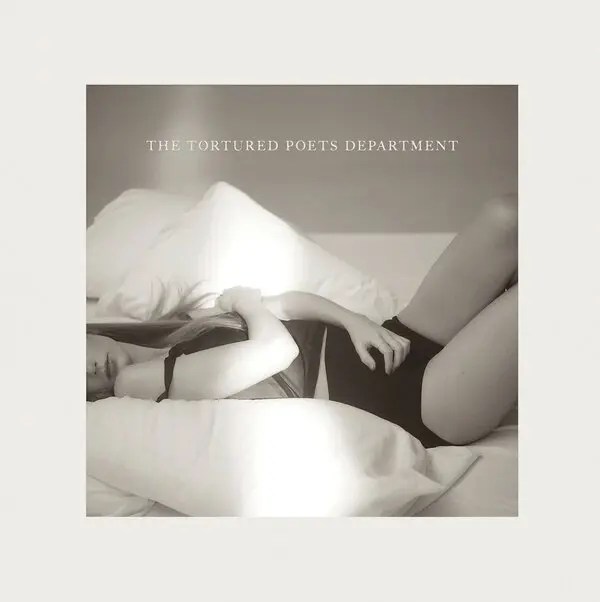
Taylor Swift, The Tortured Poets Department– Say what you want, girl can write and deliver a song! In all senses of that- musical composition, intelligent lyrics, sure vocal phrasing. There’s nothing here that’s less than flawless contemporary pop, technically. And smart, and I don’t fault women for talking about their emotional lives or call them self-indulgent for doing what every singer-songwriter in the seventies did, so I have no complaints. Though I did sneak off after her closing song “Clara Bow” to listen to the entirely different 50 Foot Wave song “Clara Bow”.

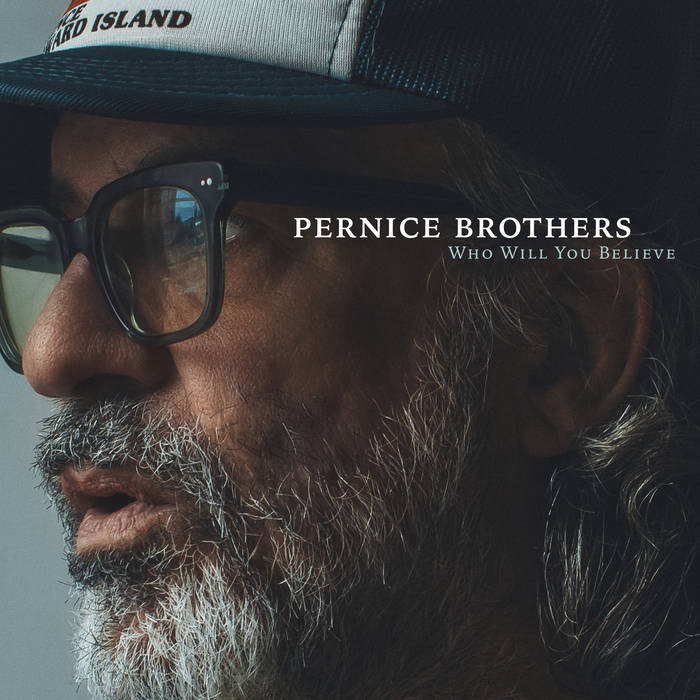
The Pernice Brothers, Who Will You Believe– Per AMG, the Pernice Brothers is an, “… outlet for acclaimed indie misanthrope Joe Pernice, whose music ranges from hushed to orchestrated pop.” And indeed, there is a bitter edge to the songs here, but also weary wistfulness and wisdom. Joe Pernice has been doing this since the late nineties, and apparently wisdom does come with age! So too does a fine burnishing of production touches that bring to mind seventies singer-songwriters and AM radio. Musically, it’s like flowing gold, with a dark emotional core.

The Reds, Pinks & Purples, Unwishing Well– The fuzzy echoing guitars, melancholy nostalgia, and world-weary vocals and lyrics do not fail. This is maybe the fourth Reds, Pinks and Purples album I’ve listened to too since I started this a few years ago, and they always get under my skin.

Maybe

  • Blue Bendy, So Medieval– The sprightliness of Magnetic Fields, the wordy poetic jerkiness of Modern Lovers, off kilter experimental arrangements which bring in the electronic and the psychedelic. I’m not entirely sure what this London band is up to, but it is intriguing!

  • BMX Bandits, Dreamers on the Run– Twee lives with these founders of the anorak movement. It even reminds me at times of dancehall music and the sillier side of the Beatles. It may be a little too sweet to take sometimes, but it is compelling.

  • Cloud Nothings, Final Summer– Many of the same charms of their release The Shadow I Remember which was on my honorable mention list for 2021: “Crunchy feedbacky rock with dreamy choral background, lyrical and vocal power, great way with melody-It’s really pretty delightful”? I agree with myself, again!

  • Drahla, angeltape– Jerky rhythms, grating edges, and something like a hardcore art approach, given just enough accessibility by lead singer Lucile Brown’s arch vocals. I wonder if it’s a little too grating for repeated listening, but this Leeds band is definitely up to something interesting!

  • Gesaffelstein, GAMMA– Now this is a great DJ mix! Dark and decadent in that European way, driving and serrated, but dynamic and energetic. At times it sounds very contemporary, at other times redolent of nineties techno, which I appreciate. I’m not sure if it has enough musical or thematic through line to totally succeed as an album, but I appreciate what this 39-year-old French DJ is doing.

  • Jane Weaver, Love In Constant Spectacle– an explorer of krautrock and modern psychedelia, interspersed with deft, arty touches of synth pop. A spare European electronica, ghostly vocals, synth pop, and occasionally blistering fuzzed out guitar. It sometimes feels like it’s going to lull out, but overall, it adds up to something that compels when listening, and stays with you after.

  • Louisa Stancioff, When We Were Looking– Her beautiful ethereal voice and an acoustic setting that is spare and yet uplifting power something that is somehow happy and sad at the same time. It may be a little narrow in musical and vocal tone, but with literate lyrics to add to the musical and vocal palette, Maine native Louisa Stancioff has produced an arresting debut album.

  • Old 97’s, American Primitive– Muscular chords and fuzzy guitar power this mix of country-influenced heartland rock. It’s got hooks, a way with melody, and an anthemic feeling. It got a little wobbly at the end by veering hard back into their more usual country and ending in a Spanish-themed instrumental, which were both out of tune with the main body, but there’s not a bad song in the mix.

  • Parsnip, Behold– A rocking off kilter girl group with wacky sonic flourishes is always going to be near and dear to my heart. In the case of this Australian quartet, they have a solid base of stripped-down pop punk (think early Go-Gos), sixties pop, and hints of indie electronic and psychedelic garage rock. It’s not the most original thing ever, but it’s fun, surprising, and it moves!

  • Sinkane, We Belong– Ahmed Gallab, the Sudanese-born, New York-based multi-instrumentalist behind Sinkane. The music here effortlessly mixes so many varieties of Black music- 80s R&B, afrobeat, disco, electro. It sounds a little too smoothly produced for my taste, but every track is buoyant musically and lyrically explores the pain and celebration of being Black in the global diaspora.

  • Spooner Oldham/Texas, The Muscle Shoals Sessions– What do you get when you put together a great Scottish pop band, a storied southern rock keyboardist, the venerable Muscle Shoals recording studio, and smartly chosen covers? Just about the best set of blue-eyed soul one could ask for! It’s not breaking new ground, but it is solidly well done.

  • T Bone Burnett, The Other Side– The tone is relaxed, the musical accompaniment restrained (despite a top-flight tier of guest musicians). But that’s just what this past master wanted for his first new album in 16 years. And if it feels a little low-key as a result, his songwriting, as always, is exquisite.

  • The Libertines, All Quiet on the Eastern Esplanade– Starts with a high energy hand-clappy piece redolent of the poppier side of UK original punk and alt eighties, and it stays in that mode. The music is maximum fun, and the lyrics are wordy and literate. The Libertines, of course, have been playing in this realm throughout the millennium. But, if it feels in a sense formulaic, it’s good clean fun the whole way though.

  • The Sunburned Hand of the Man, Nimbus– It opens with a trippy spoken word straight from the early seventies, and then follows up with instrumental and vocal-led pieces that are also joyously retro while the spoken word gets trippier and edgier, and more experimental music edges in. It turns out this Boston-based collective has been doing exploring the edges since the nineties. It’s weird and doesn’t entirely fir together, but that is kind of the point!

  • The Zutons, The Big Decider– Their album Who Killed the Zutons was one of my favorites of the 00s and I haven’t heard from them for a while, so I was curious. It turns out they still have a knack for hooky indie rock that sounds sincere but also hits the right pop notes. Not out of the park, but very solid. Well done lads!

  • X Ambassadors, Townie– Coming from an indie rock kind of place, but informed equally by EDM and heartland rock. The tone is uneven, but this Brooklyn band returns to their upstate New York roots here, and their heartfelt tales of hardscrabble small-town life resonate and ring true.

And there we are, April out sever days before the end of August, The catch-up continues!

Election 2024: Prosecutor vs. Felon!

I’m about a week late on putting this out due to various work/life reasons, but this past Monday was three months to Election Day. And what a difference the five weeks since our last update has made! The Rematch of the Century is no more. But, with Joe Biden withdrawing his name from consideration, endorsing Vice President Kamala Harris, and the Democratic establishment and the grassroots swiftly and enthusiastically consolidating around her, a new tagline has been born: Prosecutor vs. Felon!

A big, in fact, unprecedented shakeup, but has it had an effect on the dynamics of the race? As we’ll see shortly, it definitely has!

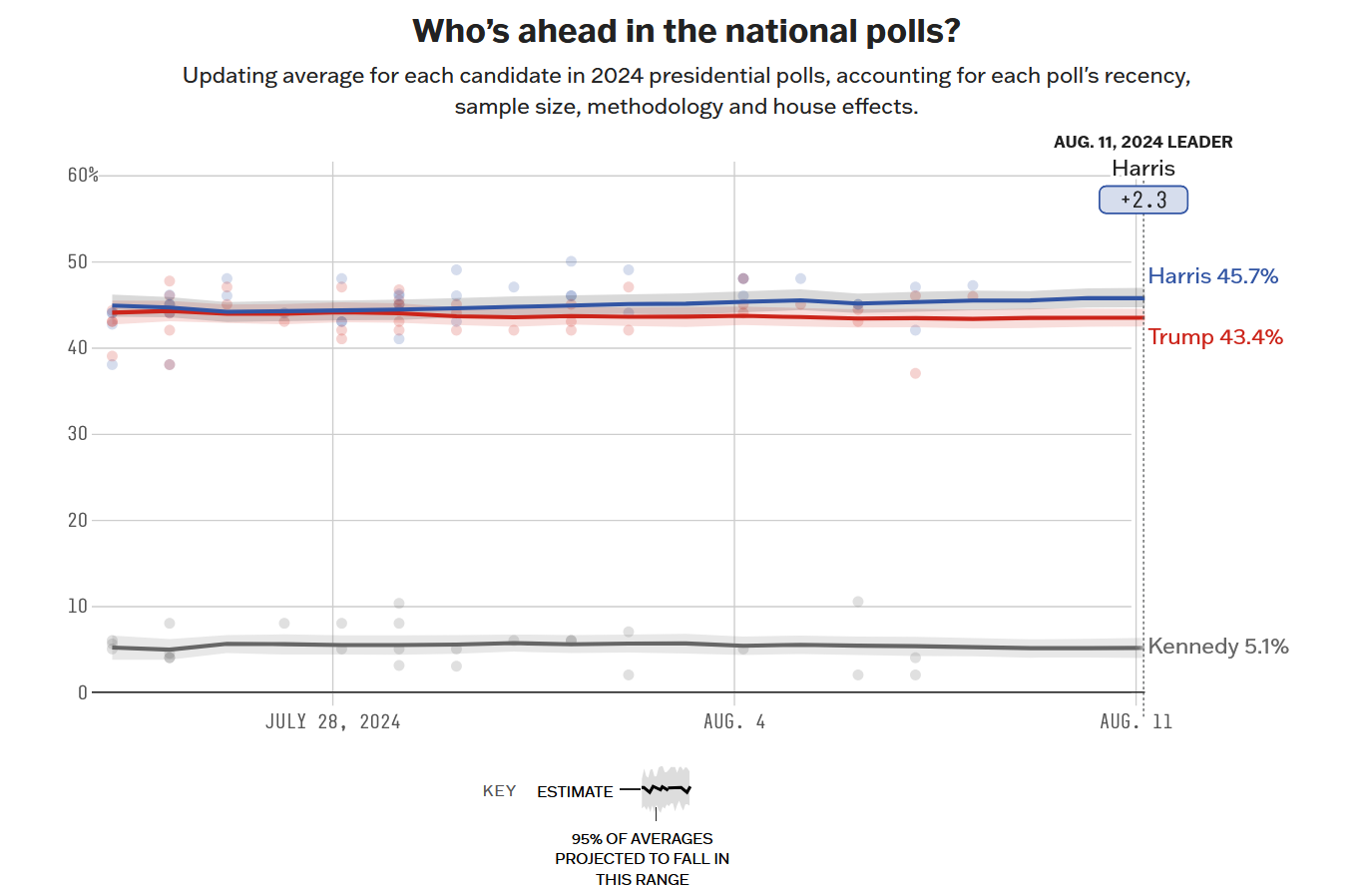
Looking at the Real Clear Politics and 538 national polling averages, what immediately jumps out is that, for the first time since we started looking at this three months ago, Trump is no longer in the lead. RCP’s average now has a small lead for Harris. 538 (which weights things according to pollster track record and history of partisan lean, and adjusts for state polling) has an even clearer margin in Harris’s favor:

Polls of the swing states are showing the same effect. While for months Trump was at 7 for 7, RCP now shows Harris leading in 2 of 7, and 538 with its more robust methodology has her ahead in 3 of 3, with another one even. All of these leads are within the margin of error, but that’s kind of the point- they all are, even the Sunbelt states where Trump had enjoyed leads outside the margin of error in prior months. Here are the current 538 numbers by state:

538’s map would already have Harris with enough electoral votes to win, and even the more Republican-tilted RCP map shows her gaining ground:

Approval ratings are now a little trickier to gauge. We used to be able to compare Biden to previous Presidents at the same point in their first terms, but that no longer works. What we can do is compare Harris’s approval rating to Trump’s, and when we do so we can see that Harris’s net approval rating has surged since Biden’s withdrawal, and is now pretty much a wash with Trump’s (these averages are from 538):

Moving on, Democrats retain their lead in the Generic Congressional ballot:

Even more hopefully for Democrats, through the end of July they continue to outperform in special elections over the past year+, running an average of 6% ahead of the partisan lean of the races in question (per a spreadsheet compiled by Nathaniel Rakich of 538):

Our previous hypothesis about Biden’s percentage in Democratic primaries being ahead of Trump’s in Republican primaries, was that Trump had more wavering partisan supporters to bring home than Biden:

Finally, in line with many of the indicators above, Presidential betting markets now show Harris ahead of Trump:

So what does all this add up to?

Harris is clearly outperforming Trump at this point, having taken the lead in several key indicators and drawn even in others. Crucially, the 538 average shows Kennedy’s numbers cut in half at 5.1%, and undecided down from 8% a month ago to 5.8%. I’d speculated before that the nearly 20% sitting on the sidelines between Kennedy and undecided indicated that there was a significant block of voters who were saying they didn’t like their choices, but would eventually sort out for Biden or Trump. Currently, they appear to be sorting toward the Democrats.

This is not to say Harris will win, but one could certainly look at these numbers and conclude she very well might. One would have been hard pressed to make that case for Biden in the last three months based on data alone. We’ll check in again in September, but for the moment the campaign’s momentum is clearly toward Harris:

In Search of the 24 Best Albums of 2024: March

This is what happened: In 2021 I set out to catch up on newer music. I listened to the critics choices for the best albums of the 2010s, and picked my favorites. I did the same for 2020, picking my top 20 from the critics most highly rated albums. And I listened to new releases monthly in 2021, eventually picking the 21 best albums of 2021. That was so much fun that I decided to do it again in 2022 and 2023, listening each month and picking out the 22 best albums of 2022 and the 23 best albums of 2023.

There are links to the albums in those posts above, but if you’d like a one-stop playlist, I’ve got that set up in Spotify for the 2021 top 21 and the 2022 top 22, and in YouTube Music for 23 Best Albums of 2023. (Eventually I’ll move the 2021 and 2022 lists to YouTube, because artists are asking us to avoid Spotify for very good reasons.)

Okay, so now you know what was happening. Well guess what? It’s happening again! Here are the previous editions if you missed them:

( January February )

A quick word on the “yes” and “maybe” categories I’ve sorted things into, before we get going with February:

Yes– This isn’t a guarantee, but it represents the albums that, upon first listen, I think could definitely be in running for best of the year.

Maybe– These albums have something to recommend them, but also something that gives me pause. I’m putting them in their own category, because I have found “maybes” sometimes linger and eventually become “yeses”.

All set? Then let us get on with my top picks from 111 new releases that I listened to from March!

1010Benja, Ten Total– This Kansas City singer and producer makes hip hop and at times heartbreakingly sweet pop on overdrive. “I like that Luciferian rebellion that Muddy Waters was holding down, that you would hear from [Jimi Hendrix]…That, just, nasty stuff I guess. Unhinged. Like coming right out of the belly of the beast. Like a bat out of hell.” So says 1010Benja about what he was aiming for here, and what he achieved is a frenetic pace with a blender of references and influences and musical mix elements outside of the ordinary.

Adrianne Lenker, Bright Future– This is Adrianne Lenker’s sixth solo album (in addition to five as lead of Big Thief), and she is firing on all cylinders. The density and emotional honesty of the lyrics is perfectly paired with the unadorned vocal delivery and spare acoustic/country setting, but full of surprises that expand the pallet.

Alejandro Escovedo, Echo Dancing– Escovedo had already played a vital role in punk (with the Nuns), roots rock (the True Believers), and alt-country. For 2024’s Echo Dancing, Escovedo takes a romp through his own songbook cutting new versions of fourteen songs from his back catalog. What results is driving guitar, minor chords, reverb, and a sound somewhere in a SF & LA circa 1978 punk, LA cowpunk, and Lou Reed story poems greater universe. I love it!

Alena Spanger, Fire Escape– The music has a stripped-down simplicity with elements of new wave and new age, and the vocals have a deceptive delicacy with surprising outbursts. The sprightliness of the approach belies the emotional depth of the lyrics. Between all these elements, the spell that Brooklyn-based Spanger is weaving here definitely pulled me in.

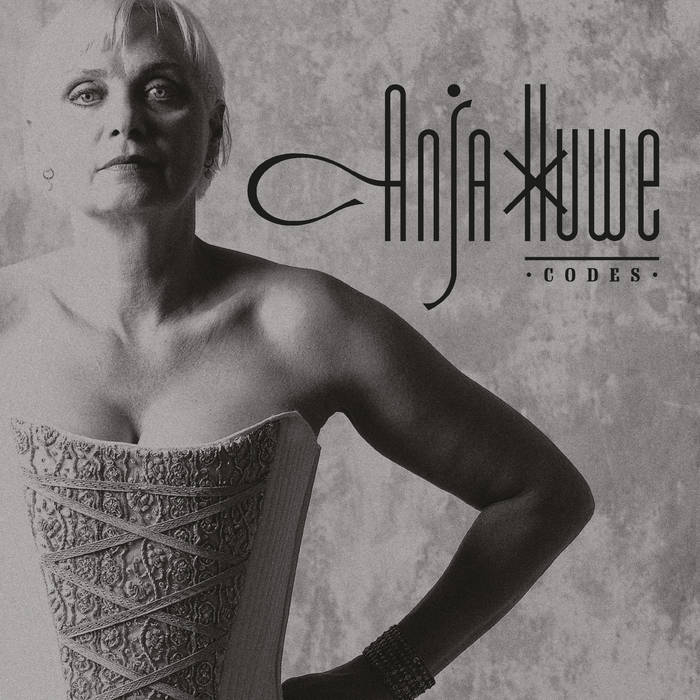
Anja Huwe, Codes– Abstract, yet powerful, driving, and affecting, set from Anja Huwe. It feels like it has the thematic and musical unity you want for a proper album as well. Huwe was the leader of influential post-punk/goth group Xmal Deutschland for the entirety of the 1980s, and has since become a noted visual artist, as well as a television producer.

Beyonce, Cowboy Carter– This is so much more than just her “country album”. Though much of it, to be sure, is country inflected, Beyonce consciously plays with not only that genre, but picks up multiple other genres and meditations on genre itself along the way, delivering a shimmering set of varied pop songs. The results are so solid that even the guest stars (always a perilous undertaking in terms of album tone and consistency) and the 78-minute run length didn’t shake me!

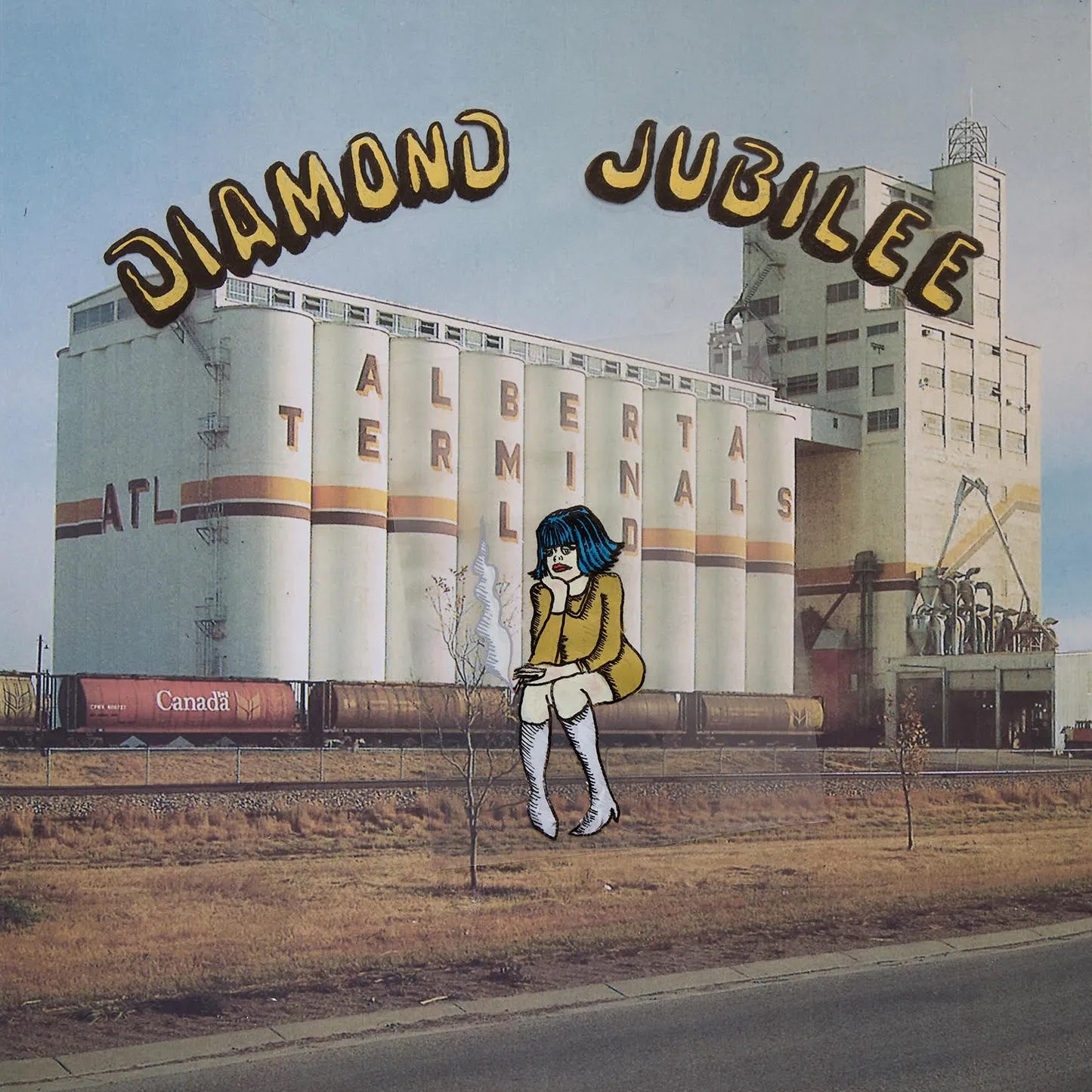
Cindy Lee, Diamond Jubilee– We’re told that Cindy Lee is “the drag queen hypnagogic pop project of Canadian musician Patrick Flegel”. Okay, what the heck is hypnagogic pop? Apparently, it is “pop or psychedelic music that evokes cultural memory and nostalgia for the popular entertainment of the past”. More specifically, I read that this album, their seventh, is, “Built on strains of ’50s girl group pop, lush ’60s psychedelia, itchy ’70s radio rock, lo-fi ’90s clutter and sparkling production choices grafted on from some alternate universe.” I’ve borrowed a lot of words to give you a sense of the layers of excellence on display here and to justify my plug for a two-hour long album. In track after intriguing track, it really does justify the length and keep one listening!

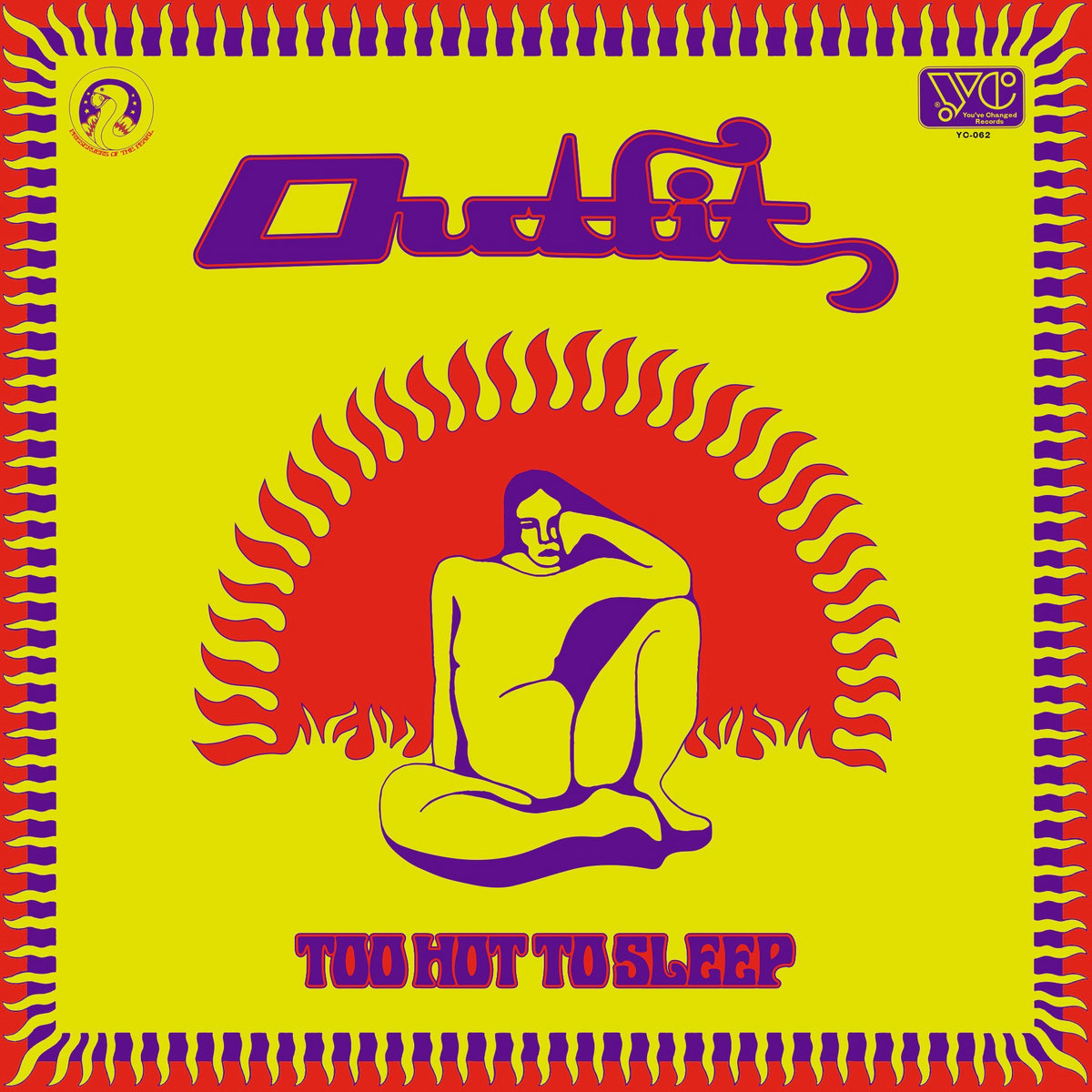
Daniel Romano, Too Hot to Sleep– The hearkening back to seventies rock here is really well done! It’s mostly in a classic vein but does venture into a very convincing original punk and Stooges-style proto-punk as well. AMG tells me Romano is an “Eccentric Canadian singer/songwriter whose versatile stylistic range has included punk, classic pop, countrypolitan, and psych-rock” who has been releasing albums since 2010. I’ll be on the lookout for more from him!

Gary Clark, Jr., JPEG RAW– It’s got hip hop in its DNA, but the heavy guitar mix and soul feeling of the flow on the first track certainly catches attention as well. The opening track calls for a revolution, and darned if the sound doesn’t deliver- jazz, blues, booming soul, hip hop, and rock all cross paths herein a way that feels organic. It reminds me in a way of Prince and Lenny Kravitz, and with Valerie June, Stevie Wonder, and George Clinton on the guest list, the ambitious eclectic approach of this Texas guitarist is confirmed.

gglum, The Garden Dream– The Garden Dream is the full-length debut of gglum, the performance alias of London’s Ella Smoker, a songwriter who started making home eight-track recordings in her teens inspired by alternative artists like Elliott Smith, the Microphones, Phil Elverum, Adrianne Lenker and Big Thief, and Alex G. It’s guitar-driven pop with a distorted sheen, attitude, and fun.

Holiday Ghosts, Coat of Arms– They know how to jangly guitar, crack boom drum, and elemental driving rock chord progression! There’s a kind of naivete to the music, but they also turn in surprising sophistication in places without it sounding slick. This is the fifth album from this southern England band, and something tells me they’re into something good.

Kahil El’Zabar & Ethnic Heritage Ensemble, Open Me, a Higher Consciousness of Sound and Spirit – Those of you who follow regularly know that jazz can be a hard sell for me. This jazz orchestra for their 50th anniversary put out what the leader calls “Great Black Music”: “a strong rhythmic foundation, innovative harmonics and counterpoint, well-balanced interplay and cacophony amongst the players, strong individual soloist, highly developed and studied ensemble dynamics, an in-depth grasp of music history, originality, fearlessness, and deep spirituality.” Well, despite my jazz skepticism, and an hour and twenty run time, I entirely agree- it’s richness, variability, and yet unity of spirit carry it through.

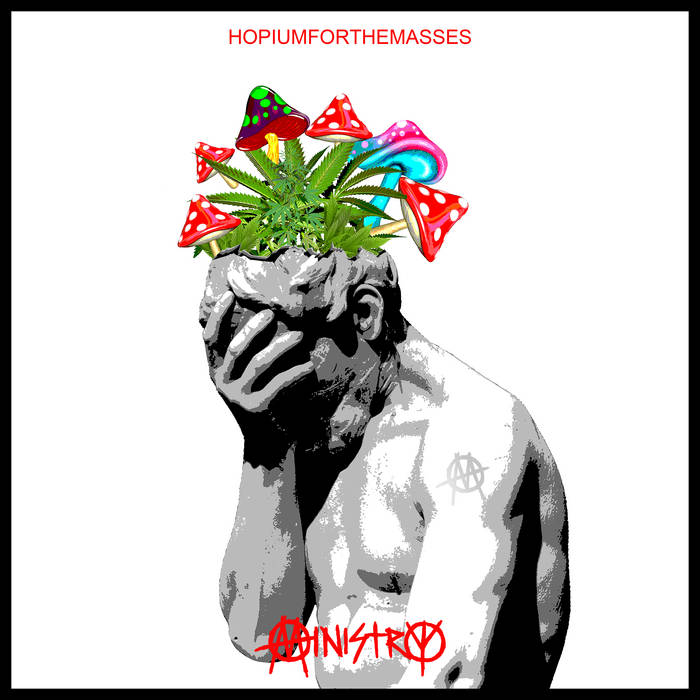
Ministry, Hopiumforthemasses– Who would have thought that a new Ministry album would be one of the freshest things this month? It does, it’s true, sound like the nineties in the guitar crunching and dense layers of sound. It’s also focused on the present moment though, with furious dissent.

Moor Mother, The Great BailoutBlack Encyclopedia of the Air by Moor Mother, aka American poet, musician and activist Camae Ayewa, was one of my favorites of 2021, so I come to this well-disposed. What I found was a powerful exploration of the construction of racism in the British Empire, delivered with poetry and a musical mix that’s equal parts experimental, electronic, and jazz. While abstract, it gets under the skin, and compels further listening.

Sheer Mag, Playing Favorites– A lot of people this year are in the space somewhere between jangly eighties alt guitar and punk throwback. But this Philadelphia band stands out with the reverb turned up, youthful enthusiasm, a classic rock vibe on the way, and a powerhouse of a frontwoman in Tina Halladay. I love it when the kids make me believe in rock again!

The Messthetics & James Brandon Lewis, The Messthetics & James Brandon Lewis– “The Fugazi rhythm section with a master jazz saxophonist and guitarist” sounds like a good concept. Everything you might think of from that description is what the fuck it sounds like, and it’s pretty amazing. Hardcore jazz! Call me crazy, but I think this works!

Vial, Burnout– I love it when young punks with a hint of metal remind me why I love young punks with a hint of metal! Plenty of snark, lots of girl power, and great hooks from this Minneapolis trio.

Maybe

  • Anysia Kym, Truest– From the distorted and disorienting start you know there’s creative ambition here. Glitchy beats, kaleidoscope mix, and unexpected juxtapositions of vocals and music are all on display. If it doesn’t totally feel together, the sonic exploration is still welcome. More bright young artists like this and we might get somewhere!

  • Bleachers, Bleachers– Rollicking good fun, it sounds classic of an era that’s hard to pin down. Artsy 00s indie? Earnest 80s alt? Eighties jazzy top forty? At times it’s all of these. And if my reservation is that it sounds a little too smooth, well, as the project of songwriter and record producer Jack Antonoff who has been all over the sound of the 10s and 20s, that kind of makes sense.

  • Boeckner, Boeckner!– Canadian singer and songwriter Dan Boeckner is a veteran of multiple Montreal indie rock bands and known for his fondness for the alt eighties. Here on his debut solo album, he carries that forward with sterling results- these songs sound so familiar and anthemic. Not the most original sound, but very well done.

  • Cakes da Killa, Black Sheep– Jazzy mix, fresh beats, and dynamically varied flow. “Black Sheep, Cakes’ third studio album, acknowledges that lonely position of belonging to no single tribe: too queer for hetero bar-for-bar New York rappers, too much of a rapper for mainstream queer pop. But the album is a confident compendium of breathless performances, bombastic personality, and thrilling genre collages. It is more akin to a victory lap, an unbothered mission statement from someone who knows what he deserves, and who’s going to laugh in your face as he tells you.” It’s not stupendous, but it does what it needs to, and these days that’s worth its weight in gold.

  • Charles Moothart, Black Holes Don’t Choke– Some good old fashioned sleazy glammy rock and roll from this San Francisco-based garage rock impresario. It’s not the newest thing in the world, but boy is he good at it!

  • Dent May, What’s for Breakfast?– Clever and buoyant pop, somewhere between new wave and 70s AM radio. It’s a little formulaic in that way, but well and sincerely done.

  • DragonForce, Warp-Speed Warriors– Okay, look! Yes, it’s cheesy retro metal. But so well and earnestly done, I succumbed to its charms. Someone in the UK still knows how to rock!

  • Gossip, Real Power– Rick Rubin produced this, and between that and my general esteem for the Gossip, I was in. At first, I found it lacking a little of the snap and boom I was expecting, but the charms of what Beth Ditto can do grew on me. It’s both powerful and varied!

  • Kim Gordon, The Collective– Of course I’m going to give this a careful listen. And indeed, it sounds not unlike what you might expect from one of the powerhouses behind Sonic Youth- dense, elliptical, challenging, but also dynamic and playful. It does tend more toward the abstract side of her body of work, which gives me pause about repeat listenability, but the artistry is undeniable.

  • Sao Paulo NTS, Funk.BR– Funk.BR – São Paulo, a new compilation from the label wing of London radio station NTS, brings together Brazilian funk stars and newcomers like DJ Dayeh and DJ Bonekinha Iraquiana. The twenty-two tracks, all previously unreleased, chart the rise of the mandelão sound. Brazilian Funk is one of my favorite still under the radar genres of electronic music, and this is a great sampler. Fun, sinister, hilarious, and so many fresh musical directions forward.

  • Sarah Shook & the Disarmers, Revelations– Shock here delivers more of her countrified rock (rockified country?) with solid songs, hooks, and verve through such songs as one where a motherfucker is promised that they’ll get what they deserve. The band really knows how to work their reverb and minor chords as well. It doesn’t totally wow, but it works solidly from start to finish, delivers some wow moments along the way, and I’ll definitely be listening again.

  • SAVAK, Flavors of Paradise– Jangly and biting guitar, sometimes getting into a new wave or more American guitar heavy side of 80s alt. And the thing that most strikes me is the consistent energy track to track. There’s also the literate lyrics (one song titled “Will Get Fooled Again” gives you an idea of the wavelength). This Brooklyn-based indie rock outfit is a kind of “supergroup” formed out of past and present members of are bands the Obits, Edsel, the Cops, and Holy Fuck. And if it doesn’t get a lot beyond its influences, it is skillfully done.

  • Sierra Ferrell, Trail of Flowers– As fine a bunch of bluegrass-inflected country songs as one could ask for from this Nashville musician. It’s not blazing new trails, but the footsteps are sure for the path it is treading.

  • The Dandy Warhols, Rockmaker– Still Dandy and still Warhol! On this album I feel like the garage rock revival never ended, and that’s pretty welcome given musical trends of the past few years. Not the most original thing ever, but fuzzy churning vaguely sleazy guitar songs make me happy.

  • The Secret Sisters, Mind, Man, Medicine– Americana with great hooks and shimmering vocal lushness. The tone doesn’t change a lot, and it doesn’t feel finished, but the contents are good.

  • Tierra Whack, World Wide Whack– The spare mix, and off kilter vocals and arrangements are winning. It does lean a little too much toward autotune, but in this context it’s understandable as a mix element. And it doesn’t feel totally together, but that’s part of the charm of the experimental mix. Long may she Whack!

  • Waxahatchee, Tigers Blood– I wasn’t sure this sounded materially different from her last album. Except I really liked her last album. And, as happened last timen, she kept reminding me of Edie Brickell and, unlike last time, Lucinda Williams. Does it rise above? Or is it “merely” really good? Regardless, it grew more charming as it went!

  • Yard Act, Where’s My Utopia– There’s a concept overlay to this album which I’m not sure about, but I do always admire ambition, and their post-punk version of UK rock feels fresh and snappy.

  • Yung Lean & Bladee, Psykos– Hip hop? Ornately produced bedroom pop? Left field power ballads? This duo between Swedish indie artists sounds like all of that. If it’s a little too muted for greatness, it’s consistently interesting the whole way through.

And so we have completed Q1 before the end of the first month of Q3. Onward!

Election 2024: The Rematch of the Century!

As of this past Friday, the General Election was only four months out, so here we are with the latest overview! Let’s start with the elephant in the room: after Biden’s thoroughly lackluster debate performance on June 27th seemingly confirmed carefully manufactured fears about his physical and mental fitness, there has been a chorus of calls for him to drop out for the good of the party and the nation, and it’s not really letting up ten days later.

But wait, did I say carefully manufactured? Indeed. As with something… something… her e-mails… in 2016, there has been an orchestrated social media campaign on the Right (possibly aided again by foreign sources) to incubate this fear, and a too-credulous and irresponsible press has gone along for the ride:
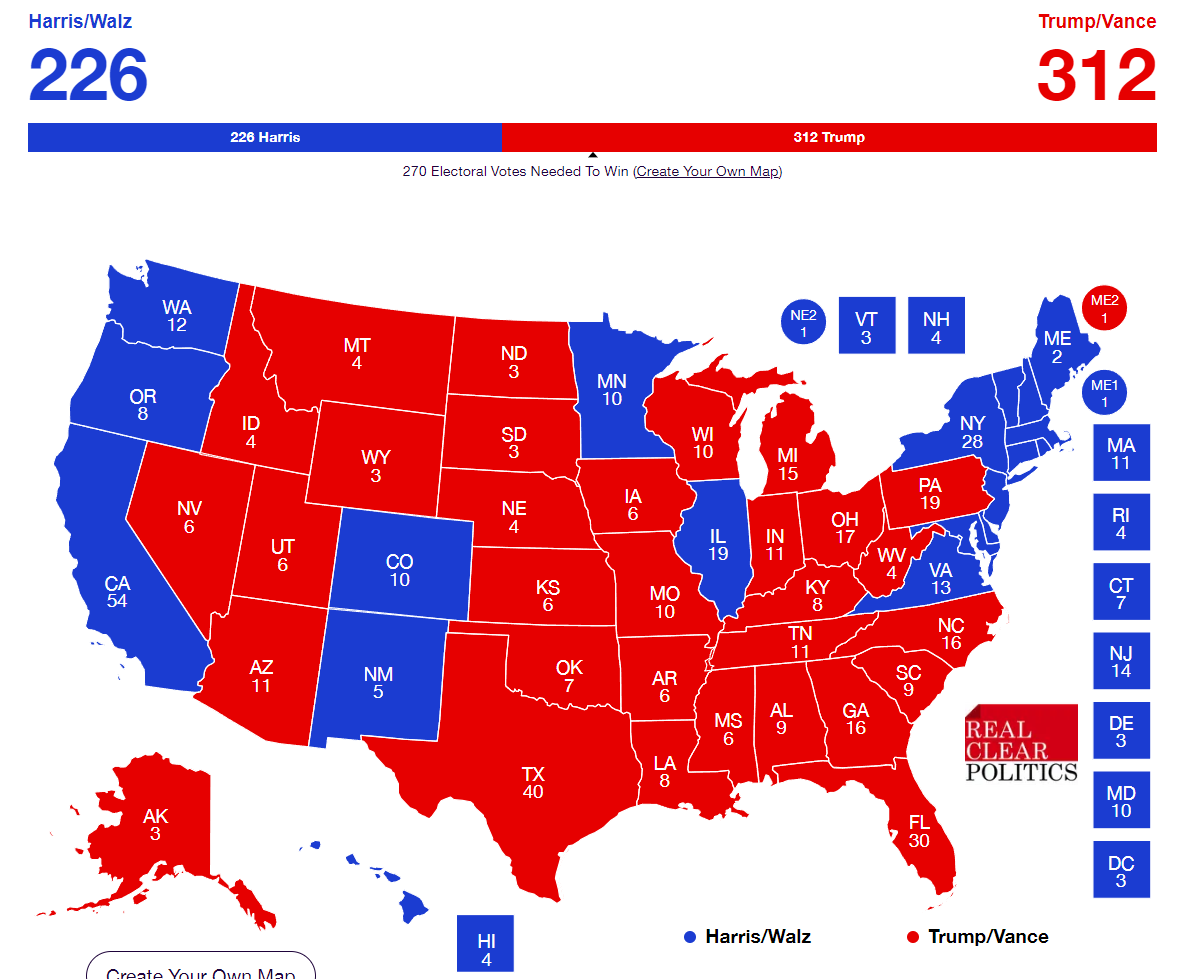
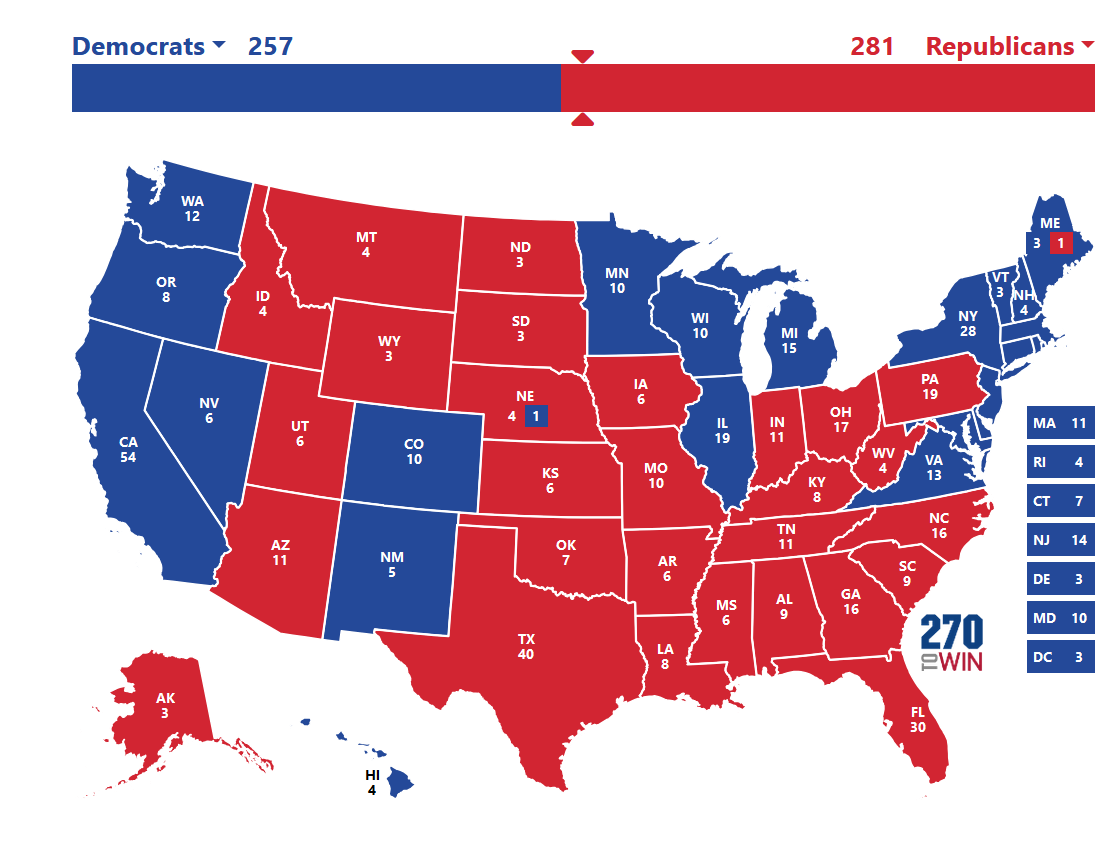
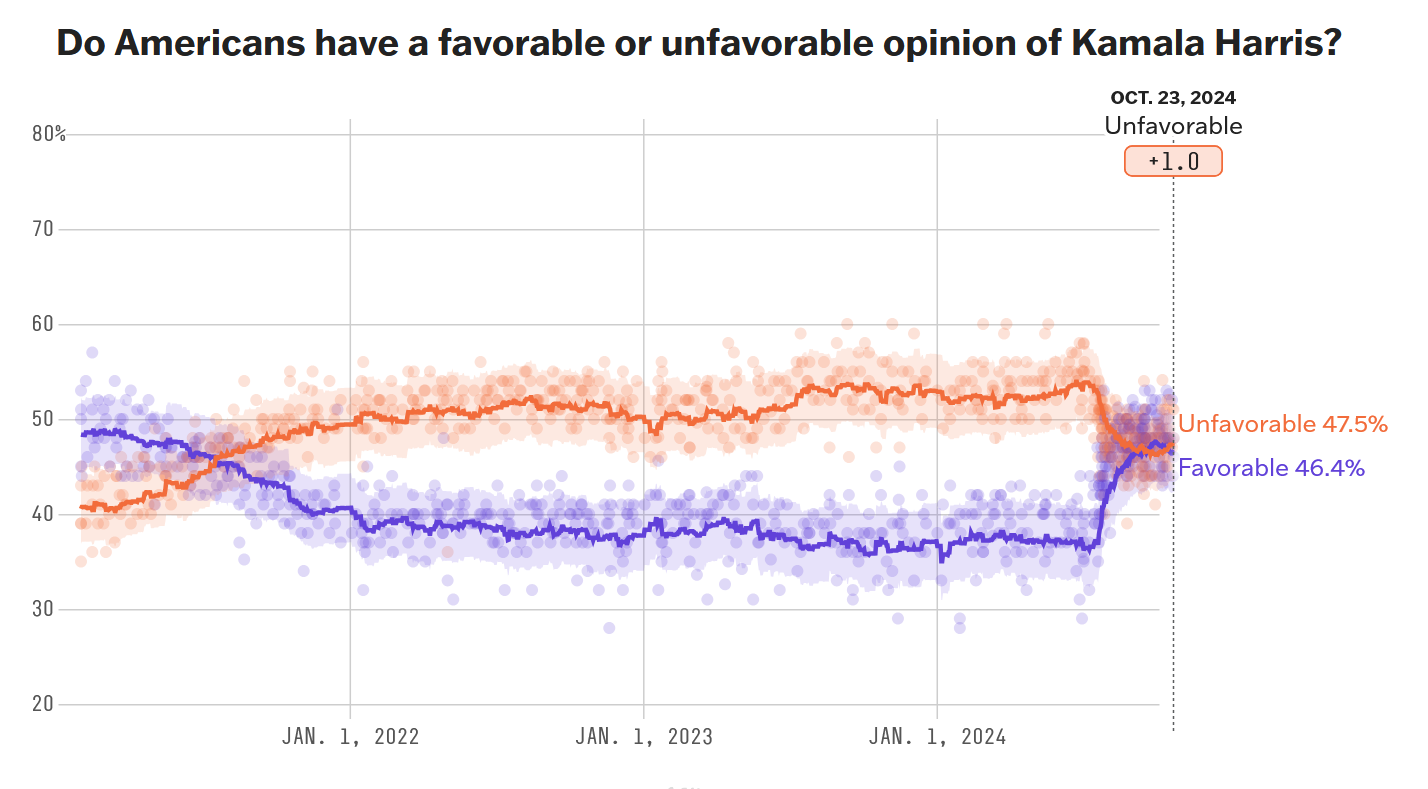
While the creation of the issue has been by artifice, Biden’s performance certainly lends some substance to it. However, I’m not here to discuss that. I’m looking at the data behind electoral trends for the two nominees, and for the moment Biden is still the nominee-elect. If a month from now it’s Harris, or Newsom, or a hybrid clone of Clinton and Obama, I’ll look at the data trends for that, but for now I’m looking at what we’ve got. Okay! So what do we have?

Looking at the national polls, the effect of the debate is certainly showing up in the Real Clear Politics and 538 polling averages. Both averages had been showing pro-Biden momentum following Trump’s felony conviction, but the debate effect has blown that out of the water. RCP’s average now has a Trump lead outside the standard 3% margin of error. 538 (which weights things according to pollster track record and history of partisan lean, and adjusts for state polling) is a little lower, and still within the margin:

Polls of the swing states are showing the same effect. Both RCP and 538 continue to have Trump leading in 7 of 7, and by wider margins than a month ago in 6 of the 7. The only good news for Biden is that the three Midwestern states are still within the margin of error, and together they could give him just enough electoral votes. Here are the current 538 numbers by state:

Speaking of the electoral college, on that front, as per the swing state results, the current map continues to have Trump well ahead:

In Presidential Approval ratings, Biden remains underwater, and the post-debate results have increased the gap to over 20 points (this average is from 538):

As one might expect from all of the above, Biden’s net approval numbers most resemble those of the recent Presidents who lost after one term (Ford, Carter, H.W. Bush, and Trump):

Democrats do retain the slightest lead in the Generic Congressional ballot:

More hopefully for Democrats, through the end of June they continue to outperform in special elections over the past year+, running an average of 6% ahead of the partisan lean of the races in question (per a spreadsheet compiled by Nathaniel Rakich of 538):

It remains true that Biden’s percentage in Democratic primaries is ahead of Trump’s in Republican primaries, which other things being equal would seem to indicate that Trump has more wavering partisan supporters to bring home than Biden:

Finally, we can check in on Presidential betting markets. They have sharply reacted to the debate, and currently have Biden’s numbers totally collapsed, such that he is slightly behind Harris:

So what does all this add up to?

Biden’s numbers have certainly taken a major hit in the past month. On the other hand, the 538 average continues to show Kennedy at an implausible nearly 10%, and 8% undecided, suggesting that about 18% of the electorate is still in play. And Democrats clearly retain a generic average in terms of Congressional preference and outperforming in open elections.

The pro-Biden argument from this is that he has plenty of room to grow support versus the tiny margins that may be needed in key states. On the other hand, this could as easily be an argument that another Democrat could do much better than Biden, as voters consistently indicate reservations about him vs. general support of Democrats. As tiresome as it is to continually look to the future, I think we may have to wait a month to see if the post-debate damage reverts to the mean, if Biden has ridden out calls for him to step down, and if any more of the nearly 20% undecided block has sorted itself out.

Until then, these are our data points, which have remained generally pretty consistent over the last two months:

See you in August!