As of this past Friday, the General Election was only four months out, so here we are with the latest overview! Let’s start with the elephant in the room: after Biden’s thoroughly lackluster debate performance on June 27th seemingly confirmed carefully manufactured fears about his physical and mental fitness, there has been a chorus of calls for him to drop out for the good of the party and the nation, and it’s not really letting up ten days later.
But wait, did I say carefully manufactured? Indeed. As with something… something… her e-mails… in 2016, there has been an orchestrated social media campaign on the Right (possibly aided again by foreign sources) to incubate this fear, and a too-credulous and irresponsible press has gone along for the ride:

While the creation of the issue has been by artifice, Biden’s performance certainly lends some substance to it. However, I’m not here to discuss that. I’m looking at the data behind electoral trends for the two nominees, and for the moment Biden is still the nominee-elect. If a month from now it’s Harris, or Newsom, or a hybrid clone of Clinton and Obama, I’ll look at the data trends for that, but for now I’m looking at what we’ve got. Okay! So what do we have?
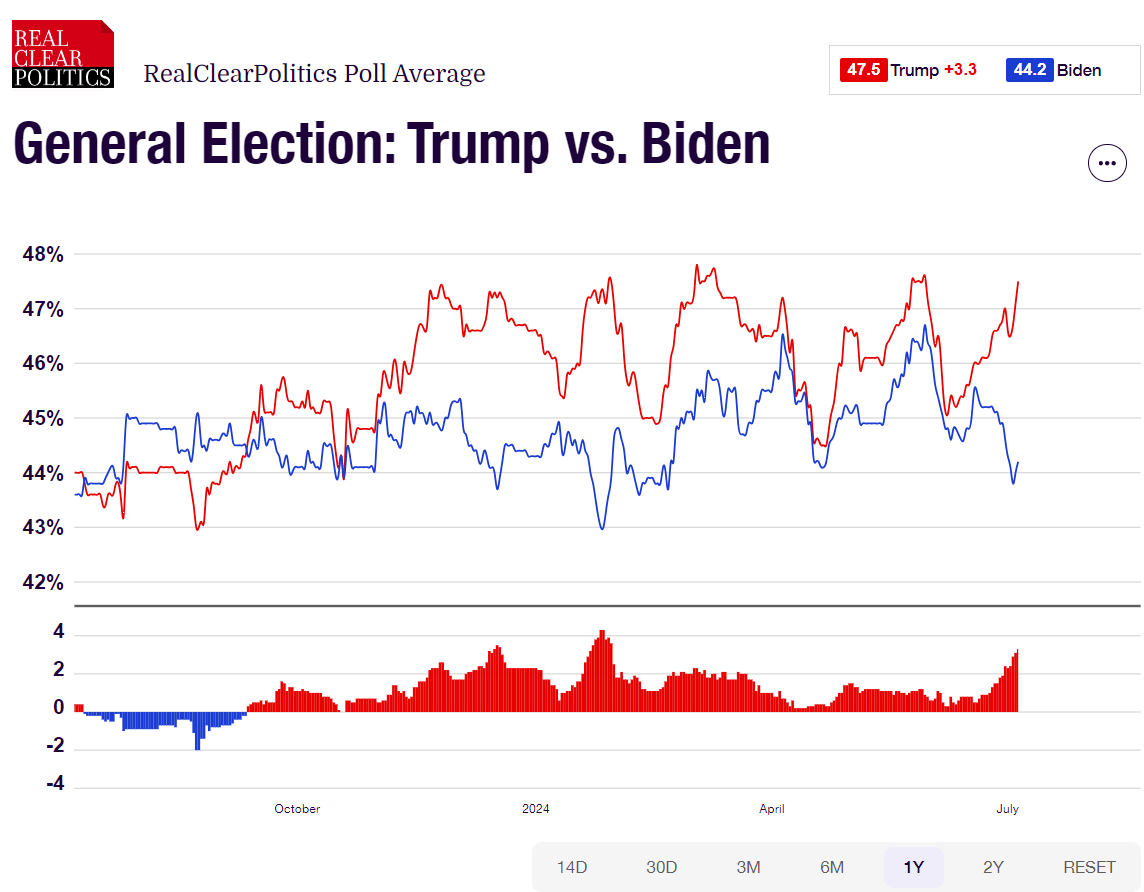
Looking at the national polls, the effect of the debate is certainly showing up in the Real Clear Politics and 538 polling averages. Both averages had been showing pro-Biden momentum following Trump’s felony conviction, but the debate effect has blown that out of the water. RCP’s average now has a Trump lead outside the standard 3% margin of error. 538 (which weights things according to pollster track record and history of partisan lean, and adjusts for state polling) is a little lower, and still within the margin:

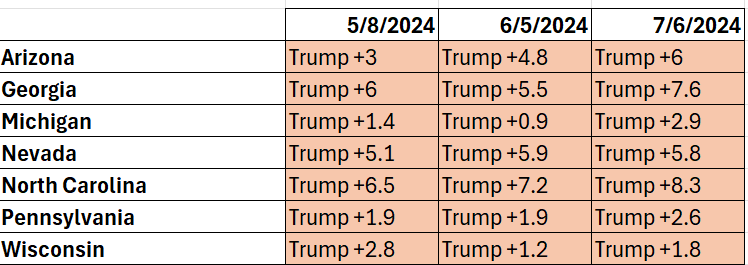
Polls of the swing states are showing the same effect. Both RCP and 538 continue to have Trump leading in 7 of 7, and by wider margins than a month ago in 6 of the 7. The only good news for Biden is that the three Midwestern states are still within the margin of error, and together they could give him just enough electoral votes. Here are the current 538 numbers by state:
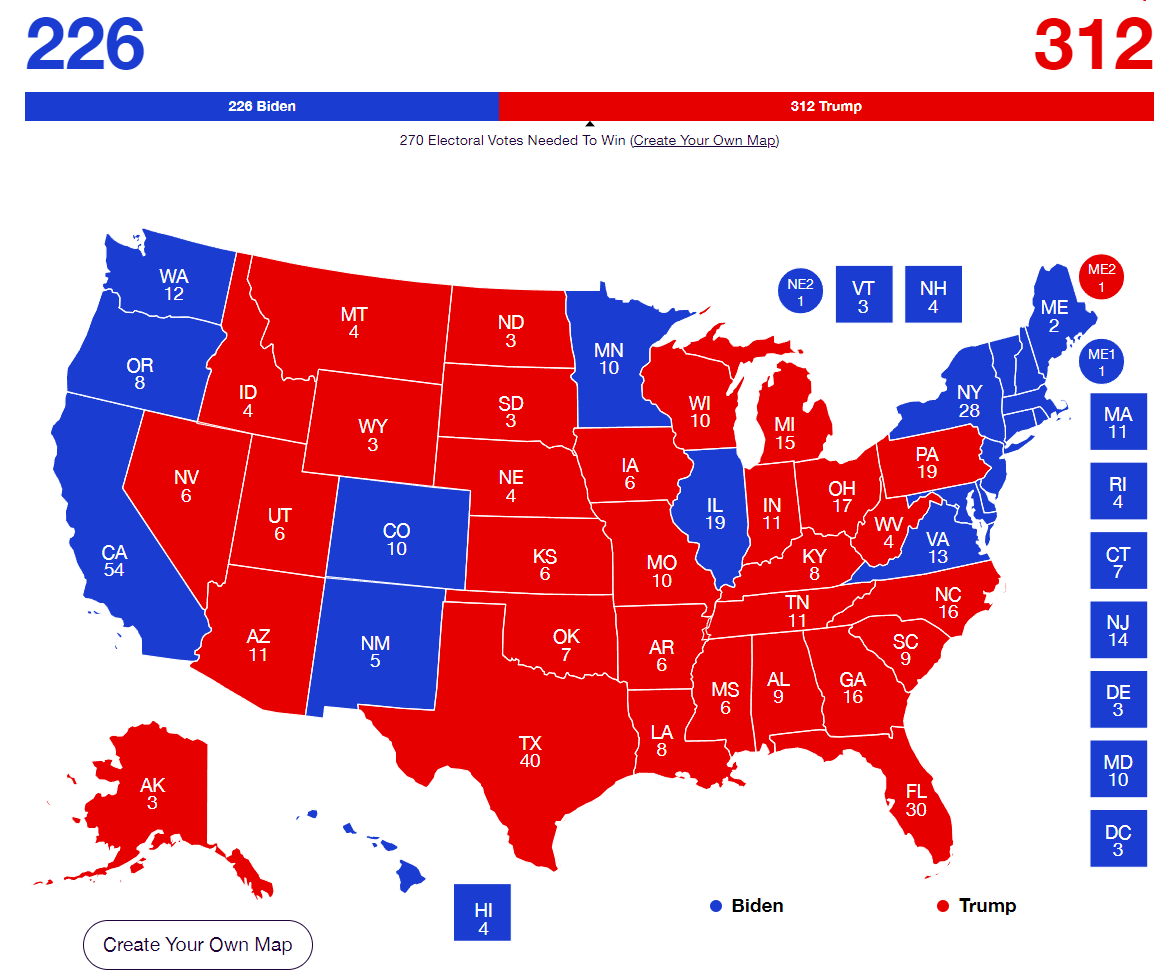
Speaking of the electoral college, on that front, as per the swing state results, the current map continues to have Trump well ahead:
In Presidential Approval ratings, Biden remains underwater, and the post-debate results have increased the gap to over 20 points (this average is from 538):

As one might expect from all of the above, Biden’s net approval numbers most resemble those of the recent Presidents who lost after one term (Ford, Carter, H.W. Bush, and Trump):

Democrats do retain the slightest lead in the Generic Congressional ballot:

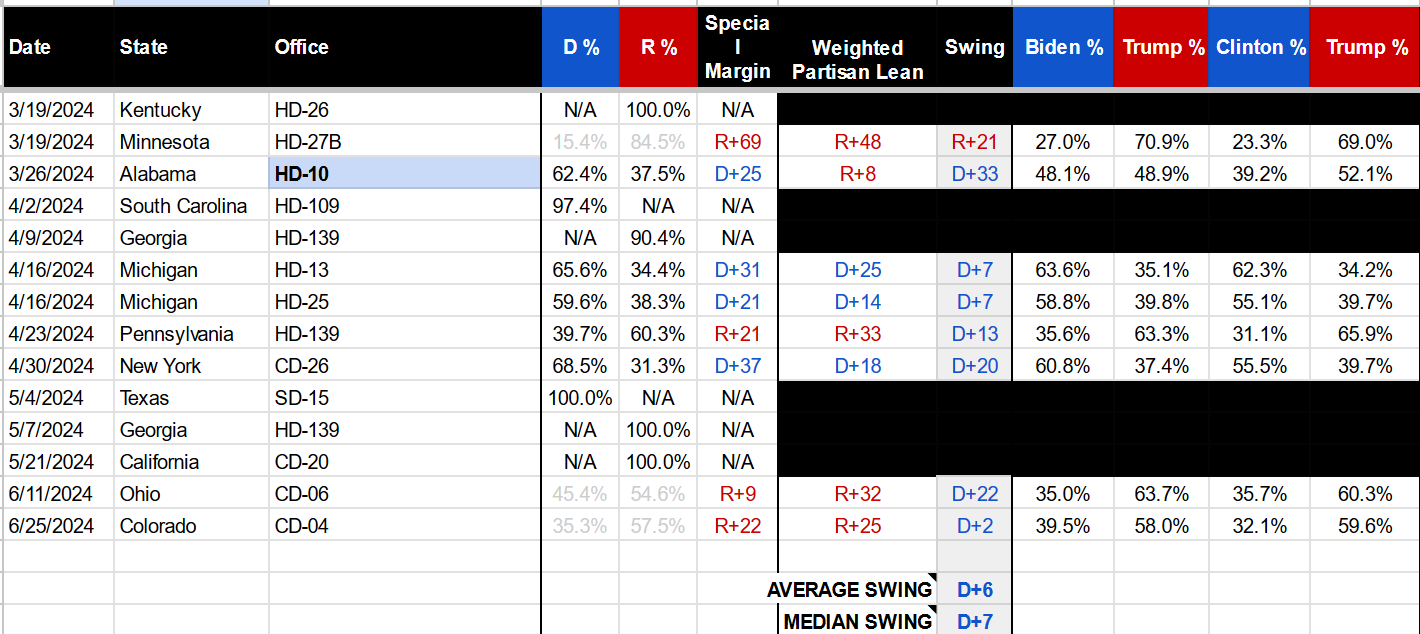
More hopefully for Democrats, through the end of June they continue to outperform in special elections over the past year+, running an average of 6% ahead of the partisan lean of the races in question (per a spreadsheet compiled by Nathaniel Rakich of 538):
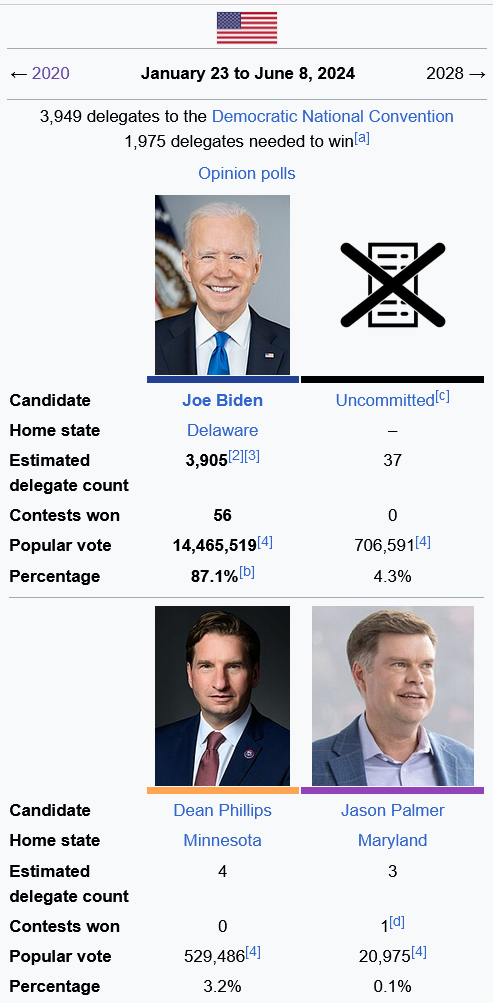
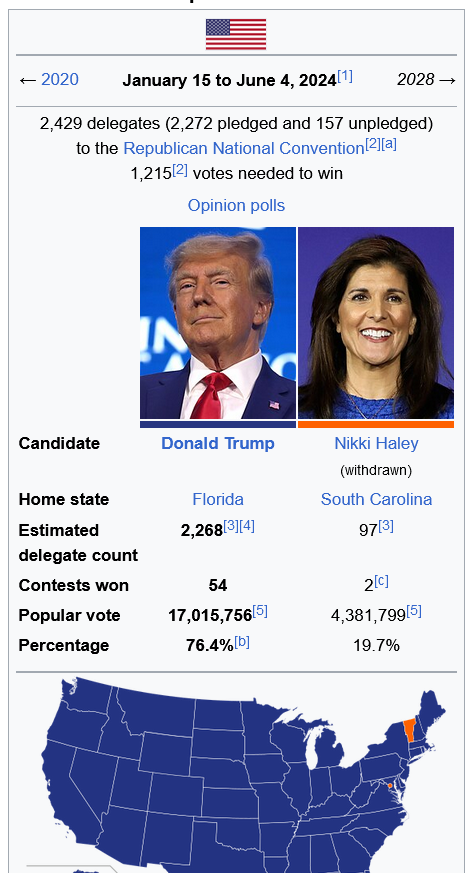
It remains true that Biden’s percentage in Democratic primaries is ahead of Trump’s in Republican primaries, which other things being equal would seem to indicate that Trump has more wavering partisan supporters to bring home than Biden:
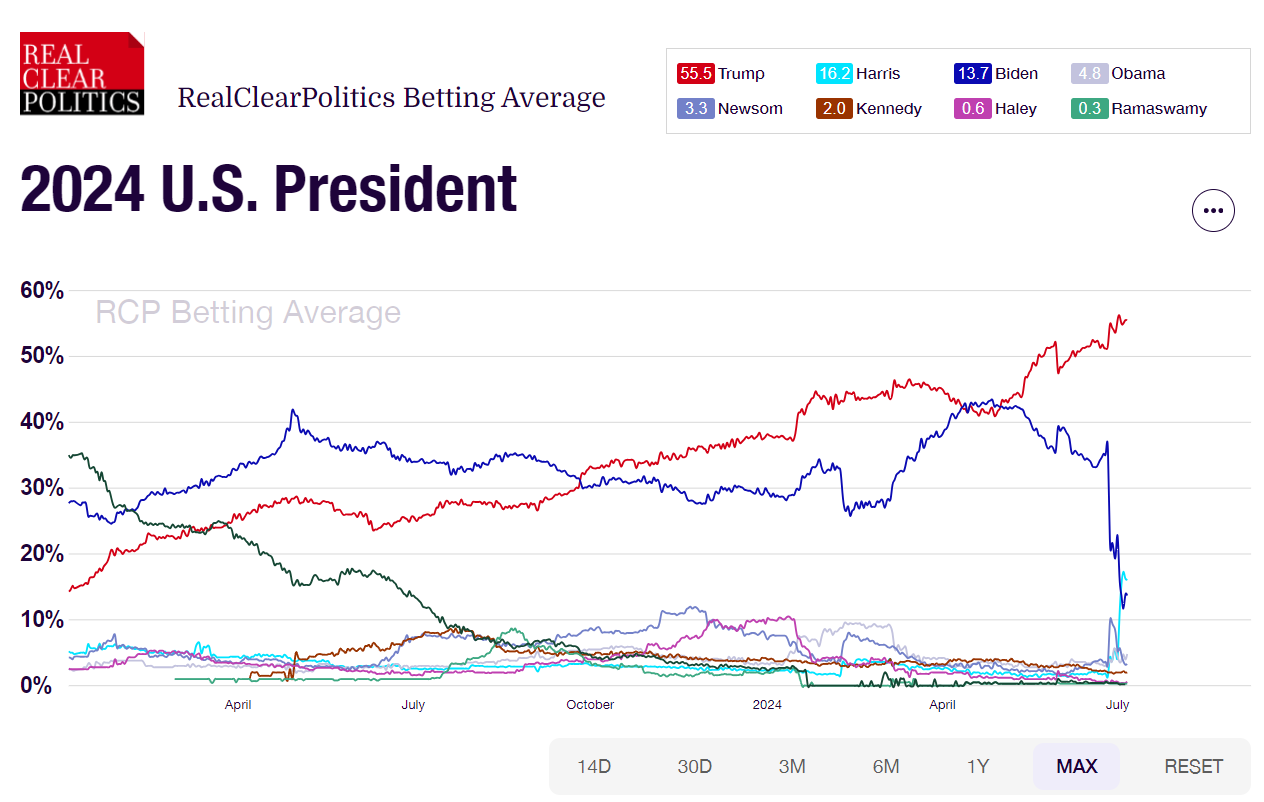
Finally, we can check in on Presidential betting markets. They have sharply reacted to the debate, and currently have Biden’s numbers totally collapsed, such that he is slightly behind Harris:
So what does all this add up to?
Biden’s numbers have certainly taken a major hit in the past month. On the other hand, the 538 average continues to show Kennedy at an implausible nearly 10%, and 8% undecided, suggesting that about 18% of the electorate is still in play. And Democrats clearly retain a generic average in terms of Congressional preference and outperforming in open elections.
The pro-Biden argument from this is that he has plenty of room to grow support versus the tiny margins that may be needed in key states. On the other hand, this could as easily be an argument that another Democrat could do much better than Biden, as voters consistently indicate reservations about him vs. general support of Democrats. As tiresome as it is to continually look to the future, I think we may have to wait a month to see if the post-debate damage reverts to the mean, if Biden has ridden out calls for him to step down, and if any more of the nearly 20% undecided block has sorted itself out.
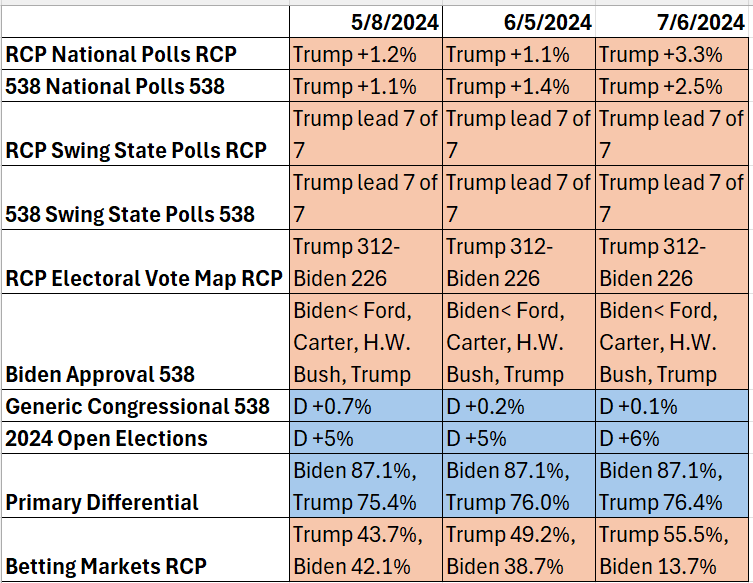
Until then, these are our data points, which have remained generally pretty consistent over the last two months:
See you in August!
 Chris LaMay-West